
Privacy-protecting Ghostery extension sold, Ghostery Inc becomes Evidon after acquisition
There's big news in the world of Ghostery Inc, the company best-known for the browser extension that boosts privacy. The firm's consumer operations have been sold to Cliqz, a German company part-owned by Mozilla, where the Ghostery extension will live on.
Ghostery Inc is rebranding to its former identity of Evidon, which will have a B2B focus. Evidon Inc will provide "monitoring and consent solutions for over 500 leading brands across the world." The deal with Cliqz is an all-cash affair, but details have not been released.
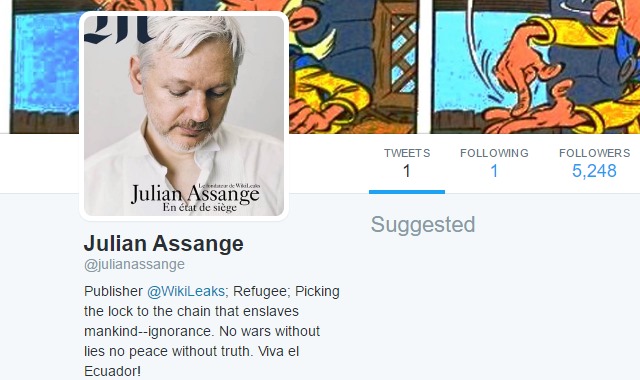
'Refugee' Julian Assange arrives on Twitter
Wikileaks founder Julian Assange has activated his Twitter account. His profile gives his location as the Ecuadorian embassy in London, and describes him as "refugee" who is "picking the lock to the chain that enslaves mankind -- ignorance."
Within minutes of activating the account, Assange managed to amass thousands of followers, and this is a number that is sure to skyrocket in the coming days now that the account is actually being used. So what did the reclusive man have to say with his first tweet?

[Updated] PayPal very sneakily increases its charges and adds weird non-discouragement clause for sellers
Nobody likes to share bad news, and PayPal is no different. Price increases certainly fall into the category of bad news, and PayPal has decided to publish the details as "Policy Updates". But it's not just the price hike that's included in this misleadingly-titled document -- there's also something rather weird.
If you are a seller -- such as on eBay or other shopping sites -- you will soon be subject to a "non-discouragement clause". What does this mean? In short it means that sellers are not permitted to encourage shoppers to use another payment method instead of PayPal. Let's drill into the detail.

Twitter tweaks Lists because of potential for abuse -- and then reverses the changes
Twitter has tried various methods of cracking down on trolling and abuse, and it is now rolling out its latest batch of safety measures. The most recent change only lasted a few hours before it was killed off due to protests.
In a seemingly well-intentioned move, Twitter decided to no longer notify users when they were added to lists. The idea was that lists could be used as a form of abuse: you might not be able to message someone, but you could add them to a list called "you're a douchebag", and they would be notified. But the change did not last very long at all.

New authentication platform seeks to tackle fake news and profiles
Fake news is big news at the moment, making it increasingly difficult to assess the reliability of material, particularly when it appears online.
A new company launching today at the 2017 RSA conference is seeking to create a secure online community to identify individuals and provide a more "authentic" online experience.

TCP Monitor Plus is a portable network toolkit
Portable network toolkit TCP Monitor Plus has had its first update since 2015, adding a snapshot feature and some handy display tweaks.
The program opens with a scrolling graph of network traffic, and assorted low-level stats on bandwidth, speeds, and packets sent and received.

Google makes it much easier to share AMP links
A huge proportion of web traffic comes from mobile devices these days, and this means people are often trying to access online articles when they have a slow data connection. For this reason, Facebook introduced Instant Articles, and Google introduced Accelerated Mobile Pages.
Both of these technologies allow for near-instantaneous loading of pre-cached, optimized articles on mobile devices, but they have a problem. Both mask the original URL which can make it difficult to share interesting articles with others. Google has seen the problem and made an important change to the way AMP works, helping to increase trust.

Twitter will finally roll out 'long overdue' fixes to tackle harassment
Twitter's trolling and harassment problem is not going away, and the company has long-promised to do more to tackle the issue. In a series of tweets, Twitter's vice president of engineering Ed Ho has revealed that action is finally to be taken.
While he does not go into detail about exactly what Twitter's plan is, he says that more will be revealed as the tools roll out this week. Importantly, he reveals in addition to changes to muting and blocking, the new measures will include steps to prevent repeat offenders from simply creating new accounts if they are blocked.
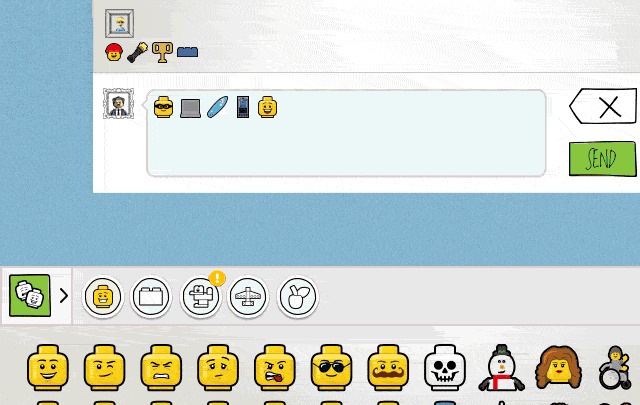
LEGO Life is a safe social network that lets kids show off their creations
Who doesn't love LEGO? Well... apart from parents who find themselves standing on the little plastic bricks in bare feet, that is! One of the joys of LEGO is not just that it lets kids -- young and old -- get creative, and it's great to share your creations.
With this in mind, LEGO has created a new social network designed for kids. Unlike Facebook and other older social networks, LEGO Life is designed for under-13s and there is a strong focus on security and anonymity.

Really, Google? Chrome 57 kills the ability to control and disable plugins
With web browsers being among the most frequently used pieces of software out there, it's little wonder that there is so much concern about security surrounding them. Browser plugins can be a major security worry, and with Chrome 57 Google has taken the strange decision to block users from disabling them or changing their settings.
While this is not the same as preventing users from changing the settings for extensions, or removing them, it still has important implications -- particularly if a security problem should be discovered in a plugin Google bundles with Chrome.

Bot traffic takes back the web
Just over a year ago we reported that, for the first time in five years, human web traffic had overtaken bot traffic.
It seems, however, that human dominance was short lived. The latest Imperva Incapsula Bot Traffic Report shows that in 2016 the bots were back on top with 51.8 percent of online activity, although it's an increase in good bot activity that has driven the trend.

Mobile ad-blocking will get out of control in 2017
It wasn’t just the news of Trump and Brexit that dominated headlines in 2016 -- adblocking also remained high on the news agenda after experiencing a roller-coaster year. Murmurs among the industry claimed that 2016 would represent a possible adblocking Armageddon, while the IAB’s CEO and president, Randall Rothenberg, spewed the words of Adblock Plus (ABP) as "extortionists, internet killers, an unethical, immoral, mendacious coven of techie wannabes."
But that wasn’t all. In August, an epic back-and-forth battle between ABP and Facebook kicked-off as we successfully circumvented each new update made by the social media giant to uphold the users’ rights of blocking ads on the desktop version of the site. And if that wasn’t enough, in late November we once again proved that adblocking is 100 percent legal after a sixth court win, this time over German publisher Spiegel Online.

China blocks VPNs, making Great Firewall circumvention harder
The Great Firewall of China is a famously totalitarian measure taken by the Chinese government to control what its citizens are able to see and do online. As with any such blockade, where there's a will there's a way, and people have long turned to VPNs to get around the firewall. But with a new 14-month crackdown on the use of such tools, the situation just got a little trickier.
While on the face of it the announcement from the Ministry of Industry and Information Technology in China seems like a new one, it is really just a drive to more strictly enforce existing legislation. The Chinese government is clamping down on the unauthorized use of VPNs in a move that will be seen by the outside world as a prime example of the country's dictatorial control and censorship of the Internet.
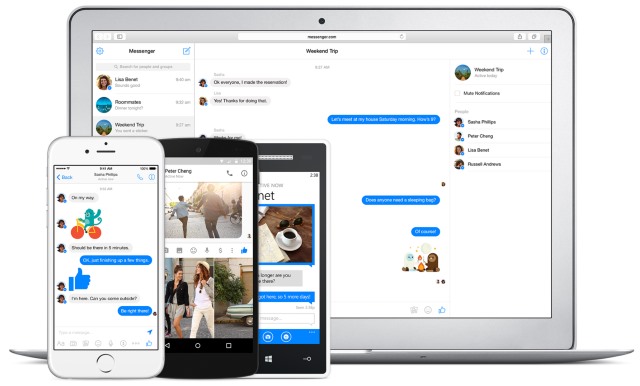
Facebook rolls out Messenger interface for web inbox
Facebook has started to roll out the Messenger.com interface as a replacement for the longstanding message inbox on the web. The latest design should feel much more familiar to folks who use the chat service on their smartphones, as it closely resembles the Android and iOS apps.
There is no official announcement yet, but you should start seeing the new interface soon on your account. It debuted nearly two years ago as a standalone website and alternative to the message inbox for folks who do not want to visit Facebook (or wish to create an account with the social network, for that matter).

Now you can perform offline Google searches... sort of
There must have been times when you're in an area with no Wi-Fi and terrible phone reception. It's almost certainly when you find yourself in this situation that you think of something you want to look up. With no signal to perform a Google search, you may mentally log your query and pledge to run it later -- but of course you will forget.
Google has a solution. The latest version of the Google app heralds the arrival of pseudo offline searching, so you can perform searches with no signal, or if your phone is in airplane mode.