
FCC votes to subsidize broadband connections for low-income households
Today the FCC voted in favor of updating its Lifeline program to include broadband. This would mean that households surviving on low incomes would be able to receive help paying for a broadband connection. It might not be as important as electricity or water, but having a broadband connection is seen as being all but essential these days.
From helping with education and job hunting, to allowing for home working, the ability to get online is seen as so vital by some that there have been calls for it to be classed as a utility. The Lifeline program has been running since the 80s, and originally provided financial help to those struggling to pay for a phone line. It was expanded in 2008 to include wireless providers, and it is hoped that this third expansion will help more people to get online.

Airbus to build 900 satellites for OneWeb to connect the world to the internet
For some companies, bringing the internet to the entire world is an important part of giving people greater opportunities. Mark Zuckerberg has been pedalling Internet.org for some time now -- even if a lot of people don’t like the scheme -- and now there's a new kid on the block.
Airbus is due to start building more than 900 satellites for OneWeb, a company looking to bring highspeed internet access to billions of people all over the world. The aim is to offer 100 percent coverage of the globe, and there is a great focus on speed. Airbus is hoping to build more than one satellite per day and launch the first batch in 2018.
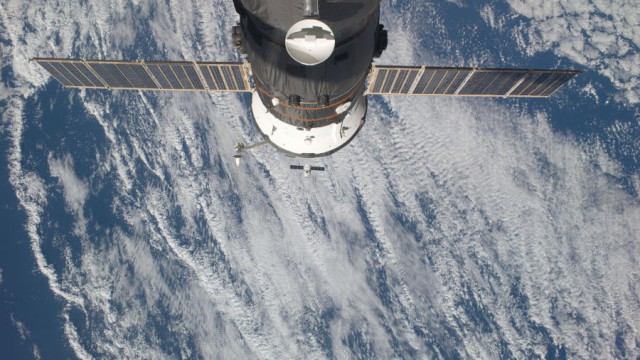
Astronauts complaining about slower than dial-up Internet
NASA first provided Internet access to astronauts in space five years ago, but these space guys have revealed that connection speeds from the International Space Stations are worse than the old-school dial-up connection.
A click on a webpage from a space station first travels 22,000 miles away from Earth, to a network of geosynchronous satellites far beyond the relatively close station. These satellites then send the signal down to a receiver on Earth, which processes the request before returning the response along the same path.

New isolation technology seeks to eliminate malware threats
According to Gartner, businesses spent more than $70 billion on cyber security tools in 2014, and collectively lost nearly $400 billion as a result of cyber crime. This suggests that existing security technologies are struggling to cope with the growing number of cyber threats.
Californian company Menlo Security is launching an new approach which it calls Isolation Platform, a technology that claims to eliminate the threat of malware from key attack vectors, including web and email.

USA Freedom Act passes unamended, limiting NSA surveillance after Snowden revelations
Today the US Senate passed the USA Freedom Act without amendments, signalling the start of the significant surveillance reform that has been called for since Edward Snowden blew the whistle on the agency's activities. It had already been determined that the bulk collection of phone metadata was illegal, and the expiry of Section 215 of the Patriot Act at the end of May brought this data collection to an end anyway.
The USA Freedom Act sets in concrete the end of the phone data collection program and is seen as a major victory for privacy advocates. It will come as good news to Snowden himself who will undoubtedly feel a sense of relief that his risk-taking paid off. The bill is still to be signed into law by President Obama, but this is now little more than a formality.

3.2 billion will use the Internet by the end of 2015
New figures released by the ITU (the UN agency for information and communication technologies) have shown that there will be 3.2 billion people online worldwide by the end of 2015.
The majority of those internet users -- 2 billion of them -- live in developing countries, according to the ITU’s analysts.

AdBlock Plus is deemed legal -- again
AdBlock Plus has already been in court once this year proving itself to be legal. A German court heard a case brought by a group of TV companies who felt they were getting a poor deal when their ads were blocked.
The internet has something of a love/hate relationship with ad blockers. While surfers love the fact that they clean up the browsing experience, content creators have a source of income crimped. To try to keep everyone happy, AdBlock Plus came up with the idea of Acceptable Ads -- a sort of halfway house between blocking and permitting ads -- and this was something that featured in this most recent court case.

New Instart Logic platform set to deliver faster, more reliable websites
Web developers are under pressure to deliver sites and applications faster and at the same time offer greater flexibility and a more personalized end-user experience.
Cloud application delivery provider Instart Logic is using the O'Reilly Velocity Conference to launch its latest Software-Defined Application Delivery (SDAD) platform.

Just about everyone thinks Internet.org is a terrible idea
Mark Zuckerberg probably thought the world would bow down to him when Facebook announced the Internet.org project. The idea of bringing internet access to those in developing parts of the world seems, on the face of it, to be something of an exercise in altruism. Of course, it's not quite that simple.
Many companies complain that the project goes against the idea of net neutrality -- a claim that Zuckerberg vehemently denies. But now the vocal opposition to Internet.org is getting louder. Privacy group Electronic Frontier Foundation (EFF) has several concerns with the project, and a collective of 67 digital rights groups has signed a letter to the Facebook founder expressing concerns about the approach Internet.org is taking.

The 10 countries with the fastest Internet speeds -- is yours on the list?
The Internet has become such a necessity for hundreds of millions of people worldwide, it is hard to believe that billions still live each day without scrolling through a Facebook feed or watching a YouTube video.
That said, a lot of the people that have Internet connection do not enjoy the speed offered by Internet service providers, especially in parts of the world where oligopolies rule the web pipes.

I cut bandwidth by two-thirds to get faster Internet
File this in the "When More is Less" folder.
My college-age daughter is moving home, at least for the summer, and my wife and I are scrambling preparations. One unexpected: Changing Internet Service Providers. Our Cox connection comes into the bedroom where my daughter will go. Access from the main living area would require new wiring that the landlord won't allow. I can understand why he wouldn't want the fancy molding drilled up. We already know that AT&T U-verse Internet is live in the living room.

Bots generate more internet traffic than humans
According to a new survey from cloud security provider Distil Networks humans accounted for only 40.9 percent of web traffic in 2014 with the remainder accounted for by bots.
This compares with 50.8 percent human traffic in 2013, however the good news is that 'bad bot' traffic is down from 24.22 percent to 22.78. The rise in good bot traffic that makes up the difference is thought to be from more aggressive indexing by Bing and new search engines in 2014.

A third of people would rather lose a finger than their internet connection
Losing a finger is something that you might more readily associate with horrific industrial injuries, or the result of failing to pay back a gangland loan shark. In the UK, however, broadband access is now seen as such a vital service that people would rather lose a digit than lose their high speed internet connection.
An incredible one in three people would be willing to live without a phalanx rather than coping without a broadband connection. Being online is now seen as a lifeline and losing that connection can lead to feelings of social isolation.

The UK could face 'internet rationing' in years to come
The UK’s internet infrastructure is in danger of beginning to seriously creak under the sheer weight of the bandwidth demands put on it -- and the power demands of keeping the net running are also set to cause big strains on the country’s suppliers, with the possible outcome of 'internet rationing'.
The warning that dire straits are looming for the UK’s comms networks will be given to The Royal Society this week, with Professors Andrew Ellis, Sir David Payne and David Saad having organized a meeting to discuss the evidently considerable problems our online expansion is causing.
Elon Musk is changing the future
Elon Musk is renowned worldwide for his roles as co-founder of PayPal and CEO of green technology giants Solar City, SpaceX, and Tesla Motors. Now, the billionaire has crafted a feasible plan for supplying Internet to all areas of the world through the use of low Earth orbit satellites -- a project which he hopes will also act as a monetary springboard for an ambitious attempt at colonizing Mars. Of course, Musk has not forgotten his eco-friendly roots, and he is expanding on those with new technology for reducing environmental impact at home.
To grant Internet access to the entire globe, Musk wants to launch hundreds or possibly thousands of satellites. Since satellite Internet typically involves high latency and slower connections, due to the time a signal takes bounce between the Earth’s surface and a geostationary satellite, one of the major aims of Musk’s approach is to replace the current approach of using a small number of large, expensive satellites with an approach that instead uses hundreds of smaller, cheaper devices, expanding coverage and reducing data transmission times.