
Broadband policy could affect how 1 in 5 UK residents vote
If you live in the UK it probably won't have escaped your notice that there's an election campaign underway. But could your broadband connection affect the way you vote?
According to a survey from broadband, TV and mobile comparison site Cable.co.uk almost one in five (18 percent) of 2,500 people polled say that broadband policy could affect the way they vote.

AdBlock Plus proves it's not illegal
Online ads are a serious pain in the ass, and lots of people turn to the likes of AdBlock Plus to clean up their browsing experience. Ad blockers are not universally liked, however; many website owners despise the tools. So hated is AdBlock Plus, in fact, that a case was brought against the tool to try to prove that it is illegal.
Now a court in Hamburg has come to a decision, and ruled that AdBlock Plus -- in case there was ever any doubt -- is entirely legal. The plaintiffs in the case alleged that AdBlock Plus should not be permitted to block ads on the websites it owns. The judge presiding over the case disagreed.

Zuckerberg says Internet.org is not anti-net neutrality... but it is
A few days ago Mark Zuckerberg conducted a Q&A on Facebook. Despite tens of thousands of comments, very little of interest came out of the session -- he works 50-60 hours a week, likes Oculus (surprise, surprise), and he stands behind his Internet.org project which is providing internet access to people all over the world, including those in remote and developing locations. As is to be expected from a Q&A session, Zuckerberg also found that he had criticism levelled at him in addition to questions, including criticisms of his beloved Internet.org.
Some people pointed out that even in the US there is still a digital divide, while others complained that Internet.org goes against the principles of net neutrality. This obviously struck a nerve because the Facebook founder felt the need to defend the program and express his support for net neutrality. My colleague Manish Singh wrote about this, but is Zuckerberg right? Can Internet.org and net neutrality really live happily side by side?

Huh? Pay beaucoup bucks for .sucks?
As someone whose name also is his brand (welcome to 21st-century journalism), I watch with interest the new .sucks top-level domain, which is available for select preregistration through May 29—the only time to surely secure your.sucks. Today, I looked to a reputable registrar to see what joewilcox.sucks would cost me. Cough, cough: $3,797.99 now, during the so-called Priority Access (e.g., Sunrise) period, or $407.98 when general pre-reg starts in June.
The new TLD is just one among hundreds of available or forthcoming domain extensions sanctioned by governing body ICANN. "I think the motivation behind the release of all these new domains is money", says Roger Kay, who describes the sellers as shady land speculators. "The .sucks domain is particularly nasty", the president of consultancy Endpoint Technologies Associates emphasizes. "It's pretty close to blackmail". But is it really? This analysis means to help you decide.

Apache -- 20 years of the world's favorite web server
In 1995 a group of just 21 web masters got together to develop some server software. They became the Apache Group and today the project they started powers over 500 million websites, around half the internet.
Open source software specialist Lucidworks has produced an infographic that looks at the history of Apache and how it has succeeded by becoming a collaborative, consensus-based development process with an open and pragmatic software license.

Half of users believe using the internet means giving up privacy
More than half of internet users in the US, UK and Germany believe it's impossible to keep their personal information private if they're to enjoy the Internet.
This is one of the findings of research by Open-Xchange, the German open source software company. The Consumer Openness Index surveyed 1,000 internet users in each of the three countries to gauge their opinions about online privacy.
New tool to identify website vulnerabilities
Many of the security breaches that have made the headlines over the past year have been due to some form of web vulnerability. It's no surprise that the web has become the main route for cyber attacks as highlighted by things like Shellshock.
But identifying these flaws manually can be a mammoth task. Which is why cloud security provider Qualys is announcing the latest version of its Web Application Scanning (WAS) tool.

It's Data Privacy Day and Facebook knows you're reading this
A new global study conducted by Microsoft across 12,000 people shows that most internet users still don't believe they're aware of all the data that's being collected about them.
For example, Facebook, Twitter and Google+ know you've read this page, as they track your visits to any website with a 'Like', 'Tweet' or '+1' button, whether you click that button or not. Information gathered can include anything from your IP address and general geography, to insights into your age, gender, income, hobbies, health status and financial situation, by way of your browsing and purchase history.
Google Fiber expands, new markets on the horizon
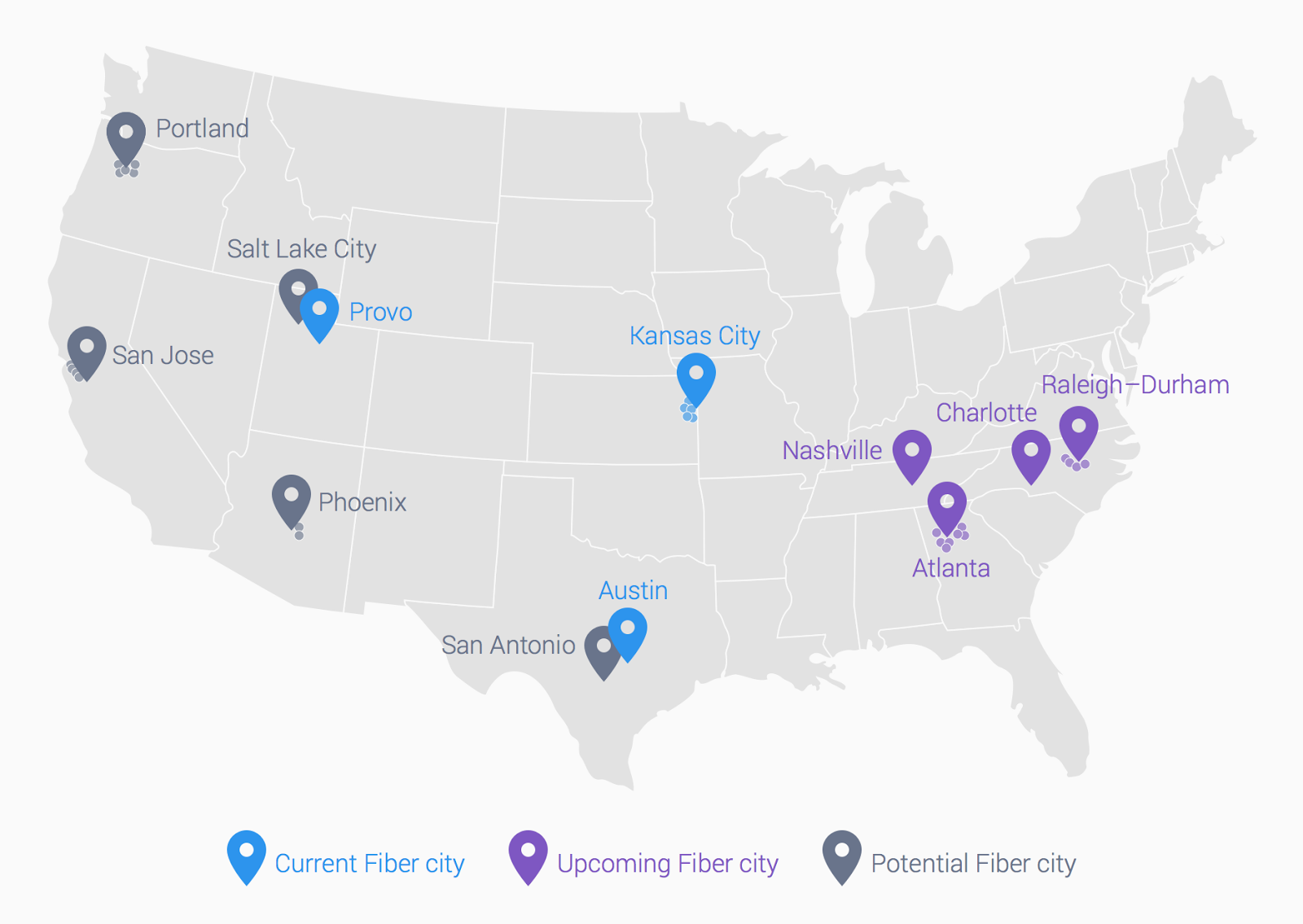
Everyone wants access to high-speed internet, as it seems to feel like a human right these days. Sadly the US lags behind other nations in this department, but things are slowly improving, thanks in large part to Google introducing its own broadband in the form of Google Fiber.
That offering is now expanding to new markets, with Google announcing four locations set to have their internet speeds increased dramatically. Thus far, the service has existed in Kansas City, Provo, and Austin.

Intel IoT Platform aims to drive adoption of secure Internet of Things
The Internet of Things will see an acceleration in adoption if Intel's plans work out. The chipmaker has just unveiled its own Internet of Things platform called, inevitably, Intel IoT Platform. The aim is to create a unified system that makes it easy for manufacturers to securely connect their devices to others.
The platform is essentially a set of protocols that helps to ensure compatibility between devices. Intel has already forged a number of partnerships with a view to accelerating uptake of and interest in the Internet of Things in general, and Intel IoT specifically.

Yeah, let's 'band' Fagioli from BetaNews
Reader reaction to Brian Fagioli post "Sorry Netflix, but you should pay 'tolls' to ISPs" is quite dramatic. Three-hundred-thirty comments later, some of you demand his head. There is even petition "Band Brian Fagioli from Beta News", in response to the post. I assume the petition creator means "ban" but band is good enough for me. Brian is one of the group.
The story requires no editorial response but I give one anyway. Earlier, a reader emailed that he is done with BetaNews. I think my reply to him will benefit other readers, so I share it, slipping in some additional commentary. I hope this answer will illuminate our editorial policies.

Innovation will save net neutrality and keep data plans affordable
Wireless carriers are opposing net neutrality because their networks have limited capacity and they need more flexibility to handle traffic. But they are missing an opportunity by not embracing spectrum sharing, a technology that could vastly increase the available bandwidth.
Net neutrality has been in the headlines following Verizon's recent Federal court win against the Federal Communications Commission's (FCC) open Internet rules. Also, AT&T is now courting corporate sponsors to help subsidize customer data plans. Some consumer rights groups view these events as a concerted effort to undermine the longstanding practice that compels service providers to treat all traffic equally. These events could all signal the beginning of a tiered-off Internet.

FileZilla 3.7.0 improves FTP performance
Open-source FTP client FileZilla 3.7.0 and FileZilla Portable 3.7.0 have both been released. The new build now allows users to view the total transfer speed as a tooltip over the transfer indicators, and replaces the depreciated term SSL with TLS. The update also promises better performance over secure FTP connections and subtle tweaks to the user interface to make the program easier to use.
Users can now view the total transfer speed by hovering the mouse over the transfer indicators in the bottom right-hand corner of the FileZilla window. Similarly, hovering the mouse over the Host box in the Quickconnect bar now reveals a list of supported protocols: FTP, FTP over SSH, FTP over TLS (implicit), and FTP over TLS (explicit).

Shopping, beer and bus shelters -- the websites that sum up Britain
In April of this year the British Library along with libraries in Scotland, Wales and Dublin gained powers to archive the whole of the UK Web for future generations of researchers. To mark the introduction of these regulations the library today announced a list of 100 sites it says will be essential reading for future generations.
Lucy Burgess, Head of Content Strategy for the British Library says that the project aims to collect about a petabyte of data over the next decade. "We want to paint a diverse picture of what life in the UK today is like, for our great grandchildren and for future generations of researchers so they can understand how we lived, how we worked and how we felt. We’re talking about our culture and our digital heritage here and that’s what we exist to preserve".

If Congress passes Internet sales tax legislation, you lose
It's almost as if some in Congress forget that we've been down this path before. Garbage legislation, now under the moniker of the Marketplace Fairness Act, has been discussed in various guises and masks over the last 20 years or so. Streamlined Sales Tax. Remote Sales Tax. Distant Sales Tax. They've been tried, debated and debunked each time before.
But it's funny how larger than ever state budget deficits perk up the ears of slimy congressmen on the umpteenth attempt at an Internet sales tax. While proponents like J Marra, writing for BetaNews this week, are in favor of this bill, I stand tall against it, without hesitation.