
Backupify is a reliable cost-effective cloud backup solution for Google Apps [review]
While the cloud generally provides for better reliability than on-premise systems, having a solid backup plan is still a universal necessity. Cloud solutions like Google Apps and Office 365 have nearly eliminated the notion of data loss due to technological failure. The systems and processes in place that govern the storage of your important data with players like Google and Microsoft are rock solid. We can fault providers for service downtime any day of the week; but you'll be hard pressed to read about cases where they actually lost your data.
The biggest issue with data loss on cloud platforms lies within the acute problem of human error. We aren't perfect and will likely always be dealing with data loss stemming from incorrect clicks, mistaken deletion, and other similar circumstances. For this very reason, even with its inherent safety nets, the cloud needs a fallback of its own.
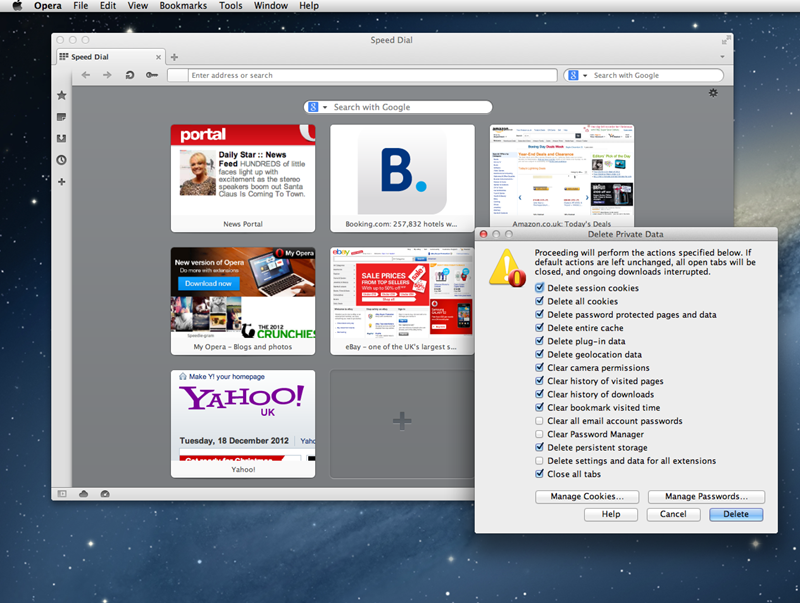
Opera 12.12 releases with tweaked Delete Private Data tool
Opera 12.12 has been released for Windows, Mac and Linux. This Norwegian cross-platform browser and email client -- also available as Opera 12.12 64-bit for Windows 64-bit platforms, is primarily a bug-fix release, with emphasis on security and stability.
It does, however, make changes to the Delete Private Data tool, promising a redesign and new option as well as fixing a potentially critical issue.
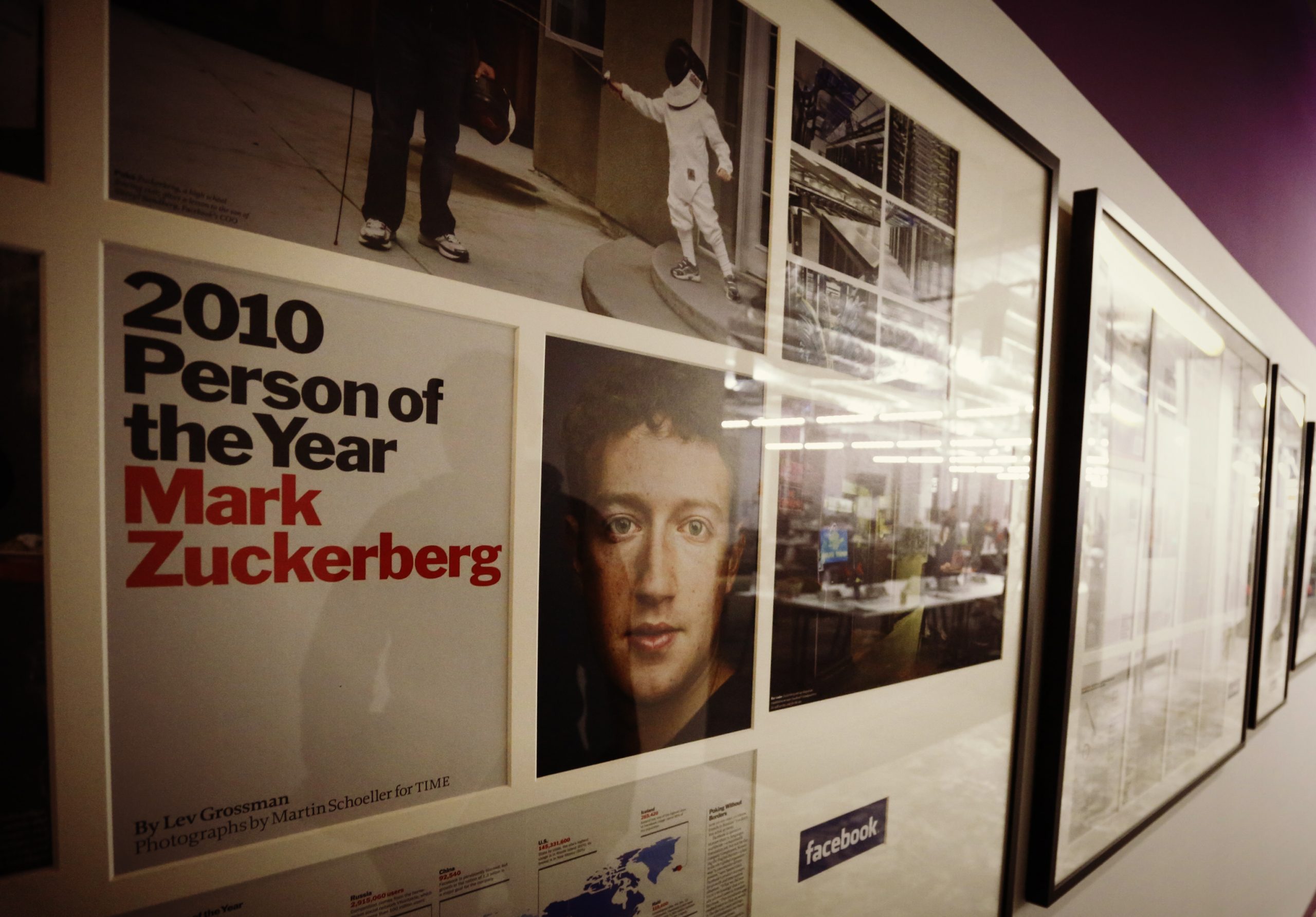
Mark Zuckerberg can take his billions to hell, I'm done with Facebook
I joined Facebook on Sept. 30, 2006 -- that's four days after opening to the public. The service promised so much, and I was excited by this compelling competitor to MySpace, which let customization run amok. But within short time, my interested declined; over the years I've come to loathe Facebook, which user interface is among the worst ever, as the site increasingly clutters with distracting elements. MySpace is now clean by comparison. Far worse: Privacy settings too often change, and what's different is often lost, even if temporarily, in the grotesque layout.
Overnight, Instagram, which Facebook now owns, announced radical rights policy changes starting in mid-January. The photo-sharing service grants itself a perpetual license to use and to sell your content. No permission required. That's one policy change too many for me. On December 9, I posted to Google+ my intentions to give up Facebook on the last day of the month. I thought more to empty the account of friends, information and content but not cancel -- for sentimental reason of having joined so much earlier than most everyone else. My intentions changed. I'm done with Facebook on December 31. I'd cancel today, but want intimates -- family and close friends -- to have forewarning.

Tell us what you think about Instagram's new 'screw you' policy
If you're planning to Instagram lots of photos this holiday, think again. They might be in next year's commercial marketing -- your embarrassing candid plastered on billboards everywhere -- and you have no real say about it. Big companies use the Digital Millennium Copyright Act of 1998 to keep you from sharing stuff. Instragram takes away such recourse for you, overnight announcing one of the biggest rights policy changes of the contextual cloud computing era. The photo-sharing site claims the right to sell your content, offering you absolutely no compensation for the privilege.
The change is snakey sneaky: "Instagram does not claim ownership of any Content that you post on or through the Service. Instead you hereby grant to Instagram a non-exclusive, fully paid and royalty-free, transferable, sub-licensable, worldwide license to use the Content that you post on or through the Service", but "Instagram Content is protected by copyright, trademark, patent, trade secret and other laws, and, as between you and Instagram, Instagram owns and retains all rights in the Instagram Content and the Service". You give up your rights to ownership simply by using the service, which gives you nothing.

This Chrome extension masks your email address
Sign up for an account with a website and you’ll usually see them promising not to share your details with others. “We hate spam as much as you do”, they might claim, although none of this seems to prevent the endless torrent of junk which pours into our inboxes on a daily basis.
It could be a better idea to simply never give out your main email address in the first place, then. And MaskMe is an excellent Chrome extension that can help.

SmokeScreen: hide what you're doing on the PC with the wave of a mouse
There have always been programs around to hide what you’re doing on a PC, and perhaps unsurprisingly they don’t have the best of names. The assumption seems to be that they’re only ever used by people who don’t want everyone else to know they’re looking at porn, say, or playing games when they should be working. But of course the reality is a little more complicated than that.
What if you’re shopping for birthday presents and the lucky recipient-to-be comes in, say? Or maybe you don’t want a work colleague to see you’re browsing a mental health website? There are all kinds of reasons why you might want to maintain your PC privacy, and SmokeScreen is a simple free tool which promises to help.

Richard Stallman: Ubuntu contains spyware, shouldn’t be installed or recommended
In a lengthy new blog post, Richard Stallman, founder and president of the Free Software Foundation, criticizes Canonical for its decision to add surveillance software to the latest version of its Ubuntu operating system, calling on users to give it a wide berth.
The "Home Lens" universal search feature built into Ubuntu 12.10’s Unity Dash, sends off details of users’ search requests to Canonical's servers. This information is used to integrate relevant Amazon search results. Stallman doesn’t have a problem with the adverts themselves, more the spying aspect. "Canonical says it does not tell Amazon who searched for what. However, it is just as bad for Canonical to collect your personal information as it would have been for Amazon to collect it," he explains.

Why don’t computer users take passwords seriously?
Passwords exist to keep our personal data secure. They prevent snoopers accessing our computers, and stop hackers from getting into our Facebook or email accounts. Passwords can be a pain at times -- thinking up something secure, and remembering it whenever prompted isn't always easy -- but they’re a necessary evil.
And yet, time and again we hear stories of people being hacked because they used simple-to-guess passwords, and/or the same passwords everywhere. Signing up to multiple websites with the same login you use for your email account is just asking for trouble, but people do it. The reason I bring this up is cybersecurity company ESET has just released new data from a Harris Interactive study that once again shows how lackadaisical we are when it comes to password protection.

Google Analytics Cookie Cruncher exposes your online activities
When you need to know more about the websites someone is visiting (you want to make sure your kids haven’t been straying on the darker side of the web, say) then checking their cookies has always been one option. But the information you’ll get is often very limited, maybe just to a domain name, and so won’t always be particularly useful.
Google Analytics Cookie Cruncher may be able to help, though, by focusing on Google Analytics cookies. These contain much more data, and in a standard format, so with just a little work you may be able to see the sites someone has browsed, the search keywords used to locate them, the date and time of the last two visits, and the number of times a site has been visited in total.

Document Metadata Cleaner 3 scrubs Office files of personal info
Create a document in Microsoft Office and you’ll usually find it includes metadata, information you might not realize was there: your name, company name, some computer details, version information, comments and more.
Windows makes it easy enough to remove metadata from individual documents (right-click > Properties > Details > Remove Properties and Personal Information), but you can also use the free Document Metadata Cleaner 3 to check and clean your entire system in a single operation.

Google Play demands reviewers' identities
If you wonder why "A Google User" suddenly is the most popular review commenter at Play, he (or she) is not. Today the store started a radical change, requiring Google Profile to place stars and comments for apps and other content. The days of anonymity are over, and good riddance.
Others disagree, and the move definitely isn't popular with some writers in our newsroom. All the typical justifications are back: People need anonymity to protect their jobs. So on and so on. Blah, blah, blah. I've heard these crap excuses before. You got an opinion, stand by it with your identity -- particularly something like an app, movie or music review.

Who don't you trust with your personal data?
About a month ago I posted "Whom do you trust with your personal?", containing two polls. The number of respondents is surprisingly low, so I'm back with them, using a slightly different approach. Perhaps the InterWebs will respond more to the negative trust question.
The results so far don't surprise me. Facebook is distrusted by a wide margin -- 57.42 percent of respondents. Microsoft and Google are most trusted (38.6 percent and 34.5 percent, respectively). But Google also is second-most distrusted (27.1 percent). Both polls provide just five major tech companies but opportunity for respondents to give their own answers. Nine percent trust no one.

Skip the crowded mall and get these great software deals online
This time of the year is a great one to pick up some technology bargains and the Downloadcrew Software Store is no exception. In addition to the regular deals, there are some extra-special Black Friday/Cyber Monday offers that run until the end of November.
We open with some great savings from CyberLink. PowerDirector 11 Ultimate, which bundles PowerDirector 11 with 22 NewBlueFX effects, is yours for only $99.99, a saving of 23 percent from MSRP. Better still, you pick up a free bundle worth $59.90 with every order! PowerDirector 11 Ultra is yours for $79.95, a saving of 20 percent from MSRP, also shipping with the free bundle. Media Suite 10 Ultra, which is CyberLink’s 11-in-1 multimedia suite, is yours for $89,95, or 31 percent off MSRP. PowerDVD 12 Ultra, is yours for $50, or 50-percent off MSRP.

Adobe responds to reported hack, closes connectusers.com
Users are becoming accustomed to Adobe security flaws these days. After all the company did occupy five of the top-10 spots in the recent Kaspersky report. While the "occasional" Flash bug can be dealt with, having one's user information stolen is a whole different story, but that is exactly what sources are claiming and Adobe is confirming by shutting down the service in question.
"Adobe is currently investigating reports of a compromise of a Connectusers.com forum database. These reports first started circulating late during the day on Tuesday, November 13, 2012. At this point of our investigation, it appears that the Connectusers.com forum site was compromised by an unauthorized third party. It does not appear that any other Adobe services, including the Adobe Connect conferencing service itself, were impacted".

Toolbar Cleaner reclaims your browser from unwanted add-ons
From full commercial applications to simple freeware tools, it’s surprising just how many setup programs will now try to install unwanted browser addons on your PC. And too many of these can slow your system down, make it less stable, maybe even compromise your privacy.
The deceptive techniques used by some software means these “extras” can be difficult to avoid, too. But fortunately help is at hand in the shape of the free Toolbar Cleaner, which can assist you in reviewing and taking control of your IE, Firefox and Chrome addons.