
Why it might be time to ditch WhatsApp for Signal or Telegram
By now you’ve heard the news: WhatsApp is currently rolling out an urgent update to all app users to close a major vulnerability that leaves unpatched phones at risk of being targeted by hackers. WhatsApp is owned by Facebook, and if you plan to stick with the platform, don’t wait for an update notification: access your phone’s app store now to force install the update.
Except maybe now is the time to go one step further: perhaps it’s the perfect opportunity to switch to a different messaging platform. One that’s not owned by one of the major tech companies, is equally -- if not more -- secure, and which works on more than just your phone. Enter stage left, Telegram, and stage right, Signal.
Privacy: Twitter 'inadvertently' collected and shared location data of some users
Social media services are hardly regarded as bastions of privacy, and the latest slip-up by Twitter goes some way to showing why. Twitter has revealed that it "may have accidentally collected location data" about users, that this data was shared with one of its "trusted partners".
Twitter blames the "inadvertent" data collection on a bug, and says that the issue affects some iOS users. It also says that precise location data was not collected or shared, but zip code or city-level only.
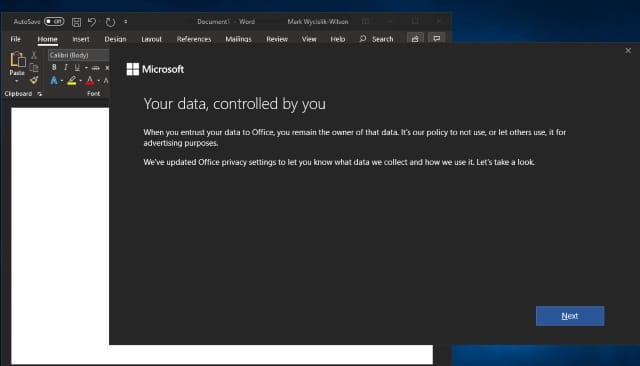
Privacy: Microsoft wants to (sneakily) collect more data from users via Office
Launch Word, Excel, PowerPoint or some other Microsoft Office app on your computer, and you'll be greeted by a dialog entitled "Your data, controlled by you". You'll then be invited to review your privacy settings to determine how much telemetry data Microsoft is able to collect through Office.
Earlier this month, Microsoft made reference to privacy and user feedback in its office suite, saying that "Office is built on trust". Now, the company is using a popup dialog to give users a chance to control the data they share; or, looked more cynically, to trick them into agreeing to share more data.
Photo storage app Ever is using millions of users' photos to build a facial recognition system
An investigation by NBC News has found that photo memories app Ever has been using billions of images uploaded by people to develop a facial recognition system without making it obvious to users.
Ever is a photo storage app that offers "free, unlimited private backup of all your life's memories". It's not until you delve into the company's privacy policy that you learn that in using the service, users are agreeing not only to have their photos used in facial recognition training, but also for Ever to sell the resulting technology to private companies, law enforcement agencies and the military.

Mozilla promises to delete private data collected by Firefox fix and apologizes for add-on outage
A slip-up by Mozilla stopped Firefox add-ons from working last weekend, and the company issued a fix followed by an update to the browser to get things back to normal. Mozilla has now issued an apology, a detailed explanation about what happened, and made a promise to delete the private data collected by those who used the first fix.
The initial fix that was issued via Firefox's Studies system required users to enable telemetry. Many people have such data-collection options disabled for privacy reasons, and Mozilla says that it will delete any data that it collected for its entire user base.
New privacy regulations mean your company needs better data management now
Do you know how every company you interact with uses your private data? Consider this: In December 2018, The New York Times revealed that tech and marketing companies use seemingly innocuous apps to gain access to users’ locations -- sometimes up to 14,000 times each day.
For example, the Weather Channel app funneled users’ location data to an IBM subsidiary, while Reveal Mobile, a location-based marketing firm, harvested users’ location data from code planted in more than 500 other apps. It’s safe to say that most people trusted the Weather Channel app to make daily decisions about what to wear or whether to take an umbrella. After the news broke, however, the Weather Channel’s status as a trusted institution was less certain.

Protecting card data and more in the contact center [Q&A]
Although many transactions are now carried out online, contact centers remain an important tool for businesses.
Call and contact center payment security solutions provider Semafone has had its latest Cardprotect (version 4) product validated by the Payment Card Industry Security Standards Council (PCI SSC) against the latest version of the Payment Application Data Security Standard (PA-DSS). This makes it one of the only companies in the industry to provide this level of certification.

Americans are overconfident about cybersecurity
A new study from Webroot that examines the cyber hygiene habits of 10,000 Americans, 200 in each state, reveals that 88 percent feel they take the right steps to protect themselves from cyberattacks.
However, just 10 percent scored 90 percent or higher on a cyber hygiene test, with the average respondent getting only 60 percent.

Privacy: HMRC forced to delete 5 million unauthorized voice recordings of UK taxpayers
The UK tax authority, HM Revenue and Customs (HMRC), has been forced to deleted voice recording of five million taxpayers. The recordings were made without consent, which the Information Commissioner's Office (ICO) said constituted a "significant" breach of data and privacy rules.
Before being allowed to access HMRC services, callers were required to repeat the phrase "My voice is my password". This recording was fed into the authority's biometric voice ID database, and violated GDPR rules.

It is getting harder than ever for VPNs to break through the Great Firewall of China
The censorial Great Firewall of China is famed throughout the world for the restrictions it places on Chinese citizens. Internet users play a game of cat and mouse, seeking tools and methods for slipping through the censoring and spying that the government enforces.
But it is getting harder and harder to evade the Great Firewall. VPNs that once allowed unfettered access to the greater internet are quickly stomped on by the Chinese government, just as happens in Russia. At the end of March, a new update to the firewall blacklisted hundreds of VPN servers and now fewer VPN tools than ever work in China. So which is the best VPN for those fighting the Great Firewall?
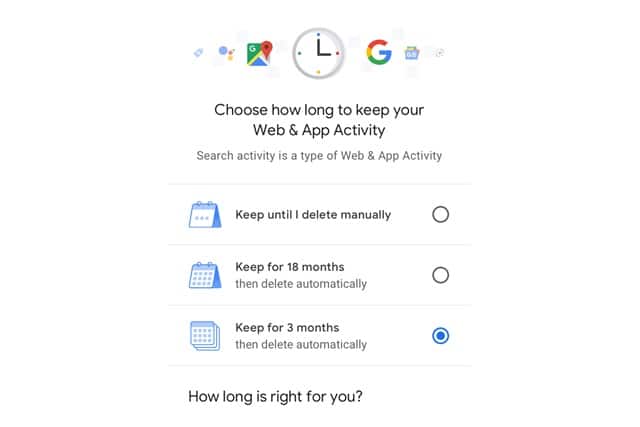
Google to roll out auto-delete controls for location history and activity data
Google has announced that it is giving users greater control over how long the company holds on to location history and activity data.
A new time-limiting feature makes it possible to have information such as account activity and location data automatically deleted after a period of time. The privacy-focused move comes after feedback to Google which found users wanted the company to provide simpler ways to manage or delete the private data it holds.

More than half of companies have sensitive files open to all employees
The latest data risk report from security company Varonis reveals that 53 percent of companies have at least 1,000 sensitive files open to all employees, putting them at risk of data breaches.
Keeping old sensitive data that risks fines under HIPAA, GDPR and the upcoming CCPA is a problem too. The report finds over half of data is stale and 87 percent of companies have over 1,000 stale sensitive files, with 71 percent having over 5,000 stale sensitive files.
Automated governance platform helps businesses use data safely
Data privacy is a major concern for businesses, made more acute by the raft of new compliance and data protection rules appearing around the world.
Immuta is launching a platform with no-code, automated governance features that enable business analysts and data scientists to securely share and collaborate with data, dashboards, and scripts without fear of violating data policy and industry regulations.

New York attorney general to investigate Facebook for scraping 1.5 million users' email contacts
Following the revelation that Facebook "unintentionally" scraped and uploaded 1.5 million users' email contacts, the New York attorney general's office has announced that it is opening an investigation into the social media giant.
Attorney general Letitia James said that it is "time Facebook is held accountable for how it handles consumers' personal information".

Privacy: Facebook 'unintentionally' scraped and uploaded 1.5 million users' email contacts
It seems that barely a week passes without another Facebook scandal emerging, and this week is no different. The company has revealed that it accidentally uploaded the email contacts of up to 1.5 million users who signed up for the social network since 2016.
A glitch meant that new users who signed up for email password verification had their email contacts scraped and uploaded without consent. As of last month , Facebook stopped offering this verification option to first-time users, although it's not clear if this is because of the privacy issue.