Consumers' privacy concerns not backed by their actions
A large majority of people say they are concerned about their online privacy, but this is not reflected in their actions according to a new study.
The survey from Blue Fountain Media reveals that 90 percent of respondents are very concerned about their internet privacy and 48 percent wish 'more was being done about it'.
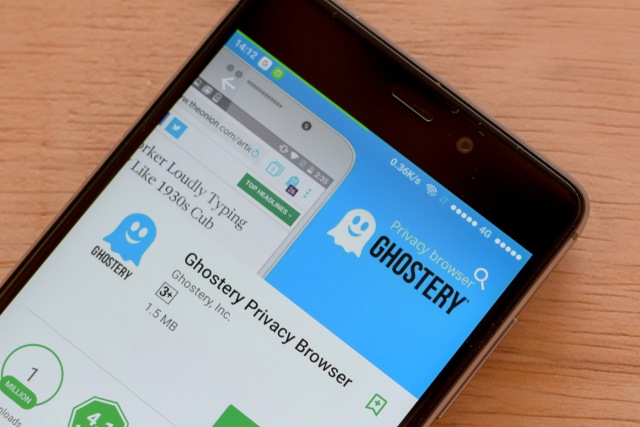
Ghostery makes a huge privacy gaffe when emailing customers about GDPR
Ghostery is a company rooted in privacy, so that the firm should accidentally reveal users' email addresses would come as something of a surprise. Over the weekend, however, this is exactly what happened.
The company -- as many others have been doing recently -- emailed its users with details of its updated privacy policy that complies with GDPR. Unfortunately, the message exposed the email addresses of hundreds of customers as the company failed to make use of the BCC field.

How to check which of your conversations Alexa has been recording -- and delete them
There was concern recently when a couple of Alexa users found that the smart assistant built into their Amazon Echo had not only recorded a conversation they had been having, but had sent it to an acquaintance.
Since this story broke, it is entirely understandable that other people who have Alexa listening in the background are worried that something similar could happen to them. If you want to check whether Alexa has been secretly/inadvertently recording you (delete according to your prejudices), we can show you how. If you find any recordings you want to ensure no one else hears, you can also delete them.

Apple to add details of government app takedown requests to transparency report
Apple has announced that it is to expand the scope of its twice-yearly transparency report. Starting with one of its next report -- the one which will cover the period July 1 to December 31, 2018 -- the company will share details of government app takedown requests.
The announcement was tucked away in the latest transparency report, in which Apple shares details of "Government and Private Party Requests for Customer Information". The company says that it takes the protection of user data very seriously, and this addition to the report sees Apple demonstrating this by providing even more information.
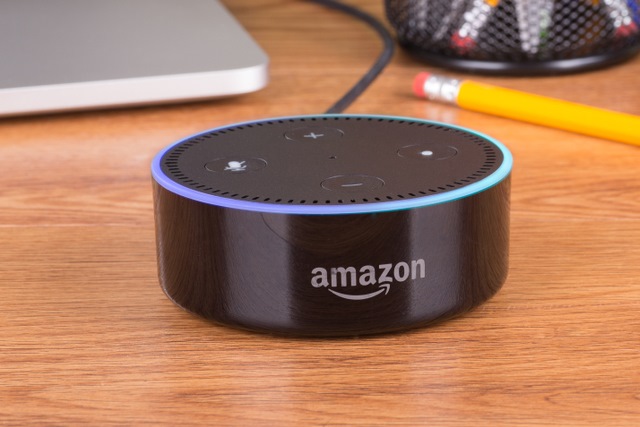
Amazon Echo secretly records couple's conversation... and then sends it on to a contact
There have long been accusations that digital assistants such as Amazon's Alexa and Apple's Siri are constantly listening in on and recording conversations, and recent events in Portland, Oregon are simply going to serve as extra fuel for conspiracy theorists.
A couple were disturbed to find that Alexa not only recorded a private conversation they had in their house, but then sent it on to a colleague as a message. Danielle says she and her husband felt it was "a total privacy invasion", and it is unlikely that Amazon's explanation will do anything to encourage her to use her Echo every again.

Some US websites are blocked in the EU as GDPR day arrives
It has been impossible to avoid stories about GDPR over the last few weeks and months, and today the new rules regarding privacy and personal data come into force across the EU.
Inboxes across Europe have been flooded with GDPR-related emails as companies have rushed to comply with the new regulations that require them to seek consent from users to collect data about them. But now GDPR day has arrived, dozens of US websites are blocked in the EU.
Facebook to ask all users to review privacy settings
With the recent scandals involving Facebook coupled with the impending arrival of GDPR in Europe, there has been a lot of talk about privacy recently. Now the social networking giant is to start asking all of its users to review information about privacy and "how to control their experience".
The company says that it introduced updated data policies and made privacy settings easier to find, as well as making other changes, in Europe, and now is rolling out the same things to the rest of the world.

Facebook asks British users to submit their nudes as protection against revenge porn
Following on from a trial in Australia, Facebook is rolling out anti-revenge porn measures to the UK. In order that it can protect British users from failing victim to revenge porn, the social network is asking them to send in naked photos of themselves.
The basic premise of the idea is: send us nudes, and we'll stop others from seeing them.

Download all the information Apple holds about you from its new Data and Privacy portal
If you've ever been curious about just what data Apple has gathered and stored about you over the years, now you can find out -- if you're in Europe, at least.
The iPhone-maker has just launched a new Data and Privacy portal in order to comply with GDPR which comes into force across the EU from Friday. The website lets you download pretty much every piece of data that Apple has collected about you.

Amazon is selling its face recognition technology to US law enforcement agencies
A Freedom of Information Act (FOIA) request by the American Civil Liberties Union (ACLU) shows that Amazon has started selling facial recognition software to at least two US law enforcement agencies.
A report published by the ACLU shows that the online retailer has been advertising its facial recognition system -- known as Amazon Rekognition, and described as "deep learning-based image and video analysis" -- to numerous states. Testimonials from the Orlando, Florida Police Department and the Washington County Sheriff’s Office in Oregon suggest that the system is already in use.

Zuckerberg's appearance in front of the EU was an utter joke
Yesterday, Facebook CEO Mark Zuckerberg appeared in front of members of the European Parliament to answer questions and to address concerns that the EU has about the social network in general, and its use of private data in particular -- thanks largely to the Cambridge Analytica data scandal.
At least that was the idea. What actually happened was nothing short of a farce, with Zuckerberg smugly sitting back and choosing which questions to answer, neatly avoiding any he was uncomfortable with. It was little more than a PR-cum-damage-limitation exercise for the Facebook founder... and it didn't really go very well.

Trend Micro launches Zero Browser for iOS -- a web browser that protects your privacy
Trend Micro has a new privacy-focused mobile browser for iOS users called Zero Browser. It has been designed specifically to block a range of tracking techniques, including the invasive activity-recording "session replay" method.
The company says that the browser was created to overcome the shortcomings of existing "incognito" browsing modes and brings an extra level of privacy to iPhone, iPad and iPod touch users.
Microsoft will roll out 'key' GDPR rights globally... not just in Europe
The clock is ticking for the arrival of GDPR (or General Data Protection Regulation) in Europe. As of May 25 -- this Friday -- new regulations will give people greater access to the data companies store about them and the right to have it deleted.
Microsoft is among the global technology firms that will have to comply with the laws in Europe and -- pointing out how it appreciates "the strong leadership by the European Union on these important issues" -- the company says that it will also roll out some of the benefits of the privacy legislation on a global basis. It will be known as Data Subject Rights.

Half of employees not aware of their company's GDPR preparations
With GDPR coming into force at the end of this week, new research from Egress Software Technologies found over half of respondents were in the dark about what their company was doing to prepare for the legislation.
Only 43 percent of the 1,000 respondents were aware of preparations, there is also a lack of awareness surrounding personal data in general. One in 10 are unaware they are handling personal data in their day-to-day jobs and 57 percent are unable to correctly identify when it would need to be protected.

Comcast website leaks details of Xfinity users -- including router passwords
Security researchers have discovered a bug in the Comcast website that makes it possible to gather information about Xfinity users. As well as customer data such as home addresses, it is also possible to access wireless network details including passwords.
The bug was reported by Karan Saini and Ryan Stevenson after they found it was possible to use the Xfinity activation website to access customer data using nothing more than a customer account ID and that customer's house or apartment number.