Ukraine conflict puts organizations’ cyber-resilience to the test
Russia’s invasion of Ukraine has provoked a massive rally of hackers to join both sides of the conflict and take up arms in the cyber-war. As has been the case in cyberattacks of recent years, the consequences of this will affect organizations way beyond the initial intended target. For example, in June 2017 French company Saint-Gobain was forced to halt its operations as a result of the NotPetya attack, a Russian cyberattack targeting Ukraine that resulted in over €80 million of losses in company revenue.
As a result of a sharp increase of cyber-attacks since the beginning of the conflict, from DDoS, new data wipers, phishing campaigns and malware, organizations worldwide should take immediate action to improve their cyber-resilience and limit the damages that any spillover could have on their business.

Cyberwarfare plays growing role in the Russia-Ukraine conflict
As we reported last week, cyberattacks are being used on both sides of the Russia-Ukraine conflict. Two new reports out today take a deeper look at how the cyber aspect of the conflict is developing.
Accenture's Cyber Threat Intelligence team has been looking at how threat actors have been dividing along ideological lines. Meanwhile Aqua Security's Team Nautilus has been analyzing the cloud technologies used in the conflict.

Is Microsoft to blame for DuckDuckGo 'censoring' Russian search results?
We recently reported that privacy-focused search engine DuckDuckGo had taken the decision to downrate sites that publish Russian propaganda and disinformation. At the time, CEO Gabriel Weinberg said that the move came because the company was "sickened by Russia’s invasion of Ukraine and the gigantic humanitarian crisis it continues to create"... but this may not be the whole story
The announcement by DuckDuckGo caused upset on the left and right of the political spectrum, but it seems that the ire and claims of censorship might have been misplaced. It is actually Microsoft that is to blame. Or maybe the EU.
Facebook and Instagram will permit the promotion of violence against Russians and calls for the death of Putin
Meta has announced a temporary change in its hate speech policies, meaning that users in some countries will be allowed to post content that would otherwise have been banned. The change means that users of Facebook and Instagram will be able to promote violence against Russian soldiers, as well as call for the death of President Putin, without fear of censorship.
Posts that include violent speech such as "death to the Russian invaders" are to be permitted in numerous countries, but there is the matter of the context of the invasion of Ukraine to keep in mind. At the same time, the privacy-focused search engine DuckDuckGo has surprised many by announcing that it will downrate sites that publish Russian propaganda and disinformation.

Buying the Zorin OS 16.1 Pro Linux-based operating system can help Ukraine
Zorin OS is one of the best Linux-based operating systems around, thanks to its focus on elegance and simplicity. It offers familiarity to Windows-switchers too. Ultimately, Zorin OS is a solid distribution for both Linux beginners and experts alike.
Today, the first "point" release of Zorin OS 16 becomes available for download. Zorin OS 16.1 comes with security patches plus other goodies, such as the great LibreOffice 7.3 office suite and other updated packages.

HBO finally pulls out of Russia as parent company WarnerMedia makes its exit
In the span of the last 13 days, we have seen a steady, but ever-increasing flow of major companies exiting the Russian market. Big names who have announced they will be pausing business in Russia include Microsoft, Google, and Apple, as well as non-tech entities such GM, Ford, McDonald’s, Starbucks and VW. That’s just scratching the surface.
Today will be another big jolt to the country’s economy. Or, at the very least, the people’s lifestyle, as WarnerMedia is now exiting Russia.
Almost 90 percent of cyberattacks in March targeted against Russia and Ukraine
We're used to a high volume of cyberattacks originating from Russia, but in an interesting turnaround following the invasion of Ukraine, 70 percent of cyberattacks in March have been targeted at Russia.
Research from Atlas VPN shows a further 19 percent of attacks targeting Ukraine. The USA is the third biggest target but attacks targeting the country accounted for only five percent of the total.
Microsoft suspends sales of new products and services in Russia
It’s hard to imagine that Vladimir Putin expected quite the response his invasion of Ukraine generated. In addition to hard hitting sanctions, Russia has seen its media censored across the world, sporting events pulled, and hacktivist collective Anonymous has been knocking many state-sponsored sites offline, and much more.
Tech firms have also shown their anger towards Russia in a number of ways, and now Microsoft -- which previously revealed what it was doing to help the people of Ukraine -- has taken the decision to suspend all new sales over there.
Why we shouldn't try to kick Russia off the internet
The Russian invasion of Ukraine has sparked condemnation around the world and led to the imposition of a range of sanctions from the economic to the sporting and the cultural.
There have been calls to censor media linked to the Russian state too, with the European Union taking the step of banning the distribution of content from outlets like Russia Today.

How neutral is Kaspersky in the Ukraine cyberwar?
Kaspersky has been trying to distance itself from ties to the Russian state for several years, but the invasion of Ukraine has cast some doubt on its success.
The Cybernews site reports that Kaspersky Lab is protecting the resources of the Russian Ministry of Defense along with other high-profile Russian domains including Russia Today, TASS news agency, and Gazprom bank.
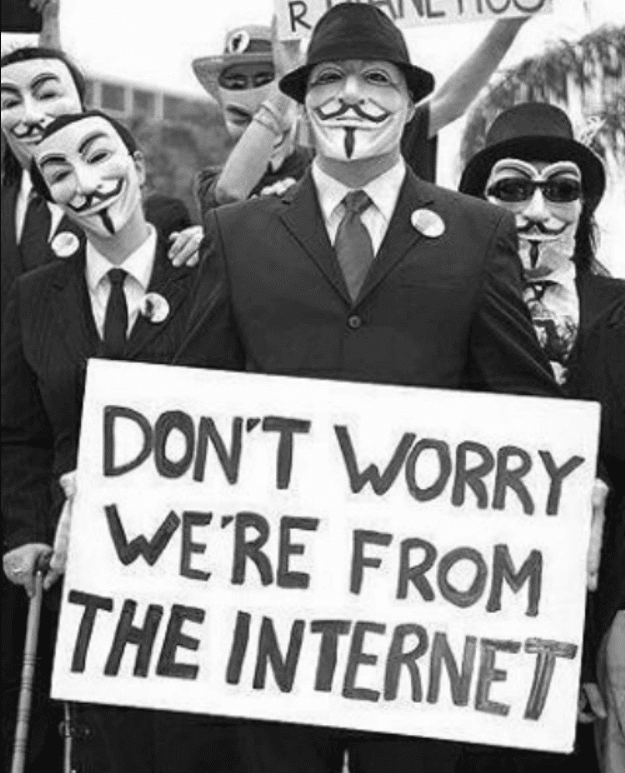
Ukraine conflict: Anonymous (and the internet) vs. Russia [Continuously updated]
A few days ago, Russia launched a full-scale invasion of the sovereign nation of Ukraine. Likely most of you have seen at least some of the endless coverage that currently blankets the airwaves. But TV is only giving you part of the story; you can learn a lot more by nosing around online. For the past several days I have kept a running update of what hacktivist collective Anonymous has been up to. The group has been busy and they have made the Russian government even busier, hacking their various state-run 'news' services, such as RT (Russia Today). You can look back at the original post and the multiple updates that were added to it on a daily basis.
Now it’s time to start again and unlike the original story, this time we are letting you know there will be updates that you’ll want to check back in on. We will post them as they happen, which could be once or more in a day. We will begin with what is happening today, March 2.
Google explains how it is helping in Ukraine
Google's president of global affairs, Kent Walker, has detailed the various ways in which the company is offering support to the people of Ukraine following the Russian invasion.
The announcement comes after Microsoft made a public declaration of support for the Ukrainian nation and condemned the actions of Russia. Google is offering not only financial support, but also helping to improve security, safety and the dissemination of trustworthy information about the unfolding situation in the country.
Winter is here
Gary Kasparov, the famous Russian chess player wrote a book in 2015 titled "Winter is Coming" which chronicled the collapse of the Soviet Union, charted the rise of Putin, and painfully captured the many missed opportunities of the West to contain Putin. The book also laid out historical reasons that Putin invaded Ukraine in a chilling fashion. Now that "Winter is Here," Putin initiated a ground war that might evolve to other geographies and realms, including information operations and cyber.
The prospect of a full-blown Cyber war -- once remote -- seems more likely if the Russian invasion of the Ukraine escalates and spills out of Eastern Europe and enters the highly-connected world in which we live. How bad can it be? No one fully knows, but cybersecurity professionals are no strangers to Russian cyber-attacks.
Microsoft reveals how it is responding to the 'tragic, unlawful and unjustified invasion of Ukraine'
Elon Musk has taken steps to help ensure that the people of Ukraine have internet access while their country is under attack from Russia, but he is far from being the only member of the tech community reaching out to assist.
Microsoft is also doing its part to help those in need during the crisis, including fighting off cyberattacks carried out by Russia. The company's president and vice chair, Brad Smith, has penned a blog post outlining just what it is that Microsoft is doing to help with humanitarian appeals, blocking state-sponsored disinformation, as well as keeping its own employees safe.
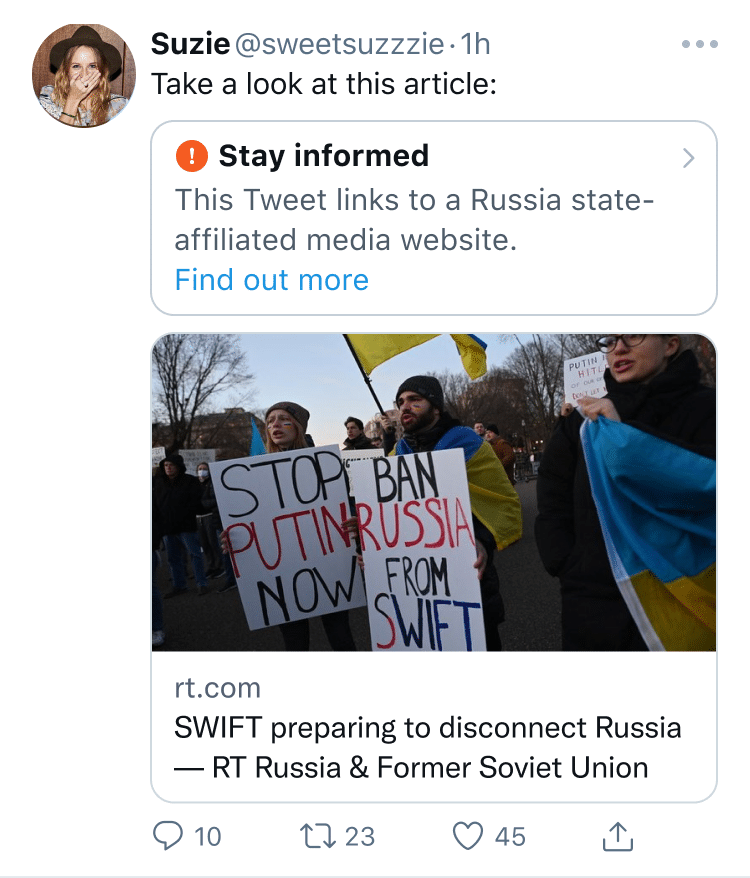
Ukraine conflict: Twitter starts labeling tweets that link to Russian state media
Russia’s invasion of Ukraine has brought immediate condemnation from other countries, and while they won’t be sending in troops to help the Ukrainian fight-back, the barrage of sanctions coming from all angles is certainly going to hit Russia hard.
We’ve been seeing companies and organizations doing their bit to put the pressure on Putin's Russia too -- hacktivist collective Anonymous has certainly been hard at work here -- and today, Twitter has announced it will increase its fight against misinformation coming from Russian media organizations.