

Apple's space ambitions are real

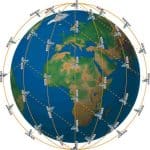
Last summer, a couple weeks before the iPhone 13 announcement, Chinese market analyst Ming-Chi Kuo wrote that the iPhone 13 would include satellite communication capability. Huh?
This was a bolt from the blue. No other Apple analysts were writing about satellites at that time. And while Ming has a very good track record based on finding out from Apple’s supply chain about likely details in upcoming products, there was nothing about this satellite tip that even made sense, since it didn’t seem to involve hardware at all.
How to quickly end the war in Ukraine -- deploy $10 laser pointers

President Zelenskyy of Ukraine is begging NATO for a no-fly zone they can’t risk providing. So I came up with another solution -- $10 laser pointers.
Buy 100,000 laser pointers and give them to Ukrainian mothers (not kids -- too dangerous). Even the puniest lockable laser pointer (notice the keys?) can temporarily blind a pilot at a distance of more than a mile, so what will 100 non-puny laser pointers do to the same aircraft? It would not only create an effective no-fly zone, it might kill hundreds of Russian pilots before they figure it out.
Einstein's Fridge: Who knew the history of thermodynamics was so much like high school?

Almost 50 years ago I had the misfortune to take two statistics classes at the same time. One was a required introduction to statistics and the other was econometrics. Don’t ask why I took them both -- I don’t remember. But I do remember one day in the Intro to Statistics class when another student asked about this distribution plot (above).
"What was it? What did it indicate? What could it be used for?" they asked. "It’s nothing," said the TA. "It’s useless." But I had seen that shape before, in econometrics, where they called it a split normal distribution. that was said to be good for displaying time-series data. So not useless at all.
Starlink is a global ISP built at ZERO COST to SpaceX, enabling NASA's Artemis launch
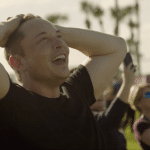
There is lots of good news lately for SpaceX, especially NASA choosing the Hawthorne, CA-based company to build a $2.89 billion lunar lander for NASA’s Artemis Moon landing slated for 2024. Key to that single-source contract, which eliminates two competitors including Jeff Bezos’ Blue Origin, was SpaceX’s willingness to restructure payments to fit the $750 million appropriated by Congress this fiscal year for the project.
Already the lowest Artemis bidder, Elon Musk’s company was willing to make the deal work for the customer, which is unusual thinking for space contractors, with many asking, Where did SpaceX get the money?
Half a dozen little 2021 predictions about life after COVID-19

Six hundred and seventy-five thousand Americans died of the Spanish Flu in 1918, back when the total population of the United States was 103 million. In the current pandemic, American deaths are already above 540,000 (remember when a projection of 160,000 deaths seemed crazy?) but our population is now 331 million. While COVID-19 will undoubtedly kill more Americans than did the Spanish flu, the percentage of the population dying will be much lower than the 0.65 percent death rate in 1918. But the numbers are close enough that one might guess the long-term impact of this pandemic could be very similar to that one.
I don’t think it will be. I think this pandemic will have greater long-term effects than that of 1918 and the reason comes down mainly to technology.
2021 Prediction #6: COVID-19, Clubhouse, and The Great High School Reset
To this point in my tech predictions for 2021 I have ignored COVID-19, which we all do at our peril. Now that we know the pandemic is real, that it won’t just disappear, and that half a million people in the US (so far) are dead from it, what are predictable longer-term impacts? I see plenty changing in how we work, how we use social media, and how education has generally failed. Coming out the other side of this mess several aspects of life will be different, but school probably won’t be one of those.
I have an unusual perspective on these times since I am a parent of three sons (19, 16, and 14), I have a background in IT, yet my first job out of college 48 years ago was teaching high school biology, chemistry, physics, and vocational agriculture. Oh, and I home-schooled two of my kids for two years ending about 18 months before the pandemic began.
2021 Prediction #5: Apple (and maybe Google) saves the world
Back on January 23, the New York Times published an Op-Ed piece by Kate Murphy titled America Has a GPS Problem, citing fear at the highest levels of government and industry that international bad actors might bring down the Global Positioning System satellite network, running your Tesla into a guardrail in the process. It’s just the sort of story you’d expect to read here, rather than in the Times, but what the heck. And the story is absolutely correct: we are all in danger. But Ms. Murphy, beyond wringing her hands, doesn’t say how the crisis will be averted or who will do the averting. I predict that Apple will fix the problem and save the day and they’ll probably do it this year.
The military and intelligence communities have long been worried that China or Russia could shoot down some or all of the 24 GPS satellites, blinding our strategic weapons in the process. It’s literal shooting-down, too, since the anti-satellite weapons demonstrated so far have been kinetic -- dumb rocks smashed into our satellites at incredible speed, knocking them from the sky and requiring incredible precision. So far only China and Russia have this offensive capability. But Ms. Murphy and the Times expand the population of bad guys beyond China and Russia to include enemies jamming, spoofing, or otherwise hacking GPS, which could be anyone -- Iran, North Korea, even groups of private individuals.
2021 Prediction #4: Wi-Fi 6 is a bust (for now) as Bufferbloat returns thanks to ISP greed
Remember Bufferbloat? It’s a subject I was among the first to write about a decade ago, starting with a prediction column just like this one in 2011. The problem at the time was that every video or audio application -- the big bandwidth consumers -- was trying to solve performance issues through pre-buffering. You’d launch Netflix (just one example -- they all did it) and it would pause for a few seconds filling a huge buffer intended to smooth-out any playing glitches. Except performance didn’t improve and in fact got worse because of buffers buffering buffers. These extra buffers were defeating TCP/IP’s own flow control mechanisms, often leading to total failure of the connection. Jim Gettys from Bell Labs called it Bufferbloat, then Jim and Dave Taht spent the next three years or so fixing the problem, or so they thought.
Well Bufferbloat is back.
2021 Prediction #3: Get ready for more GameStops as hedge funds are no longer the only bullies in town
Today is my birthday. Thirty-five years ago today I was drinking coffee in my Palo Alto kitchen when the Space Shuttle Challenger exploded on TV. Thirty years ago today my father fell over, instantly dead of a heart attack while walking between gates in the American Airlines terminal at DFW. I was expecting a call, just not that one. Life is full of surprises and some of them aren’t good, as hedge funds are learning this week while their fortunes are determined by millennial traders in shares of GameStop, the venerable video game retailer. This is all part of the new normal.
Day Trading of stocks and options was a big deal during the dot-com era 25 years ago. "Traders" intent on closing-out their positions at the end of each day would hype this stock or that on Internet discussion boards, counting on artificial volatility and good timing to both buy and sell (or sell and buy) before the other guy -- one trader against the world. That’s NOT what is happening here with GameStop, AMC, Bed Bath & Beyond, Blackberry, etc. This is coordinated action of thousands of traders toward a specific and guaranteed profitable end.
2021 Prediction #2: Peak Facebook as Zuckerberg runs out of role models
If 2020 was a Trump- and Covid-inspired year of social media excess, 2021 can’t help but see some reversion. But it’s more than that, with big Internet companies coming under greater regulatory scrutiny worldwide, especially Facebook and Google. This year is going to be a tough one for Mark Zuckerberg, especially. And while I don’t expect Zuckerberg to abandon his CEO job this year, he eventually will, simply because it isn’t as much fun as it used to be and there will come a point (maybe in 2022) when leaving the top job will help Facebook’s stock.
At this moment there’s reportedly a bot operating on Telegram selling for $20 or less the personal info including phone numbers of 500 million individual Facebook users. What’s the logical corporate response to a gambit like that? Nobody knows because nobody has been in Facebook’s particular position before.
2021 Prediction #1: Trump will do fine without Twitter, Instagram, and Facebook
I’m no Trumper. This prediction has nothing to do with politics and everything to do with how social media actually works. Following the U.S. Capitol riot of January 6th, President Trump was bumped from nearly all social media, even YouTube, with many of those changes subsequently made permanent. These moves led to speculation that Trump would be hobbled without his beloved accounts, his immediate impact on public discourse muted without the ability to tweet. While this may be true in the very immediate sense, it won’t last. Even Trump, the technical luddite, will figure it out and roar back shortly with or without those accounts.
This prediction is very similar in thinking to a column I wrote last August -- President Trump thinks he can shut down WeChat: It won’t work. That column made the simple point that such bans are hard to make stick, even for a U.S. President, simply because of the international nature and foreign hosting of the WeChat service.
Bob's 2021 tech predictions: What a difference a pandemic makes
This is when I typically generate a list of technology predictions for the coming year. The challenge this year isn’t coming up with predictions, it’s finding a moment of calm to share them when people are most likely to read. With a pandemic rolling along and the nation in political and economic crises to boot, such a moment of clarity isn’t likely to ever arrive, so I’ve decided just to write the damned columns and see what happens.
This is the column in which I’ll review my predictions from 2020 to see how I did and whether it is even worth your while to read further. Having done this for over 20 years, historically I’m correct abut 70 percent of the time, but this year could be a disappointment given that I’m pretty sure I didn’t predict 390,000 deaths and an economy in free-fall. We’ll just have to see whether I was vague enough to get a couple right.
2020-21 is the asterisk academic year

A few weeks ago I wrote a column about helping our children cope with distance learning as we hide from COVID-19. Since then I’ve watched the progress of my own children -- Cole (16) and Fallon (14) are still at home -- and I’ve spoken to friends and teachers all over the world. It isn’t going well. In fact, the whole distance learning experience has been a disaster that will ultimately result in this academic year being forever assigned an asterisk to separate it from every other academic year, before or after.
I hope your experience is better, but I doubt that is the case. And the fact that people aren’t generally saying what I am here is because there’s lag in the system and the teachers and school administrators, frankly, don’t want to admit just how bad things are. But shit will shortly hit fans all over the world, I assure you, and the impact will last for years to come.
Tesla won the self-driving car war, it just isn't telling us
There was a time when I could figure something out, just plain figure it out of raw data, then blurt my conclusions out to the world through this rag just to see what would happen. And what would inevitably happen was a thousand experts would pipe up just to tell me to pipe down, saying that I was too frigging stupid to read, much less write. Except occasionally I got it right (pure luck) so, damn it, they had to keep reading my work. Well I’m back to try again and here it comes: When the history of autonomous cars is written, the winner will be Tesla. Heck, I think it’s already won.
Autonomous cars are like the graphical user interface, object-oriented programming, the Internet, or yet another K-pop boy band: you can know in advance they are coming and will define the future, you just can’t be quite certain when they will arrive or exactly what they will look like. We all now know there will come a time when most cars will be electric and they will be able to drive themselves. The only question is when will this finally happen?
Mark Zuckerberg's pact with the Devil
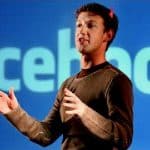
This is a column about Mark Zuckerberg and Facebook, but it starts with an old story about Intel and Monsanto from my book Accidental Empires. Stick with me here and you’ll soon understand why…
There was a time in the early 1980s when Intel suffered terrible quality problems. It was building microprocessors and other parts by the millions and by the millions these parts tested bad. The problem was caused by dust, the major enemy of computer chip makers.
Robert X.'s Bio
Robert Cringely has worked in and around the PC business for more than 30 years. His work has appeared in The New York Times, Newsweek, Forbes, Upside, Success, Worth, and many other magazines and newspapers. Most recently, Cringely was the host and writer of the Maryland Public Television documentary “The Tranformation Age: Surviving a Technology Revolution with Robert X. Cringely.”
© 1998-2024 BetaNews, Inc. All Rights Reserved. Privacy Policy - Cookie Policy.