




Mass registration of fake online shops originates from China
A new campaign uses mass registration of fake online shop domains to impersonate legitimate retailers, facilitate financial fraud, and in certain instances, distribute malware through counterfeit checkout systems and redirect payloads.
Identified by the research division of BforeAI, analysis of the campaign’s registration and DNS telemetry indicates a well-structured operation with distinct clusters, primarily originating from Chinese infrastructure providers and utilizing domain privacy services to obscure attribution.

Motorola’s $299.99 moto g power 2026 adds water resistance and a larger display
If you’re in the market for a new smartphone to start the new year and don’t want to spend a fortune, Motorola has announced the moto g power 2026. The new device combines a large display, reinforced build, updated cameras, and latest Android software.
The phone is powered by a MediaTek Dimensity 6300 processor, paired with 8GB of RAM. Motorola also includes virtual memory expansion through RAM Boost, which allows the phone to allocate storage as temporary memory when required.

Revolut Mobile lands in the UK with impressive roaming data
Fintech giant Revolut has started to roll out its own mobile network across the UK. Revolut Mobile is designed – like Revolut’s banking products – with travel in mind, including a generous roaming package as standard.
The network will use Vodafone’s infrastructure and a special introductory price is available for anyone who jumps on board early on. There is a waitlist in place, with the full launch due in January 2026.

Citizen developers dominate, the rise of AI, code as the new Latin -- development predictions for 2026
Software development, perhaps more than any other area of IT, has seen a major impact from the rise of AI. It’s become easier for anyone to develop apps but that doesn’t come without risks.
Industry experts look ahead to what we can expect to see in the development space, from AI and more, as we head into 2026.

Mozilla has a new CEO and plans to make Firefox an AI browser
Mozilla now has a new CEO in Anthony Enzor-DeMeo, and this should be news enough. But the appointment has been accompanied by the announcement that the organization plans to transform Firefox into an AI Browser over the course of the next three years.
More than this, Firefox is set to evolve into something more than just a web browser. Details are scant at the moment, but the new CEO says that “Firefox will grow from a browser into a broader ecosystem of trusted software”.

Microsoft now runs resource-hogging AppX Deployment Service at Windows 11 startup
Earlier last week, Microsoft released a cumulative update for Windows 11 in the form of the KB5072033 update. In addition to the usual raft of fixes, changes and additions, there was a curious inclusion that Microsoft did not really shout about.
The company has taken the decision to make the AppX Deployment Service (also known as Appxsvc) an automatic startup item. While Microsoft says this is to improve reliability, it is something connected to reports of high resource usage.

Digital bank Monzo gains a full European banking licence
UK-based digital bank Monzo is ready to expand into Europe. The fintech has acquired a full banking licence from the Central Bank in Ireland, as well as from the European Central Bank.
Monzo has gone from strength to strength since it launched back in 2015. Now the company’s European headquarters will be in Dublin, where it will be regulated by the Central Bank of Ireland.

Governing AI where work actually happens [Q&A]
Enterprises are rushing to embrace AI copilots and browser-based assistants, but most struggle with governing how employees actually use them. Sensitive data gets uploaded, prompts leak strategy, and risky extensions run unchecked, all outside the reach of traditional network or app-layer controls.
We spoke to Michael Leland, field CTO at Island, to discuss why the UI surface is becoming the most strategic security layer as SaaS and AI copilots flood enterprise workflows.

Practical quantum, encryption risk and government regulation -- quantum computing predictions for 2026
It’s the time of year again when industry executives like to peer into their crystal balls and try to predict what the future might hold.
We’ll kick off this year’s roundups with a look at quantum, something which has been hovering on the edge a major breakthrough for a few years now but, so far, has always seemed to be just out of reach from a commercial perspective. Is that set to change in 2026?

Chainguard aims to improve stewardship of mature open source projects
What happens to open source projects when they reach maturity? When a project has fulfilled its purpose and become foundational to customer workloads, it no longer requires a roadmap of sweeping changes. What it needs is safe, predictable maintenance after the creators have moved on.
However, it remains essential that stays OSS safe and supported when its maintainers are ready to step away, or the project no longer needs constant upkeep. To address this challenge Chainguard is launching EmeritOSS, a model for supporting mature open source projects and long-term OSS sustainability for the community.

Zencoder aims to end vibe coding and bring engineering discipline
While chat interfaces have popularized AI coding, uncoordinated agents can produce ‘slop’ -- code that looks correct but fails in production or degrades with iteration.
To address this problem Zencoder is introducing its new Zenflow app, a free orchestration platform designed to transition the industry from ‘vibe coding’ to AI-first engineering.

Almost half of Gen Z hide their AI use at work
A new survey shows that nearly half of Gen Z workers (48 percent) quietly keep their AI use under wraps -- roughly in line with the 45 percent of all employees who say the same.
But the research from Slingshot finds that, unlike their older colleagues, Gen Zers (ages 18-28) conceal their AI use because of concerns about being judged (47 percent) or that it will be seen as cutting corners (44 percent).

Cloudflare report shows how AI bots, encryption, and growing attacks shaped the internet in 2025
Cloudflare has released its 2025 Radar Year in Review, the sixth annual report examining broad trends in internet traffic, security, and technology adoption across its global network over the past year. Using aggregated data from web requests, bots, and connectivity signals, the report shows how automation, encryption changes, and attacks shaped online services worldwide.
Internet traffic continued to rise across the year, with Cloudflare reporting overall growth of 19 percent. Levels stayed relatively steady through the first six months or so before accelerating from late summer onwards. For website operators, this trend reflects a steady increase in demand, although it also drives higher infrastructure costs and greater exposure to outages or attacks.

AI hype is leading investors to bet big on humanoid robotics but is it just another bubble?
The robots are coming, there’s no question about that, but many humanoid robotics startups backed by venture capital firms face deep problems related to cost, reliability, and general real-world usefulness, according to a new report from CB Insights.
Investors warn that enthusiasm driven by AI hype is outpacing commercial reality, creating concerns that parts of the sector are drifting toward speculation rather than reality.
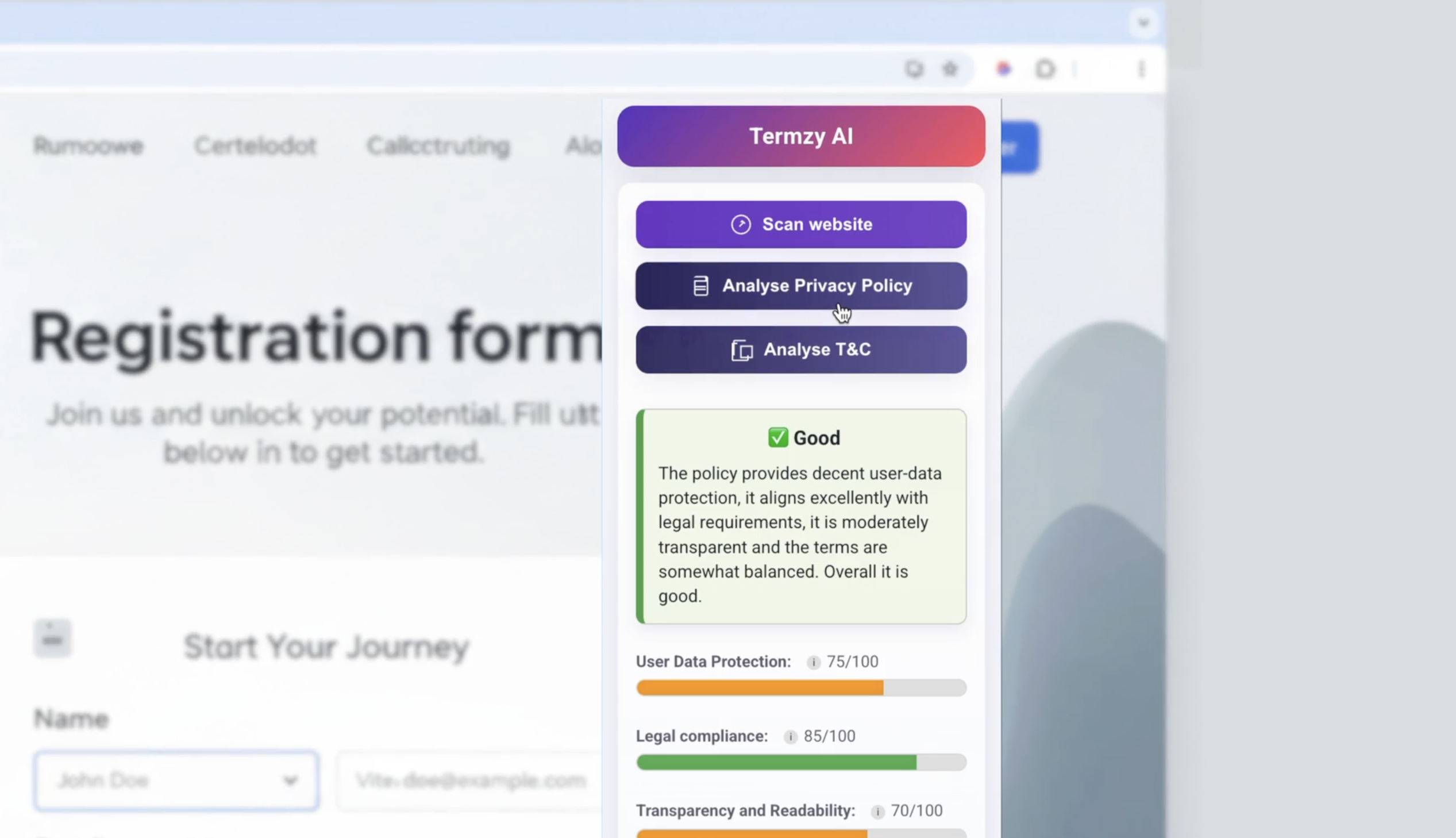
Don’t waste time reading T&Cs -- AI can do it for you
Be honest now, do you really read T&Cs, privacy policies, etc when signing up to a service? Of course you don’t, you just scroll to the bottom and click Accept, trusting that you haven’t just handed over your first born child to a social media mogul.
Step forward Termzy AI, an AI tool that can scan those pesky T&Cs for you and alert you to any problematic things lurking in there that you might be agreeing to.



