
Sneaky cryptocurrency-mining malware Skidmap hits Linux
Security researchers at TrendMicro have discovered a rootkit-like strain of malware that is striking Linux users. Called Skidmap, the malware is a cryptocurrency miner, but there is much more to it than that.
Skidmap is clever. Very clever. It goes out of its way to disguise itself, going as far as faking system statistics to hide the tell-tale high CPU usage that might give it away. More than this, the Monero-mining malware can also give attackers unlimited access to an infected system.
Apple is still trying to avoid paying a $14 billion tax bill in Europe
Apple is fighting in Europe's General Court to avoid paying $14 billion (€13 billion) in back taxes after an EU ruling back in 2016.
The iPhone-maker is one of many multi-national companies who have taken advantage of tax benefits in Ireland -- so-called "sweetheart deals" that the country offers to large companies and which the European Commission deemed illegal. Apple told Europe's second-highest court that the hefty tax bill "defies reality and common sense".

LastPass fixes bug that exposed passwords
The browser extensions for password management tool LastPass suffered from a vulnerability that meant users' passwords could be leaked, a Google Project Zero researcher reported.
Affecting the Chrome and Opera extensions, the vulnerability meant that malicious websites could trick LastPass into exposing usernames and passwords. LastPass explains that the problem stemmed from a "limited set of circumstances" that allowed for clickjacking. The good news is that the security flaw has been patched.

The KB4515384 update is also causing network and Action Center problems
There have been suggestions that quality control has been slipping at Microsoft of late, fuelled by the recent spate of problematic updates to the operating system.
We've seen the KB4512941 update causing problems with high CPU usage as well as introducing a weird screenshot bug. After this, KB4515384 was found to cause problems with searching and the Start menu, and then interfering with game audio. Adding to the seemingly never-ending list of problems, KB4515384 has now been found to be responsible for issues with the Action Center and networking.

Microsoft suggests fixes for Windows 10 1903 game audio problems caused by KB4515384
Following complaints from a number of users about problems with audio in games, Microsoft has acknowledged that the KB4515384 update for Windows 10 version 1903 is to blame.
The company is working on a proper fix, which it says should be released later this month. In the meantime, however, it has suggested temporary workarounds for anyone irritated by the sound issues.

The KB4515384 update for Windows 10 1903 is causing sound problems in games
Microsoft recently released the KB4515384 update for Windows 10 version 1903, and this was supposed -- among other things -- address the high CPU usage problem caused by the earlier KB4512941 update. Unfortunately, this cumulative update was found to cause issues with the Start menu and searching for some users, and Microsoft is currently looking into addressing these problems.
But these are not the only issues with KB4515384. Complaints are also mounting about problems with audio in games after installing this particular update. [UPDATE: Microsoft has acknowledged the issue and suggested a workaround]
Apple disputes Goldman Sachs' negative analysis of Apple TV+
Despite the launch of the iPhone 11 range, new iPads, and other hardware, Apple is increasingly embracing services to attract customers. One of the latest ventures in this area is Apple TV+, and Goldman Sachs -- the company backing the Apple Card credit card -- has warned that the streaming video service could negatively impact on Apple's profits.
Apple, however, disputes this. The company dismisses Goldman Sachs' analysis, marking an interesting twist in the relationship between Apple and its client.

Time to fire up Netflix -- MoviePass has closed down
Movie tickets subscription service MoviePass is no more. In an announcement on Friday, the company behind the service, Helios and Matheson Analytics, advised customers that as of today, September 14, subscriptions would no longer work.
MoviePass underwent numerous changes and restructurings through the course of its existence, but it seems that, ultimately, financial troubles, competition from streaming services, and other factors were too much for it to weather.

Software isolation utility Sandboxie is now free; soon it will be open source too
Sandboxie -- the sandboxing tool with the tagline "Trust no program" -- has been made into a free utility. But more than this, Sophos also plans to make the software open source in the near future.
The company says that it was a difficult decision to make, pointing out that Sandboxie has never been a significant component of its business. While simply shutting down the app would have been the easiest and cheapest thing to do, Sophos says: "we love the technology too much to see it fade away".
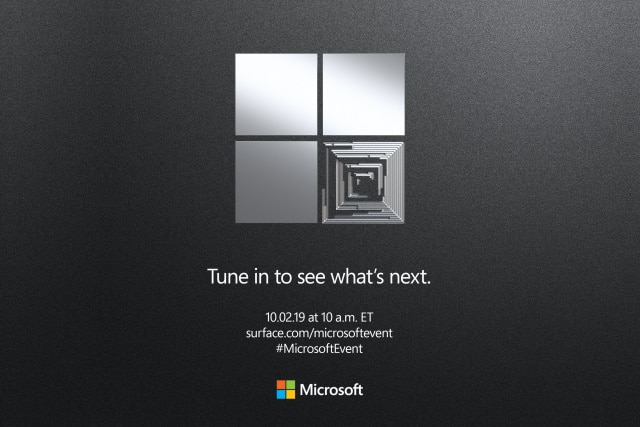
You can watch a live stream of Microsoft's Surface event
Next month, Microsoft has a Surface event coming up, and it's looking as though it could be a big one.
At the moment there are no hints about what we can expect to see at the event, but Microsoft has decided to live-stream it for the first time ever. We also know that head of Surface, Panos Panay, will be there, along with Microsoft CEO Satya Nadella.
Microsoft acknowledges that KB4515384 update breaks the Start menu and Search in Windows 10
Updates for Windows 10 have proved to be more problematic than usual recently. The KB4512941 update was found to cause high CPU usage, and then some users started to experience weird orange screenshots.
Now the KB4515384 cumulative update that was supposed to address the high CPU usage issue is breaking the SearchUI.exe associated with Windows Desktop Search. On top of this, some users are complaining about problems with the Start menu.

Microsoft addresses orange screenshot bug in Windows 10... kinda
Windows 10 users are accustomed to putting up with the occasional bug here and there, and people who installed the KB4512941 update found they were plagued with an issue that gave screenshots an orange hue.
Now Microsoft says that the issue has been addressed. Well... sort of. In fact, the company has shifted the blame to Lenovo, saying that the Eye Care mode feature of Lenovo Vantage is to blame. Here's what you need to know.
Windows 10 20H1 will be called Windows 10 May 2020 Update
Eager Windows 10 users involved in the Insider program have been able to play with Windows 10 20H1 for a little while now. This has given people a chance to try out new features, but two things we haven't known are what this update will be called, and when it will be released.
Now, thanks to an eagle-eyed user, we know both. Unless, of course, Microsoft chooses to change its mind...
Chrome 77 makes it easy to send tabs from one device to another
With the release of Chrome 77 -- which is rolling out right now to desktop and mobile platforms -- Google just made it a whole lot easier to send tabs between devices.
If you're reading a website on your laptop and want to finish off a story on your journey to work, there's no need to email a link to yourself anymore. Now you can easily bounce an open tab from your computer to your phone, from your phone to your computer, or between two computers -- all it takes is a few clicks.
D-Link and Comba routers have multiple vulnerabilities, including storing passwords in plain text
A security researcher has revealed details of a series of vulnerabilities in routers made by D-Link and Comba which make it easy to see usernames and passwords.
Simon Kenin from Trustwave SpiderLabs -- an "elite team of ethical hackers, forensic investigators and researchers" -- found a total of five security flaws which involve the insecure storage of credentials. In some instances, passwords are stored in plain text and can be seen by anyone with network or internet access to the routers in question.