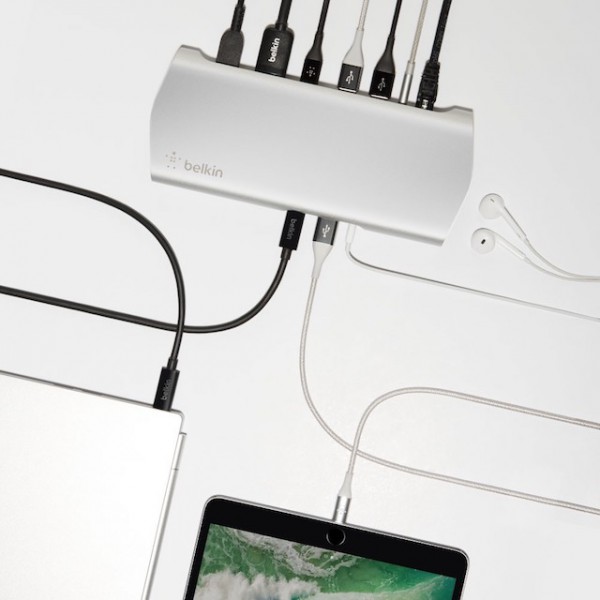
Belkin launches USB-C 3.1 Express Dock HD, but you probably don't want it
There are a lot of USB-C docks and accessories on the market today. While the port can be found on Windows and Linux machines, you can thank Apple for the overall popularity. When the company went all-in with USB-C ports on the MacBook Pro, accessory makers really took interest.
Today, Belkin releases a new dock that uses the newest USB connector. Called "USB-C 3.1 Express Dock HD," it features 8 ports. Best of all, it can charge your laptop while it is connected. While it does offer 4K video, it is unfortunately capped at 30Hz, making it a non-starter for many.

How to choose the best experimentation solution
To build and deliver products that customers love, development teams at leading companies like Uber, Netflix, Airbnb, Google, and Facebook focus on experimentation as a critical business process. Engineers and product managers are empowered to A/B test each new product feature in a controlled environment to determine the impact to key metrics like engagement, product usage and revenue before launching the feature to everyone.
These companies have all built complex internal software platforms to support their experimentation-driven approach to product development. If you’re looking to adopt the same practice of validating digital product decisions with data, you’ll likely be evaluating how to implement an experimentation platform for your product and engineering team.

Move out of the dark ages of lighting with LED bulbs
As Americans strive to be greener and more conscious consumers, ironically, the ordinary light bulb has found itself thrust into the spotlight. First, there was the "ban" on incandescents. Then, as CFLs slowly made their way into the mainstream, LEDs were also becoming more economical and practical for home use. Now, with so many factors to consider -- from lumens to watts to kelvins to CRI -- it’s tough for some consumers to confidently choose between CFLs and LEDs.
In the era of "smart" technology, things can get even more complicated -- so much so that many consumers would rather just avoid change altogether. Unfortunately, that means that they’d also be missing out on a number of outstanding benefits that come from simply changing a light bulb. Still unsure if it’s worth making the switch? Here are 7 ways LEDs outperform CFLs and why you should get on the brighter path with LEDs:

What the new Yahoo breach numbers mean for you
Earlier this week, Yahoo announced that the data breach reported earlier this year did not impact 200+ million users as originally thought. The reality is that up to three billion accounts may be compromised --which is essentially Yahoo's entire customer base. What does this news change? How does it impact you? What should you do now? Let's walk through the answers to those questions.
What changed: In July 2016, Yahoo officially released information about a data breach that it believed involved the personal information on 200-400 million users, or more. This week, it notified the world that its original estimate was incorrect. In reality, up to three billion users were in the data files that the attackers have stolen, which means that nearly everyone who's used Yahoo services is going to be impacted by this situation.

IT spend will reach $3.7 trillion in 2018
Global spending on IT is expected to grow 4.3 percent next year, according to new estimates from market analyst Gartner.
Gartner says spending is expected to hit $3.7 trillion next year, up from $3.5 trillion. The growth will be fueled mostly by communications services, followed by software spending which will see an increase of 9.4 percent next year, to a total of $387 billion.

Facebook test brings context to links that are shared in your newsfeed
One of the problems with Facebook -- and the internet in general -- is that it has been incredibly democratizing in terms of who is able to publish news and other messages online. Democratization of anything is usually perceived as a good thing, but as the genuine problem of "fake news" (i.e. not the notion peddled by Trump that anything presenting an opposing idea is fundamentally untrue) demonstrates, it can also be a bad thing.
To help with this, Facebook is testing a feature that helps to add context to stories and links that appear in your newsfeed.

Three-quarters of Brits worry about risks from connected homes
Despite their potential to reduce bills and make life easier, 76 percent of British consumers are worried about the impact of smart technology and connected homes.
A study by price comparison site MoneySuperMarket polled more than 2000 people and reveals many are fearful of the smart homes concept, with unapproved data collection cited as the greatest worry.
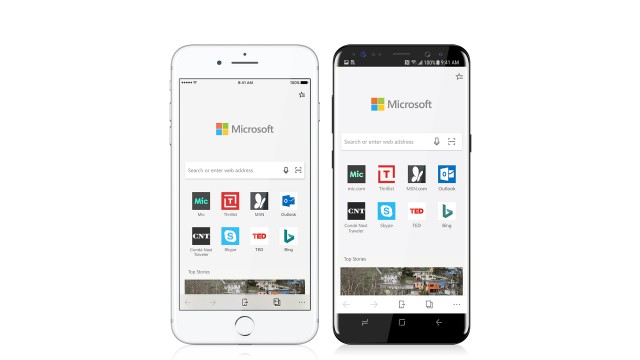
Microsoft Edge coming to Android and iOS
Microsoft today addresses one of the biggest shortcomings of its Edge browser, announcing its upcoming availability on the two biggest mobile platforms: Android and iOS.
Microsoft says that support for Android and iOS is "one of the most common requests" that it has received from Edge users on Windows 10. By making it available across multiple platforms, the software giant is making its browser a viable option in this space for folks who use a mix of devices.

More iPhone 8 Plus units splitting open while charging
Even though smartphone manufacturers rigorously test new devices before releasing them into the market, defects sometimes do make it into production. In the best-case scenario, you can live with them. Sometimes though, you get one so serious that the manufacturer has to recall the smartphone -- take the Galaxy Note7 for example, which had the bad habit of catching fire spontaneously.
Apple seems to have a potentially major problem of its own with the iPhone 8 Plus. A number of users are claiming that their new smartphone has split open while charging, effectively turning it into a very expensive brick.

Most organizations aren't sure where their data is stored
The modern IT landscape means that information can be stored across a number of platforms and locations. It's perhaps not surprising then that only 47 percent of organizations know where their data is stored at all times according to a new study.
The survey by McAfee of 800 business decision makers looks at how enterprises are looking after their data in the light of legislation including GDPR.

Cloudflare ditches sites that use Coinhive mining code after classing it as malware
Bitcoin has been in the news for some time now as its value climbs and drops, but most recently interest turned to mining code embedded in websites. The Pirate Bay was one of the first sites to be seen using Coinhive code to secretly mine using visitors' CPU time, and then we saw similar activity from the SafeBrowse extension for Chrome.
The discovery of the code was a little distressing for visitors to the affected sites, and internet security and content delivery network (CDN) firm Cloudflare is taking action to clamp down on what it is describing as malware.

Apple releases watchOS and iOS updates to fix connectivity and crackling problems
Apple's launch of the iPhone 8 and Apple Watch Series 3 has certainly not been without its problems. Buyers of the latest addition to the iPhone range have complained about crackling audio, while owners of the new smartwatch have been less than impressed by problematic LTE and battery life.
Now Apple has pushed out a couple of updates that should help with the issues -- watchOS 4.0.1, and iOS 11.0.2.

Human-driven AI can improve threat detection
Hackers and criminal syndicates are attacking enterprises with increasingly stealthy and sophisticated techniques. In response, companies are deploying a new generation of firewalls, IDS appliances, and Security Information and Event Monitoring (SIEM) servers to detect suspicious activity as quickly as possible.
Two problems are undermining these recent investments in IT security.

Mozilla announces extended end-of-life support for Firefox under Windows XP and Vista
Mozilla has revealed that support for its Firefox web browser on Windows XP and Vista is coming to an end.
The organization had previously announced that anyone using these old versions of Microsoft's operating system would be moved to the Firefox Extended Support Release (ESR). This meant that support would be offered until "at least" September this year. Now the final kill date has been revealed -- and it's later than expected.
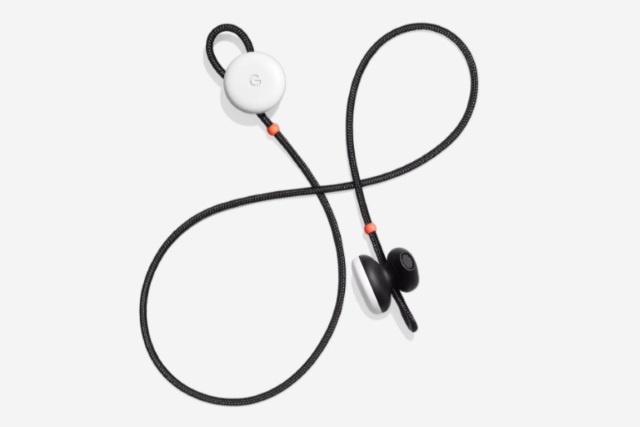
Google's instant-translation Pixel Buds are its most incredible release yet
There were numerous exciting releases announced by Google yesterday, but perhaps the most exciting -- certainly the most impressive -- was the Pixel Buds. Forget Apple's AirPods, Google's earphones have a mind-blowing trick up their sleeve.
Designed (ideally) for use with the Pixel 2, the Google Pixel Buds can translate spoken words on the fly. Real-time translations -- the Babel fish made real and implanted in your ear -- is now a reality, allowing for conversations between two people speaking different languages.