
What's so different about Paris? Facebook reveals why it enabled Safety Check after French attacks
The shootings and suicide bombings in France this week grabbed the attention of the global media. To help those caught up in the aftermath to let loved ones know that they were OK -- and to enable others to check on friends and relatives in France -- Facebook enabled its Safety Check feature for the disaster.
While this was welcomed, it also raised questions. Why had this not been done for other such disasters? Why were shootings in other countries treated differently? What was so special about France that it warranted extra attention from Facebook? Were the lives lost in other atrocities seen as less important? Facebook's Alex Schultz has stepped up to the plate to answer these concerns.

FCC says it's legal to hack your router
Router hacking is a geek staple. No computer geek worth his or her salt would consider running vanilla firmware -- the likes of Tomato are where it's at. A little while back, the FCC suggested plans to ban such hacking via open source firmware... or at least that's how it seemed.
The commission has now acknowledged that there was more than a little confusion from people who believed that manufacturers would be encouraged to prevent router modifications. The FCC wants to make it clear that most router hacking is fine and will remain fine. With a few exceptions, that is.

Young people don't consider automation issues when choosing a career
Indeed -- the world’s largest job site -- has just launched a new research study that determines that almost half (49 percent) of young people in Britain are not taking the issue of job automation into account when choosing their career.
Furthermore, Indeed’s study reveals that 17 percent are not aware of the industry trend towards automation and the effect it will have on future employment both at the low and high end of the skills market.
Zune is dead
The writing has been on the wall for some time now, but Microsoft has today officially killed Zune. After nine years, the music service is no more, driven to the grave by the competition.
Zune players just never managed to fight off the iPod, and with smartphones taking on the role of music player in addition to everything else, it didn’t take long for Microsoft's player to become surplus to requirements. Microsoft is not learning from history, though; the company continues to try its hand at music with Groove.
Amazon plans to introduce a new payments service
It seems as Amazon is ready for another round in the payment platform fight. This time around, however, the media is saying everyone should be paying attention, as Amazon just might have finally gotten it right.
Re/Code was first to bring it to the public's attention, saying Amazon is ready to launch "Pay with Amazon", bringing the buttons to mobile apps while "tripling down" on placing its Pay with Amazon buttons on websites in overseas markets. The feature is currently available in the U.S. only.

Has Windows 10 November Update (Threshold 2) reset your privacy settings and default apps?
Windows 10 has caused greater privacy concerns than any previous version of the operating system. You may well have spent some time tweaking settings so that you are in control of your privacy and limit the tracking that Windows 10 is able to do, but if you have installed the latest big update you may well have to do it all again.
In addition to resetting their privacy settings to their defaults, many people have reported that installing Windows 10's November Update has wiped out any personalization of default apps. This is just the latest in a series of slip-ups which sees Microsoft upsetting Windows 10 users. So how do you know if your settings have been changed?

Microsoft details four commitments to help rebuild trust in the cloud
In a lengthy, rambling blog post, Microsoft President Brad Smith explains how what has happened in relation to security over the past year is shaping the company's attitude to the cloud. He says that "it's time to rebuild the world's faith in the technology that empowers us all".
He takes a while to get to the point, meandering slowly around anecdotes about Windows 10, Edward Snowden, terrorist attacks in Paris, hacking, and governmental desires to weaken encryption. He says that these and other events "show it's crucial to have a conversation about worldwide information security".

Microsoft's Project Oxford can detect human emotions
In a scene in the 2014 sci-fi movie Robocop, the namesake main character analyzes his enemy’s emotional condition and concludes that violence is imminent.
You can say he successfully detected emotions. For a living person, that isn’t really a big deal, but for a computer, that’s science fiction. Or, to be precise, that was science fiction. Not any more.

Firefox users are stuck with unremoveable Pocket... for now at least
Earlier in the year Mozilla took the decision to build Pocket into Firefox. Previously available as an add-on, the 'read it later' tool was transformed into an integral part of the browser. While this was a move welcomed by some users, others are concerned about the privacy implications.
There are also concerns that having Pocket built in unnecessarily bloats Mozilla's code, but it looks as though it is here to stay. Speaking to Venture Beat, director of engineering for the browser said "there are currently no plans to offer a version of Firefox that doesn’t include Pocket".

Microsoft gives Distributed Machine Learning Toolkit to the open source community
While Microsoft may be looked at as the enemy of open source, it actually does contribute to the cause. In fact, I am comfortable saying that the company embraces open source; although closed source ideology will always be its "bread and butter".
Today, the Windows-maker announces that it is making yet another one of its projects open source. The Distributed Machine Learning Toolkit seems quite interesting and could prove valuable.
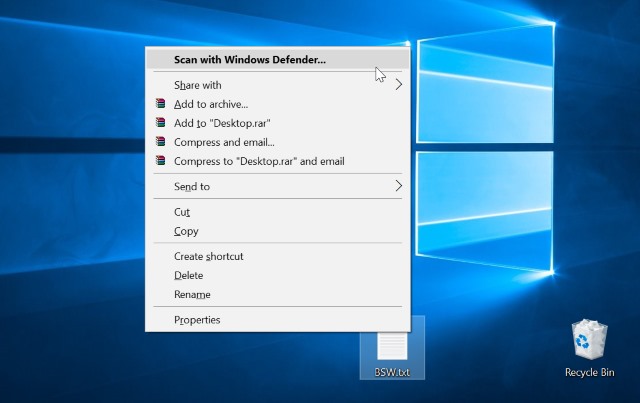
Delete the Scan With Windows Defender content menu entry from Windows 10 (Threshold 2)
If you've installed the November Update for Windows 10 (or Threshold 2 if you prefer) there are a number of changes for the better to enjoy. But there are some changes that you might not be happy with, and the arrival of a new Scan With Windows Defender entry in context menu is something that is likely to grate with many people.
It might be that you have no intention of using Windows Defender, or your context menu may have become unwieldy and need a little trimming. Either way, a quick registry hack is all that's needed to banish the unwanted option. Here's what to do.
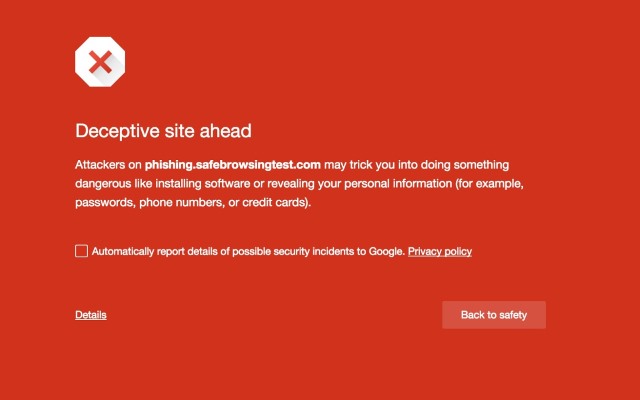
Google extends Chrome's Safe Browsing protection to fight social engineering
Online attacks take a number of forms, and phishing is one of the more recent problems. Chrome has long featured Safe Browsing to notify people when they visit potentially dangerous websites, and today Google announces that the feature is growing to include social engineering.
Google describes social engineering as being a much broader category than traditional phishing. Typical examples include sites that trick visitors into imparting passwords or credit card details, and those which purport to be an official website when they are in fact malicious. The Safe Browsing expansion offers protection against a range of social engineering attacks that Google provides examples of.
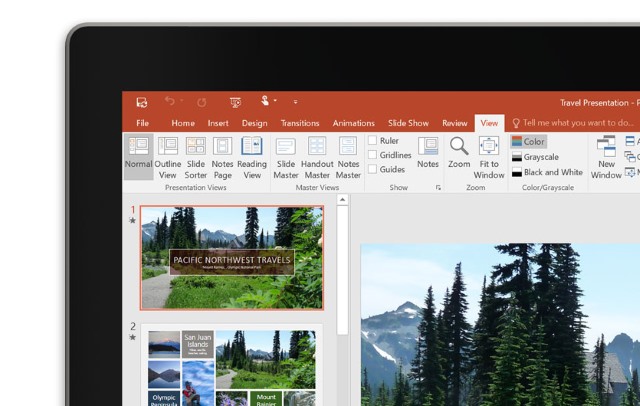
Microsoft launches Office Insider giving access to preview builds of Office 2016
With Windows 10, Microsoft's Windows Insider program proved immensely popular. The chance to try out new features ahead of an official launch gave millions of people an insight into the development process and provided an opportunity to give feedback and influence the future of the operating system.
Today Microsoft is giving Office the same treatment. With the launch of the Office Insider program, Office 365 subscribers are being given the chance to try out upcoming releases of Office 2016.
It is your duty to use an ad blocker, says Edward Snowden
Ad blocking tools are rarely out of the news these days. In times of heightened awareness about online privacy, more and more people are turning to things like Adblock Plus to banish ads and clean up their web browsing experience. For many people an ad blocker is seen as essential.
Edward Snowden goes further. The former NSA contractor says that it is a web user's duty to protect their computer by blocking potential attack vectors such as Flash and JavaScript-riddled advertisements.

Are ad-blockers killing marketing efforts?
Ad-blocking on both desktop and mobile devices is becoming more and more common. But does this mean advertisers are increasingly wasting their time?
A new survey of over 500 consumers by consumer intelligence and predictive marketing company Boxever reveals that 70 percent of consumers surveyed say they're likely or extremely likely to use ad-blocking apps, and another 15 percent said they'd consider it.