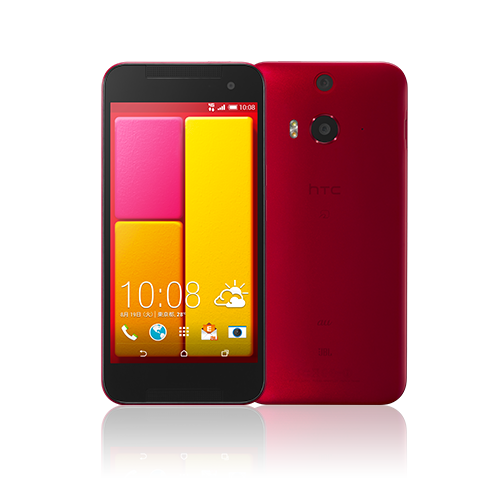
J butterfly joins HTC's premium Android lineup
Today, HTC introduces a new smartphone in its premium Android lineup. Called J butterfly, the device features similar specs to the One (M8) flagship, but without making use of the latter's 4 MP UltraPixel main camera, employing a 13 MP unit instead. Pixel fans, rejoice!
That said, J butterfly retains the Duo Camera technology HTC baked in One (M8). It allows the smartphone to capture depth information to achieve a bokeh effect in photos, which is typical of DSLRs. On the front, there is a 5 MP camera, that is also taken from One (M8), designed for selfie-lovers. So far, J butterfly is shaping up to be what some had hoped One (M8) would be.

XP is still used in 53 percent of businesses
It's around three months since Microsoft pulled the plug on support for XP, yet according to a survey carried out by Adaptiva at May's TechEd North America, 53 percent of respondents are still running the old OS in their organizations.
Just under half (43 percent) of respondents to the survey represent companies with more than 10,000 nodes (desktops, laptops and servers), including 13 percent with more than 100,000 so there are potentially a lot of business XP systems still out there.
It is game over for Windows Phone
Microsoft, it is time to reconsider your Windows Phone plans. The tiled smartphone operating system's market share came in at a tiny 2.7 percent in Q2 2014, dropping from the 3.8 percent it claimed in the same period of last year. As a result, Windows Phone saw a 28.94 percent decrease year-over-year in market share, caused by low shipments of only 8.0 million units in the second quarter of the year, 0.9 million units less than in Q2 2013 when its shipments were at the 8.9 million units mark.
The data is from a new report issued by research firm Strategy Analytics, which adds "Windows Phone continued to struggle in the United States and China", the first two largest smartphone markets worldwide. There, Kantar Worldpanel ComTech places the platform at 3.8 percent and 0.9 percent market share, respectively. That is lower than in other markets such as Australia, where Windows Phone was able to reach 5.3 percent market in Q2 2014, as well as some parts of Europe.
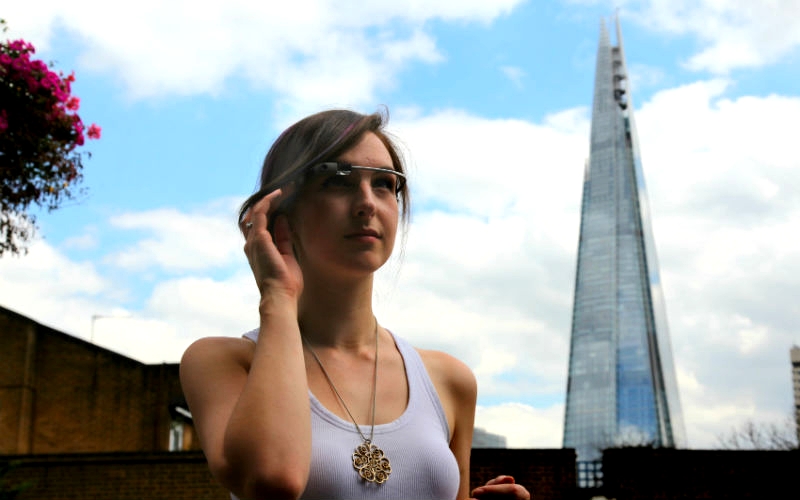
Google Glass: The pinnacle of wearable technology? [Review]
Begin a sentence with the phrase "most anticipated gadget ever" and tradition dictates the words "Google" and "Glass" must follow shortly after.
Unceremoniously launched into public consciousness from a plane hovering over Google I/O, Google Glass has been one of the hottest topics in tech since 2012. Two years on and the smart specs are still the gadget every technical guru desires; to some it's "an overwrought headband", to others it's the wearable future of modern technology.

Big data is transforming every industry, from health and education, to farming and energy
Big data is already making a big impact all over the world. Large corporations, world organizations, and governments have hopped aboard the big data bandwagon, hoping to utilize new sources of data to improve operations and increase productivity among many other reasons.
It's easy to see from the latest technology news how such massive organizations can benefit from big data considering their available resources and history of using the technology. Finding ways big data is impacting life outside of large, urban areas may seem a little more difficult.

Canonical joins forces with Nokia HERE for A-GPS on Ubuntu Linux distribution
We all know Google is the darling of the mapping world. If you are going on a trip, the search-giant's navigation solutions are arguably the best. However, it is dangerous to allow one company to essentially own an entire aspect of technology. Luckily, there are additional solutions like Apple Maps and Nokia HERE, to at least offer some semblance of competition. As a Windows Phone user, I have learned to love Nokia HERE as an excellent alternative to Google Maps and navigation. While HERE is lacking in some areas, it has the potential to be great.
Even though I love Windows Phone, I love Linux too -- shocking right? Yes, believe it or not, you can love both Microsoft products and open-source. Not all Linux users have tattoos of penguins urinating on the Windows logo. Hell, I own an iPad too -- the horror! Well, today, Canonical announces that it has formed an agreement with Nokia HERE to provide A-GPS technology to Ubuntu computers, including phones. Don't worry you strict Linux enthusiasts, Microsoft does not own Nokia HERE -- it was not part of the Nokia acquisition.
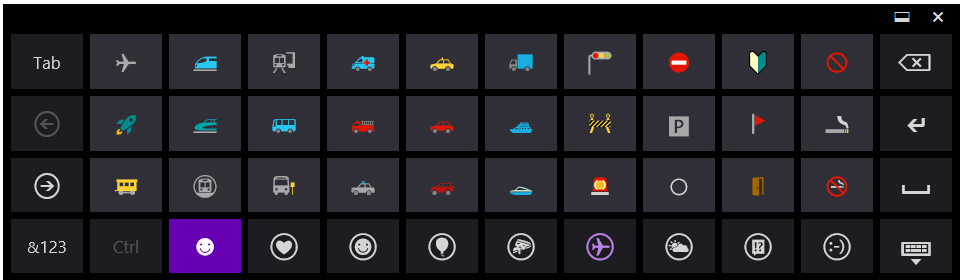
How to access Windows 8.x emoji on a desktop PC
The touch screen keyboard available on Windows 8.x tablets -- like Microsoft Surface, for example -- gives you access to a wealth of emoji you can use in chats, emails, comments and so on. As well as the usual smileys, there are hand signs, hearts, cartoon characters, vehicles, weather symbols, and many more to pick from. Just select the character set you want at the bottom of the keyboard.
If you’re not using a touch screen device, but still want to access these characters you can.

BitTorrent releases Bleep for Windows, a closed Alpha chat client
Recent revelations, courtesy of Edward Snowden, have given insight into just how much citizens need to worry about NSA activity, and it was an alarmingly large amount. BitTorrent has been working to mitigate these issues, at least as best as possible, with a Sync app that stores no data that can be accessed, and now a new chat app that will do the same.
The service debuts in private Alpha today, allowing testers to jump on board and get a taste of what it's like to use what is claimed to be a "serverless" version of chat.
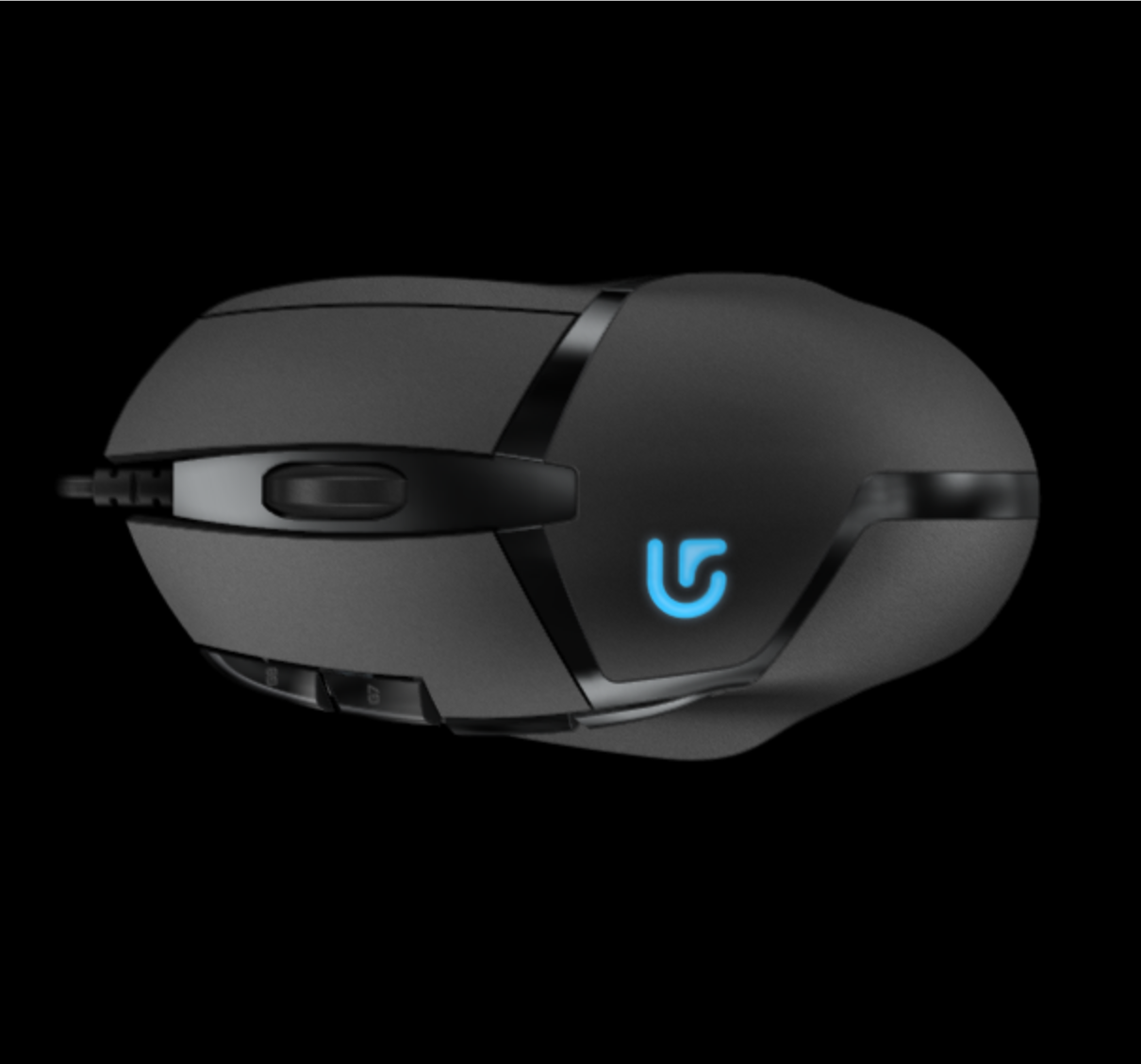
Logitech reveals the world's fastest gaming mouse -- G402 Hyperion Fury
PC gaming is a really awesome pastime. While some people prefer console gaming, it is strictly a matter of preference. I like both, but I particularly like the gamification of PC gaming hardware. In other words, the actual building of the gaming PC and buying of cool peripherals can be as fun as the games themselves. Hell, it can sometimes be more fun.
One of the most fun peripherals to buy for a gaming PC is the mouse. Unfortunately, far too much emphasis has been put on appearance lately, instead of performance. Don't get me wrong, a gaming mouse should look cool and sexy, but only as a secondary focus. Today, Logitech announces a mouse that meets the needs of performance and appearance-driven consumers, with the G402 Hyperion Fury. The company claims that it is the world's fastest gaming mouse. Is it faster than Speedy Gonzales?
Why I'm still right about the BlackBerry Passport (and other things)
What a firestorm! I sort of knew going in that my previous entry, "Do NOT buy a BlackBerry Passport until you read this", would evoke a heated response from the BB faithful. However, I never imagined there were still so many dedicated BlackBerry fans out there. Over 200 (mostly scathing) comments later, and I can feel the rage (the "Zionist" quips, in particular, were hilarious).
Another pundit might try to backtrack in light of such unrelenting animosity. But not me! The potent combination of unbridled hubris and geographic isolation have emboldened me to double-down on my original assertions. So, instead of dancing around the issues, I’m tackling a few of the major objections head-on to show you why I’m right (and you’re all wrong) about the BlackBerry Passport.

Jitterbit connects SAP to the cloud
SAP is the world's most popular ERP (enterprise resource planning) system, but a recent survey by HCL Technologies shows that integration with their existing solutions was the biggest obstacle to 45 percent of SAP users when implementing cloud technologies.
Integration company Jitterbit has announced a new SAP Connector that lets businesses integrate their existing processes with SAP whether they're on-site or in the cloud. Certified by SAP and running on Jitterbit's Harmony cloud platform it offers faster integration and is compatible with SAP's latest HANA in memory appliance.

Smartphone market sees stiffer competition
The competition is heating up in the smartphone space, as, in Q3 2014, a dozen vendors have what it takes to shake up the top five smartphone makers list, according to a new report from research firm IDC. Judging by the standing from Q2 2014, the likely players in danger of losing their spots are Huawei, Lenovo and LG.
Samsung and Apple continue to be in a position of strength, with the two being responsible for 25.2 percent (74.3 million) and 11.9 percent (35.1 million), respectively, of the 295.3 million smartphones shipped in the quarter that ended June 30. That said, both lost market share compared to Q2 2013, when they claimed 32.3 percent and 13 percent, respectively, thanks to shipments of 77.3 million and 31.2 million units, respectively.

SUPERAntiSpyware 6 reveals new System Investigator
Support.com has updated its popular malware hunter SUPERAntiSpyware to version 6.0.
The major new feature is System Investigator, a tool which highlights files of interest in the most common infection points: startup programs, browser extensions, installed applications, Windows services, drivers, temporary and system folders, scheduled tasks, and more.

Internet of Things devices open up new avenues for hackers
We're constantly being told that the internet of things is set to revolutionize the world we live in. Gartner has predicted that it will have around 26 billion units by 2020, but with this rapid growth comes added risk.
A new study from HP shows that 70 percent of the most commonly used internet of things (IoT) devices contain vulnerabilities, these include password security, encryption and personal data issues.

LibreOffice 4.3 arrives, promises more intuitive spreadsheet handling, adds 3D modelling to Impress
The Document Foundation has released LibreOffice 4.3 FINAL for Windows, Mac and Linux. The new release sees some notable user-interface tweaks, performance enhancements and a number of new and tweaked features.
TDF is particularly keen to highlight four major new features: improved document interoperability, comment management, more intuitive spreadsheet handling in Calc, and support for animated 3D models in Impress.