
LinkedIn and Facebook join forces with Microsoft Office in the cloud
One of the new features of Office 2010 (yep that’s 2010) was the Outlook Social Connector. This addon brought with it the ability to display social network information within Outlook itself. It took a little while for developers to get on board but last time I checked you could download "providers" to integrate Facebook, LinkedIn, Windows Live and Xing data.
Well, Office 2013 is now with us, and the social connector has been improved further. You no longer need to download a specific "provider" for Facebook or LinkedIn. Simply sign in with your existing credentials and Outlook 2013 will pull through the relevant data.

Basic Hardware Inventory gets the system info you need
Every PC owner will occasionally need to find out more about their system hardware, and Basic Hardware Inventory is a simple tool that will quickly display just about everything you might want.
This starts with the core ingredients that are essential to any system information tool: CPU model and speed, total RAM, hard drives and capacities, graphics card, monitor, network interfaces, motherboard model, BIOS type and date, and more.
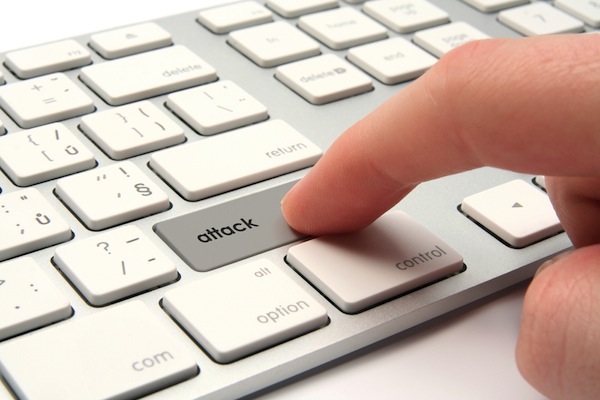
Apple scoops up security firm AuthenTec for $356 million
Apple has agreed to purchase security firm AuthenTec for $356 million, a Thursday SEC filing from the Melbourne, Fla.-based company indicates. Apple is likely looking to bolster the security credentials of its products, and with the recent focus by hackers on Apple's products, that might be a good idea.
AuthenTec produces a variety of software and hardware-based security solutions, including fingerprint sensors. Its VPN security software is already included in smartphones and tablets from Samsung, and its DRM platform is used to protect streaming content within the HBO GO application.

PC-era dinosaurs: Beware the BYOD Extinction Level Event
Ah! Life in paradise. As the literal incarnation of the mythical "guy who ran away to a tropical island", I've had the joy of returning to my once primary (and now mostly vacation) home in the United States only to discover all of the things that can go wrong with an empty house in the Florida heat (this time, it was a failed A/C compressor -- ugh!).
However, I've also had the opportunity to revisit many of my core IT beliefs from the perspective of a relative outsider living in the slower-paced world of coconuts, litches and 2Mbps ADSL connections. Basically, my geographic isolation has forced me to take the long view on new technology trends. Which is why I'm so excited about the potential of BYOD: I see the emergence of the Post-PC phenomenon as a truly disruptive force that will forever change how people view "computers".

The Internet was created to save money
Depending on who you are talking to there were several very different reasons why the Internet was created, whether it was military command and control (Curtis LeMay told me that), to create a new communication and commerce infrastructure (Al Gore), or simply to advance the science of digital communications (lots of people). But Bob Taylor says the Internet was created to money. And since Bob Taylor was, more than anyone, the guy who caused the Internet to be created, well, I’ll believe him.
Taylor, probably best known for building and managing the Computer Systems Laboratory at XEROX PARC from which emerged advances including Ethernet, laser printing, and SmallTalk, was before that the DARPA program manager who commissioned the ARPANet, predecessor to the Internet. Taylor was followed in that DARPA position by Larry Roberts, Bob Kahn, and Vint Cerf -- all huge names in Internet lore -- but someone had to pull the trigger and that someone was Bob Taylor, who was tired of buying mainframes for universities.
SmartPower gives more control over when your PC sleeps
A quick tweak of the power options and you can soon have your PC set up to shut down automatically if it’s left unattended for a while. But Windows isn’t exactly smart about how this happens, and you may sometimes find your system is closed even if it’s busy downloading something, or running some lengthy CPU-intensive task.
Install SmartPower, however, and it’s a different story. The program allows you to create far more flexible rules about when your PC should sleep, and when it needs to wake up, which can be a great way to save you time, energy and money.
Samsung charges up Galaxy smartphone marketing
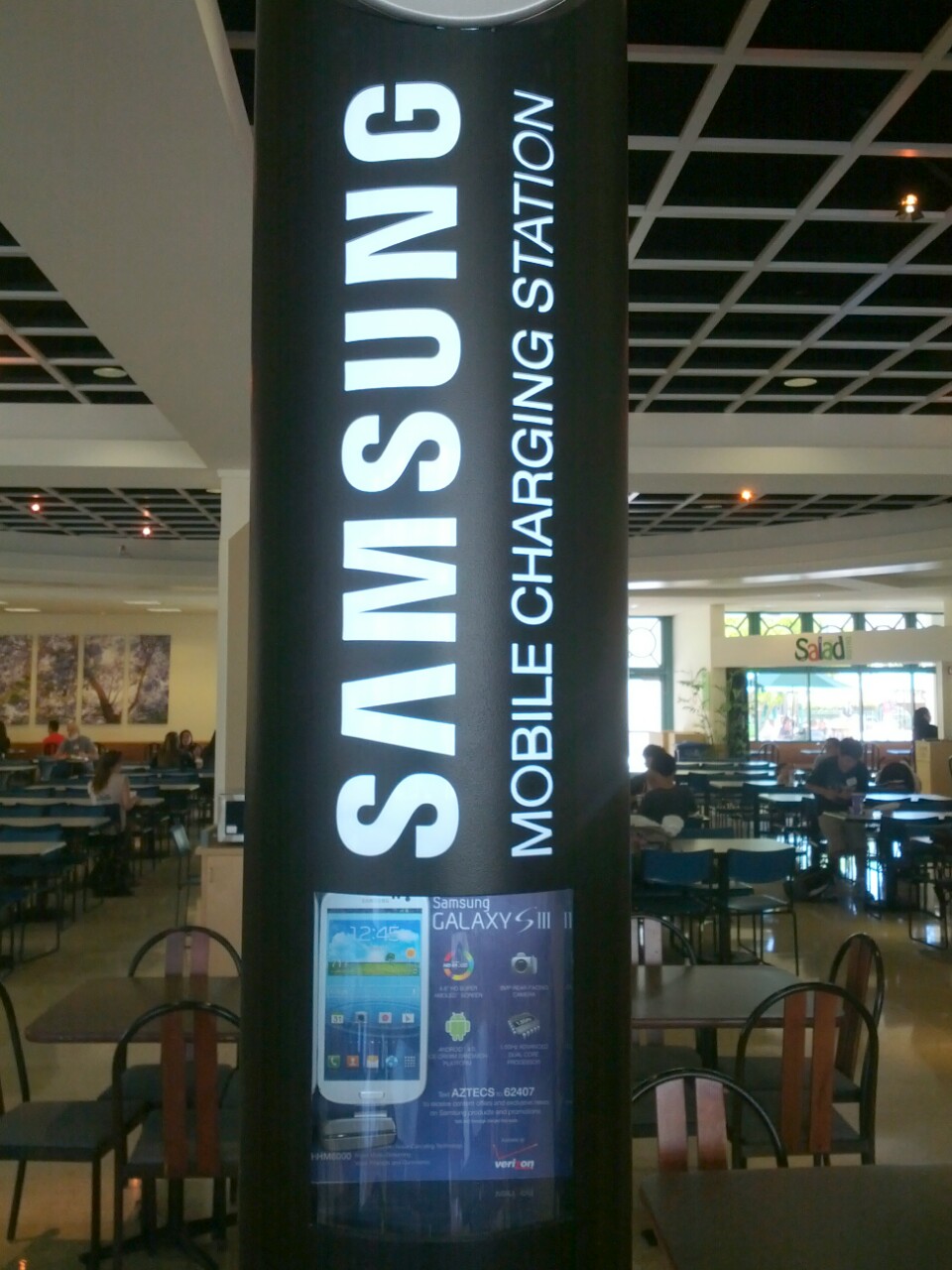
I'm out of the office today attending Freshman orientation with my daughter. We were at San Diego State University for day-long lectures a month ago, but I saw something today either missed before or that is new (I'm convinced it's the latter). The East Commons has two Samsung charging stations that promote Galaxy S II and S3. It's simply brilliant marketing.
Think about it. Education is considered to be an Apple stronghold; some of that is reality, some perception. Two days ago, Apple CFO Peter Oppenheimer said about fiscal Q3: "We achieved all time record Mac sales to US education institutions during the quarter. We sold more than twice as many iPads as Macs to US education institutions. We are extremely pleased with these results".
Samsung error removes universal search from the Galaxy S III, not Apple's patent war
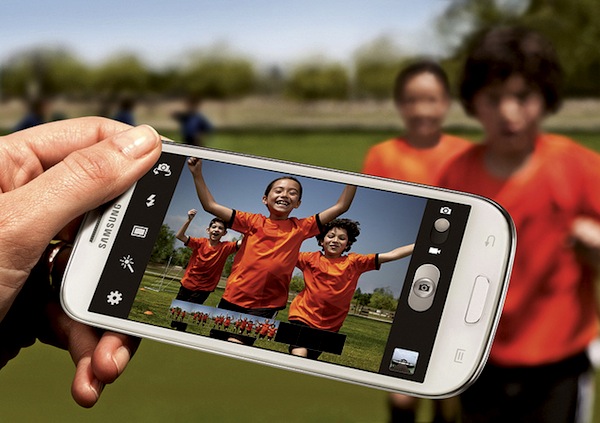
Now here’s an interesting thing. A couple of days ago Samsung disabled the Google local search function from the international version of its Galaxy S3 handset, preventing users from being able to search their phone’s apps and contacts. It was believed to have been done as a result of a patent dispute with Apple, and followed the search-on-device disabling update that hit Galaxy Nexuses in the US.
Users were understandably up in arms because they weren’t told that installing the new stability update would remove the universal search feature, and probably a fair few of them felt compelled to join the boycott Apple movement as a result. (Fortunately I didn’t update my S3 so my opinion didn’t change. Not that it would have.)
Facebook ends quarter in the negative, but made $6.8 billion in cash from IPO
Popular social network Facebook posted its second quarter financial results on Thursday afternoon, revealing a net loss of income for the site at the end of its first quarter as a publicly traded company, but also revealed the huge amount of cash earned from its initial public offering.
Facebook showed a net loss of $157 million, a significant decline against its total income last year, which was $240 million, but this came after a hugely improved revenue flow.
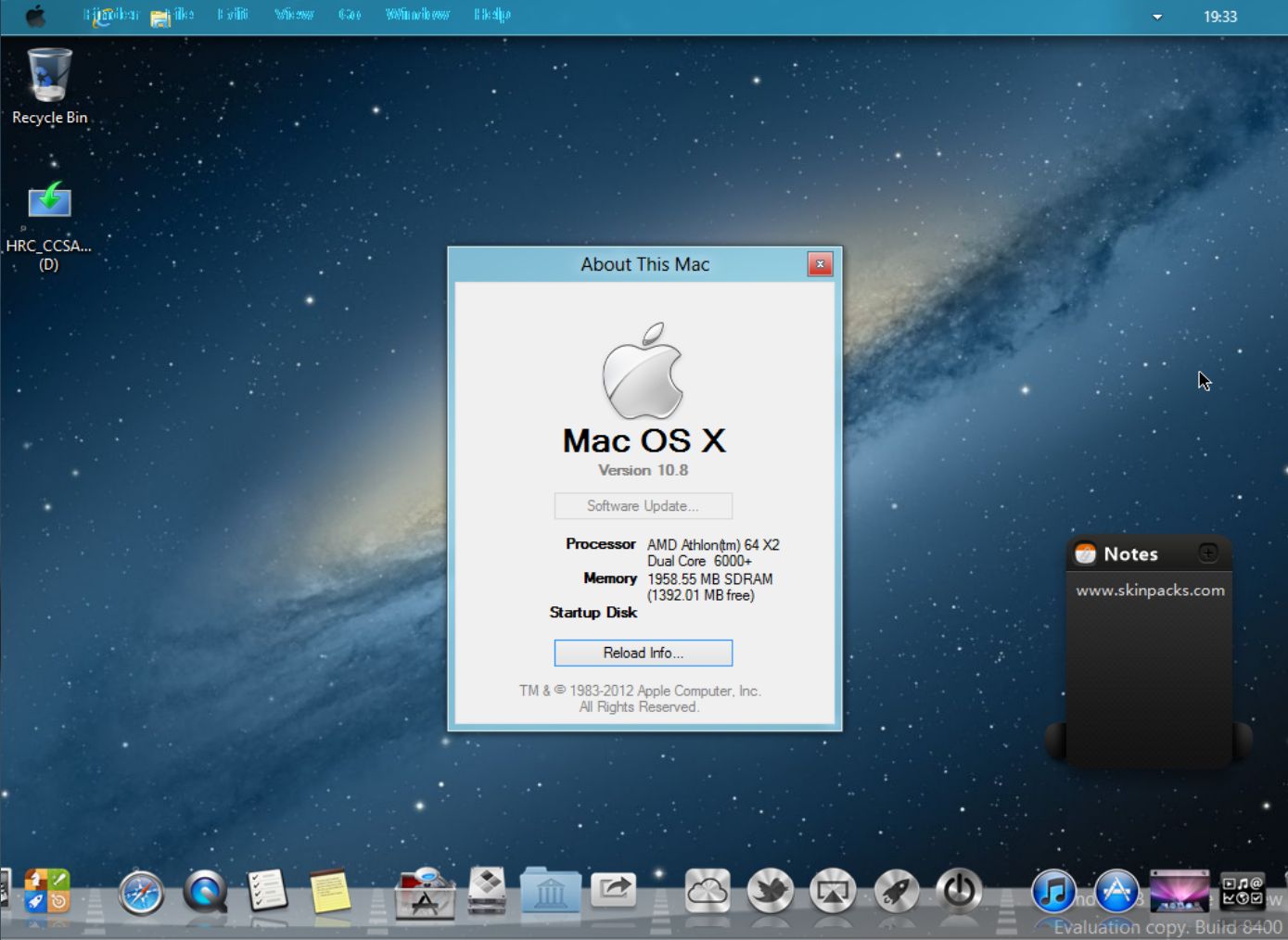
Transform Windows 8 into Mac OS X Mountain Lion
If you’re running Windows 8, but like the look of Apple’s new Mountain Lion OS, you can use a skin pack to assuage some of your UI envy, without dumping Metro in the process (which may be a good or bad thing, depending on how you feel about the new tiled interface).
The Mountain Lion Skin Pack for Windows 8 Consumer Preview was obviously designed for the earlier trial version of Windows 8 (the clue is in the name), but it works just as well in the release candidate. It won’t actually transform Windows into Mountain Lion, so you won’t get cool features like apps that match their iOS counterparts, cloud-based sync features or AirPlay mirroring, but it will at least give you a reasonable flavor of Mountain Lion’s aesthetics.
Google's Kansas City ultra-fast fiber network set to debut
Residents of the Kansas City metropolitan area are close to having access to super-fast Internet as Google unveiled its fiber-to-the-home service on Thursday. For as little as $70 per month, Google will provide 1 Gigabit Internet service to customers in both Kansas City, Mo. and Kansas City, Kan.
The service will also include a television component for an additional $50 per month. Deployment depends on the number of consumers that pre-register in a specific area: Google will only complete runs of fiber-optic cable to where the demand is highest.

5 ways to put hackers on the defensive
Black Hat keynote speaker Shawn Henry, the former executive assistant director of the FBI’s Criminal, Cyber, Response and Service Branch, started off the day after opening remarks from Jeff Moss, founder of Blackhat. Moss wondered if now was the time for the cyber-security sector to take a more aggressive/offensive approach. Moss mentioned working for a former employer years back, a firewall manufacturer that had a product that would launch specially crafted code in response to an attacker, sort of an early offensive DoS attack. This was an early attempt by security professionals to cause pain by going on the offensive.
But since DoS attacks aren’t exactly a legal offensive tactic nowadays, what to do? He recommends civil action, a la recent Facebook actions where attackers were sued in civil court. But what happens when attackers are overseas? Mr. Moss is hopeful that responding in a civil manner would “encourage” other countries to implement legal protections to stop current and future attack attempts abroad.
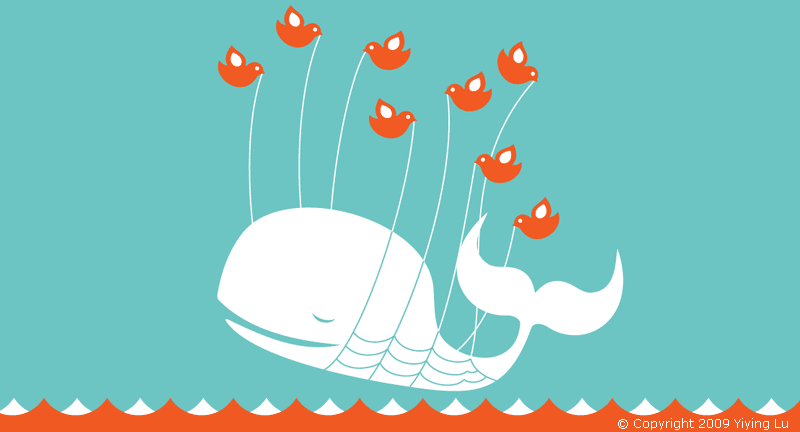
Yes, Twitter was down (And Google Talk was too).
It has not been a good day for messaging services.
Both Twitter and Google Talk experienced service problems Thursday, with Google Talk down for much of the morning and Twitter until early this afternoon. As of press time, neither Twitter nor Google had given specific reasons for the downtime.
Ahead of quarterly reports, rumors of another Facebook phone rise
Today marks the day when Facebook lets everyone know of their financial state, with the company announcing their second quarter 2012 results this evening when the market closes. Perhaps not so coincidentally, a rumor of a new Facebook branded phone from HTC has surfaced right before the company's financial announcements.
HTC and Facebook have collaborated before, and the result was the HTC Status. The device is no longer available from AT&T, and let's just say it's not due to high demand. HTC is currently in a weak financial state, and their smartphones make up about 14 percent of the market in the United States. So, from the start there is a limited reach.
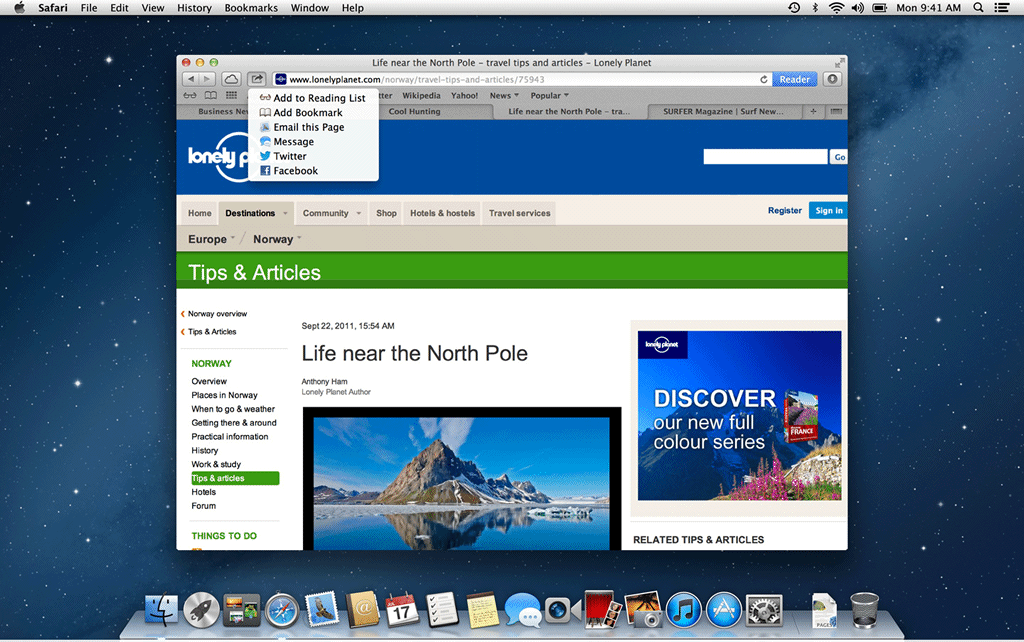
Apple releases Safari 6 for Lion -- get it NOW!
Hot on the heels of its official launch of OS X Mountain Lion, Apple has also updated its own web browser for Lion users. Safari 6 for Lion includes some of the improvements found in the browser shipped with Mountain Lion, while missing out on others.
Key improvements found in Safari 6 for Lion include a unified search and Address bar, bringing Safari into line with rival browsers. It also sees the introduction of an Offline Reading List, Do Not Track privacy feature and new password pane.