




Facebook founder paid $65m settlement to classmates
Facebook founder Mark Zuckerberg paid $65 million to two former Harvard classmates who claimed he stole their idea for a social networking site, a law firm has revealed.
The settlement amount in the suit waged by Cameron and Tyler Winklevoss, Zuckerberg's ex-classmates, was supposed to be confidential.

Dell expands computer recycling program
Number one U.S. computer maker Dell has been building a nationwide recycling program for nearly five years, and efforts look to have picked a considerable amount of steam.
Today, Dell announced that its partnership with Goodwill Industries called Reconnect has been expanded into six more states: Arkansas, Iowa, Maine, New Hampshire, Oregon and Vermont. The program now counts over 1,000 Goodwill locations as recycling centers and is actually expecting to add jobs to handle Reconnect's growth.

Amazon Kindle: not a gamechanger...yet
Digital distribution has infiltrated media. We saw MP3s take over the music business, and we're seeing streaming take over the film and TV business, but will it happen to the book business too?
Who better to ask than an executive at a site dealing in the trade of good old fashioned paper books? Betanews spoke with Eric Ginsberg, the VP of marketing at startup Bookswim.com, a company whose business model is identical to the one pioneered by Netflix. At Bookswim, subscribers build a queue of books, receive them in the mail, and send them back when they're finished reading.

Data flies out of breach at FAA
Maybe it's a bigger story when a government agency isn't breached. This week's hacked federal database is property of the Federal Aviation Administration, and it holds among other things records on 45,000 employees and retirees connected with the FAA as of the first week of February 2006.
The FAA issued a statement describing the breach in very general terms, noting that the compromised computer didn't have anything to do with any air-traffic control systems or other operational system. The agency has called in "appropriate law enforcement agencies," it says, and says that the employees and former employees whose records were breaches will receive individual letters with more information about what may have happened and what can be done.

What recession? Oracle support provider quadrupled its customer base
In a year when a lot of other companies floundered, Rimini Street, Inc. -- a services provider for PeopleSoft and other Oracle-owned software products -- picked up 150 new business customers in 2008, four times its 2007 number.
How did Rimini Street pull off that feat? A "significant number" of new customers came to Rimini from Tomorrow Now (TN), a SAP business unit which disbanded last year in the wake of an acrimonious lawsuit with Oracle. But other customers, fed up with Oracle's high software maintenance and upgrade fees, migrated to Rimini directly from Oracle, said David Rowe, Rimini's senior VP of global partnerships and alliances, in an interview this week with Betanews.

New DDoS attack based on deluge of dots
A technique for worsening the effects of a distributed denial-of-service-type attacks uses a feature in the DNS system that was once designed to be helpful. Patching it could involve reconfiguring millions of domain-name servers, or even rethinking how the system works.
A DDoS attack, of course, involves bombarding a target site with garbage so no other traffic can get through. Some attackers, especially the ones who do these attacks for a living (think extortion), amplification techniques that increase the flow of packets while further disguising the true source of the onslaught. One of these, which SecureWorks is currently examining, leverages a feature in the domain-name system, making it appear that the victim's computer is lost and in need of a list of all the root domain nameservers. That's a long list, and the forged command is quite short -- in fact, it's "." . A tiny effort on behalf of the attacker, therefore, is leveraged into a significant amount of DDoS distress.

Adobe: Microsoft's Silverlight 'has really fizzled'
Addressing attendees at a tech-and-telecom conference on Tuesday, Adobe EVP and CFO Mark Garrett spoke of the challenges ahead. Microsoft's software doesn't appear to be one of them.
Speaking at a fireside-chat style event at Thomas Weisel Partners Technology & Telecom Conference 2009, Garrett noted that "if you set the economy aside, there are a lot of tailwinds" acting to boost Adobe's reach online. Those tailwinds are coming from many sources, including the warm front centered around the fever for online video (the company estimates that four-fifths of all video online plays through its software) and the hard, cold drive to digitize information stored in printed media.
Senate passage of stimulus bill could fuel latest broadband debate
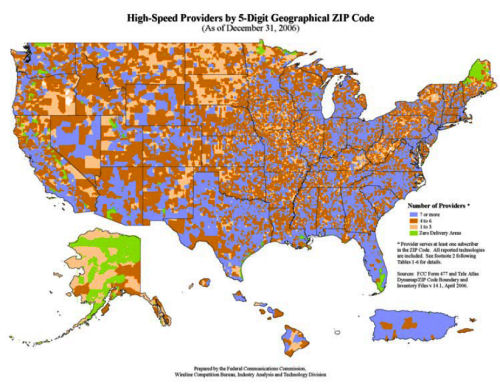
If you receive government money to build a broadband pipeline for rural areas, do you have an obligation to remain open to all customers? Or to make yourself closed to certain ones? It depends on your definition of "open."
The latest version of the President's economic stimulus package passed a US Senate vote this afternoon, though not without some trimming of its projected expenditures. As a result, the projected $9 billion annual allotment (originally $6 billion) for funding the expansion of broadband service in rural areas, was trimmed to $7 billion, according to Broadcasting & Cable.
Dell launches a gesture-enabled tablet PC
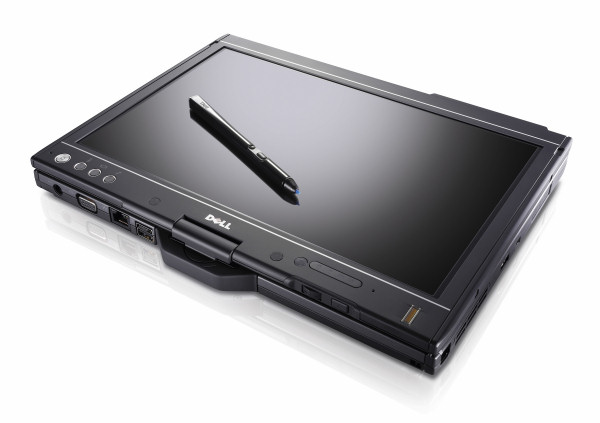
Dell today shipped the Latitude XT2, a convertible tablet PC with integrated multitouch and up to 11 hours of battery life.
"Multitouch capabilities on the Latitude XT2 allow users to use natural gestures like a pinch or tap for scrolling, panning, rotating and zooming that work with productivity applications they use every day," according to a statement from Dell.
Row, row, row your boat, TCP/IP...
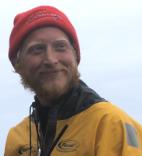
Bon voyage and safe travel, Oliver Hicks! Afloat on a flying carrot in the company of virgins, the... *cough* okay, let's try that again. Oliver Hicks, the 26-year-old rower who was the first man to solo-row eastbound across the north Atlantic, has set off on an attempt to be the first man to circle the globe rowing alone. And technology is there.
Hicks' attempt is sponsored by Virgin, home of Richard Branson, who knows a few things about circling the globe in unusual conveyances. Mr. Hicks, who holds the record for slowest transatlantic crossing (124 days), expects to spent 18-22 months in his attempt, with an overwintering period of a few months factored in. The craft involved is dubbed the Flying Carrot. To keep things interesting, he's choosing an extremely southern route -- the circumpolar current, at around 50 degrees south. There are no significant landmasses at that latitude, so the waves can get up to 50 feet.

Safer Internet Day marked internationally
Europe's sixth annual Safer Internet Day is being observed also by some in the US, as lawmakers and companies announce an assortment of efforts to make the Web and other digital technologies safer for the young ones.
A study recently conducted by the European Union indicated that across that continent, British parents are the most active in attempting to safeguard kids' online travels, with 77% using filtering software. More productively, 87% say they talk to their kids about what they do online, and an overwhelming percentage keep close to the computer while the kids are online.
Livermore's IBM BlueGene/P will be chased by one from Europe
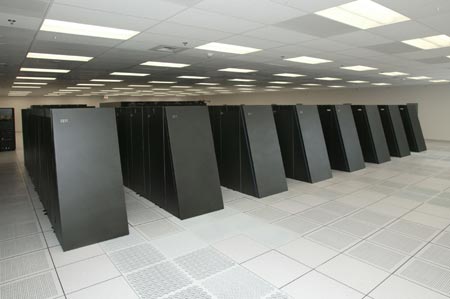
If the US government thought that investing DOE money into a 20 petaflop computer would give the country a competitive advantage, it learned today it's mistaken: IBM will also be partnering with German researchers.
While the initial goal for the BlueGene/P model being developed for the Forschungszentrum Juelich's Gauss Centre for Supercomputing will be to break just the one petaflop barrier -- the one thousand trillion floating-point instruction mark already superseded by two US Dept. of Energy supercomputers with IBM's help -- the design chosen is the same one the company announced last week for Lawrence Livermore Labs.

Music industry tectonic shift: Ticketmaster and LiveNation to merge
The big record labels are not only being pummeled by the digital music distribution model, but the looming threat of the even bigger "mega label." The merger of Live Nation with Ticketmaster could create the biggest mega label yet.
Live Nation is a promotion company which goes a step further than others because it acquires venues and signs artists. In 2006 it purchased House of Blues, and in 2007 debuted the Unified Rights Model, which controls recording, merchandising, fan sites, ticketing, broadcasting, sponsorship and marketing rights of its artists. Conceivably, an artist can be "signed" to Live Nation, and never play a single show outside of a venue owned or sanctioned by the company. Live Nation calls this its "global concert pipe," and a "vertically-integrated concert platform."

Computing in India, or the disappearance of the $10 laptop
How many Web sites have to repeat a story before it finally, at long last, becomes the truth? Not enough, as Tim Conneally has learned, in this story about how far the omission of a zero can take a news story.
I wanted to wait until the hype of the "$10 laptop" died down before I dove into the subject, because it was such an appalling mixture of doe-eyed optimism and sloppy reporting, that I simply could not touch it without turning it into an indictment of journalism as a whole. Instead, we look at what $10 really will get you.

Conficker virus grounds French fighter planes
A virus making the rounds on Windows machines apparently left three French fighter jets unable to load their computers' flight plans, according to news reports from Europe.
According to a report in the Daily Telegraph, translating earlier coverage from Ouest France, the Conficker bug infected French military computers so severely that in mid-January that navy's Rafale aircraft were grounded. The aircraft were apparently eventually fed their data through a secondary system. Meanwhile, the Navy -- which said through a spokesperson that it's thought the non-secured internal network was infected accidentally, via a thumb drive -- relied on fax, phone and snail mail to conduct many tasks.



