
Spotify agrees to block user-created Ministry of Sound playlists
Spotify is all about streaming music, creating playlists and sharing them with others. Who doesn't relish the idea of creating the ultimate mixtape and sharing with not just their best friend, but the whole world? Music fans love it, and so do the musicians who earn royalties from making their work available.
But Ministry of Sound felt a little differently about things. Back in September, the dance brand took Spotify to court, claiming that the music streaming service was refusing to delete playlists created by users that mimicked the tracklisting of Ministry of Sound releases.

Major organizations face looming information crisis
Big data, cloud technology, social networking and the switch to mobile computing are all contributing to an increase in the amount of information enterprises have to deal with.
This is forcing companies to focus on the information that’s most relevant, risk related and value generating. As a result Gartner is predicting that 33 percent of Fortune 100 organizations will experience an information crisis by 2017, due to their inability to effectively value, govern and trust their enterprise information.

UK's Optic Nerve program spied on millions of Yahoo users' video chats -- found porn
It sounds like something from a James Bond film -- or something from a creepy news story about a landlord stalking one of his tenants -- but the headline relates to a real story. We're all only too aware of the activities of the NSA and other governmental agencies monitoring the telephone and internet activities of people around the world, but the latest revelations see things taking a turn for the seriously sinister.
The UK intelligence agency GCHQ, between 2008 and 2010, tapped into the webcam chats of millions of Yahoo users.

AVG dumps LiveKive cloud backup service -- here’s what you need to do next
AVG has announced plans to discontinue its LiveKive cloud-based backup and sync service for Windows and Macs. The decision is unsurprising -- thanks to underwhelming reviews and fierce competition, it appears AVG has decided to concentrate its efforts on its core security products.
Existing LiveKive users won’t be cut adrift immediately, however: the service will continue as normal until April, and data won’t actually be deleted until August.

Mark Zuckerberg addresses MWC 2014 -- looks to get the world online
Mark Zuckerberg spoke at the Mobile World Congress today, saying that there needs to be some "pretty dramatic changes" to help to get more people online, pointing out that most people in the world simply do not have access to the internet. The Facebook founder has already launched Internet.org with a view to getting more people online around the globe and this is referred to as an "an on-ramp to the internet" -- he wants to get a billion people online in the next five years.
Zukerberg's goal is fairly simple. He feels that there are a number of basic services -- he mentions weather and messaging specifically -- that everyone should have access to, and this is what Internet.org provides. He admits that Facebook is not able to connect everyone without help, and suggested the possibility of working with more partners in the future. It seems as though this is a venture that Zuckerberg has taken a broad view with. At the moment it is a venture that is losing money, but this is not an example of martyrdom: "If we do something good for the world, eventually we'll find a way to benefit from it".

Why Chromebook is good for students
Today, at ZDNET, James Kendrick's commentary "Chromebooks and students: Long term trouble for Microsoft" adds to a growing meme. With a few schools deploying Chromebooks (emphasis few) and rumors Microsoft has slashed Windows licensing fees (remember unconfirmed), recurring theme "2014 is year of the Chromebook and Windows is in deep dodo because of it" isn't surprising. But just because bloggers say something's true often enough, doesn't make it that way. Twenty fourteen isn't year of the Chromebook, nor is its utility to the education market guaranteed.
That said, Kendrick makes some good points about why Chromebook appeals to students. I won't recap them. This isn't an aggregated synopsis. You can read his fine points. My post adds to them, from experience. I am a long-time Chromebook user.

New networked flash storage solution delivers competitive advantage
San Diego-based Astute Networks is announcing a new software release for its ViSX family of performance storage.
ViSX OS 5.0 adds Network File System (NFS) v2, v3, and v4 to its existing iSCSI support. The ViSX range also now offers an expanded range of capacity options to meet the growing demand for high application performance in both physical and virtual environments, including OpenStack support for cloud deployments.

Companies are overlooking a new generation of security threats
We reported yesterday on businesses being unprepared for the threats presented by BYOD. But according to a new study by Dell this is just one of a range of new threats that are being overlooked.
Technologies like BYOD, mobility, cloud computing, and internet usage, as well as internal actions both accidental and malicious, introduce organizations to a multitude of new risks.

Hosted virtual desktop helps businesses migrate to the cloud
One of the problems with migrating systems to the cloud is ensuring a consistent means of access for users in different locations and with different devices.
Cloud services provider dinCloud has an answer in the form of webHVD, an HTML 5 virtual desktop that’s fast secure and easy to deploy.

96 percent of applications have security vulnerabilities -- and it's getting worse... or better
Publishing its Application Vulnerability Trends Report, Cenzic states that virtually all of the applications it tested had at least one security vulnerability. A staggering 96 percent of apps exhibited security issues, and it looks as though things are on a downward spiral.
In a similar report published last year, it was found that the median number of flaws was 13; this year it has increased to 14. So it appears as though things are getting worse... but is this the full story?

Skyhigh helps quantify the risk from corporate cloud usage
The cloud is increasingly popular with businesses because of its flexibility and low infrastructure costs, however, it does present risks when compared to running systems in house.
A new product from California-based Skyhigh Networks is aimed at quantifying the risks associated with public cloud services and takes the guesswork out of understanding and managing them.
Simpler, faster analytics for QuickBooks with InsightSquared
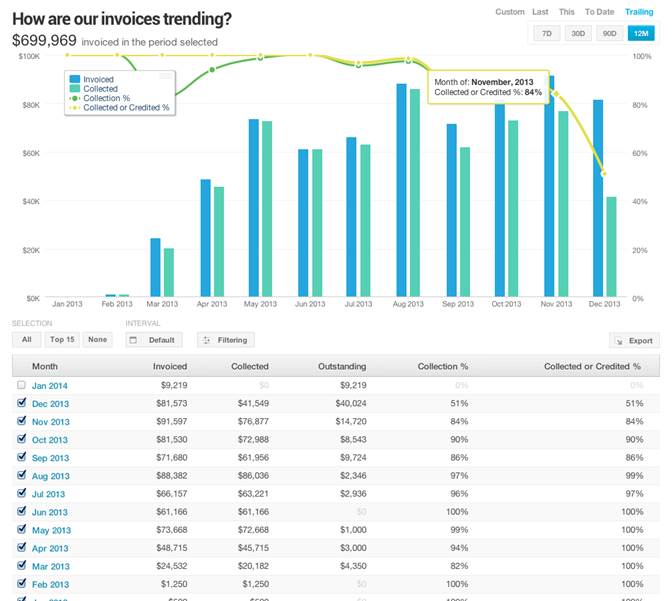
When it comes to invoicing and accounting packages for smaller enterprises QuickBooks is one of the first names that comes to mind
Now analytics specialist InsightSquared has launched a SaaS package for QuickBooks that lets users have immediate access to financial dashboards and reports, in addition to sales & marketing data.

Oracle delivers enterprise financial planning in the cloud
Effective financial planning and budgeting is essential for all businesses, but the software needed to support it can be expensive.
ERP specialist Oracle has released its Oracle Planning and Budgeting Cloud Service to help businesses harness the power of integrated financial planning cost effectively and fast.

CloudSOC makes enterprise clouds secure and compliant
As businesses move their data to the cloud they can often be caught out by the need to comply with audit and usage reporting requirements.
Cloud security specialist Elastica has a solution to this with its new CloudSOC product which helps companies and employees use the cloud whilst remaining secure and compliant.

The Old Reader gets a Premium level, adds better search and more
Since the death of Google Reader last year, it seems RSS has been steadily heading towards becoming a paid service. Many of the front-runners in the field, while still offering a free plan, are pushing "premium" access.
Now The Old Reader joins Feedly, InoReader and others in entering this field. The company is promising a number of perks for those who pony up the $3 per month, or $30 per year. Features will include full-text search, faster feed refresh times, six months of post storage and more.