TeslaCrypt 4 ransomware now features unbreakable encryption and is even more dangerous for victims
Apple might be currently talking about its unbreakable encryption and how it's a good thing for privacy, but the FBI ruing it. The privacy arguement certainly stannds up to scrutiny, but strong encryption can also be used as a weapon, as demonstrated by countless examples of ransomware. There are numerous breeds of ransomware out there, but one of the most prolific is TeslaCrypt.
It's just a year since the first version of TeslaCrypt appeared on the scene, and it's gone through various updates and iterations over the ensuing months. Now it's hit version 4 and as well as continuing to threaten victims with sharing their files online, it also boasts what is being referred to as 'unbreakable encryption'.

Apple's fight with the FBI is about LGBTQ issues as well as privacy
As the battle between the FBI and Apple rumbles on, the debate about encryption has intensified, bringing with it renewed discussion about privacy. There are few people who would want to give up their right to privacy and allow unrestricted access to their personal communication, but there are some for whom privacy is even more important.
Tim Cook is just one of the voices shouting that a backdoor for the government would be a backdoor for anyone. Most people and companies have sided with Apple saying that rather than backdoor access, what's needed is stronger encryption, greater security, even more robust privacy. It's something that has the support of people from all walks of life, but it's an issue that's very close to the hearts of the LGBTQ community.
Apple vs FBI: Tim Cook concedes helping authorities is a theoretical possibility
In the Apple vs FBI fight, the issue is very black and white for many people; you support Apple's position of standing firm against the FBI, or you believe the FBI should have unfettered access to whatever data it wants, regardless of the consequences.
Tim Cook has been steadfast in his position, but in an interview with TIME the Apple CEO admits that the situation is not entirely binary. Presented with a thought experiment Cook appears to concede there are gray areas, opening up the possibility of assisting the FBI to break into the San Bernardino shooter's iPhone.
Majority of IT pros support Apple in legal fight with FBI
Encryption is a must-have in today’s digital communications, IT pros agree, adding that what the government is (trying to) achieve with surveillance could mean the death of privacy altogether.
Those are the results of a new survey conducted by security firm AlienVault. It surveyed the attitudes of more than 1,500 IT (including security) professionals about today’s privacy, and came up with interesting results -- 34 percent believe the government should be able to eavesdrop on communications for the purposes of national security.
Third-party encryption renders iPhone backdoor useless
Let’s assume for a minute that the FBI got its way. It coerces Apple into disabling the self-destruct function on the San Bernardino terrorist’s iPhone, allowing it to brute force the password. Effectively, the FBI and Apple create a backdoor that theoretically works the same across all iPhones. Police even uses the same tactic on the dozens of other iPhones that are currently involved in active investigations. People across the world sacrifice their privacy, while the police has a new tool to fight terrorists.
Except they don’t, really. Sure, iMessage and other iCloud services could be decrypted without a password, but what Apple critics often fail to realize is the abundance of third-party encryption tools widely available. Free, open-source alternatives exist to encrypt chats, phone calls, files, and even entire hard drives. That pesky self-destruct function the FBI is so eager to remove? Alternatives for that exist as well, and they are all easily accessible with nothing more than a Google search. By removing the default encryption built in iPhones, the FBI isn’t stopping terrorists. It’s merely inconveniencing them.
Symantec introduces website encryption service
Symantec today announced the global release of a new product which will help companies encrypt user data on their websites.
The new product is called Encryption Everywhere, and it will be offered through hosting providers. According to a press release following the announcement, there will be a couple of levels of encryption and general protection the new service will offer, but Symantec would love to see every "legitimate" website in the world have at least the basic level of encryption by 2018.
Malvertising campaign targets Americans through major websites including BBC and New York Times
Top news websites including the BBC, the New York Times and MSN were hit over the weekend by a co-ordinated malware campaign. Delivered through the advertising networks used by the sites, the malvertising attack aimed to install ransomware on victims' computers.
On-site ads are far from loved, hence the prevalence of ad-blocking tools. But as well as being an annoyance, online ads can also pose a serious security risk -- something highlighted by this attack. The infected ads redirected people to servers hosting the Angler exploit kit and was engineered to target US-based web users.
Limiting encryption affects security and competitiveness
The Information Technology and Innovation Foundation (ITIF), a nonpartisan research and educational institute and policy think tank, today became the latest to come out and urge the US government not to limit the commercial use of encryption.
In its new report, entitled Unlocking Encryption: Information Security and the Rule of Law, co-author Alan McQuinn -- an ITIF research assistant -- argued that restricting encryption for use by law abiding citizens and businesses would reduce overall security and be ineffective at keeping encryption out of the hands of terrorists.
Encrypt all the things! Facebook, Google and WhatsApp to increase privacy and encryption
Privacy and security has always been a hot topic, but never more so than in recent months. The Apple/FBI case has really brought things to a head, enlivening the debate between privacy and security advocates, and those who side with the government. As Apple fights to prevent the FBI from accessing the San Bernardino shooter's iPhone, Facebook, Google and others are looking to increase encryption and lockdown user data even further.
The Guardian has learned that a number of Silicon Valley companies are working on ultra-secure encrypted messaging systems. With President Obama having made a sideways reference to supporting the inclusion of backdoors for government, Facebook is planning to not only bring encryption to Whatsapp's voice messages, but also to bolster the security of Facebook Messenger.

Only collaboration will solve the encryption dilemma
"They who can give up essential liberty to obtain a little temporary safety deserve neither liberty nor safety". So goes the quote from Benjamin Franklin, one of the Founding Fathers of the United States, in 1755. Little did he know that over 250 years later, his words would be frequently cited in one of the most complex debates of modern times.
In a world where data is collected, shared and sold as the norm, the liberty vs. security question has never been so relevant. The topic has been brought into the public eye by the UK Home Secretary’s draft Investigatory Powers Bill -- or Snoopers’ Charter -- and honed-in on the issue of encryption. More specifically, whether government agencies should be given the power to access encrypted, private communications, by forcing service providers to hand them over.

Telegram gets major 'Supergroups' update
When it comes to cross-platform chat, I used to be a huge proponent of Skype. Since Microsoft's offering is on a number of platforms, it made sense. Unfortunately, the company didn't keep up with quality, letting Skype get stale. Even worse, it has seemingly abandoned its Linux development, making it a non-starter for many.
Telegram is emerging as one of the best cross-platform chat solutions, being available for Windows, Android, iOS, Ubuntu, etc. Best of all, it is constantly being updated. It is beautiful and clearly cared for. Not to mention, it offers encryption -- something very important in today's security climate. Today, one of its killer features, Supergroups, gets a major upgrade. Yes, Telegram is getting even better.
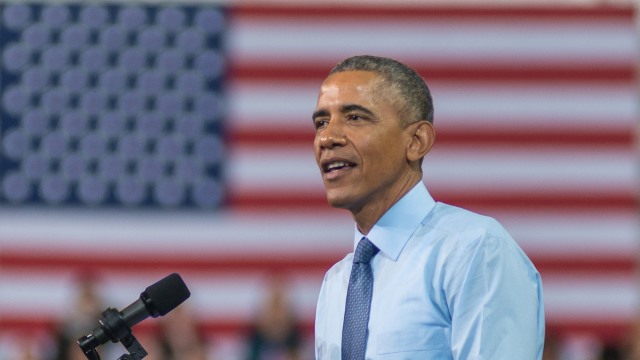
Privacy and security killer: Obama supports backdoors to bypass encryption
The on-going battle between Apple and the FBI has brought encryption and security to the fore once again. After remaining silent on the subject for some time, President Obama -- speaking at SXSW -- said that he was opposed the idea of encryption mechanism that are so strong it prevents governmental access.
"If technologically it is possible to make an impenetrable device or system where the encryption is so strong that there is no key, there's no door at all, then how do we apprehend the child pornographer, how do we solve or disrupt a terrorist plot?" he wondered aloud, his almost rhetorical question playing neatly on two of America's biggest fears. He suggested that security keys should be made available to third parties, saying "you cannot take an absolutist view" when it comes to balancing security and privacy. But Obama has a solution: backdoors.
Justice Department accuses Apple of false rhetoric, pooh-poohs privacy concerns
Ahead of the hearing due to be held on 22 March, the Justice Department has lashed out at Apple in its latest response to the company's refusal to unlock the San Bernardino iPhone. Playing an emotional game, the DoJ says "Apple deliberately raised technological barriers that now stand between a lawful warrant and an iPhone containing evidence related to the terrorist mass murder of 14 Americans."
It says that only Apple is able to remove the barriers that are currently in the way, "and it can do so without undue burden". Apple has already made it abundantly clear that it will not help the FBI in creating what it describes as a backdoor into the iPhone at the center of the case.
FCC's Tom Wheeler wants to protect internet users' privacy by limiting ISPs' personal data usage
The chairman of the Federal Communication Commission has put forward a set of proposals to protect internet user's privacy. Tom Wheeler wants to place limits on how ISPs are able to use customer data in much the same way that phone companies are regulated.
The amount of unencrypted data ISPs have access to which can be used for advertising and marketing worries Wheeler. The FCC already governs how phone companies can use and resell customer data, and he believes the same rules should be applied to ISPs. More than this, he wants to empower customers so they can choose precisely how their data is used.
Apple says FBI case is the start of a slippery slope to mass surveillance via iPhone
The battle between the FBI and Apple over access to the San Bernardino shooter's iPhone is turning into little more than a battle of wills. Both sides are using the case to make a point; Apple posits that unlocking the phone would set a dangerous precedent, the FBI says not unlocking the phone amounts to aiding terrorists.
There have been heavy words thrown from both sides, and the latest round of blows sees Apple claiming that the FBI could follow up its phone unlocking demand with a demand to switch on iPhone cameras and microphone for the purposes of spying on users. "Where will this stop?" asks Eddy Cue. "Some day, someone will be able to turn on a phone's microphone. That should not happen in this country".