The FBI wants you to think Apple is a terrorist sympathizer
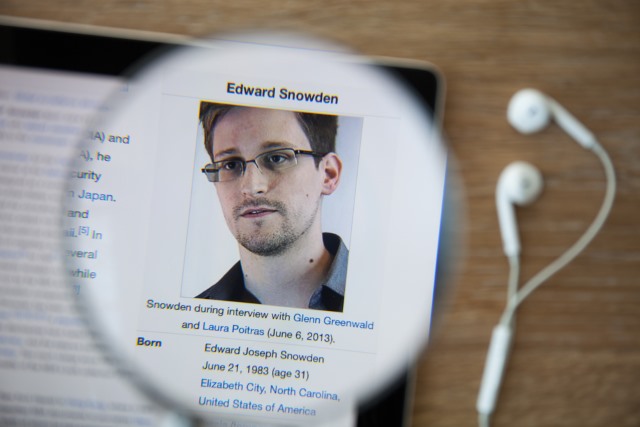
Speaking at the Common Cause Blueprint for a Great Democracy conference in Moscow via video link, Edward Snowden gave tech writers around the world an excuse to swear in headlines. Dismissing the FBI's claims as 'bullshit', the former NSA contractor says that Apple's involvement is not needed for the law enforcement agency to unlock the San Bernardino shooter's iPhone.
Snowden is not alone in decrying the demands being made by the FBI that Apple should create custom firmware to allow it to bypass the lock screen of the iPhone at the center of the terrorism case. He's one of a growing band of people convinced that the FBI is using the San Bernardino as a PR exercise. Apple has been criticized for being unhelpful, but more than this, the FBI is painting a picture that shows Apple as a terrorist sympathizer.
FBI should break Apple's encryption and keep it a secret
At the end of last month, Apple released a letter to its customers protesting about a US court order that could force the company to give the FBI a back door entry to individual iPhones. The case has brought the debate about government access to personal data and the protection of civil liberties to the fore once again. It has also made society and industry look more closely at the mechanics of data encryption and ask what makes the technology effective.
At its most basic, encryption provides a layer of protection for data at every stage of its journey from sender to recipient. If anyone tries to intercept or access the data without permission, they find themselves with a screen full of unintelligible gobbledygook. But encryption is only strong if there are no weak links in the chain. Apple argues that the FBI’s court order requesting a back door into its OS (Operating System) would force the company to create such a weak link in its encryption. This would undoubtedly speed up investigations of high profile crimes, but would come at high cost to the millions of law abiding iPhone users.
GCHQ: US and UK tech firms need to work together to solve encryption challenges
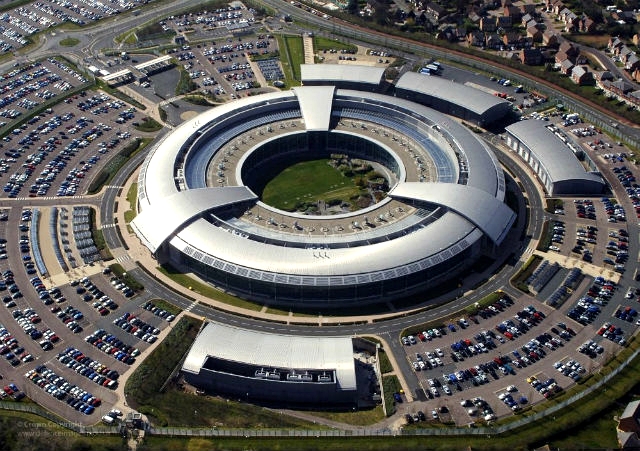
The head of GCHQ, Robert Hannigan, has called for greater co-operation between tech companies and governments. Speaking at the Massachusetts Institute of Technology, Hannigan referred to the "highly charged atmosphere" surrounding the encryption debate in a barely-concealed reference to the on-going battle between Apple and the FBI.
He said that in the coming months Prime Minister David Cameron will set out plans to improve the relationship between tech companies and intelligence agencies. He was at pains to stress that the controversial snooper's charter (or Investigatory Powers Bill) would not be used as an excuse to allow governmental spying or to introduce a ban on end-to-end encryption.

Security pros believe an encryption backdoor is open to abuse
The Government wants backdoor access to our devices so that it can protect us from terrorists and defend matters of national security. Even if its intentions are good, there are people out there that would abuse such a feature, security professionals attending the RSA conference agree.
Endpoint protection and response, security and compliance solutions company Tripwire surveyed 198 security professionals at the RSA Conference 2016 in San Francisco. Out of those surveyed, 81 percent said it was certain (or at least very likely) that cyber-criminals would abuse the government’s access to encrypted data via a backdoor.

Hillary Clinton says ¯\_(ツ)_/¯ about Apple-FBI encryption battle
It seems that just about everyone has something to say about the on-going battle over encryption that is raging between Apple and the FBI. While tech firms have rallied behind Apple's decision not to help the FBI bypass the lockscreen of the San Bernardino shooter's iPhone, Donald Trump has taken the opposing view and called for a boycott of Apple products.
Presidential hopeful Hillary Clinton is taking a more pragmatic approach. Describing the situation as "the worst dilemma ever", the former First Lady refused to side with either Apple or the FBI, saying "I am not expert in any way to tell you how to do it".

Mac users targeted by KeRanger ransomware -- here's how to remove it
Ransomware is a growing problem, with businesses and individuals increasingly having their data encrypted and held to ransom. As with so many forms of malware, it has been PC users that have borne the brunt of attacks, but over the weekend it was Mac owners that were targeted by the KeRanger ransomware.
The malicious software first appeared on Friday and is said to be the first fully-functional example of ransomware aimed at Apple devices. KeRanger was found to be installed alongside the Transmission BitTorrent client, and while Apple has used its Gatekeeper security system to prevent further infections, if you have installed Transmission 2.90 there are steps you need to take to clean up your system.

Big Brother's crystal ball: China developing software to monitor citizens and predict terrorist activity
We've become used to the idea of online surveillance thanks to Edward Snowden blowing the lid off the activities of the NSA and GCHQ. While it's easy and natural to bemoan the infringement of privacy such surveillance entails, no one ensures as limited and controlled an internet as the Chinese.
There's the famous Great Firewall of China for starters, and as part of a counter-terrorism program the country also passed a law requiring tech companies to provide access to encryption keys. Now the Communist Party has ordered one of its defense contractors to develop software that uses big data to predict terrorist activity.

Amazon values encryption so much that it drops support on Kindle Fire tablets
Amazon has came out in support of encryption, following Apple's recent legal battles with the US government, saying that it "plays a very, very important role" in protecting customer data.
But you might be surprised to learn that Amazon has also decided to quietly drop support for full disk encryption on its Android-based Kindle Fire tablets. Since it is portraying itself as an encryption and consumer advocate, its decision to go in the opposite direction strikes me as sheer hypocrisy.

Updated Snooper's charter will allow police to remotely hack phones and computers
The UK's controversial Snooper's charter (or draft Investigatory Powers Bill) has been updated to grant the police sweeping new powers. The new legislation will permit authorities to not only access the browsing histories of suspected criminals, but also to remotely hack into computers and phones in certain circumstances.
Previous version of the bill had limited such powers to the investigation of "serious crime", but the updated version expands this dramatically. Home Secretary Theresa May is hoping to push the draft Investigatory Powers Bill through parliament later this year. The bill has already met with strong criticism from not only privacy groups, but also governmental advisers. While there are some concessions to protect unbreakable encryption, the latest changes will do little to assuage concerns with the bill.

Tor Project says Google, CloudFlare and others are involved in dark web surveillance and disruption
With privacy concerns and the threat of surveillance from the likes of the NSA, more and more people are turning to the dark web and Tor. The anonymous, encrypted network has become a haven for not just illegal activity, but also for those who simply don’t want what they do online to be tracked and traced.
But now the Tor Project has voiced concerns that CDN and DDoS protection service CloudFlare is monitoring Tor traffic by introducing CAPTCHAs and cookies. CloudFlare is not alone: similar accusations are levelled at Google and Yahoo which are described as 'larger surveillance companies'. Concerns about interference with Tor traffic have been raised by project administrators in a ticket entitled "Issues with corporate censorship and mass surveillance".
Mozilla sides with Apple against FBI -- proposes basic principles for government surveillance
The ongoing dispute between the FBI and Apple is absolutely chilling. It shakes me to my core to think our government wants to force a company to write code under the guise of anti-terrorism. Quite frankly, the oft-argued opinion that supporting Apple in this regard is anti-American is not only wrong, but insulting. My soul still aches from 9/11, and I love America, but I also support Tim Cook and the company's fight to protect our civil liberties.
But forget my opinion -- major tech companies, such as Google and Microsoft, are standing up and pledging support for their competitor, Apple. Now, open source darling, Mozilla, is voicing its support too. Taking it a step further, however, the Firefox-maker is also proposing basic principles for government surveillance -- sort of like a bill of rights for encryption and surveillance.
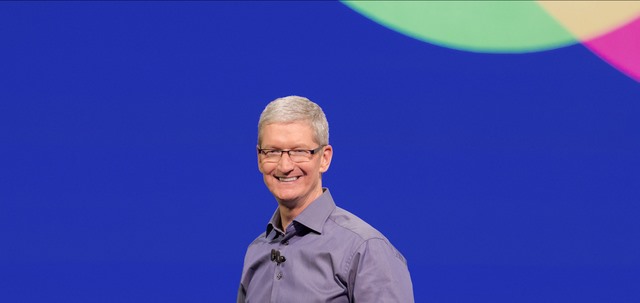
Tim Cook goes off-script describing FBI iPhone backdoor request as 'cancer'
Say what you like about Apple, one thing is for sure -- it is one of the most scripted and tightly-controlled companies in existence. Everything is stage-managed to within an inch of its existence. Leaks about upcoming releases are rare, and there is a tight rein on the media and who has access to its products for review. So when the FBI asked Apple to unlock the iPhone of the San Bernardino shooter it was hardly surprising that the company was a little shaken and unprepared.
This was a media situation Apple was not in control of. Tim Cook has gone on the offensive in recent days, defending his company's decision not to help the FBI, and in a new interview with ABC News the CEO referred to the request to unlock the phone as requiring "software that we view as sort of the equivalent of cancer" -- something of a shocking thing to say when you consider the cause of death of his predecessor, Steve Jobs.

Bill Gates is wrong
I see something disingenuous about Microsoft cofounder Bill Gates supporting the government's demands that Apple selectively unlock an iPhone used by one of the San Bernardino, Calif. shooters. The former CEO turned philanthropist spoke to the Financial times in an interview posted today. The implications for Microsoft cannot be overstated, and the company's current chief executive should state corporate policy.
Gates' position aligns with the government's: That this case is specific, and isolated, and that the demand would merely provide "access to information". Here's the thing: The interviewer asks Gates if he supports tech companies providing backdoors to their smartphones. The technologist deflects: "Nobody's talking about a backdoor". Media consultants teach publicly-facing officials to offer non-answers exactly like this one. The answer defines the narrative, not the interviewer's question.

Thanks to encryption, UK efforts to block torrent sites are pointless
In the UK, ISPs are required to block access to a number of big-name torrent sites -- the thinking being that sites such as The Pirate Bay are used primarily for (gasp!) downloading pirated material. Despite the government's desire to control what people can access online, good old HTTPS means that people are able to very easily bypass any blocks that may be put in place.
There are all manner of proxy services and mirror sites that provide access to otherwise-blocked content, but these are really not needed. With the likes of The Pirate Bay and Kickass Torrents offering secure, encrypted connection, accessing the goodies they contain could involve little more than sticking an extra 's' in the URL.

Why Apple's shameless fight with the FBI is all about ego, not just cause
After spending the last few days soaking up as much as possible on the Apple-FBI San Bernardino iPhone spat, the evidence -- in my eyes -- has become crystal clear. Apple's planted itself on the wrong side of history here for numerous reasons, and is using nothing less than a finely scripted legalese tango in defending its ulterior motives.
As a part time, somewhat auxiliary member of the tech media at large, I'm a bit embarrassed at how poorly this story has been covered by my very own colleagues. Many of those who should undeniably have a more nuanced, intricate understanding of the technical tenets being argued here have spent the last week pollinating the internet with talking point, knee-jerk reaction.