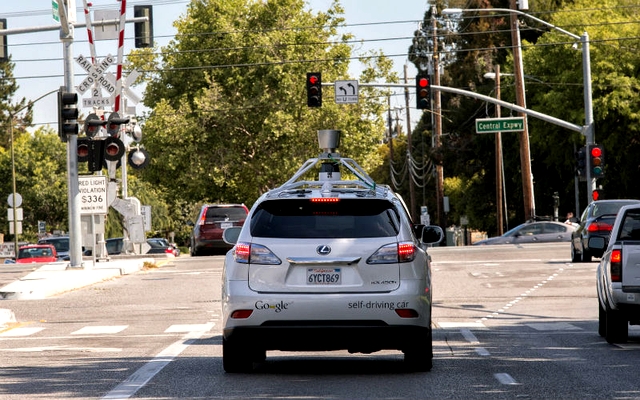
Google's now testing self-driving car in Texas
This week has been a particularly exciting week for Google, as the company has started testing its self-driving car in Austin, Texas. The car in question is a specially equipped Lexus prototype, and with the new change of scenery the company is hoping that with it will learn more about the car’s performance in a different environment and road conditions, and how it reacts.
They have been testing self-driving cars since 2009, but most of the testing was done within Silicon Valley. Outside of Silicon Valley, Mountain View in California has been the primary testing ground, but with the ramping up of testing Google hopes that the self-driving technology should be ready for commercial use by 2020.
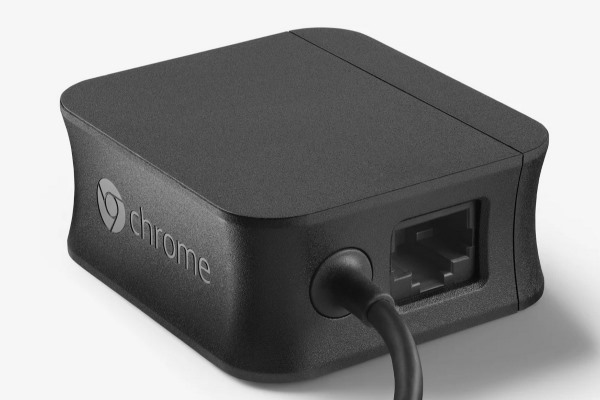
Chromecast Ethernet adaptor overcomes Wi-Fi problems
Google's Chromecast has gained quite a following of people looking for a cheap, simple way to stream content to their TVs. Part of the device's appeal is its ease of use and extensibility through the use of apps, but it is reliant on a steady Wi-Fi signal. If this represents a problem in your home, there's now a solution.
The new Ethernet Adapter for Chromecast does very much what you would expect -- it adds a wired Ethernet port to Google's streaming dongle. This is great news for anyone with a flaky Wi-Fi signal, or those looking to use Chromecast beyond their router's normal range.

Pressure mounts on Google to extend Right to Be Forgotten to US
The Right To Be Forgotten has proved controversial. A little over a year ago Google was told by a European court that it should accept requests to remove from search results pages that are "inadequate, irrelevant or no longer relevant". Now, calls for the scheme to be extended to the US are growing ever-louder.
Consumer Watchdog not only says that the Right To Be Forgotten should be brought to the US, but also that Google's refusal to do so is an "unfair and deceptive" business practice. The consumer group is writing to the Federal Trade Commission calling for the search giant to be investigated and forced to consider the removal of certain search results. As has been proved in Europe, it's something that is not without controversy.
Report suggests Samsung is more reputable than Google, Microsoft and Apple
A company's reputation can make or break it. No matter how good the product, a poor perception of the brand can negatively impact it. Sony, for example, is still recovering from its numerous blunders, such as installing rootkits on Windows machines and having its PlayStation network hacked. The company was not particularly open about both situations at first, leading many people -- myself included -- to be hesitant to trust it.
Samsung, however, seems to be the darling of the tech sector lately. Its smartphones and tablets are wildly popular, despite pundits constantly looking for it to fail. Guess what? According to a new study, the company is more reputable than Google, Microsoft and Apple. The study looked at "social responsibility, innovation, product and services excellence, and creating a great workplace environment".
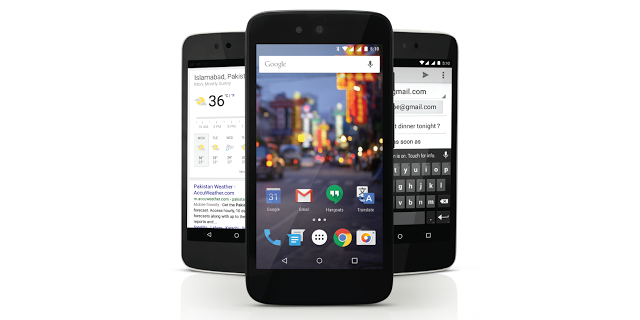
Google launches Android One in Pakistan
The Android One program targets consumers in emerging markets who are looking for smartphones with an untainted Android experience, devoid of the typical bloatware and customizations that they can expect from major vendors like Samsung. At the same time, Android One is also about offering that vanilla Android experience in an affordable package, so that more consumers can afford to make the switch to smartphones.
Android One launched in India in September of 2014, and has since expanded to include other Asian countries. The latest market to join the program is Pakistan, where QMobile's A1 is now available.

OnePlus has free Google Cardboard VR headsets for everyone!
Virtual reality is making a comeback. Forget the atrocious examples we endured in the 90s, now we have the likes of Oculus Rift to delight our senses, and Microsoft is tempting us with HoloLens. Neither of these are particularly cheap, but Google came up with a cheap alternative in the form of Cardboard.
As the name suggests, this is a foldable cardboard unit which can be used to transform a variety of smartphones into a fully-fledged VR headset. While much cheaper than the likes of Oculus Rift and HoloLens, Cardboard is not free... or at least, it wasn't. Ahead of the launch of OnePlus 2, OnePlus is offering its own OnePlus CardBoard for free.
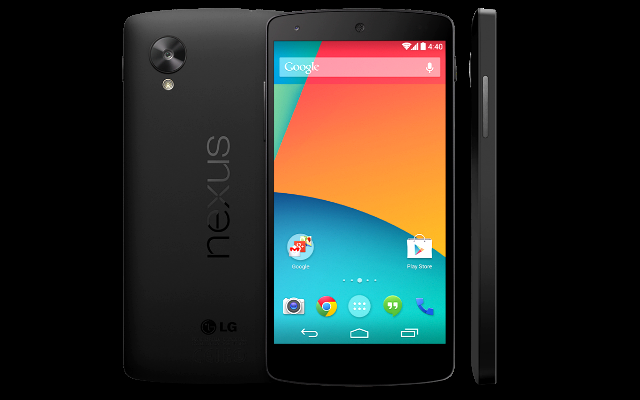
The 2015 Nexus 5 will be built by LG
The Nexus range of smartphones has proved a popular way to get a fairly high-end handset running stock Android at a decent price. Previous models have (largely) sold well, and there is always eager anticipation surrounding the next release. One thing people are always keen to know is just who is going to be making the handset.
According to a report by AndroidPIT, it is LG who will be responsible for the 2015 Nexus 5. A spokesperson said that the device is to be based on a yet-to-be-seen prototype rather than the LG G4. Based on previous launches, it's safe to assume that the release will coincide with the launch of the next version of Google's mobile operating system, Android M.

Google apologizes for labeling black people 'gorillas'
Google has issued an apology after the automatic tagging feature of its Photos apps labeled a black couple as 'gorillas'. This is not the first time an algorithm has been found to have caused racial upset. Earlier in the year Flickr came under fire after its system tagged images of concentration camps as sports venues and black people as apes.
The company was criticized on social networks after a New York software developer questioned the efficacy of Google's algorithm. Accused of racism, Google said that it was "appalled" by what had happened, branding it as "100% not OK".

Google puts lipstick on Gmail -- adds new themes and emojis
I am definitely a Gmail power user. Not only do I use it for much of my personal email, but business communications too. Does it bother me that the search giant scans the contents of my messages for advertising? Yes, a bit, but I realize there is no such thing as a free lunch.
What does really bother me, however, is how archaic Gmail looks nowadays. The appearance is boring and drab. To make matters worse, I know Google is capable of a beautiful redesign -- it is frustrating that the company just doesn't. Today, Gmail gets a little lipstick by way of new hi-res themes and new emojis.
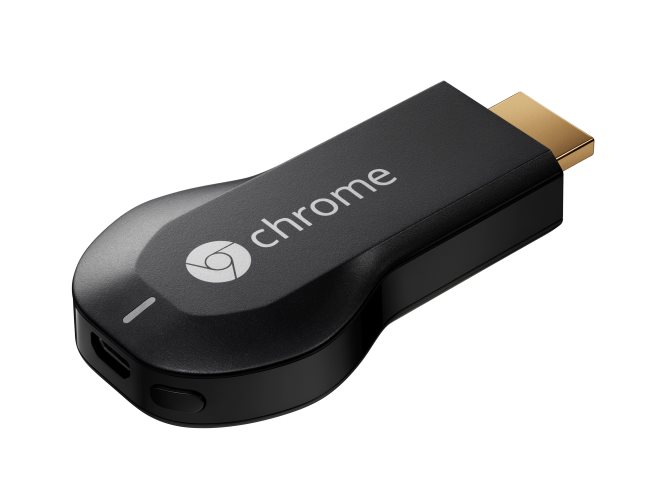
Chromecast update moves users to beta channel and breaks apps
A recent update pushed to Chromecast devices has caused a series of problems for users. One of the most obvious issues is that users who were signed up to the regular, stable update channel found that they had been moved to the beta channel without their permission. Although the problem started to appear a few days ago, Google has been slow to issue a fix.
The update has also caused problems with a number of Chromecast apps including YouTube, Plex, and HBO GO. Not all users have been affected by the issues, and Google insists that only "a small percentage of users" have the issue which is flagged up by a beta/developer string at the bottom of the screen.

Google will eliminate accidental mobile ad clicks
Ads are part and parcel of being online, but they can be particularly annoying for mobile users. When playing games on a phone or tablet, it's all too easy to accidentally tap an ad you have absolutely no interest in, pulling you out of the game you were playing or the site you were reading. If you've cursed when this happened to you, Google hears you.
The company is taking steps to make the "user experience" of ads a little better. It recognizes that advertisements that get clicked accidentally don't benefit anybody. They end up irritating the clicker, and are unlikely to be of value to the company that placed the ad. With around half of ad clicks being made by mistake, Google is now taking steps to stop this from happening -- great news for users and advertisers alike.

Anti-trolling site aims to stamp out online abuse, sexism, and homophobia
The day after the US Supreme Court voted to legalize same-sex marriage in all 50 states, the self-explanatorily named Stop Abuse Online website has launched. While the site has been set up with the intention of combating online abuse and trolling in general, female and LGBT victims are a particular focus.
The aim of Stop Abuse Online is to offer advice to those who find themselves falling victim to abuse -- be it online harassment, stalking revenge porn, or blackmail -- complete with legal tips about how to deal with different circumstances. The site is run by seven voluntary organizations in the UK and looks to bring the same protection to the web that people expect in the real world.
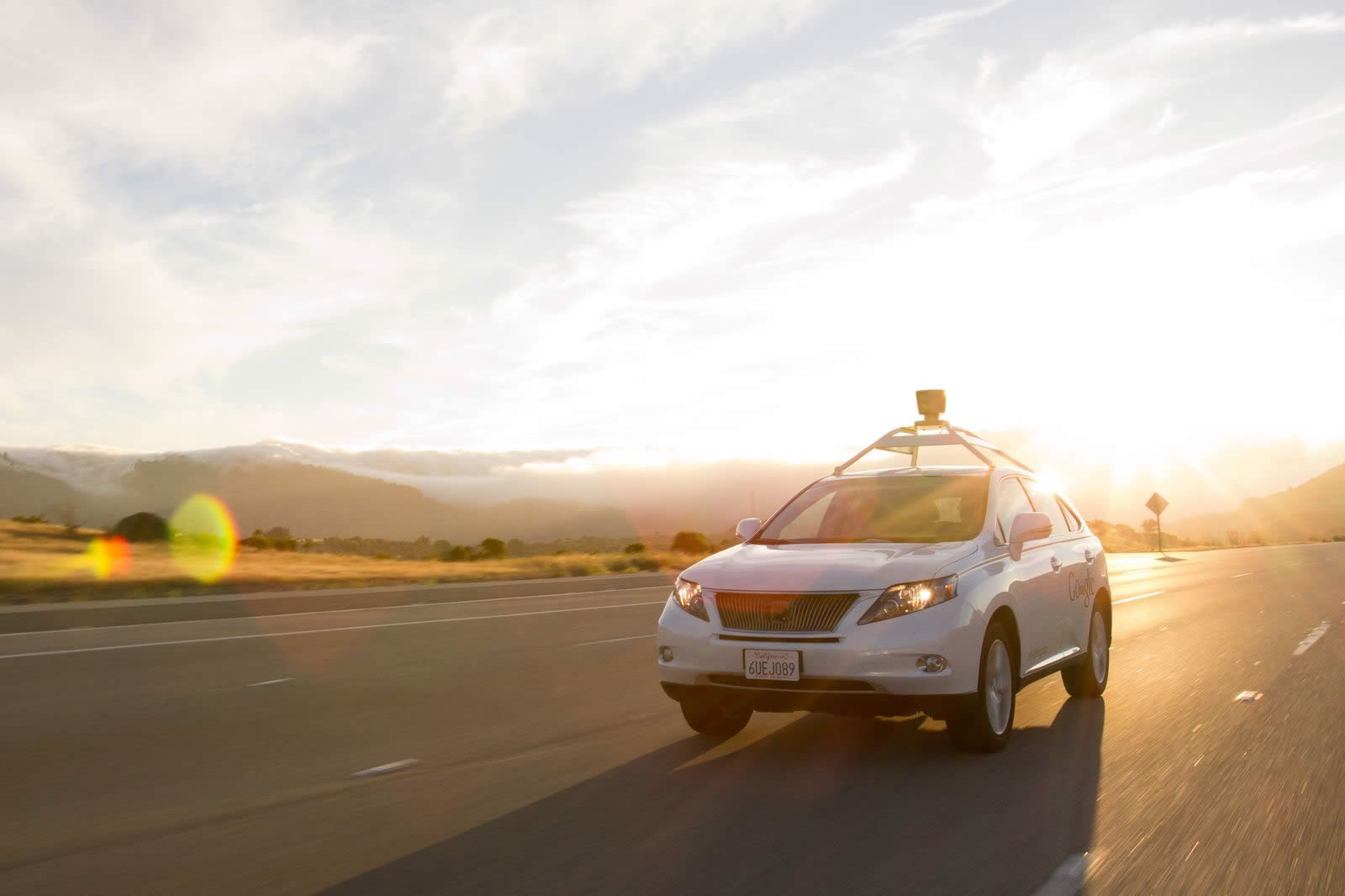
Google car cuts off rival self-driving vehicle [Updated]
A case of autonomous road rage nearly broke out on Thursday, after two competing self-driving cars barely avoided colliding with one another on a California roadway. It's being called the first incident of its kind.
As Reuters reports, one of Google's driverless car prototypes -- a modified Lexus RX400h crossover -- was cruising along San Antonia Rd in Palo Alto, CA. By happenstance, another driverless car powered by automotive company Delphi, was driving on the same road. Google's corporate headquarters and Delphi's self-driving research facility are both located nearby in Mountain View, CA.
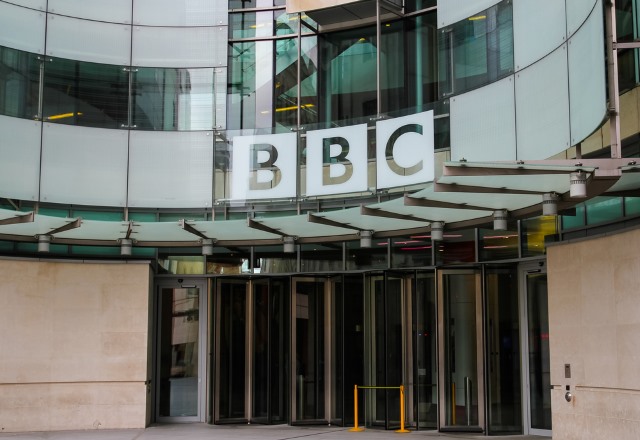
BBC reveals links censored by Google's Right To Be Forgotten
Google's Right To Be Forgotten gives people the chance to request the removal of search results linking to pages that contain information they believe to be "inadequate, irrelevant or no longer relevant". Google says it rejects more requests than it complies with, but there is still concern that the company is not providing enough detail about what it is doing. There have been calls for greater transparency from the company about the censorship that is taking place.
The BBC has published a list of all of the stories from its own site that have been removed from Google search results. The corporation announced that it wanted to be clear with people about which links has been deleted and plans to update the list each month. It already extends to nearly 200 entries and the BBC explains that while the stories may no longer be shown by Google, they are still available uncensored on the BBC site.
Google introduces Cloud Source Repositories -- new GitHub rival
Google closed its own project hosting site, named Google Code, earlier this year, in a move that allowed GitHub and Bitbucket to become the dominant platforms. The move away from project hosting only lasted a few months, with a new place called Cloud Source Repositories now available on the Google Cloud Platform.
Part of Google’s ever growing line of services on the cloud platform, Cloud Source Repositories allows users and teams to upload, build and deploy applications for the web and mobile.