
PC users, get rid of Adobe Flash end of life versions
Secunia Research at Flexera Software has published a report covering the fourth quarter of 2015 for 14 countries, regarding vulnerable software, applications and PCs.
Turns out we’re not really good at keeping our computers safe, and our software up to date.

Developer: Windows Store is a disaster
One of the features that an app store must absolutely get right is search. Users have to be able to find what they are looking for and discover titles that meet their needs. At the same time, developers who spend time creating apps need to have their titles easily available to potential customers. If one, or both, of these requirements is not met, that creates a serious problem.
Windows Store is in this exact situation, according to multiple developer reports. Microsoft has been unable, or, worse, unwilling, to make the search functionality as useful as users and developers might like, at a time when Windows Store is already being penalized by its pitiful selection of top-tier and quality apps.
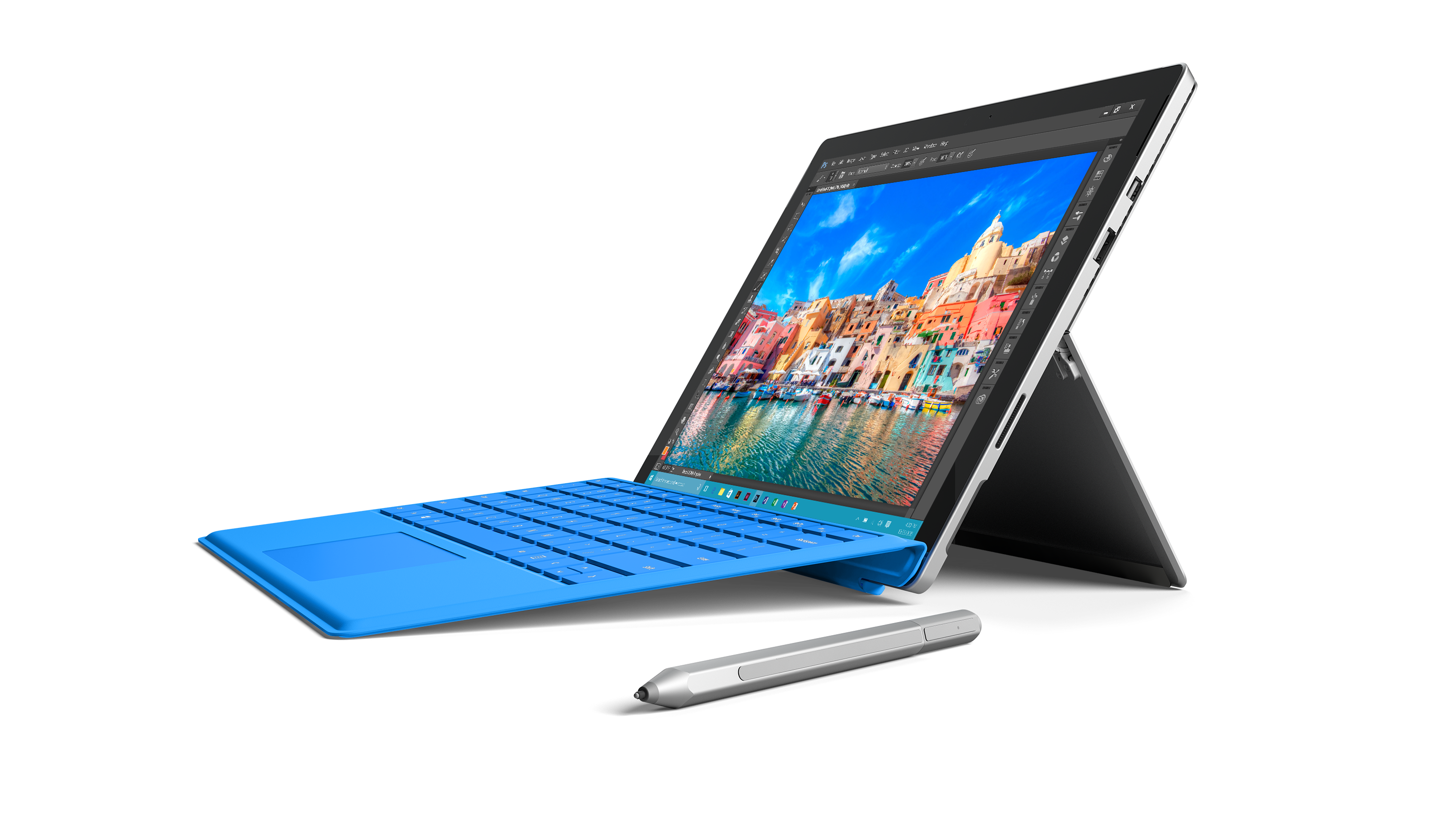
Microsoft debuts more powerful models of Surface Pro 4 and Surface Book… and a new gold pen too
If you’re thinking of buying either Surface Pro 4 or Surface Book, there’s quite a few variations in the range to consider, with different capacities for different budgets.
Today Microsoft launches the most powerful versions yet of both devices, and also introduces a new Gold Surface Pen for people looking to make a "bold statement" (Microsoft’s words, not ours).

Microsoft is finally hiding Skype users' IP addresses by default -- better late than never
Microsoft is a curious company sometimes. Quite often, it offers wonderful products, but then fails to truly focus on the details. A great example is Skype. On paper, it sounds great -- a cross-platform communication solution. Sadly, the Windows clients are quite ugly, and overall, it can feel half-baked. The company really needs to dedicate some resources to improving the user experience, but I digress.
The largest oversight with Skype, however, is that it can expose your IP address. Sure, there may be situations where you might want to share this, but for many users, it is simply a security and privacy faux pas. Today, Microsoft finally rights this terrible wrong, and will be hiding the IP by default. Better late than never, eh?
Windows 10 Insider Preview Build 11102 arrives on the Fast ring
Microsoft promised late last year that it would be speeding up the rate that new Windows 10 preview builds arrived on the Fast ring in 2016, and (so far) it’s been as good as its word. A mere week after Build 11099 was pushed out to insiders, there’s a new build ready to install.
Build 11099 was rather unexciting for the most part, as it simply introduced structural improvements to OneCore, the core that Windows 10 shares across devices. Build 11102 is a little more interesting and introduces one welcome new feature for Microsoft Edge.
This is how to get a free replacement power cord for your Surface Pro
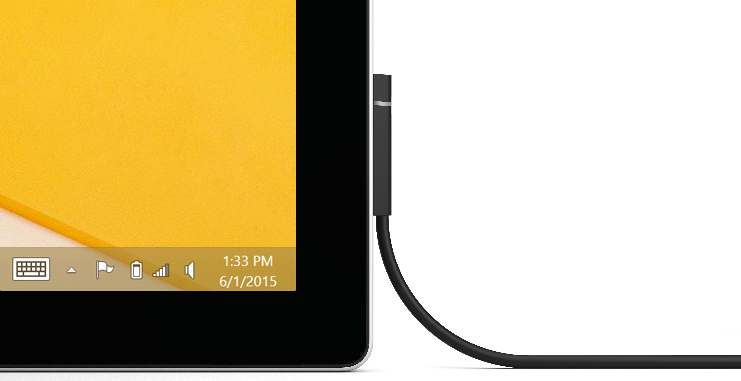
As you may already be aware, Microsoft has discovered that in certain situations the Surface Pro’s power cable could overheat, making it a potential fire hazard.
This is a problem that affects cables for the Surface Pro, Surface Pro 2, and Surface Pro 3 on devices purchased before March 15 2015 (in the US) or July 15 2015 (in all other territories). Microsoft has issued a voluntary recall, and you can now request a replacement power cord. The process is fairly simple, and this is what you need to do.
Premium ultrabooks and hybrid devices will keep PC market relevant
Combined shipments of PCs, tablets and phones reached 2.39 billion units in 2015, according to a new report from Gartner, with an increase to 2.54 billion units expected for 2018. As you might expect, phone shipments account for the vast majority of units, 1.91 billion of them to be exact.
The report says that PC vendors shipped a combined 246 million desktops and non-premium laptops in 2015. Things aren't looking good in the long term, as shipments are expected to drop to 219 million units in 2018 for these two categories. However, the PC market as a whole, which includes desktops, non-premium laptops as well as premium ultramobiles will see a rise in shipments until the end of 2018 to 312 million units from 290 million units in 2015.
Microsoft to donate '$1 billion' worth of cloud computing resources
With great profits, comes great responsibility. Nowadays, being profitable, creating jobs and selling quality products isn't enough from a publicity perspective. Take Microsoft, for example. Windows and Office has powered countless successful businesses, while the company employs thousands of folks globally. Yet, despite those things, in order to be seen as a friendly company, the Windows-maker -- and other corporations -- must be philanthropic too. You know what though? Regardless of motivation, its donations are much appreciated.
Today, Microsoft announces that it is donating "$1 billion" worth of cloud computing resources, which it claims is "measured at fair market value". True, this is not the same as donating $1 billion to the homeless or hungry, but it is still something for which to be thankful. With that said, the dollar figure is arguably subjective, as Microsoft is pretty much setting the value. Still, the potential for this donation is immense.
Microsoft to recall millions of Surface Pro power cords over potential fire risk [Update]
Despite getting off to a very shaky start, Microsoft’s Surface Pro is now a firmly established product that can genuinely replace not only your iPad, but your laptop too. However, there’s potentially bad news for anyone who purchased one of the company’s slates before 15 July 2015 (in Europe) or March 2015 (in the US).
Microsoft has discovered that in certain situations the Surface Pro’s power cable could overheat, making it a potential fire hazard.

Microsoft announces Minecraft: Education Edition
Going to school for many students is a total drag. In some schools, technology lags behind the "real world". Heck, I'm not an old guy, yet I had to learn the 100-year old Dewey Decimal System in elementary school -- something totally worthless nowadays. In other words, my interest in learning was negatively impacted by a lack of excitement and a failure to focus on the future. We kids knew the things we were being taught were dated.
Luckily, children have it much better these days. Between iPads, Chromebooks, and smartphones, everything is at their fingertips. Today, however, Microsoft-owned company, Mojang, announces that it is making education much more exciting with Minecraft: Education Edition. Yes, the wildly popular block-based game is being adapted for learning thanks to the purchase of third-party MinecraftEdu.
Don’t want Windows 10? Here's how to say no to the upgrade in Windows 7 and 8.1
Fed up of Microsoft aggressively pushing Windows 10 on you? Happy to stick with Windows 7 or 8.1? You’re not alone.
Microsoft doesn’t make it easy to say no to Windows 10 (wouldn’t it be great if there was a "no thanks" button you could click to make the upgrade message and installation files simply go away?) but you can reject it using a Group Policy Setting or a registry tweak.
How to restore features Microsoft removed from Windows 10
Windows 10 is a decent operating system, but Microsoft has seen fit to remove certain features found in previous iterations of the OS.
If you’ve upgraded to Windows 10 and have been disappointed to discover one or more of your favorite features have been removed, the good news is it should be possible to restore the missing functionality without too much effort.

Microsoft announces new flagship event for business leaders
Microsoft has introduced a new flagship event for business leaders, called Microsoft Envision, which will take place in New Orleans between April 4 and April 6, and registration is open now.
Microsoft Envision is designed to replace Microsoft Convergence as the premier event for business leaders such as CxOs and their senior department and functional leaders.

Unable to spark interest in Windows 10 Mobile, Microsoft infects iOS and Android like a cancer
At the moment, Microsoft is all about Windows 10. Such is the company's focus on its desktop operating system, that you would be forgiven for forgetting that Windows 10 Mobile is on the way as well. But here Microsoft has a problem. Not only has Windows 10 Mobile failed to infiltrate the public consciousness, those who are aware of the impending release are singularly indifferent to it.
Clearly Microsoft is not happy about this, but there's not much that can be done to force people into using Windows 10 Mobile (although given the company's track record with pushing Windows 10 to desktops, nothing would come as a surprise). Instead, Microsoft is having to content itself by spreading cancerously to iOS and Android, spreading the diseases of Cortana, the Word Flow keyboard and more to rival platforms.

Microsoft gets aggressive -- after 18 months nextgen CPUs like Skylake will only support Windows 10
Microsoft's aggressive pushing of Windows 10 is becoming legendary, with everything from irritating nag screens, to automatic downloading of set up files. Now things are taking a slightly different turn as the company says that after July 17, 2017, 6th generation Intel Core Skylake processors and other nextgen CPUs will no longer be supported for Windows 7 and Windows 8.1.
The announcement comes somewhat out of the blue, and is all the more surprising considering Microsoft's track record of lengthy support periods. Once the new deadline is reached, Microsoft says that it will only release the "most critical" security patches to these now-unsupported platforms, and even then the patches will only be made available if they do not "risk the reliability or compatibility" of other systems.