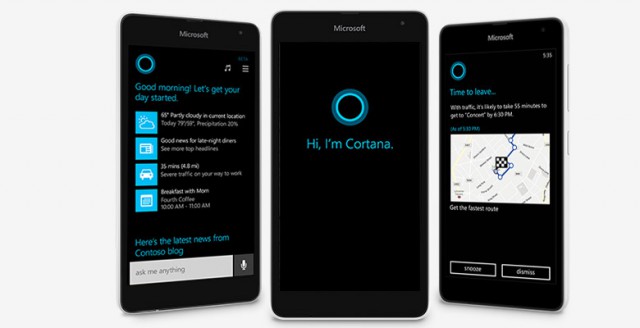
Microsoft: Not giving up on phones; aims to build profitable portfolio by releasing 'killer' handsets
Has Microsoft given up on Windows Phone? Will there be no new Lumia devices? Microsoft realizes the amount of debate and confusion it wittingly created earlier this month when it announced restructuring of its phone division, in which it showed the door to more than 7,000 employees. At the ongoing WPC event, the company went in-depth to convince people that it is still committed to doing great things with its mobile operating system.
At the event, Microsoft's Chief Operations Officer Kevin Turner made some new announcements. He boldly claimed that Microsoft will continue to make new Lumia smartphones -- and "killer" ones at that. He further noted that the recent restructuring at the company was done to make its phone platform grow profitability and become sustainable.
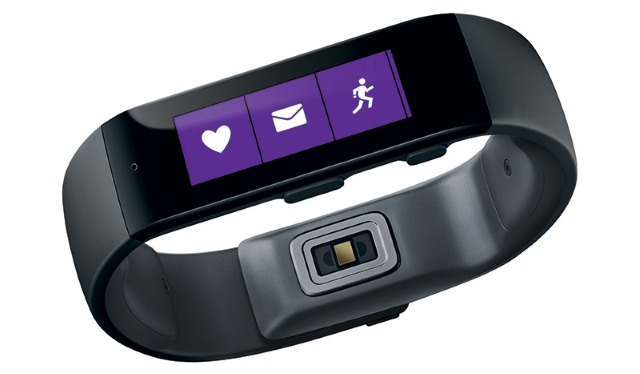
Microsoft WearDrive can triple battery life for wearables
Microsoft Research expects to almost triple the battery life of wearables through a technology called WearDrive which uses the aid of a smartphone.
The idea of the technology is to use the battery of the user’s smartphone to allow the wearable to handle high-battery consumption tasks, while also keeping the device on for a longer period of time.
Windows 10 is free because... Windows Phone
Windows 10 is free; that much we know. There was initially some confusion about the length of time for which this would be the case, but one of the biggest questions surrounding the giveaway has been 'why?'. Is Microsoft aping Apple? Does the company feel that the operating system was not good enough to warrant a price tag?
The actual reason is rather interesting, and was revealed in an interview between Satya Nadella and ZDNet's Mary Jo Foley. This is not (really) a bid to compete with Apple, nor is it (particularly) meant to encourage as many people as possible to move away from Windows XP, Windows 7, and Windows 8.1 (although this will almost certainly be a happy side-effect). Rather it is a move to boost the profile of Windows Phone.
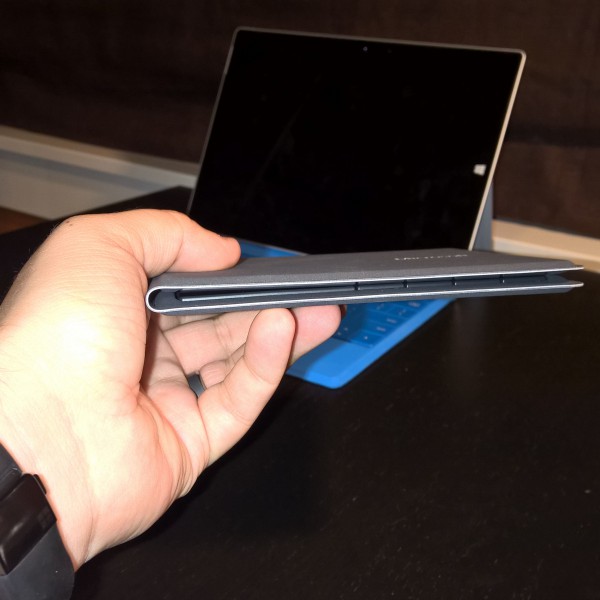
Microsoft Universal Foldable Keyboard now available -- brings Surface typing to all
Microsoft makes damn good hardware. The Xbox One and the Surface Pro 3 are works of art, beloved by many. Hell, even its peripherals, such as keyboards, mice and webcams are mostly winners.
One place where it doesn't shine, however, is the Surface Type Cover keyboard. I can get by with it when on the go, but I would certainly prefer a big beautiful mechanical variant for heavy lifting. If you do like the Type Cover, and have wanted to use it on your other devices, today is your lucky day. The Windows-maker announces the Universal Foldable Keyboard. Guess what it is? It is a universal keyboard... that is foldable. The keys and design are very reminiscent of the Surface Type Cover -- but do consumers really want that?
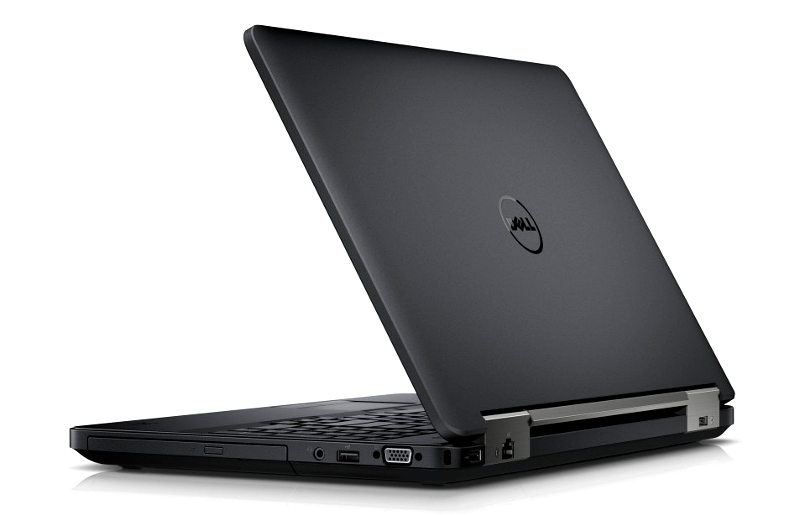
Forget what Microsoft said, Dell assures it will begin shipping Windows 10 laptops on July 29
It wasn't until recently that Microsoft explained when and how it plans to release Windows 10. The Redmond-based software giant noted that Insiders will be able to download the final copy of Windows 10 starting July 29, and weeks later, retail copies of it as well as Windows 10-powered laptops will be available to purchase in stores. But it appears, Dell won't be waiting that long.
The company, which had previously announced that it would begin shipping Windows 10-powered computers on July 29, reaffirms that it is still committed to its original promise. In a tweet, Michael Dell, CEO of Dell Inc, confirms the release date to all.
Don't put your business at risk by continuing to use Windows Server 2003
One constant in the technology industry is that technology continues to evolve at a rate that many find it difficult to keep up with. Microsoft, for example, is currently busy promoting the launch of its latest desktop operating system (OS) -- Windows 10 -- that will be available from July 29 in 190 markets around the world. The company’s expectations are high, with it professing a goal of putting Windows 10 on a billion devices within two to three years.
As with its desktop OS, Microsoft’s Server solutions are also at a turning point, with countless businesses around the world facing up to the stark reality that as one server version comes into being; support for another one will drop by the wayside; now it’s the turn of Windows Server 2003. But managing any migration is not for the faint hearted.

Microsoft introduces Azure Data Catalog and Power BI Desktop
This week is a big one for Microsoft and its Azure cloud platform, with major updates coming through before its Worldwide Partner Conference. The updates introduce a raft of juicy new features, including Azure Data Catalog and Power BI Desktop.
Azure Data Catalog is actually available in public preview today, and Microsoft describes it as an enterprise metadata portal for the self-discovery of data sources.
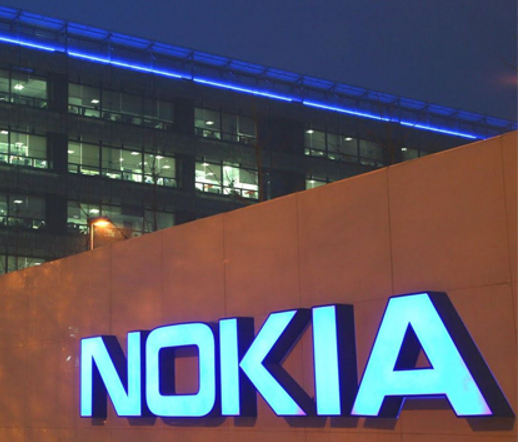
Nokia returning to smartphone business -- could be in 2016
Nokia is no stranger to the smartphone market. Once an iconic player in the game, the Finnish-based company sold its devices and services business to Microsoft last year. The company, however, plans to get back in the smartphone business, it confirms today.
Weeks after its CEO Rajeev Suri revealed company's plan to return to the smartphone business, in a blog post, it notes today that it will be establishing brand licensing model with partners that can be "responsible for all of the manufacturing, sales, marketing and customer support for a product."

Microsoft suspends availability of Windows 10 builds
If you haven't already downloaded Windows 10 build 10162 or 10166, you're now too late. Microsoft has suspended the availability of these two builds -- previously available on the Slow and Fast rings respectively -- in the run up to the big launch day in a couple of weeks' time.
As we edge closer and closer to the RTM build of Windows 10, Microsoft is now asking Windows Insiders to stick with the build they currently have installed for the time being. Anyone who hasn’t upgraded to these latest preview builds is out of luck. As well as disabling upgrading through Windows Update, Microsoft is also suspending ISOs and activation.
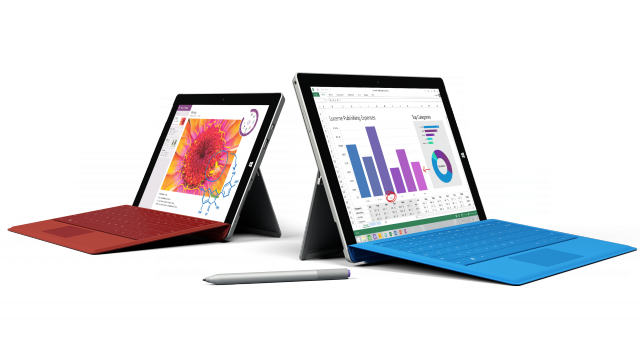
Microsoft to make Surface range more widely available, but delays Surface Hub
It’s not been exactly difficult to get your hands on a Surface slate, but Microsoft is set to dramatically expand the number of partners selling its touch-screen devices in the coming months.
Timed, naturally, to coincide with the launch of Windows 10, Microsoft says it will go from "having a few hundred partners selling and servicing Surface to a few thousand globally".
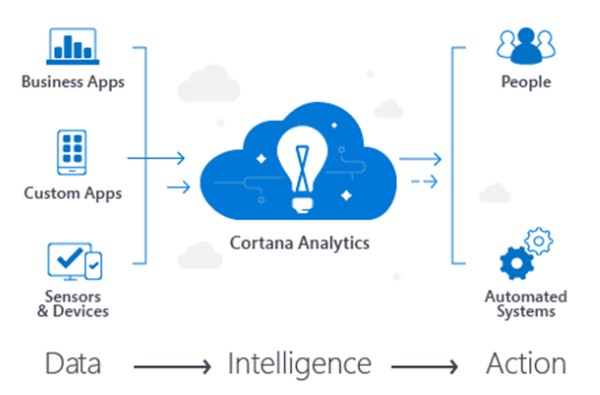
Microsoft launches Cortana Analytics Suite to leverage big data
Today at its Worldwide Partner Conference, Microsoft unveiled Cortana Analytics Suite. This is a set of tools designed for business to harness big data and use it to perform relevant, automated tasks. The suite neatly ties together the cloud, big data, and the Internet of Things to create a system that can be put to countless uses.
There are two big clues in the name that help to explain why Microsoft is describing this as a tool that will help to bring about "intelligent enterprise". Automated analytics takes the legwork out of dealing with data from apps, devices, sensors, and more, while Cortana integration means that users can interact with data in a more natural way.
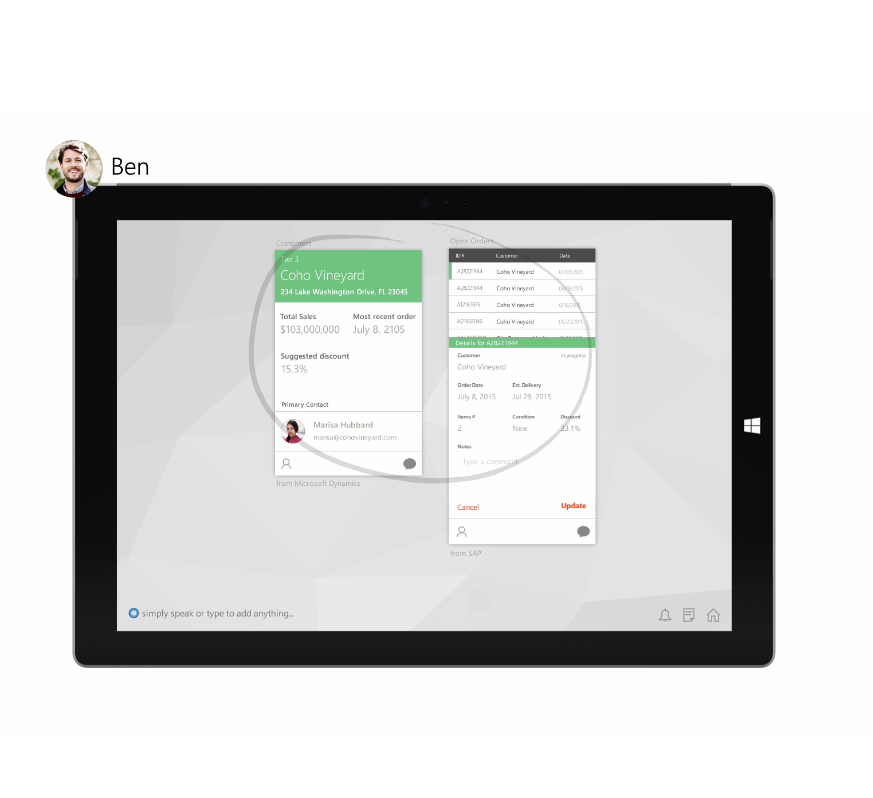
Microsoft Project GigJam humanizes business collaboration, delegation, and tracking
The future of business -- and for some, the present -- is a world without barriers. Gone is the anger-inducing commute and soul-sucking cubicles. Working from home, the coffee shop, or even the beach from the device of your choice is a real possibility.
The problem, however, is a lack of easy to use collaboration, delegation and tracking tools. Not to mention the overwhelming number of in-use programs -- and devices -- that do not communicate with each other. Simply sharing a screen with remote users and dialing into a conference line is a recipe for boredom and failure. There needs to be a better way. Microsoft is hoping its new solution Project GigJam -- announced today at the 2015 Worldwide Partner Conference -- is that way.

Microsoft reveals its Windows 10 launch celebration plans
While there’s no guarantee you’ll get Windows 10 on July 29, that’s the official launch date for the new OS. To celebrate the rollout, Microsoft is planning "global fan celebrations, joint efforts with thousands of retailers, including Microsoft store locations, a new global advertising campaign, and a new year-long initiative to celebrate people and organizations making a difference around the world". What no cake?
"Windows 10 was built to empower people to do great things. We are thrilled to celebrate the launch of Windows 10 with our fans," says Yusuf Mehdi, corporate vice president of Windows and Devices Marketing at Microsoft. "We’ll mark the launch of Windows 10 by celebrating the people and organizations that upgrade the world every day -- and by helping them do more in their communities".

How to change Windows 10's title bar color
Windows 10 introduces a lot of changes. If you're upgrading from Windows 7 or Windows 8.1 (or even from XP or Vista), you're going to find a lot that's new. But in addition to new features, settings, and options, some things have also vanished.
One casualty of upgrading to Windows 10 is the ability to customize the color of title bars. This incredibly simple option has been around for as long as Windows itself, but now it has been sacrificed. That is, unless you are willing to jump through a few hoops. Here's how to change the color of title bars in Windows 10.

Here's how Windows Hello login works in Windows 10
One of the more intriguing new features of Windows 10 is Windows Hello. If you're sick of typing a password to log into your account, but don’t want to do away with security altogether, you can use this biometric feature to log in using your face or fingerprint.
Windows Hello works in conjunction with Microsoft Passport to lock down your system, but the facial recognition feature is only compatible with certain hardware. This fact means that it has been hard to try out Windows Hello, but over on SuperSite for Windows Richard Hay got his hands on an Intel RealSense 3D Camera (F200) and recorded a demo of how it works.