
Just how effective are parental control products?
Parents are keen to ensure that their offspring don't access inappropriate material on the web and for that reason most security software providers now offer parental control products, whether as a standalone product or part of an internet security package.
In a study commissioned for a German magazine, AV-Comparatives has looked at the leading products for Windows and mobile platforms to assess which are the most effective.

Another data breach... Yeah, yeah, whatever
It seems like data breaches are seldom out of the news these days, but whilst that means we're more likely to be aware of their existence it also means there's a risk that individual threats begin to fade into the general day-to-day techy chatter and we don't give them the attention they deserve.
The growing number of breaches -- up 10 percent over last year according to a recent study by the Ponemon institute -- means they're less likely to catch our attention. Security training firm KnowBe4 refers to this phenomenon as "breach fatigue" and warns that it may be placing companies at risk.
There is no escape -- with Atlas, Facebook ads follow you between devices
How much do you hate ads? How much do ads piss you off? Well prepare to turn into an even bigger ball of hate-filled pissed-off-ness when you hear about Facebook's latest ventures in advertising. Few people would argue against the suggestion that Facebook has all but given up any pretence of being a social network and has become little more than a huge cog in a massive advertising machine. Claims have been made that ads are being made more relevant to users, but the truth of the matter is that users are being made more relevant to advertisers. And Facebook now has a whole new way to follow you around the web to make sure you are delivered even more better-targeted ads.
Facebook has been criticized for forcing users to reveal their real names -- information which is as valuable to advertisers as it is anything to do with security -- and there have long been concerns about privacy settings on the site. Users of Facebook may complain that their newsfeeds are cluttered with news and posts at the wrong time, but one of the biggest issues people have with the site is with ad delivery. Last week we learned that Facebook was on the verge of revealing something "more powerful than what Google can currently do" in terms of user tracking. Facebook has now launched Atlas, an ad platform that can track users as they move from desktop to mobile devices -- and it's sure to raise plenty of privacy hackles.

What a shocker! FBI head complains about Apple and Google's encryption practices
Apple and Google do not want the US Government to be able to access your private data, even when search warrants are involved. It's a bold stand they're taking, which has been applauded by privacy advocates and, quite probably, criminals as well. But, guess what? That does not sit well with the authorities. FBI Director James Comey is troubled by the idea that the all-mighty agency that he runs can be stopped dead in its tracks when trying to see your intimate photos, videos and whatnot. Imagine that.
Here's what the fuss is all about. If encryption is turned on, the encryption key, that is needed in order to access the data that is stored on an Android or iOS 8 device, is in the user's control, instead of Google's or Apple's. As such, this allows the companies to be unable to comply with search warrants. It's clever: you can't give what you don't have.

Bye bye, Facebook. Hello, Ello?
It's very easy -- some would say fun -- to bash social networks. MySpace was a very easy target, and Twitter comes in for criticism from time to time, but it's Facebook that tends to bear the brunt of people's ire. Mark Zuckerberg's social (advertising) network hits the headlines quite frequently, but it's been on the lips of many in recent weeks after starting to aggressively implement its "real name" policy. It's something that initially upset drag artists around the world but it's also something that affecting musicians and other artists who have opted to use a stage name. In recent days another name has bubbled to the surface. It's not brand new, but Ello has been hard to avoid over the last few days. What’s going on?
It's clear that the fallout from the drag artist incident that social network users have been seeking out new homes where they are free to be whatever they want to be. This is something that Ello seems to offer. If you want to hide behind a pseudonym, adopt a different online persona, run multiple account under different names, pretend to be someone else, or just smirk at the fact you can call yourself Farty McPoopButt if you feel so inclined, you're onto a winner here.

eBay heavily criticized for leaving user data exposed
eBay is being put under intense pressure by leading security researchers to take action over the dangerous listings that are tricking customers into giving away their personal data.
The vulnerability relates to user's ability to insert custom JavaScript and Flash content into their listing pages, which significantly raises the likelihood of malicious code being included through a technique known as cross-site scripting (XSS).
How to keep yourself safe from hacking [Q&A]
As we all carry out more of our day-to-day transactions online and access the internet through a wider range of devices, we're opening ourselves up to greater potential risk.
Add in the constant battle of security providers to stay ahead of hackers and malware writers and it's easy to doubt if you can ever stay truly safe online. Joe Siegrist CEO of password management specialist LastPass thinks that although it's not 100 percent possible to hack-proof yourself, you can significantly reduce your risk, we spoke to him to find out how.
Google: Android L turns data encryption on by default
Turning on data encryption can make a huge difference in case your Android device is lost or stolen, as it will make it extremely difficult -- if not impossible -- for a third-party to access your files. It also gives you quite a bit of time to remotely wipe your device, which means that your photos, videos, texts and whatnot have a better chance of remaining private.
And if the local authorities want to take a peek, they are also out of luck -- it's good news for those involved in criminal enterprises, and others as well. All this sounds great from a privacy and security standpoint, except that encryption has never been enabled by default in Android. But that is soon about to change.

Simple Secure -- open source security organization backed by Google and Dropbox
Strong security is necessary nowadays. However, some solutions can be overwhelming to many users, so they are often not implemented or simply misunderstood. In other words, regardless of how strong a security implementation is, if users do not understand how it works or how to use it, it may be worthless.
Today, Dropbox, Google and the Open Technology Fund come together for a new organization called Simple Secure. This organization is designed to spread knowledge of open source security tools and empower people to use them properly.
Apple: iOS 8 will keep your private data safe from the US Government
It's very important for us to know that the things we store on our mobile devices are safe from prying eyes. It gives us a sense of security knowing that our private thoughts, photos, videos and whatnot will only be seen by us and the people we share them with. But what if it is the US Government that wants to take a look? If the authorities get hold of our devices, what's to stop them from using search warrants to see what's in there?
If we are talking about iOS 8 devices, then its security design is standing in the government's way. Apple has updated its Legal Process Guidelines to reflect that it will be unable to extract data that its customers store on devices running its latest mobile operating system, as the key which unlocks the treasure trove is solely in its users' control.
News Corp: Google is a 'platform for piracy' with 'cynical management'
News Corp, Rupert Murdoch's media behemoth, is the latest source of criticism of Google. Robert Thomson, the chief executive of the company -- responsible for the Times and the Sun in the UK as well the book publisher HarperCollins -- has written to the European Commission to complain that the search giant is "a platform for piracy". Thomson pulls no punches as he lays into Google, saying that the company was in the hands of a "cynical management" and was "willing to exploit its dominant market position to stifle competition".
The letter, addressed to Competition Commissioner Joaquin Almunia, is bitter in tone as Thomson complains of Google's "egregious" practices. It is Google's dominance of the search market that is seen as particularly problematic. News Corps feels that Google's power "increases with each passing day" -- a claim that many have leveled at Murdoch's corporation in the past -- and fears that this "will lead to a less informed, more vexatious level of dialog in our society". But this is far from being the only accusation that Thomson fires at Google.

Internet users say they want privacy but behave like they don't
We all say that we want privacy and security online, yet we indulge in potentially risky behaviors that put this in jeopardy according to a recent study commissioned by Trend Micro and released to coincide with the launch of its Internet Security 2015 product.
Activity like browsing suspect websites and allowing apps to access public information from their social media profiles puts people’s privacy at risk. Also 67 percent of people let their browser save passwords for websites. Trend Micro says saving passwords leaves them susceptible to being hacked, especially in light of recent retail security breaches.
UK web users are the most likely targets for phishing scams in the world
Phishing scams are a problem around the world -- and it's likely that one or more was at least partly responsible for the Fappening -- but it seems that it is more of a problem in some places than others.
Just about all of us have received emails that contain malicious links, but analysis by Proofpoint found that web users in the UK are more than two and a half times as likely to receive phishing mail as those in the US. Germany fairs much better, receiving just a fifth of the number of scam emails as the UK. But these numbers are not the whole story -- phishing emails account for just a portion of unwanted emails.

Comcast could cut off customers who use the Tor browser
Last week there were net neutrality protests from a number of big names in the online world. This week there is controversy courtesy of Comcast -- described by DeepDotWeb as "the most hated company in America" -- as the firm apparently declares war on Tor.
The web browser -- one favored by those concerned about their privacy -- has been branded "illegal" by Comcast according to DeepDotWeb and customer reports appearing on the /r/darknetmarkets subreddit (reddit itself having banned subreddits associated with the Fappening). Customers are reporting having been warned that use of Tor is against Comcast's term of use and could result in a termination of service.
Facebook is going to start taking notice of why you hate certain ads
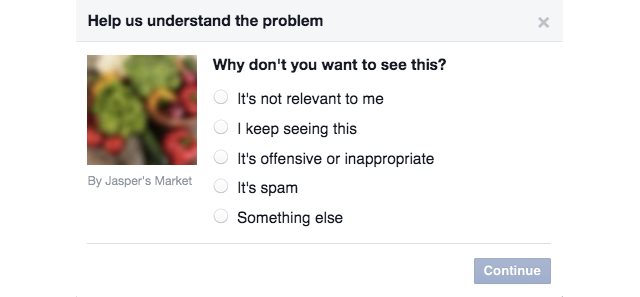
Adverts are pretty much universally hated online. Sites can try to justify their presence as much as they like but visitors will still view them with loathing. Among the many complaints levelled at Facebook, the irrelevance of many of the advertisements that appear on users' pages is a major cause of complaints. For quite some time now Facebook has given users the chance to voice a dislike of individual ads -- opt to hide an ad via the official Facebook method and you can indicate that you find it irrelevant, offensive, repetitive, spammy, and so on -- but it has been hard to know just how much notice has been taken of these complaints. Now Facebook wants to assure users that it is listening and that more relevant ads will be displayed.
Hopefully this can be taken to mean "ads that are more relevant" rather than "there will be more ads and they will be relevant", but the point is that Facebook wants to ensure that you see ads that might actually be of interest. Two new updates will help to tailor your ad experience. The first seems like a fairly obvious one: