
Facebook's 'real name' policy is wrong, discriminatory, and potentially dangerous
Facebook's policy requiring the use of real names on the social network is not all that new, but it remains controversial. Many users would like to be able to use a nickname (other than the "variation of your real first or last name" permitted by the site), but Facebook continues to insist that forcing the revelation of birth name "helps keep our community safe". Or does it? There's certainly an argument that suggests it makes sense to know who you are dealing with, but this cannot be a one-size-fits-all policy. There will always be exceptions, and this is something highlighted by ReadWrite.
As Selena Larson points out, there are many people who choose to use "pseudonyms online for both safety and personal reasons". And yet the site is trying to force Sister Roma -- a drag artist and member of Sisters of Perpetual Indulgence, a "leading-edge Order of queer nuns" -- to use her birth name rather than what is being regarded as her stage name. Who is Facebook to try to interfere with this? This is the site that only recently was encouraging its users to boost their privacy by checking the settings they had in place. It smacks of giving with one hand and taking with the other.
85% of Android and iOS apps are failing on privacy
A report carried out by the Global Privacy Enforcement Network (GPEN) has revealed that the majority of apps are failing when it comes to user privacy.
Of the 1,211 apps examined, the study found that 85 percent didn't clearly explain what data was being collected and nearly one in three requested an excessive amount of personal information.

Google Chrome is to blame for a massive increase in online ad blocking
A shocking new report looking at online advertising shows that there has been a huge increase in the number of internet users making use of ad blocking tools. The report describes ad blocking as having gone mainstream, but it also suggests that the loss of ad revenue threatens the life of many websites.
Pagefair worked with Adobe putting together the report and found that 4.9 percent of internet users make use of ad blockers, including more than a quarter (27.6 percent) of those in the US.

One in three financial services firms inadequately protected against cyberattack
We trust financial services organizations with some of our most precious data, but are these companies doing enough to protect the information?
According to a new survey by Kaspersky Lab and market research company B2B International, 93 percent of financial services organizations have experienced some form of cyberthreat in the past 12 months.
Facebook rolls out Privacy Checkup feature to users around the world
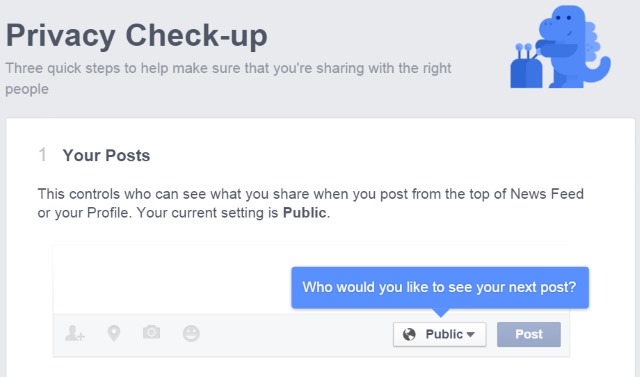
We now live in an age where privacy is a key concern. Facebook has long been criticized for its somewhat lackadaisical attitude to the privacy of user data, and over the years various steps have been taken to afford Facebookers greater control over who is able to see their status updates and other data. First announced back in May, the social network is now rolling out its Privacy Checkup feature around the world, giving users the chance to check exactly who they are sharing information with.
The new tool does not really introduce any new features, but it does bring existing security controls to the fore. Privacy Checkup should make itself known over the next few days by popping up when you use Facebook, but it can be accessed whenever you want by clicking the privacy lock icon to the upper right of the page. For some reason, the face of Privacy Checkup is a friendly blue dinosaur, sort of like a prehistoric version of Clippy.
Facebook to target emerging markets with ads tailored to connection speeds
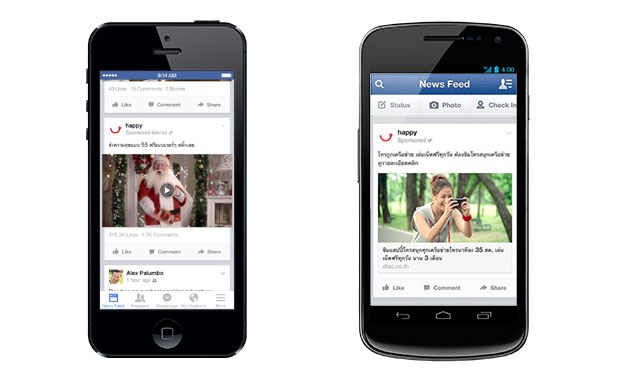
Equality for all is a utopian ideal, but Facebook has plans to treat its users differently depending on where in the world they are. Specifically, the social network plans to change the way adverts are delivered to people based upon the speed of their internet connection. In a blog post drearily entitled "In High-Growth Countries, Reaching People Based on How they Connect", product marketing manager Brendan Sullivan reveals details of the plans which will make better use of available bandwidth.
Facebook has analyzed internet usage in developing, growing nations, and determined that the majority of people in these areas get online via mobile networks. The speed of connections can vary greatly from place to place leading to a huge variation in experiences. Mark Zuckerberg is already involved in projects designed to help get more people online, but the company is also concerned about keeping advertisers happy. "High-growth countries" offer great potential for income streams, and companies need to be sure that their ads are being seen by the people they target.

91 percent of Americans concerned about online privacy -- 7 percent would change their name as protection
There are lots of reasons to be concerned about privacy online -- not least the spying carried out by the NSA and other governmental agencies. While some companies are trying to stick up for the rights of their customer, many web users have now taken to censoring themselves. New research by WP Engine shows that the level of paranoia is higher than many people may have thought -- a staggering 91 percent of Americans are concerned about their online privacy. This is interesting in itself, but the steps that web users are willing to take if they feel their privacy is threatened makes for particularly interesting reading.
Of course there are some people who would take things to the extreme, going as far as changing their name in a bid to protect their privacy, but others would take slightly less drastic action. In fact only five percent of those surveyed say they would take no action to protect their privacy. The most common reaction to feeling threatened is to change passwords (79 percent of people), but some would go further, admitting they would consider changing their email address (48 percent) or change their credit cards (48 percent). Well over a third of those surveyed (42 percent) said they would be willing to delete all of their social media accounts. Three percent of people indicated that they would even move house as a result of having their privacy threatened online.
Is your partner spying on you?
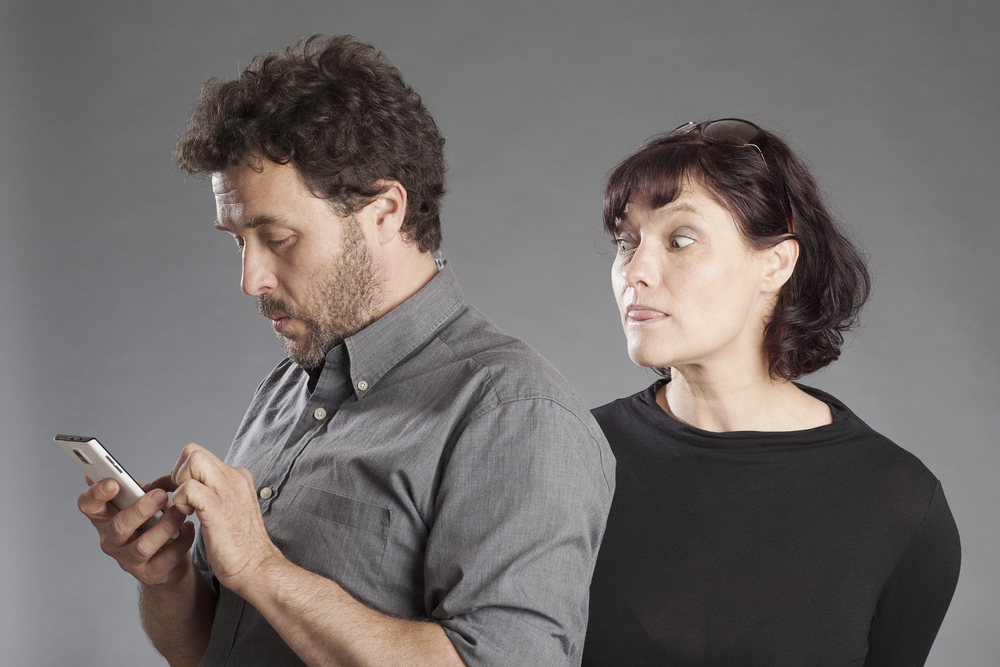
Google knows a lot about you, and the government may be snooping on your activities, but it's your significant other who may well be the one spying on you the most, according to a new survey by security firm Avast.
The company surveyed 13,132 adults in the United States and found that one in four women and one in five men regularly checked their partner's smartphone. Most of the women were doing so purely to be nosy, but a quarter of married women admitted to looking for evidence of infidelity.
Twitter CEO says it's your own fault you see tweets from people you don't follow
Many Twitter users have become frustrated by a problem with the social network. Increasing numbers of people are finding that they see tweets from people they do not follow. Twitter CEO, Dick Costolo, has an explanation: it's your own fault. He's not talking about promoted tweets or anything like that, but tweets that have been favorited by people you follow. The explanation came over the weekend in a couple of tweets in which Costolo put the appearance of such tweets down to users' impatience.
Freelance science writer Katie Mack pointed out that Twitter feeds now include "random tweets from people others follow, ads, other people's favs". Costolo replied:
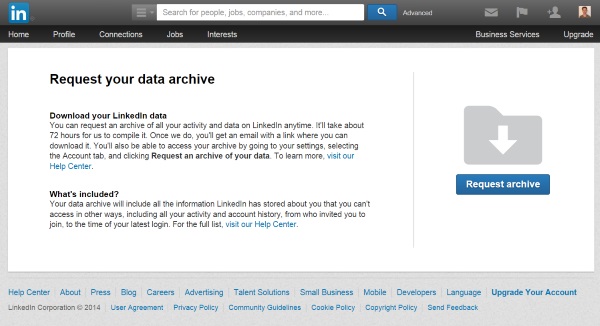
LinkedIn introduces data export option and new security features
LinkedIn, the social network for professionals looking to stay connected, today introduces a few new features to give users greater control over their accounts. Like Google, Facebook, Yahoo and other online services, it is now possible to check which devices you are signed in on. This is not just something that satisfies a curiosity; the ability to terminate unrecognized sessions means that should you spot that you’re still signed in on a computer you're not using, you can remotely sign out of it -- more importantly, it also makes it possible to boot out anyone who has gained unauthorized access to your account.
You can head to the Settings page of your account and click the See where you are logged in link -- alternatively, you can jump straight to the session management page. The page shows a list of all of the sessions that are currently active and provides details such as the associated IP address, the browser that's in use, and the approximate location of the session. Spot something that you don’t recognize or looks a little untoward? Just hit the Sign out link. You can also sign out of all sessions in one fell swoop if you prefer.

I'm anti-censorship! I won't try to silence those who criticize me
A week ago I wrote about my feelings of ennui towards the iPhone 6, asserting that there was just nothing to get excited about. Some people agreed, but many didn't -- it was to be expected really. What was particularly interesting was not just the discussion that started here in the comments on BetaNews but also that the article spread further afield. It was picked up by Macworld whose resident columnist The Macalope, er, disagreed with what I had to say. You'll notice that I've provided a link to the Macworld article which, despite quoting 46 percent of my post, The Macalope failed to do initially.
If you take the time to read the Macworld article you'd be forgiven for thinking that I was hurt at having my work pulled apart. Not a bit of it. No, I'm not concerned about being criticized. I've been writing for approaching 15 years now, and I know I'm going to piss people off from time to time. That's not to say that this is necessarily my intention -- in addition to news, I like to share my opinion and there will, of course, be some collateral damage that follows. Despite The Macalope's suggestions to the contrary, this was not designed to be a "link-baity" piece. Like Joe Wilcox, I've written about the importance of writing for the reader rather than writing for Google, and this is an ideology I firmly subscribe to.

Microsoft defies court order and refuses to hand over emails to US government
Back in July, a New York court ruled that Microsoft should provide access to emails stored at a datacenter in Ireland. The company has been quite vocal in opposing requests to hand over this information, and continues to stand its ground. Although a court order requires the emails to be handed over, Microsoft remains defiant. In a blog post entitled "Your email belongs to you, not us" (forget "all your base are belong to us"), Microsoft's Chief Privacy Officer, Brendon Lynch, reiterates the company's position.
"Microsoft is committed to delivering meaningful privacy protections that build trust with our customers, and we know how much you value the contents of your email. We believe your email belongs to you, not us, and that it should receive the same privacy protection as paper letters sent by mail -- no matter where it is stored. This is the crux of our legal challenge to a U.S. government criminal search warrant for a customer's email stored in our datacenter in Dublin, Ireland".
Discounts assuage consumers' privacy concerns about wearables
Consumers are concerned about privacy issues when it comes to the increasingly connected smart world heralded by the incoming Internet of Things, where many more devices such as household gadgets and wearables are going to be online.
It's the latter that some new research (conducted by Acquity Group) focuses on, which found that the vast majority -- 80 per cent -- of consumers had privacy concerns when it comes to connected wearables.

Paranoid much? Americans are now self-censoring online after Snowden's NSA revelations
The effects of Edward Snowden's revelations about the activities of the NSA continue to be felt. Internet users are now familiar with the idea that what they do online is possibly (probably?) being monitored in one way or another. Some users have taken to the likes of Tor in a bid to increase security and anonymity, but there has also been a more interesting side-effect. Figures released by "nonpartisan fact tank" the Pew Research Center suggests that a "spiral of silence" has developed as Americans start to censor themselves online.
The research group conducted a survey of more than 1,800 people in the middle of last year and found that while most people (86 percent) were quite happy to talk about state surveillance in person, less than half (41 percent) were willing to do so on Twitter (itself involved in censorship). This self-censorship is an interesting repercussion of the NSA's activities, and it seems that social network users have been hardest hit:

Software vulnerability patching is far too slow and leaves users at risk
Security holes and vulnerabilities are to be expected, but not enough is being done to patch holes quickly enough. This is the conclusion of Heimdal Security who conducted analysis of software vulnerabilities. The security firm found that while security problems are on the increase, companies are failing to keep pace and issues remain unaddressed for too long. It's something that hackers are taking advantage of, and user data is being left at great risk. Heimdal Security found that between 60 and 90 percent of attacks from hackers take advantage of this fact.
A number of key culprits are singled out for particular attention -- names that will be familiar to most: Oracle Java Runtime environment, Adobe Acrobat Reader, Adobe Flash Player, and Apple QuickTime. The biggest offender, by quite some margin, is Java Runtime environment, blighted by 48 vulnerabilities in 2012, a staggering 180 in 2013, and 90 so far in 2014. According to CVE Details, the average severity rating for all of the vulnerabilities found in each of the four products. Using the CVSS (Computer vulnerability severity system), which rates issue severity on a 1 to 10 scale, the average rating is 7.8 for Java -- and that's the best of the bunch. Adobe's two products were rated 9.2.