
Google updates terms of service -- can use your online activity for advertisements
As Google's involvement in our lives increases, monitoring any and all changes in the terms of service becomes important. For the most part, I am guilty of not reading long terms and conditions and other small print. I tend to base my trust in a company on experience. Largely, my experience with Google has been very good. However, since the company was named in the PRSIM scandal, I have been a bit less trusting of not only Google but online services overall.
Today, Google updated its terms of service and, by and large, it is innocuous. However, one aspect of it has given me a reason to pause, and I warn you to do the same. You see, Google plans to use your online activity to target advertisements at your Google+ circles. For example, lets say you use Google+ to like a product online with a +1. Google can then share your endorsement with your friends, family and co-workers. The search-giant calls this "shared endorsements".

Websites use device fingerprinting for secret tracking
We all realize, or should do, that whatever we do online leaves a trail. Usually this is in the form of cookies or other information over which we have some control and which is subject to a degree of legal regulation, but what about other, more insidious, forms of tracking?
New research carried out by Netherlands-based university KU Leven reveals that a small number of sites are secretly tracking their users. The study by KU Leuven-iMinds researchers has uncovered evidence that 145 of the Internet's 10,000 top websites carry out tracking without the knowledge or consent of their users. The sites do this by using hidden scripts to extract a device fingerprint from users' browsers. This technique avoids the legal restrictions imposed on the use of cookies as well as ignoring the Do Not Track HTTP header. The study's findings suggest that secret fingerprinting is being used to get around legitimate barriers to tracking.

Adblock Plus reveals details about how its whitelists work
Adblock Plus is in its seventh year of clearing out advertisements from web pages, and is now for the first time sharing details about how its whitelisting system works. Known as Acceptable Ads, Adblock Plus recognizes the fact that advertising exists for a reason and is a cornerstone that keeps the internet running.
For this reason, advertisements that meet certain criteria are whitelisted, and Adblock Plus' Ben Williams reveals details of how the process works.

Should webmail providers recycle unused addresses?
When Yahoo announced plans to recycle inactive email addresses, concerns were raised about the possibility of the new address owner getting emails intended for the previous occupant. It turned out to be a valid fear as my own experience shows.
But Yahoo is not alone in recycling email addresses. According to a report from PC World, Microsoft is quietly doing the exact same thing with Outlook.com email accounts. A spokesman for the software giant told Webwereld, a Dutch IDG publication, "the email account is automatically queued for deletion from our servers. Then, after a total of 360 days, the email account name is made available again".

1Password for Mac introduces multiple and shared vaults, revamps user interface
Agile Web Solutions has released 1Password for Mac 4.0.1, a major update to its encrypted password manager tool. Also available for Windows and iOS, the latest version comes with the promise of over 90 new features, including support for multiple and shared vaults.
Other highlights include bypassing the cloud via Wi-Fi Sync, 256-bit authenticated encryption, iCloud support and a completely revamped user interface.

Facebook makes statuses editable… but is this open to abuse?
It's extremely irritating. You change your Facebook status and immediately notice that you've made a stupid spelling mistake. This could come as a result of a slip of the finger, or your phone's autocorrect might be to blame. You could, of course, simply delete the status update and recreate it without errors. But what about if you've already managed to amass dozens of comments that you don’t want to lose?
Now there's no need to fret because Facebook has made it possible to make edits to statuses. At least this is the case if you're using the Android app or the website -- iOS app users will have to wait a little longer for an update. This is great news! No more stupid typos! No more statuses that sound like they were written by someone with their eyes closed after an evening of heavy drinking! Or is it such great news?

Facebook isn't getting rid of ads, but will make them more relevant to you
Facebook wants to show you more relevant ads. Advertisements are the price we pay for free online content and services, and there are no signs of it vanishing any time soon. Even though this is something internet users have accepted for some time, there are often complaints about the unsuitability of ads. Far fewer people have a problem with seeing adverts for products and services they might genuinely be interested in than those that have no relevance to their lives.
In a blog post Engineering Manager for News Feed Ads, Hong Ge explains that Facebook would like to ensure that the ads that make it into your timeline are more relevant. If you're anything like me, you've probably built up something of a mental filter for "pointless" ads, and maybe even those that might be of interest, but Facebook is keen that you see more ads and that you respond to them positively.

Microsoft reveals 37,000 data requests from law enforcement agencies
Just about every company with an online presence is getting into the sharing game. It's something we’ve already seen from other companies. Facebook has already shared information about the data requests it has received from governments, and LinkedIn, Microsoft and Google all want to be able to tell us more. Now Microsoft is sharing what it can about the requests for information it has received from law enforcement agencies around the world.
The company's second Law Enforcement Requests Report covers the first six months of 2013 and reveals the requests received for data about users of all of Microsoft's online services. There is no particularly detailed breakdown of the figures, but they do include requests made for information about Skype. Despite collating figures for all Microsoft services, it looks as though the number of requests is in line with the figures from last year. In the first six months of 2013, Microsoft received a total of 37,196 requests relating to 66,539 accounts. This compares to 75,378 requests impacting 137,424 accounts throughout the whole of 2012.

Companies must refocus privacy efforts says Gartner report
According to a survey by research company Gartner only 43 percent of organizations have a comprehensive privacy program in place whilst seven percent admit to only doing the bare minimum to address privacy laws. The results are based on 221 organizations surveyed in April and May 2013 in the US, Canada, UK and Germany.
"More than a third of organizations still 'consider privacy aspects in an ad hoc fashion' and it is surprising that so many companies are saying that they are not conducting privacy impact assessments before major projects. Sixty-two percent do not scan websites and applications, or conduct an organization-wide privacy audit every year. Organizations must put these activities on their to-do list for 2014," says Carsten Casper, research vice president at Gartner.

PowerArchiver 2013 improves performance, adds cloud support and encryption tools
It’s taken a little while, but ConeXware has finally released PowerArchiver 2013 (aka version 14). We’re not really surprised that it’s taken some time to get through beta, though: this is no cosmetic upgrade, rather it’s crammed with significant changes and major new features.
Extensive cloud support means you can upload, add files or download from services like Amazon S3, Microsoft Azure, Box.et, Dropbox, Google Drive and SkyDrive.

LinkedIn throws its hat into the ring -- wants to be more transparent
It seems that every online company is in a sharing mood at the moment. Facebook has already come clean about the data requests it has received from the US government, Microsoft wants to tell us more and Google is really keen on the idea. The latest company to express concern about the restrictions on reporting about government data requests is LinkedIn.
In a "Letter to the LinkedIn community", Vice President, General Counsel, and Secretary of LinkedIn, Erika Rottenberg, not only announces the publication of the social network's Transparency Report for H1 2013, but also expresses "great disappointment and frustration" at the limitations on what can be reported. Rottenberg reveals that she has written to the FBI to ask that LinkedIn be permitted to release additional data about requests that have been made.

Google loses appeal in Street View Wi-Fi collection case -- right or wrong?
Google faces claims for damages from people who had personal data collected from their wireless networks as the company gathered information for its Street View service. Google had previously claimed that emails, usernames and passwords had been collected unintentionally, but the appeal ruling means that the company is not exempt from liability under the federal Wiretap Act.
Back in 2010, Google admitted that data such as network SSIDs and MAC addresses were collected along with photos. In this blog post the company denied that it pulled "payload data" (essentially the data that is being sent over the networks) but it was later revealed that "Google did indeed collect (and store) this information from unencrypted Wi-Fi networks". A full report is available to read online. Google was required to delete this data, and indeed did so.

Google files amended transparency petition in push to publish FISA order details
Google's unofficial motto has long been 'do no evil' and the company is keen to be seen to stick to it. Jumping into bed with Nestle may have raised a few eyebrows and rattled a few cages, but in a blog post, Richard Salgado, Director of Law Enforcement & Information Security, and Pablo Chavez, Director of Public Policy and Government Affairs show the search giant is eager to stay on the right side of customers.
Google has filed petition in the US Foreign Intelligence Surveillance Court asking that they be allowed to publish details of FISA orders. The petition is very similar to others that we have seen in recent months in the wake of the NSA surveillance revelations, and is really just a follow-up to the We Need To Know letter from back in July in which a number of leading companies wrote to, amongst others, President Obama to "urge greater transparency around national security-related requests".
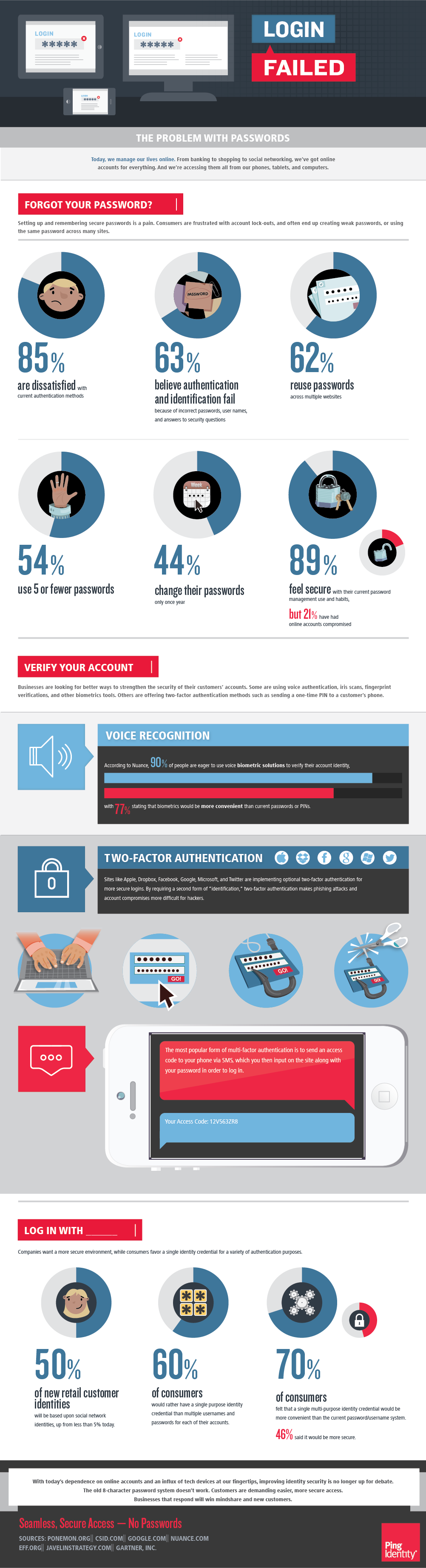
The trouble with relying on passwords for security
One of the key features of the new Apple iPhone 5S is the fingerprint sensor built into the home button. This allows users to unlock the device, and even authorize iTunes purchases, simply by pressing a digit against the laser cut sapphire crystal. So now when someone steals your phone, they’ll have to also steal one of your fingers at the same time.
It’s another attempt to replace the password and PIN, and we’ve seen a few of those over the years. Windows 8 even lets you sign in using a picture as an alternative. But the truth is, as exciting as fingerprint scanners and other forms of futuristic security measures seem, the password is here to stay for a while yet. And that’s a problem.

DeepSound lets you hide confidential documents inside audio CD tracks
When you need to send confidential documents to someone else steganography can be an effective technique. Use SteganPEG to embed your files inside JPEGs, say, then just email them as normal, and casual observers will see only normal pictures. They’ll never realize your hidden data is inside.
And at first glance, DeepSound seems to carry out much the same function, but with audio files. Point the program at a WAV or FLAC file, hide a few personal documents inside, and you’re done: the audio files will still play just as before, and only someone who knows the secret will be able to extract your hidden content.