
Verizon plans to install spyware on ALL its Android phones [Updated]
Two days ago, the US House voted to destroy the rights of American web users, essentially putting their privacy up for sale.
Now, as reported by the Electronic Frontier Foundation, Verizon has announced plans to install software on Android devices that will track which apps customers download and use. This data will be shared with other Verizon companies, including AOL, and used to push targeted ads on you across the internet. If that doesn’t sound all that bad, the EFF points out the ads could be based on things such as "which bank you use and whether you’ve downloaded a fertility app."

Calls for transparency as UK government meets technology firms to discuss encryption and privacy
The UK Home Secretary Amber Rudd is today meeting with technology firms to discuss how they can help to combat terrorism. The meeting comes just days after Rudd said that encrypted messaging services such as WhatsApp should not be a "secret place to hide."
Calls for backdoors to be built into encrypted apps and services have been met with shock, derision and incredulity, but some have pointed out that the controversial Investigatory Powers Act (aka the snooper's charter) already grants the government the right to force the removal of encryption. Ahead of the Rudd's meeting, civil liberty organizations have written a letter demanding transparency.

US House votes to destroy the privacy rights of web users
Last week, the US Senate voted to permit ISPs to share -- or sell -- customers' browsing histories and other data without permission. Now the House has gone ahead and voted the same way, so internet users' privacy is now up for sale.
Just as the Senate vote to overturn privacy rules was close (50 votes to 48), so was yesterday's: 215 to 205. The repeal of the FCC-approved rules had President Trump's support, and the latest vote means that all manner of personal information is now able to be sold for marketing and advertising without individuals' consent.

StartPage.com launches 'the world's best private image search' and Instant Answers
Privacy-focused search engine StartPage has launched an upgraded private image search feature. With extreme concern mounting about plans for ISPs to be granted permission to sell customers' browsing histories without express permission, interest in untrackable browsing is on the increase.
Based in the Netherlands, StartPage is outside the reach of US law enforcement agencies, and it uses a secure connection so there is no way to tell what users have been searching for, and also secures click-throughs using a proxy. In addition to the private image search enhancement, StartPage has also launched Instant Answers to provide searchers with easy access to key information.

Microsoft's Docs.com search feature leaks sensitive files
Users of Microsoft's Docs.com website took to Twitter to complain after files marked as private were made public by the sites' search function.
In response, Microsoft pulled the search feature from the site, but it is now back up and running. Even during the time it was not possible to search the site directly, Google and Bing searches could still be conducted to reveal social security numbers, job applications, contact details, and other private information.

Encrypted messaging service WhatsApp criticized as 'a secret place to hide' for terrorists
WhatsApp has been criticized for failing to help police following the revelation that Khalid Masood used the encrypted messaging service shortly before running down numerous people and stabbing a policeman to death in London last week.
The UK home secretary Amber Rudd spoke out over the weekend, saying that police and other agencies should be granted access to encrypted messages with a view to countering future terrorist attacks. Later this week, Rudd is due to meet with technology leaders to talk about how the government should be able to access messages protected by end-to-end encryption -- something already dropped from the controversial snooper's charter.

Privacy warning: US ISPs could sell and share your browsing history without consent
In a major blow for privacy advocates and individual rights, the US Senate has voted to permit ISPs to sell or share customers' data -- including their browsing histories -- without consent.
The vote overturns a Federal Communications Commission rule that banned such activity. While there are still legislative hoops to jump through before the result of the vote is ratified, ISPs will be rubbing their hands in glee at what the Senate has done.
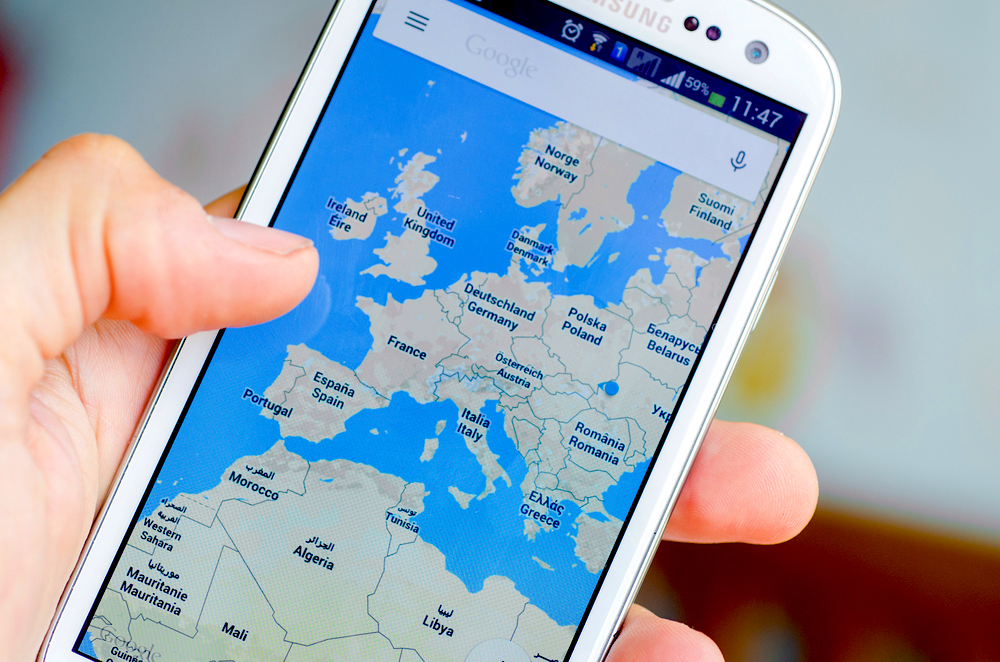
Google Maps gets real-time location sharing
When it comes to Google, many people are concerned about privacy, and rightfully so. Look, the company makes money through advertising and data collection. In other words, if you rely on the search giant's services, such as Gmail and Maps, the company probably knows a lot about you -- including the locations that you visit.
While exposing your location is normally something people try to avoid from a security perspective, today, Google is making it easier to do so. No, the search giant isn't doing it without your permission -- it is actually a very cool new feature. The company is enabling Google Maps users to share their real-time location with others. The reason that this is cool (and not scary) is that the user can choose with whom they share the location, and for how long it is shared. Your phone will even keep you notified that you are sharing your location -- just in case your plans change and you forget to shut it off. In other words, it is totally optional.

Archiving partnership aids financial services compliance
For the financial services industry, compliance is a major issue as there's a need to archive communication from many different sources.
To provide a solution to the industry's unique demands, financial services software specialist IPC Systems has announced a collaboration with communications compliance and archiving company Actiance. This will use Actiance's Alcatraz solution to offer IPC's financial services customers a holistic archival solution across a range of digital communications, including voice.

Pakistan risks privacy concerns by asking Facebook and Twitter to identify users suspected of blasphemy
Pakistan is seeking help from Facebook and Twitter to help execute its incredibly strict blasphemy laws. Anyone found guilty of insulting the Prophet Muhammed, or Islam in general, risks being sentenced to death, and the country is keen to track down offenders both at home and abroad.
The two social networks have only been asked to identify Pakistanis, but the move is likely to raise concerns about privacy. Of equal concern will be not only what is deemed to be blasphemous, but who makes that judgement -- particularly when Pakistan is seeking to identify offenders in other countries.

People who identify as 'tech savvy' are 18 percent more likely to suffer ID theft
Identity theft is a growing problem, but who is falling victim to online ID fraud, why is it still happening, and how can you protect yourself?
IT training specialist CBT Nuggets has carried out some research among more than 2,000 people in the US to find out, with some intriguing results.

Mozilla: people have no idea how to protect their privacy and security online
Privacy and security are major concerns when it comes to life online, but a survey by Mozilla reveals that a worrying number of people do not know how to stay in control of them. The company also found that a third of people feel they have no control over their information online, with a similar number confessing to knowing "very little" about encryption.
But these are not the only concerns of internet users. Mozilla also asked about people's greatest online fears. Topping the list is "being hacked by a stranger" (a fear held by 80 percent of people), and "being tracked by advertisers" (61 percent). As well as presenting the results of its survey, Mozilla also has some important advice.

Facebook bans devs from creating surveillance tools with user data
Without a hint of irony, Facebook has told developers that they may not use data from Instagram and Facebook in surveillance tools.
The social network says that the practice has long been a contravention of its policies, but it is now tidying up and clarifying the wording of its developer policies. American Civil Liberties Union, Color of Change and the Center for Media Justice put pressure on Facebook after it transpired that data from users' feeds was being gathered and sold on to law enforcement agencies.

Worldwide web inventor Tim Berners-Lee's biggest concerns: privacy, fake news and political ads
It was 28 years ago that Tim-Berners-Lee submitted his proposal for the worldwide web. What he envisioned as an open platform that would break down global barriers has become a wild beast with endless problems. Talking on the anniversary of his invention, Berners-Lee has spoken about his concerns for the web.
He has three problems in his crosshairs, and he says the trio of issues is something "we must tackle in order for the web to fulfil its true potential as a tool that serves all of humanity." But he does not come armed with solutions; it's at least partly down to us to sort things out.

Ever Sentinel notifies you when companies change privacy policies or terms and conditions
Changes to terms and conditions or privacy policies happen all the time, and this presents a few problems for consumers. As well as having to negotiate through the often impenetrable language used in these documents, it can be near impossible to work out what has changed, and what the implications are. This is where Ever Sentinel can help.
The service monitors the terms and policies for a number of popular websites and services, and not only alerts you when they change, but highlights exactly what has changed. It's part of a drive to encourage greater transparency in terms and conditions and privacy policies, and it's free for you to use to keep yourself informed.