More than half of companies fail to measure the effectiveness of their cyber security
With businesses spending increasing amounts on cyber security, a new survey reveals that many of them are failing to measure the effectiveness of their investments.
The study from privileged account management specialist Thycotic found 58 percent of its 400 respondents scored a failing grade on a benchmark survey when evaluating their efforts to measure their cybersecurity investments and performance against best practices.
Brexit negotiations could be hit by DDoS attacks
Hackers could use DDoS to disrupt the Brexit negotiations for the UK's leaving the European Union, or use attacks as a distraction technique while they seek to steal confidential documents or data, according to new research.
The study by Corero Network Security polled 100 security professionals at the Infosecurity Europe conference in London and found 57 percent believe Brexit negotiations will be disrupted by DDoS attacks.

Exploring the psychology of ransomware
In recent months we've seen high profile ransomware attacks target many businesses, and we've seen cyber criminals making greater efforts to target their victims.
A new study from endpoint protection company SentinelOne and De Montfort University has been looking at how social engineering tactics are used by cyber criminals to manipulate and elicit payments from victims.
Threat hunting becomes critical to defeating cyber crime
Security company McAfee is using this week's Black Hat conference to release a new report examining the role of cyber threat hunting and the evolution of the security operations center (SOC).
Among its findings are that on average, 71 percent of the most advanced SOCs closed incident investigations in less than a week and 37 percent closed threat investigations in less than 24 hours.

90 percent of consumers think security should be built into IoT devices
With increasing numbers of connected devices entering our homes and workplaces, their security is becoming a major concern as they can offer hackers an attractive backdoor into networks.
A new survey from digital platform security company Irdeto shows that 90 percent of consumers across six countries think security should be built in, and 78 percent are aware that smart devices connected to their networks have the potential to be targeted.
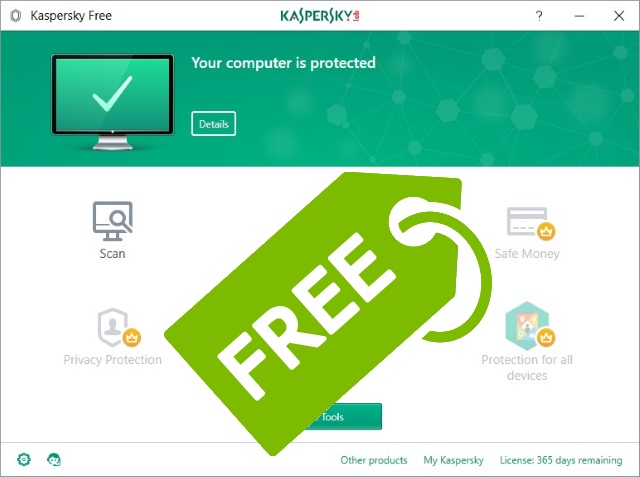
Kaspersky launches free antivirus tool -- Kaspersky Free!
Kaspersky has been in the news quite a lot recently, primarily because of US concerns over links to the Russian government. The security company also hit the headlines when it filed an antitrust case against Microsoft because Windows 10 disabled Kaspersky antivirus software.
But now there's a new reason to be in the news -- and this time it's a good one. The Russian company is launching Kaspersky Free, a free antivirus tool available globally. Company founder Eugene Kaspersky announced that the US, Canada and numerous Asia Pacific countries have access to the software immediately, and the global rollout will continue over the coming months (although it already seems to be downloadable in the UK).

CEOs should be held accountable for cyber attacks and data breaches
CEOs should be the ones responsible in case of a cyber-attack and a data breach in an organization, according to a new report by Tripwire.
Polling Infosecurity Europe 2017 attendees on who should be held accountable in such a scenario, 40 percent said CEOs. CISOs are the second in line with 21 percent of answers, while 14 percent would blame the CIO.

Productivity trumps security
An overwhelming majority of workers are putting the security of their entire business at risk by preferring productivity over safety, new research has claimed.
A survey by security firm Bromium found that most security professionals are often asked to make exceptions to their work that would put companies at risk.
Veritaseum cryptocurrency loses $8.4 million in ICO hack
The cryptocurrency market is a very attractive target for hackers. This month alone, we have seen successful attacks carried out against popular wallets and an ICO (Initial Coin Offerings), during which hackers stole tens of millions of dollars. And the siege is not over yet.
Veritaseum, which is one of the most valuable cryptocurrencies, also had its ICO hacked, with the attacker (or attackers) managing to steal $8.4 million in tokens. This time around, it was more sophisticated than the CoinDash ICO hack which happened just a week before.

AI-based platform improves security teams' response
With risks showing no signs of declining, and security skills in short supply, companies are increasingly looking at machine-driven solutions to protect their networks.
AI security company JASK is launching a new platform called JASK Trident which uses AI to facilitate machine driven alert triage, malicious behavior detection, and investigations into those behaviors.

New intelligence service allows companies to protect their digital identity
Hackers often seek to imitate well-known companies in order to cash in on events as we saw in the wake of the recent WannaCry attacks.
It’s therefore important for companies to be aware of their digital presence and know if they are being impersonated online. Threat management company RiskIQ is launching a Digital Footprint Snapshot to provide an on-demand intelligence report of a firm's internet-facing digital assets.
Google rolls out Play Protect security tool
Google is looking to take the fight against Android malware and harmful apps with the roll-out of its latest mobile security platform.
Google Play Protect automatically scans Android devices to ensure no malicious software is installed anywhere on your device, and provide a comprehensive overview of your device's security status.
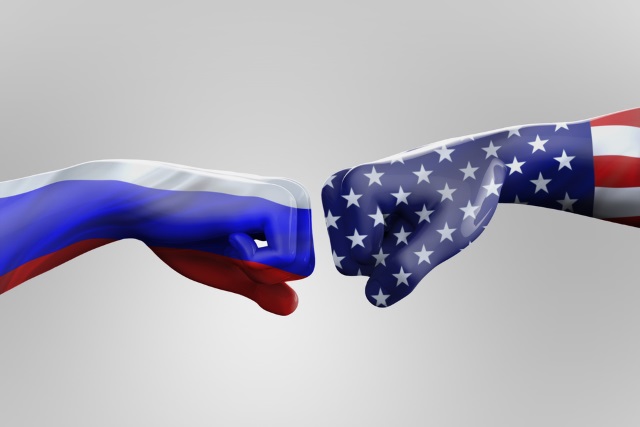
NSA says it is 'not the best time' to create a US-Russia cyber unit
When Donald Trump met with Vladimir Putin, the pair apparently discussed the idea of the two nations forming an "impenetrable Cyber Security unit." It's an unlikely partnership, to say the least, and NSA Director Mike Rogers has voiced his disapproval of the move.
Given the, erm, interesting relationship between the US and Russia, the controversy surrounding Russia's possible hacking of the last election, and Trump's ongoing problems defending himself over rumored Russian ties, it's perhaps little surprise that the NSA chief says "now is probably not the best time" for the two superpowers to work together on such a project.
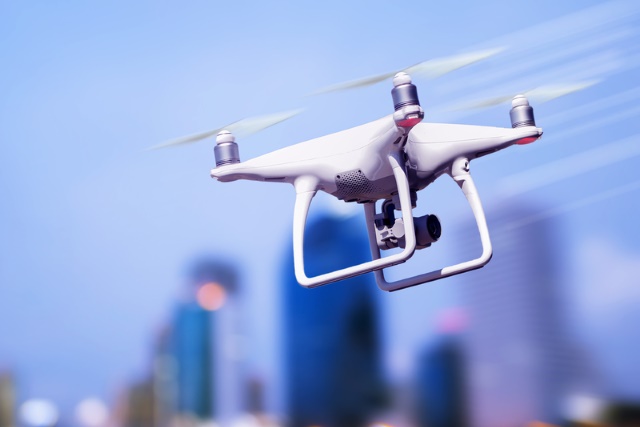
UK government proposes mandatory drone registrations and safety awareness tests
The UK government has announced plans to force private drone owners to register their devices as well as passing a safety awareness test -- a drone driving test essentially. The rules would affect drones weighing more than 250g and they come in response to an increasing number of near-misses between drones and aircraft.
The Civil Aviation Authority’s Airprox Board investigated no fewer than 22 incidents between drones and commercial aircraft in the first four months of the year, but police currently have a near-impossible task when it comes to tracing owners of drones that have been flown dangerously.

London Stock Exchange trials blockchain for shares in Italy
London's Stock Exchange is set to start using blockchain to improve transparency for shareholding information among unlisted businesses.
According to a news report by CityAM, the London Stock Exchange Group (LSEG) will use Hyperledger Fabric, one of the open source blockchain frameworks hosted by The Linux Foundation to make info on private SMEs digital. The end goal is to draw more mature investors.