
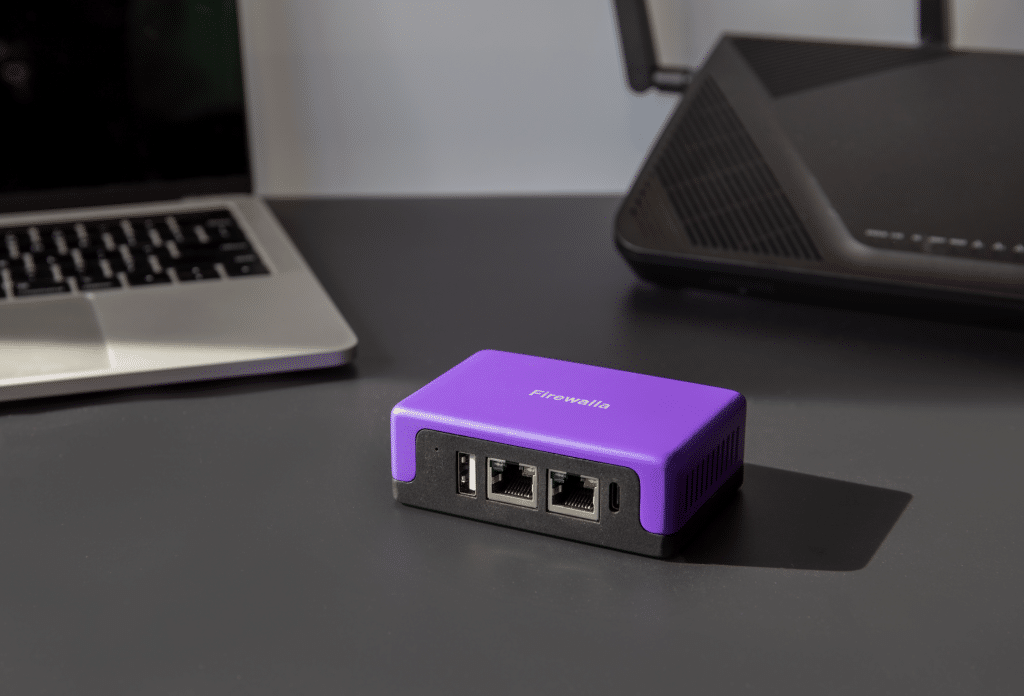
Firewalla goes Purple to protect gigabit networks
Regular readers will recall that last year we reviewed the Firewalla, a little box that provides protection for your network.
We tested the Blue version that provides protection for networks up to 500Mbps in speed. Now the company is launching a new Purple version that works at gigabit speeds and has extra features too.
Five percent of VPN solutions remain unpatched and vulnerable
In 2020 we saw a huge shift to remote working, with VPN often the technology of choice for keeping connections secure.
But a new Network Security Report from SpiderLabs at Trustwave reveals that this trend didn't go unnoticed by cybercriminals, with malicious actors targeting unpatched VPN vulnerabilities more frequently.
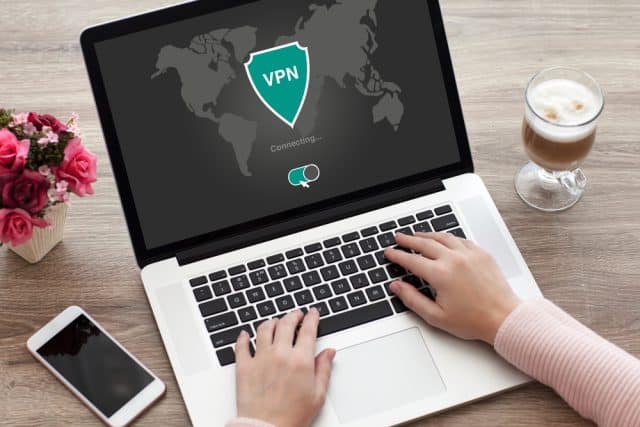
Remote working leads to increase in attacks on VPNs
Attacks against VPNs have seen an increase of more than 1,500 percent in the first quarter of this year according to a new report.
The latest Threat Landscape Report from managed security services company Nuspire shows a 1,916 percent increase in attacks against Fortinet's SSL-VPN and a 1,527 percent increase in Pulse Connect Secure VPN.

Security and privacy knowledge is good but bad habits persist
New research from NordVPN finds that people around the world generally have good security and privacy knowledge, but still indulge in bad habits.
NordVPN ranked 21 countries by their performance, placing Germans at the top and -- perhaps surprisingly -- the Japanese at the bottom.

Americans flock to online banking -- but many still don't trust it
Americans' online banking usage has reached 85 percent, with 25 percent using online banking exclusively. But trust is lagging behind.
A new report from NordVPN shows 40 percent of respondents report that they check their banking apps on a daily basis for compromises. 13 percent say they don't trust, and 27 percent have doubts about, their banking app.

Zero trust access, VPN, both? The changing face of remote network access [Q&A]
Virtual private network (VPN), software defined perimeter (SDP), zero trust network access (ZTNA), there are plenty of technologies around for protecting remote access to enterprise networks.
This is an area that's been thrown into sharper focus this year, but what's the best option for keeping remote access secure? We spoke to Scott Gordon, CISSP for Pulse Secure to discuss the value of the different options available.
Top 20 VPN providers for privacy
Should you sign up for a paid VPN service? Only you can make that decision, but I do recommend them highly. Not only can they hide your activity from your ISP, but they can make you safer when using non-secure public Wi-Fi. Of course, you should avoid such public Wi-Fi networks when you can, but if you need to utilize them, a VPN is a must.
With all of that said, all VPN providers are not created equally. Free ones should be avoided at all costs, as their business models cannot be trusted. In other words, privacy and free services generally don't mix. Sadly, picking a good VPN provider can be hard, as there are so many from which to choose these days. Thankfully, VPNRatings.com has done some research on the subject, and it has shared its list of the Top 20 VPNs. And yes, privacy and security were huge factors.
Is it time to retire your VPN?
Historically, one of the most popular tools used to connect remotely to a corporate work environment has been a virtual private network -- VPN for short. A VPN enables corporate users to send and receive data across public networks such as the internet through a secure encrypted tunnel, providing something akin to a direct, private connection to the corporate network.
However, VPN technology was introduced at a time when business IT environments reside on business premises, and did not include distributed elements that are now commonplace, such as cloud computing, mobile devices, and flexible remote work policies. Even as VPNs have adapted to stay relevant to some of the changes in how people now work, they have struggled to keep up with the modern threat landscape.

Hackers to the rescue! UFO VPN user log database leaks online for a second time
Just a week ago, we covered the news that user log files from the VPN service UFO VPN had been exposed. A database of user data appeared online despite the company's claims of having a "strict no-logs policy".
But while security experts took steps to lock down the data and restrict access to it by the middle of this month, earlier this week it transpired that a second, newer UFO VPN database had appeared online, containing even more data. This time, however, hackers came to the rescue with a coordinated "Meow" attack.

VPN with 'strict no-logs policy' exposed millions of user log files including account passwords
An unprotected database belonging to the VPN service UFO VPN was exposed online for more than two weeks. Contained within the database were more than 20 million logs including user passwords stored in plain text.
User of both UFO VPN free and paid services are affected by the data breach which was discovered by the security research team at Comparitech. Despite the Hong Kong-based VPN provider claiming to have a "strict no-logs policy" and that any data collected is anonymized, Comparitech says that "based on the contents of the database, users' information does not appear to be anonymous at all".
Firefox Private Network VPN renamed to Mozilla VPN and priced at $5 per month
VPNs can be wonderful for protecting a user's privacy, but they are not infallible. For instance, while they can hide your activity from your ISP or an unsecured Wi-Fi network, the VPN company can potentially see everything you do. With that said, you'd better be very smart about selecting a VPN provider. Rule number one: Never trust a "free" VPN or one that offers a pay-once "lifetime" subscription, as you simply can't trust their business models to protect your privacy. Instead, splurge a bit and go with a reputable company that requires periodic payments and promises not to keep any logs. Do your homework, folks.
Mozilla is a company that I trust more than some others (I trust no person or company 100 percent, however!) thanks to its respectable data privacy principles. That is why I surf the web with Firefox whenever I can. That company has been beta-testing a VPN service of its own called "Firefox Private Network VPN". Yeah, that name stinks as it is too wordy. Thankfully, the company has wisely decided to rename it to the much cleaner "Mozilla VPN." In addition, we learn how much the VPN service will eventually cost -- $4.99 a month.
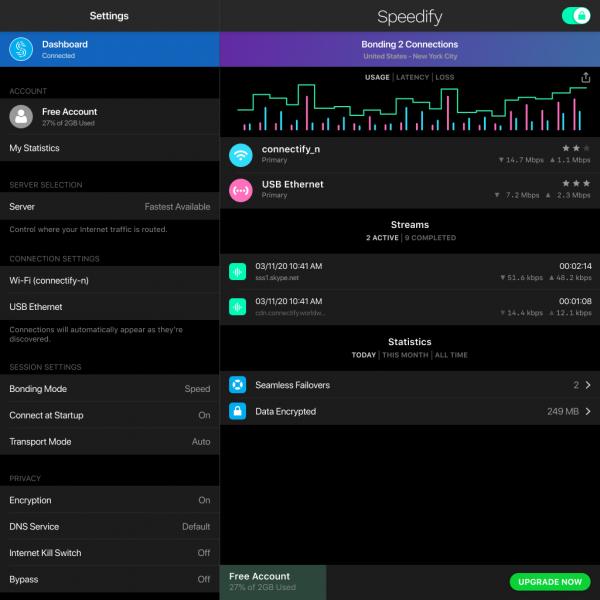
Speedify delivers more reliable VPN connection for remote workers
The increase in remote and home working in recent months has shone a spotlight on the unreliability of many domestic internet connections.
The Speedify VPN service is updating its offering which allows users to link and seamlessly switch between multiple connections including home internet, mobile data and public Wi-Fi networks to provide a more reliable connection.
Vulnerabilities allow hackers access to two popular VPNs
New research from VPNpro has found that two of the top 20 premium VPN apps have crucial vulnerabilities that can allow hackers to push fake updates and install malicious programs or steal user data.
The vulnerabilities in PrivateVPN and Betternet, can allow hackers to intercept communications and force the apps to download a fake update. The update may be automatically installed or the user prompted to install it.
Malwarebytes launches its own VPN
Well known for its endpoint protection and malware removal solutions, Malwarebytes is now moving into the online privacy space with the launch of its own VPN.
Malwarebytes Privacy aims to offer best-in-class encryption without compromising on performance. It doesn't log the user's online activities and it offers a choice of virtual servers from over 30 countries in order to protect their real location.
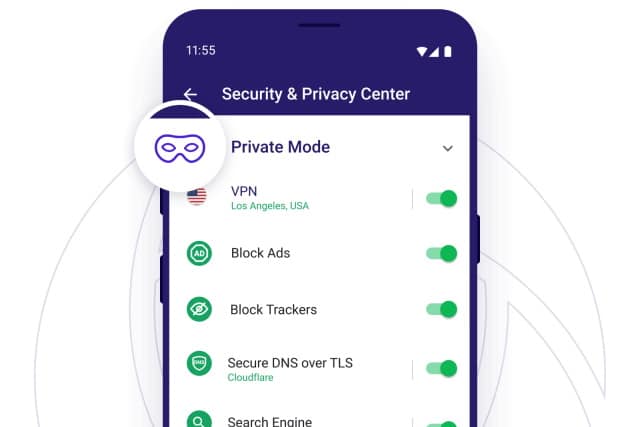
Avast Secure Browser lands on Android complete with a built-in VPN
Avast has launched an Android version of its security- and privacy-focused web browser. Avast Secure Browser features various DNS options and a built-in VPN to calm the fears of those concerned about their privacy.
This is not all the browser has to offer. There's also anti-tracking technology and complete data encryption to take care of the security side of things as well.



