

The CIA, WikiLeaks and Spy vs Spy

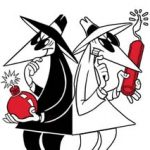
As pretty much anyone already knows, WikiLeaks has dropped a trove of about 8700 secret documents that purport to cover a range of CIA plans and technologies for snooping over the Internet -- everything from cracking encrypted communication products to turning Samsung smart TVs into listening devices against their owners.
Two questions immediately arise: 1) are these documents legit (they appear to be), and; 2) WTF does it mean for people like us, who aren’t spies, public officials, or soldiers of fortune? This latter answer requires a longer explanation but suffice it to say this news is generally not good for anyone, not even for spies unless they have been recently unemployed. But for some companies it will open up significant new business opportunities.
No fracking way! Fukishima is worse than ever

Remember the Fukishima Daiichi nuclear accident following the 2011 earthquake and tsunami in Japan? I wrote about it at the time, here, here, here, here, and here, explaining that the accident was far worse than the public was being told and that it would take many decades -- if ever -- for the site to recover.
Well it’s six years later and, if anything, the Fukushima situation is even worse. Far from being over, the nuclear meltdown is continuing, the public health nightmare increasing. Why aren’t we reading about this everywhere? Trump is so much more interesting, I guess.
Trump's anti-H-1B order won't be what it seems

Immigration policy and trade protectionism play large roles in the new Administration of President Donald Trump. With the goal of Making America Great Again the new President wants to more tightly control the flow of goods and labor into the USA. Over the last week this has taken the form of an Executive Order limiting travel from seven specific Muslim countries. That order wasn’t well done, wasn’t well explained, has caused lots of angst here and abroad and is at this moment suspended pending litigation.
That order is supposedly about limiting terrorism. It will be shortly followed, we’re told, by further Presidential actions limiting abusive labor imports using, specifically, H-1B visas. This time, depending again on how the actual order is interpreted, it might be the right thing to do, because H-1B visa abuse is a very real thing that has hurt American workers.
Bob's big picture technology predictions for 2017

I couldn’t put it off any longer so here are my technology predictions for 2017. I’ve been reading over my predictions from past years and see a fundamental change in structure over that time, going from an emphasis on products to an emphasis on companies. This goes along, I’d say, with the greater business orientation of this column. That makes sense with a maturing market and mature industries and also with the fact that a fair number of readers are here mainly as investors, something that didn’t used to be so much the case.
Of course we begin with a look at my predictions from a year ago to see how I did. Almost nobody in my line of work does this, pointing out their own mistakes, but then I always have been kind of stupid about my career. So here we go.
News we aren't supposed to know
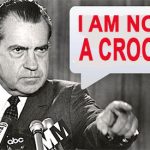
I’m writing this post on Wednesday evening here in California. Normally I wouldn’t point that out but in this case I want to put a kind of timestamp on my writing because at this moment we’re at the end of the second day of a concerted attack by the UAE Electronic Army on various DNS providers in North America. If you follow this stuff and bother to check, say, Google News right now for "UAE Electronic Army", your search will probably generate some Facebook entries but no news at all because -- two days into it -- this attack has gone unnoticed by the world at large. My last column was about fake news. This one is about real news you never hear about.
We have a great example of such news this week in the Yahoo one billion account hack. Sure, it’s all over the web but it happened in 2013. Are we really supposed to believe that one billion user records were stolen from Yahoo and it took three years for somebody to notice??? The story is that law enforcement officials came across the stolen data, or some of it, and took it to Yahoo for verification. Maybe, but having written these stories for 30 years I think it is much more likely that somebody already knew about the breach and simply chose not to say when it happened. This is not to say that Yahoo CEO Marissa Mayer knew or didn’t know about the breach, just that shit happens and often isn’t reported if jobs are perceived as being on the line.
What's real about Fake News

I’m here nominally to address the problem of what’s being called Fake News. At its core this is as labeled -- news that is fake; news that isn’t news; deceptive content intended not to inform or convince but to manipulate and make trouble. It’s a huge problem, we’re told, that will require new algorithms and tons of cloud to fix. But I’m not so sure. You see the key to keeping fake news out is to put real news in.
The recent Fake News tempest has got me thinking about what I do and don’t do right here in this simplest of all corners of the Internet. I’m just one man and a keyboard. For 19 years I’ve been pumping out this stuff generally by myself and for the most part without the support of advertising revenue, either. Did you ever wonder how I make my living? It’s not from that PayPal Donate button, which brings in about $200 per year.
Welcome to the Post-Decision Age
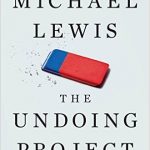
There are more things to talk about than Donald Trump, though I doubt that Donnie agrees with me. But we have to get on with our lives which, at least in my case, means getting on with my reading. Where does all the crap I write here come from but reading, talking to people, and waiting in line at Starbucks? Nowhere else! And if you want to be like me you may choose to read a new book by Michael Lewis, The Undoing Project: A Friendship That Changed Our Minds. Of course the book is very good and it’s very well-written and it will tell you a lot about how decisions are actually made. But if we are looking forward instead of backward here, the book and its content don’t really matter that much because we don’t decide nearly as much as we think we do. We don’t decide as much as we used to. In fact I’m about to argue that we’re well into the Post-Decision Age. It’s pretty much out of our hands.
Lewis’s book explains. He’s not breaking new ground but rather rediscovering old ground and explaining why it matters. In this case his earlier book Moneyball explained how the Oakland Athletics baseball team used statistics to win baseball games while this new book essentially takes the other side and explains why most of us (including many baseball managers) are not like the Oakland A’s.
Saving the Internet of Things (IoT)
This is my promised column on data security and the Internet of Things (IoT). The recent Dyn DDoS attack showed the IoT is going to be a huge problem as networked devices like webcams are turned into zombie hoards. Fortunately I think I may have a solution to the problem. Really.
I’m an idiot today, but back in the early 1990’s I ran a startup that built one of the Internet’s earliest Content Distribution Networks (CDN), only we didn’t call it that because the term had not yet been invented. Unlike the CDNs of today, ours wasn’t about video, it was about the daily electronic delivery of PDF editions of newspapers and magazines. Canon told us that if the New York Times, say, would make a PDF version of its daily paper, the Japanese company would give an ink jet printer to every electronic subscriber, making their money solely on replacement ink cartridge sales. Communication would be between the CDN and printer with no PC involved. It was effectively an Internet of Things, circa 1994. Obviously, we failed, but learned a lot along the way.
President Trump: The hangover

Wow, what an election! I’m tempted to say the FBI gave it to Trump but the results are too strong for that to be the sole reason for his victory. There’s a real movement behind this result and it isn’t in any sense a triumph of Republicanism. In fact I think it may be hard for the Republican Party as we knew it to even survive. Time will tell.
Until such time, the world will go a little crazy. Stocks will slide, women will swoon, babies and men will cry. But eventually we’ll pick ourselves up and get back to work.
What the heck is happening at Apple?
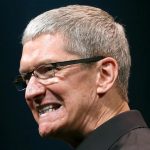
"What the heck is happening at Apple?" people ask me. "Has the company lost its mojo?" "Why no new product categories?" "Why didn’t Apple, instead of AT&T, buy Time Warner?" And "Why are the new MacBook Pros so darned expensive?"
After first getting out of the way the fact that Apple is still the richest public company in the history of public companies, let’s take these questions in reverse order beginning with the MacBook Pros. In addition to their nifty OLED finger bar above the keyboard, these new Macs seem to have gained an average of $200 over the preceding models of the same size. What makes Apple think it can get away with that?
Social media? Bob needs a social mediaTOR

Okay, I’m back, still without cataract surgery but I have the fonts cranked-up on this notebook and my one working eye is still, well, working so I am, too. My next column will be about last week’s Internet DNS failure but right now I want to write about all these folks who have been asking to connect with me on Facebook, LinkedIn, and other social media. I’ll bet you have the same problems that I do.
Once you have enough connections (I have 2785 Facebook "friends" and 2552 "connections" on LinkedIn) you become a target for people trying to build their networks. In the beginning my philosophy about these things was to never ask anyone to be my friend or my connection but to always accept any friend or connection requests. I didn’t feel I was taking advantage of anyone yet my networks grew nicely, though I’d hardly met any of these people in real life.
Fifteen years after 9-11, threats have evolved too

Fifteen years after 9-11 it’s interesting to reflect on how much our lives have -- and haven’t -- changed as a result of that attack. One very obvious change for all of us since 9-11 is how much more connected we are to the world and to each other than we were back then. Politico has a great post quoting many of the people flying on Air Force One that day with President George W. Bush as his administration reacted to the unfolding events. Reading the story one thing that struck me was the lack of immediate information about the attacks available to the airborne White House. They had televisions with rabbit ear antennas and rarely more than a few minutes of TV coverage to watch at a time as they blasted around the midwest at mach 0.94.
Even Mary Alyce and I, sitting on our Wine Country hillside, were watching satellite TV that day. Today, of course, we all have news and social media coming-in through a wide variety of channels and nothing is very private for long.
What Carrie Underwood's success teaches us about IBM's Watson failure

I have a TV producer friend I worked with years ago who at some point landed as one of the many producers of American Idol when that singing show was a monster hit dominating U.S. television. She later told me an interesting story about Carrie Underwood, the country-western singer who won American Idol Season 4. That story can stand as a lesson applicable to far more than just TV talent shows. It’s especially useful for the purposes of this column for explaining IBM’s Watson technology and associated products.
You see the producers of American Idol Season 4 knew before the season was half over that Underwood would win. And, by the same token, I’m about to argue that IBM already knows that its Watson artificial intelligence technology has lost. In each case they chose not to tell us.
John Ellenby dies at 75

I wouldn’t normally be writing a column early on a Saturday but I just read that John Ellenby died and I think that’s really worth mentioning because Ellenby changed all our lives and especially mine.
If you don’t recognize his name, John Ellenby was a British computer engineer who came to Xerox PARC in the 1970s to manufacture the Xerox Alto, the first graphical workstation. He left Xerox in the late 1980s to found Grid Systems, makers of the Compass -- the first full-service laptop computer. In the 1990s he founded Agilis, which made arguably the first handheld mobile phone that wasn’t the size of a brick. Finally he set up a company in both New Zealand and San Francisco to do geographical mapping data before most of us even knew we needed it. The man pioneered four technology industry segments, putting him on the same level as Steve Jobs.
The self-driving car is old enough to drink and drive

Twenty-one years ago, when we were shooting Triumph of the Nerds, the director, Paul Sen, introduced me to his cousin who was working at the time on a big Department of Transportation research program to build self-driving cars. Twenty-one years ago! Yet what goes around comes around and today there is nothing fresher than autonomous cars, artificial intelligence. You know, old stuff.
As you can see from this picture, driverless cars were tested by RCA and General Motors decades earlier, back in the 1950s.
Robert X.'s Bio
Robert Cringely has worked in and around the PC business for more than 30 years. His work has appeared in The New York Times, Newsweek, Forbes, Upside, Success, Worth, and many other magazines and newspapers. Most recently, Cringely was the host and writer of the Maryland Public Television documentary “The Tranformation Age: Surviving a Technology Revolution with Robert X. Cringely.”
© 1998-2025 BetaNews, Inc. All Rights Reserved. About Us - Privacy Policy - Cookie Policy - Sitemap.