Spotify now lets you hide songs from other people's playlists
If you've been looking for one more reason to cough up for a Spotify Premium subscription, the ability to hide songs in playlists could be it.
You may well have found a number of near-perfect playlists that other people have created, but there's a reasonable chance that there's at least one song you can't stand. Now, rather than having to skip the track -- or manually recreate the playlist yourself with the offending song removed -- you can simply tell Spotify to hide it.

Australia to force Google and Facebook to pay for news content
Facebook and Google both make huge amounts of money through advertising, and the Australian government feels this money should be shared with the smaller players the companies benefit from.
Specifically, digital platforms such as Google and Facebook will be required to pay news outlets for the content they produce. The Australian Competition and Consumer Commission (ACCC) told the government that initial plans for a voluntary code of conduct were unlikely to work, hence the move to a mandatory code. The move by the Australian government could well lead to similar moves in other countries.
Facebook Gaming app launches today
Facebook is now a multi-faceted beast, and the latest weapon in the social network's growing arsenal is a dedicated gaming app.
The company is launching Facebook Gaming today, providing users with an app to livestream game content. Reports says that the app will also include "casual games and access to gaming communities". Competing with Amazon's Twitch, Google's YouTube and Microsoft's Mixer, the app lands on Android today, and is also due on iOS pending approval from Apple.
Read the Microsoft Edge Privacy Whitepaper here
Microsoft has published a whitepaper about privacy in its Edge browser. The paper goes someway to answer the questions user may have about the data Edge is collecting about users.
The company says that the whitepaper is an exercise in transparency which "explains how Microsoft Edge features and services work and how each may affect your privacy". Microsoft insists that it practices data collection minimization, and it uses the whitepaper to come clean about just what data the browser is gathering.

Windows Notepad returns to the Microsoft Store with new features
It's one of the most basic components of Windows, but also one of the most loved and most useful. Notepad has been with us for decades, and now it has found a new home in the Microsoft Store.
This is not the first time the app has appeared in the Microsoft Store. Originally announced in August last year, Notepad appeared for a while before vanishing. Now it's back, and it's better than ever with a host of new features.
What's new in Windows 10 May 2020 Update?
Microsoft is ready to unleash the next big feature update for Windows 10, so what do you have to look forward to? Known variously as the Windows 10 May 2020 Update, Windows 10 version 2004, and Windows 10 20H1, there are quite a number of changes.
While not quite as big an update a some feature releases, the Windows 10 May 2020 Update includes important updates to Cortana, Settings, Search, Virtual Desktops and Windows Subsystem for Linux (WSL) 2.
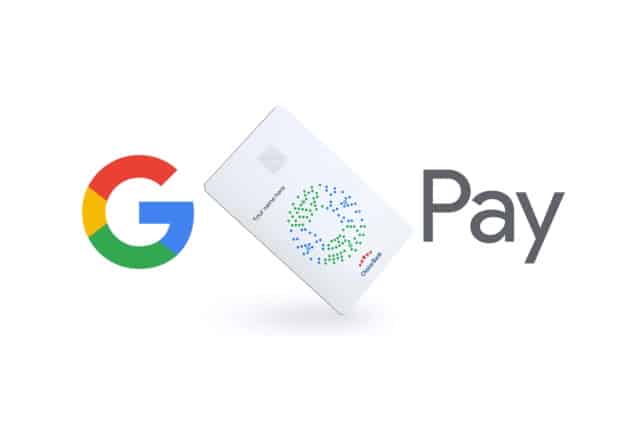
Fintech: Leak shows Google is working on a debit card to rival Apple Card
Leaked pictures suggest that Google is preparing to launch its own physical and virtual debit cards. TechCrunch cites multiple reliable sources in a report that gives a glimpse into Google's future fintech plans.
Images of not only the physical card itself but also screenshots of the Google Pay app with references to the virtual version of the card show off the design, as well as the spending tracking features that are in the pipeline.
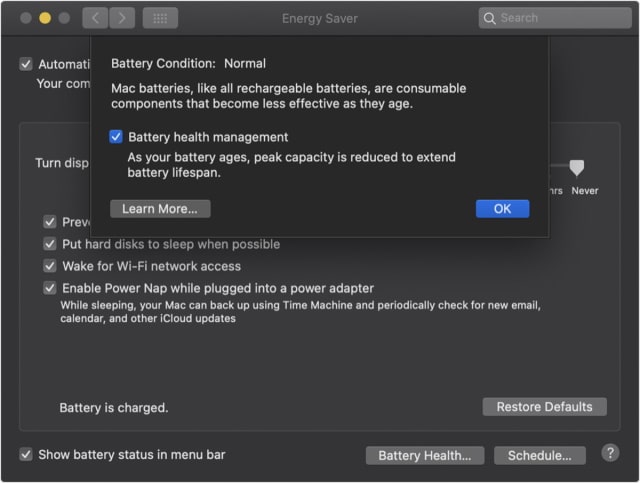
Apple's new 'battery health management' feature improves MacBook battery life
The battery life of your MacBook is about to be extended thanks to a new feature Apple is adding to macOS Catalina 10.15.5. Called "battery health management", the feature reduces batteries' rate of chemical aging, helping to extend its lifespan.
Working much like the Optimized Battery Charging feature of iOS, battery health management measures battery usage and adjust the maximum charge level for improved life.
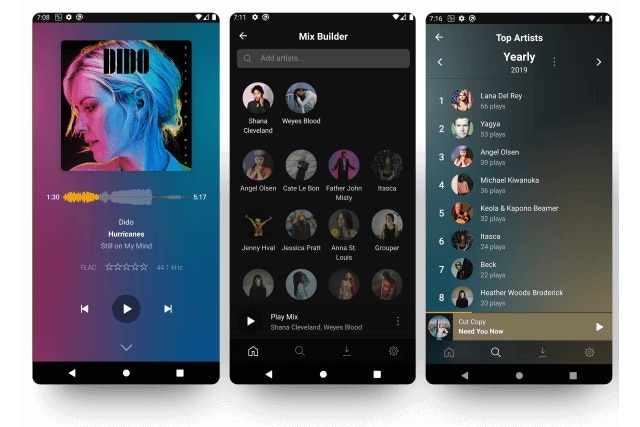
Plex releases media server app Dash, and Plexamp player for Windows, mobile, macOS and Linux
If the phrase "it really whips the llama's ass" means anything to you, you clearly remember the heady days of WinAmp. Now media server and management company Plex has come up with its own take on the classic software.
Called -- slightly uninspiringly -- Plexamp, the player is available for iOS, Android, macOS, Windows and Linux. The company has also released a new app for managing Plex media servers: Plex Dash. This is great news for Plex users, but there's a slight catch in both cases.

'Not a safe platform': India bans government officials from using Zoom -- but offers up some great security advice
The unrelenting criticism of Zoom continues, with India being the latest to slap an official ban on the video conferencing tool.
Voicing concerns that Zoom is "not a safe platform", the Indian Cyber Coordination Centre issued an advisory saying that the tool is "not for use by government offices/officials for official purpose". But the country recognizes that many people will want or need to continue using Zoom and the ministry of home affairs has issued a helpful guide to safe use of the service.
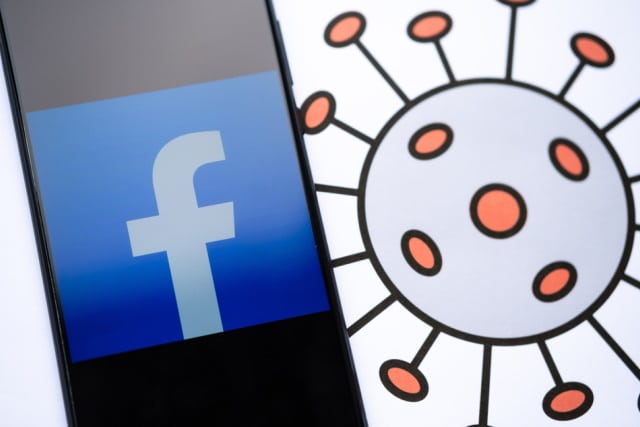
Facebook will let you know if you've been reading nonsense about coronavirus
As the world struggles to deal with the coronavirus pandemic, there is another battle taking place online -- the battle against misinformation. Well-aware that its platform is being used to spread false and misleading information about the disease, Facebook is taking action to try to stem the flow.
The social media giant, like other technology companies, has already taken steps to ensure people have access to reliable information, but now it is going further. Facebook will now retroactively alert people who have interacted with "harmful misinformation about COVID-19".
TikTok bans under-16s from sending and receiving direct messages and introduces new parental control options
TikTok has introduced a raft of new safety measures designed to protect younger users. As well as introducing new options that give parents even more control over their children's account, the company is also implementing a complete ban on direct messaging for those under the age of 16.
The changes are being tenuously linked to the coronavirus pandemic, with TikTok saying that the spread of COVID-19 has accelerated the flow of families moving to the platform for entertainment. The company says that it is adding new parental control features to help ensure a safer experience for users.

Apple thinks the new iPhone SE is worth much less than a quartet of Mac Pro wheels
Apple is not a company readily associated with low prices, and its hardware is always markedly more expensive than something comparable from other companies.
Over the years we've become used to Apple phones, tablets, desktop computers and laptops (typically) being relatively expensive -- but where the company really stands out is with the pricing of its accessories. Take the newly announced iPhone SE, for instance. With a starting price of $399, Apple values the phone less than a set of wheels for a Mac Pro, and only marginally more than a set of feet for the same computer.

Zoom releases software update to improve passwords, protect meeting IDs and secure cloud recordings
Zoom has been forced to take a long, hard look at its security and privacy in recent weeks. The company has not only put a pause on new features, it is focusing instead on making existing options more secure.
In an update to the software, Zoom has taken steps to improve the security of passwords, as well as introducing random IDs for meetings. The company has also enhanced password protection for meeting recordings stored in the cloud, and added other key security features.

Hackers are selling two serious Zoom zero-day vulnerabilities for $500,000
Both the Windows and macOS versions of Zoom have critical, unpatched security vulnerabilities that could be exploited by hackers to target users and spy on calls and meetings.
Security experts say -- despite not having seen the actual code for the exploits -- that the Windows version of Zoom is affected by an RCE (Remote Code Execution) described as being "perfect for industrial espionage". The zero-days have been offered for sale for $500,000.