
Tech companies reveal details of NSA data requests
In the light of last week’s PRISM revelations the major tech companies have all been quick to deny that they allow the NSA direct access to their servers. But they have also said that they respond to lawful requests for data and have been revealing the numbers involved.
Apple says it received between 4,000 and 5,000 requests from US federal, state and local law enforcement agencies for customer data between December 1, 2012 and May 31, 2013. In its press release Apple says, "Regardless of the circumstances, our Legal team conducts an evaluation of each request and, only if appropriate, we retrieve and deliver the narrowest possible set of information to the authorities. In fact, from time to time when we see inconsistencies or inaccuracies in a request, we will refuse to fulfill it". Apple also says that certain types of data such as iMessage and FaceTime conversations along with Map searches and Siri requests are not retained in an identifiable form.
HotShots is not just another screen grab tool
One small but welcome addition to Windows 8 is its new extended screen capture feature. Press Win+PrtSc and you’ll both grab the current screen, and save it directly to disk, which means there’s no longer any need to do the Alt+Tab, Edit > Paste, File > Save shuffle for every single image.
This is only a very small step forward, of course: the chances are you’ll still need to spend plenty of time editing your grabs before they’re ready for use. And so a better approach might be to install a tool like the free HotShots, which not only captures screens for you, but also provides some excellent editing tools to help you get them ready for prime time.

All mobile apps should require a subscription like Microsoft Office for iPhone
A couple of days ago, Microsoft quietly launched Office for iPhone. To the ire of many, it requires an Office 365 subscription. The internet is abuzz with chatter that this is simply a way to gain 365 subscriptions. While I do agree this is a way to increase subscriber numbers, it is not the full picture -- it is also the best way to fight piracy. This is the future of mobile app purchasing.
I applaud Microsoft for taking this approach. On iOS, piracy is far too convenient on a jailbroken device, thanks to apps that help the user download them. On Android, a phone does not even need root to install pirated .apk files. And so, how could Microsoft release its flagship software potentially for free for jailbroken iOS users and all Android users? Microsoft Office is too important to show up as an .apk for free in a Google (or Bing) search.
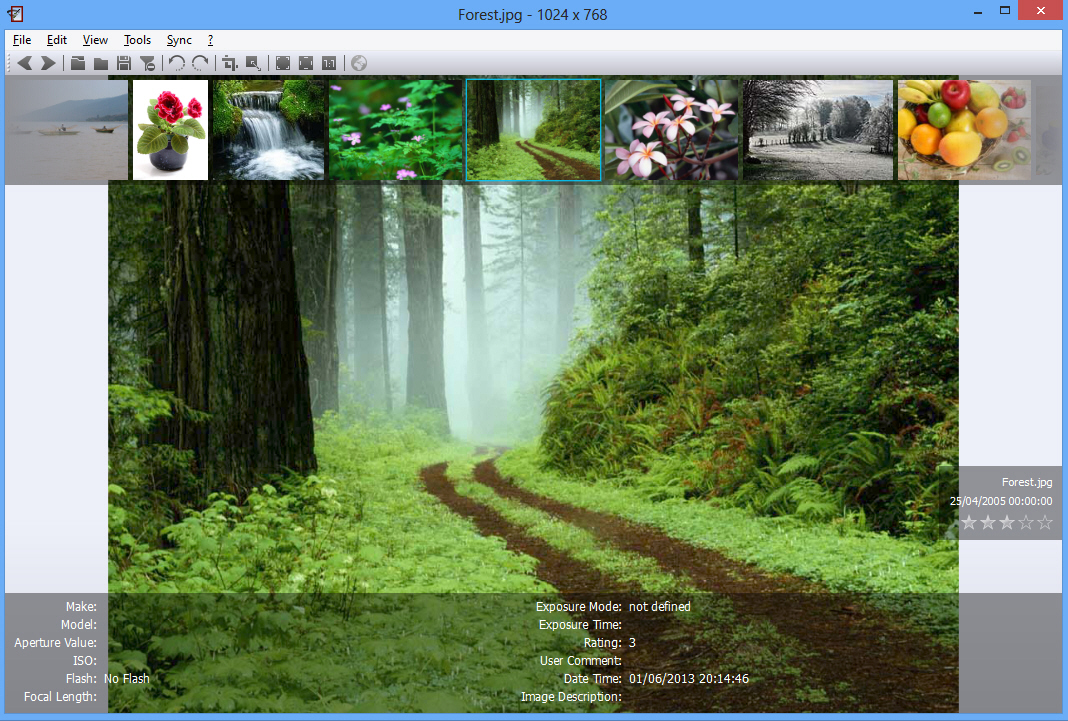
nomacs is a free image viewer with some unusual extras
Does the world really need another image viewer? It’s tempting to say no, as even Windows Explorer does a reasonable job of helping you browse your pictures, but nomacs is a cross-platform viewer which is aiming to change your mind. And it just might be good enough to succeed.
The program opens much like any other image viewer. You can display individual files or complete folders, for instance (there’s support for viewing all the main formats, including many RAW file types). A thumbnail browser helps you manually navigate to the images you need, or you can use the Player to create an automatic slideshow.
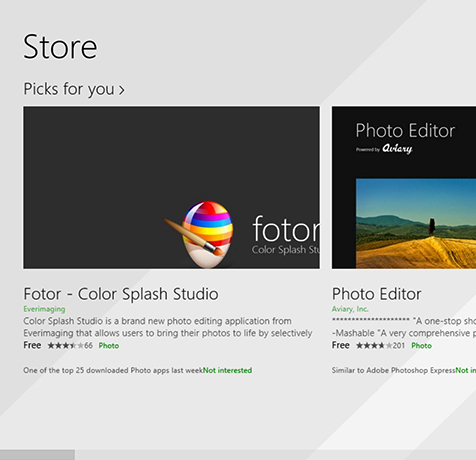
Take a look at the revamped Store in Windows 8.1
If you downloaded a leaked build of Windows 8.1 you’ll have noticed quite a few changes to Microsoft's new operating system, but there are still a lot more tweaks and features to come in the official preview build which will be released on June 26.
One of the new features is a revamped Windows Store, but unfortunately this wasn’t available to explore on the leaked builds. I say "wasn’t" because as of today you can now access and browse the store, and even download apps.

Virtual U.S. Congress: a practical, plausible way to save millions in waste
The very notion of telecommuting has been present in the mainstream white-collar workplace now for well over a decade. Yet for one of the worst offenders in padding operating and travel expenses, namely the U.S. Congress, the notion of mentioning telecommuting seems to be downright sinful. One would think that these calls for a "virtual Congress" come from watchdog groups of various political winds. But shockingly enough, one of Congress' very own -- House member Steve Pearce of New Mexico (R) -- is leading the push to bring our legislative branch full circle into the 21st century.
The premise behind the technical, and very much cultural, shift in thinking for how Congress does its business is quite down to earth. "Corporations and government agencies use remote work technology; it’s time that Congress does the same," says Pearce on a landing page for his initiative. "Members of Congress can debate, vote, and carry out their constitutional duties without having to leave the accountability and personal contact of their congressional districts." A wholesale breath of fresh air, I say.
Microsoft: Want Office for iPad? You can't have it, but use Web Apps instead
Yesterday, despite "credible" rumors suggesting a full-on iOS approach, Microsoft released Office for iPhone but left iPad users stranded. The company also planted a little trojan horse -- the app is free but it is not free to use, requiring an Office 365 subscription, which runs for $99.99 per year, to take advantage of Excel, PowerPoint and Word.
But, based on my own experience with Office on Windows Phone, the suite is not really in its own element on a small display. iPhone users are most likely to run the app just to perform quick edits and (in the most-optimistic scenario) create very short and basic documents, presentations or spreadsheets. Office would really shine on bigger screens, however Microsoft doesn't want iPad users to actually use it. I've asked the software giant to explain the iPhone-only design and here is the company's response.

Edward Snowden -- A fine line between hero and traitor
The South China Morning Post is the next stop on Snowden’s media tour. Not to discuss the NSA’s surveillance on American citizens, but the agency’s work in China. You read that right, that’s not a typo.
Snowden tells the (semi) independent Hong Kong paper that the NSA’s PRISM program is used against companies and people within China, and that the US government is and has been hacking into computers in both China and Hong Kong for at least four years.

Google Glass apps I really want to see
Your iPhone/Android is cool -- this we know. But, they wouldn’t be half as cool without apps. Apps are the icing on a smartphone -- minus the calories -- and we have a ravenous appetite for them. But cool apps aren’t isolated to just phones any more, as we’ve seen with new tech products like Google Glass.
Glass already has the usual suspects of apps, but what Glass really needs is to go nuts with apps that sound too good to be true.
Hands on with Office Mobile for Office 365 Subscribers
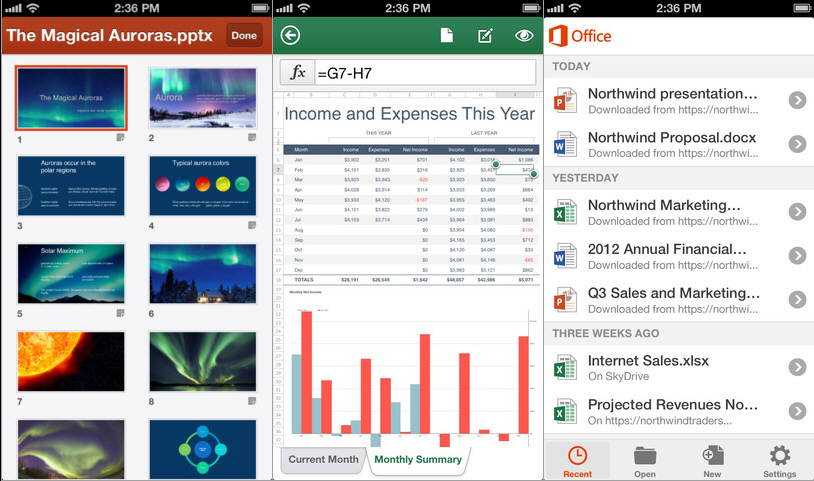
As you’ll know by now, Microsoft today announced the launch of Office Mobile for Office 365, an iOS app which allows users to access, view and edit Word, Excel and PowerPoint documents -- provided you have an Office 365 subscription.
We took it for a spin and despite the limitations, were actually pleasantly surprised. There’s plenty of functionality in the app to explore. The app can view Office documents stored on SkyDrive, SkyDrive Pro, or SharePoint, for instance, as well as documents which arrive as email attachments. It syncs with your other Office 365 devices, too, so documents you’ve read elsewhere will appear on your phone’s Recent Documents panel, and when you open one it’ll resume at whatever point you left off.
FotoSketcher adds new knife-painting effect, improves existing brushstrokes filter
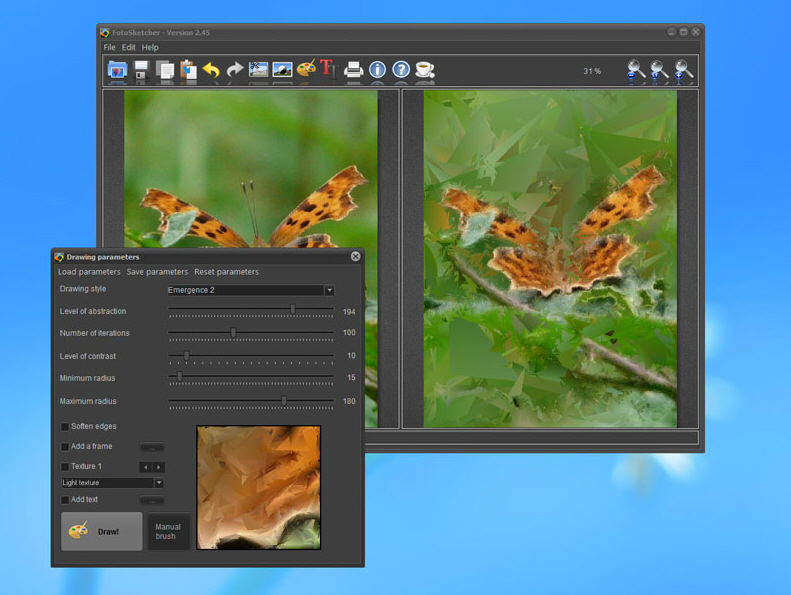
Freeware digital art creation tool FotoSketcher 2.45 has been released by French author David Thoiron. FotoSketcher, also available in portable form, provides quick and easy tools for Windows users wishing to transform digital photos into virtual works of art.
Version 2.45 introduces a new stylized effect (Emergence 2) and improves on an existing brushstrokes-based effect. It also includes a number of minor bug fixes and coincides with the author making a series of scripts available for download.
Battle of the music apps continues -- Rdio expands markets
What is your favorite flavor? Pandora? Spotify? iTunes? Perhaps Google Music All Access? Rdio is also a competitor in this ongoing battle and does not want to be outdone. With that in mind, the music service is expanding its horizons -- quite literally -- by pushing out into new markets around the world.
Most of the popular music apps serve slightly different purposes, though the new Google Music All Access seeks to bring an end to that particular dilemma. Rdio, which is in direct competition with Spotify, today announces a move into new worldwide markets.

Microsoft shouldn't do Office for Android
Seven months ago, when rumors burned hot, I explained why "Microsoft Office for Android and iOS is a Trojan Horse" -- that any mobile suite would be all about the cloud service. Sure enough, today Microsoft released the strangely named "Office Mobile for Office 365 Subscribers" to the App Store.
Office 365 is the productivity suite's future. Microsoft now claims to be a "devices and services" company. Smartphones are devices, Office 365 is a service and required for the iOS app. What more reasoning is needed? The Redmond, Wash.-based company provides more functionality than I predicted, but does so strictly in mobile context that doesn't diminish the PC product. That said, what Microsoft gives to iOS should be withheld from Android.
Office finally arrives on iOS, but with limitations
The much talked about iOS version of Microsoft Office finally arrives in the App Store today. While that sounds like great news for anyone hoping to at last be able to (officially) use Word, Excel or PowerPoint on the iPad, you may wish to curb your enthusiasm, as there are some serious limitations with this release.
It's only available in the US for starters (coming to other territories "soon"), and you need to be an Office 365 subscriber to use it. Also it's only optimized for the small screen.
BlackBerry 10.2 to introduce improved Android app support
Just a month after unveiling BB 10.1, Canadian maker BlackBerry is now focusing its attention on the next iteration of the smartphone operating system. Even though BB 10.2 is unlikely to be introduced in the upcoming weeks, the company already revealed an important detail related to the future version.
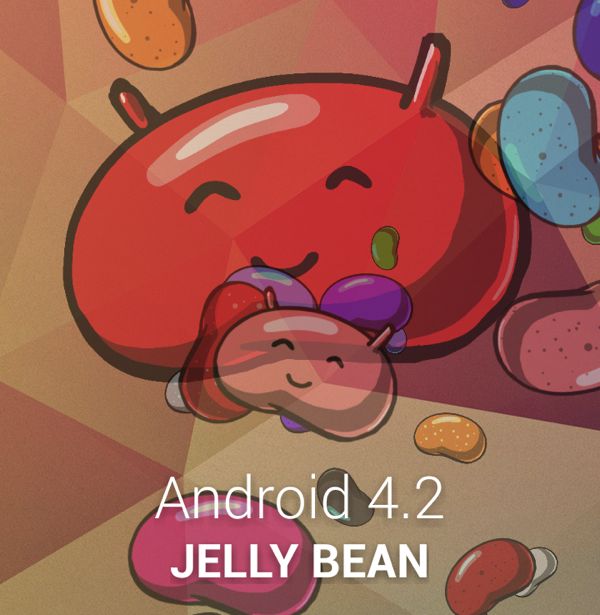
Late-yesterday, BlackBerry released the Android 4.2.2 runtime for BlackBerry 10.2, which allows developers to test apps originally designed for the second Jelly Bean iteration on the company's smartphone operating system.