
Microsoft can do no wrong lately -- rumored to buy Sunrise Calendar for $100 million
If there is one thing you should always remember about the technology community, it is that the tides are always changing. In other words, a company that can never lose, will eventually face calamity. A good example of this is Blackberry. We aren't many years removed from a world where seemingly everyone owned a Blackberry as their device of choice. Hell, if you didn't have BBM, you were not a part of the "in" crowd. Today? Not so much. Using one of those devices is perceived as very uncool. Even Apple, despite making tons of money, has seen its iOS devices hemorrhaging market share as Android grows. Again, everything changes -- nothing is set in stone.
I'm not saying Microsoft is Blackberry -- quite the contrary -- but its loss of mind share over the last decade has been staggering. Computing used to be synonymous with Windows, and it still is on the desktop, but the company is essentially absent on the mobile front, which is arguably more important. Let's be honest, Windows Phone is a failure; there is no benefit to use it over iOS or Android. Why? Because apps are really the only thing that matters. From a consumer standpoint, a mobile OS is a means of running apps -- nothing more. Guess what? Microsoft finally realizes this and if it can't be the platform for the apps, it can be the apps. Today, the company which can do no wrong lately, continues its win-streak as it is rumored to be buying Sunrise Calendar.
Facebook will urge UK users to register to vote
If you're in the UK, your Facebook feed might look slightly different tomorrow (Thursday). In addition to the usual bitching and moaning, cat videos, and lists of eight things you didn’t know about your friends, you may well also see a reminder to register to vote in May's General Election.
Why? Well Thursday 5 February is the excitingly named National Voter Registration Day, and the Electoral Commission has teamed up with Facebook to try to up voter numbers. The idea is riding the wave of interest in politics that swelled around the Scottish referendum on independence, and it is hoped that more young people will be encouraged to register in time to cast their vote at the ballot box.
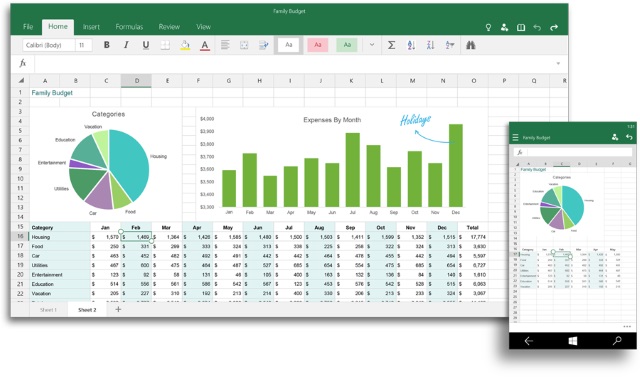
Grab yourself a free copy of Office for Windows 10 Technical Preview now
A couple of weeks ago we learned a little about what to expect from Office for Windows 10. Today Microsoft has made the universal apps for Office for Windows 10 available for download. In order to grab yourself the preview software, you need to be running Windows 10 Technical Preview build 9926 as the apps are being made available through the new Windows Store Beta.
For now, the Word, Excel and PowerPoint apps that make up Office for Windows 10 are available for PCs, laptops and tablets running Windows 10 Technical Preview, but this will open up in due course to phones as well.

Microsoft Internet Explorer security flaw could put users at risk
In terms of market share, Internet Explorer remains the top web browser thanks to being the default on Windows and average users not knowing any better. Those with a lean towards technology frequently use alternatives like Chrome and Firefox. This was a major problem in the days of IE 6, but Microsoft has improved its offering with each iteration.
But no software is perfect and security holes are found on a regular basis. This time it seems Microsoft's browser has a major one. The flaw that has been discovered can be used to exploit users via phishing attacks and malicious code insertion.

Can you trust crowdfunding projects? Not in the UK
Crowdfunding is now an incredibly popular way for startups and individuals to get the funding to get their projects off the ground. It's certainly an interesting approach to things. Ideas that might not otherwise come to fruition receive the money they need to hit production, further development and so on, and investors get the chance to be involved in something from a very early stage, and possibly reap the benefits when it hits the big time.
But in the UK the Financial Conduct Authority found that most British crowdfunding websites were less than honest with the information shared with potential investors. Specifically, the regulator warns that companies are being selective about the information that is shared with would-be investors, whilst simultaneously underplaying the risks that might be involved.

Lack of trust holds back app downloads
Consumers are increasingly wary of downloading apps according to a new report by mobile commerce community MEF and antivirus company AVG.
The study is based on data from 15,000 mobile media users in 15 countries across five continents. It explores the key areas of trust, privacy, transparency and security to identify their impact on mobile consumers, from purchasing a new device to downloading apps or paying for goods and services.

Google fails to spot adware-riddled Android apps in Play store
If you want to steer clear of malware on Android, just stick to Google Play. I am sure you have heard this line before. And it makes sense, if you think about it, as Google subjects apps to security checks prior to approving them. So, it makes sense to hand out that piece of advice whenever new Android malware is discovered in the wild. But what if the malicious bits are found in Google Play itself? A change of tune is in order.
Security firm Avast details how three popular, seemingly harmless Android apps -- but, riddled with adware -- have been tricking users into visiting unwanted sites, installing other apps, to fix different non-existent issues, like fake malware infections, porn-filled storage (though, I have to say, it is far from an unlikely scenario, in some cases) and so on.
New tool to identify website vulnerabilities
Many of the security breaches that have made the headlines over the past year have been due to some form of web vulnerability. It's no surprise that the web has become the main route for cyber attacks as highlighted by things like Shellshock.
But identifying these flaws manually can be a mammoth task. Which is why cloud security provider Qualys is announcing the latest version of its Web Application Scanning (WAS) tool.
Tweak, process and optimize your JPEGs with Jhead
Jhead is a free command line tool which crams a host of JPEG-tweaking power into its tiny 163KB executable.
The program can strip out all unnecessary metadata, reducing file size a little (occasionally, a lot), and maybe protecting your privacy.

Android 5.1 Lollipop is already here, but you can't get it yet
Android 5.0 Lollipop was the only new Android release that came out in 2014. And that was unusual. Prior to its arrival Google had announced twice as many each year (even more, if we look far enough behind), with less than six months between them. In 2015, Google is shaking things up one more time.
In recent years, the first new Android release of the year usually came in June or July, but in 2015 it arrives much sooner. In fact, Android 5.1 Lollipop is already here, as it is shipping on a new batch of Android One devices slated for Indonesia.

Samsung launches advanced enterprise mobility solution
The increasing use of mobile devices for business has highlighted the need for solutions to manage devices and keep them secure.
Samsung has recognized the growing importance of this and has announced the release of the Good app container and management system on the Samsung KNOX enterprise security platform for Android.
iOS outsells Android in US for the first time since 2012
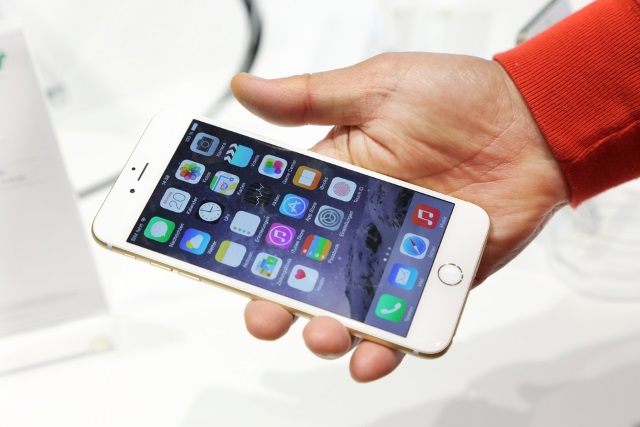
The latest figures published by Kantar Worldpanel show that US sales of iOS devices are outpacing those of Android handsets. Just. Buoyed by the launch of the iPhone 6 and iPhone 6 Plus, Apple saw sales figures rising across Europe, the US and in China, with the smaller of its two smartphones proving to be the best-selling handset in the US.
Overall, iOS devices accounted for 47.7 percent of smartphone sales, just managing to edge ahead of Android which dropped slightly to a 47.6 percent market share. The holiday period was key to this switch in popularity, as the iPhone 6 proved the most popular gift in 2014. But it's not just in the US that Android is losing its grip on the market.

Augmented Reality glasses set to become more popular than smartphones, says Augmented Reality promoter
In the future, smart glasses (or AR, Augmented Reality glasses) will become more popular than smartphones -- although we are talking about the pretty distant future.
This unlikely sounding conclusion -- particularly given the recent demise of Google’s Glass Explorer project -- was reached by a report from Augmentedreality.org, although it is potentially somewhat biased in that it’s an organization "committed to advancing Augmented Reality".

J7Z is a simpler, faster 7-Zip gui
It may be more than 15 years old, but 7-Zip is an open source classic, still used as the archiving engine for a host of applications.
7-Zip’s interface isn’t a strong point, though, and if you'd like something simpler then you might prefer the Java-based J7Z.
Toshiba releases super-secure Encrypted USB Flash Drive with hardware-based encryption
In a cloud-focused world, more and more people are shunning physical storage. It's hard to blame them, as cloud services are very convenient. Best of all, services like Dropbox and OneDrive store your files off-site, keeping them safe from floods, fires and other disasters.
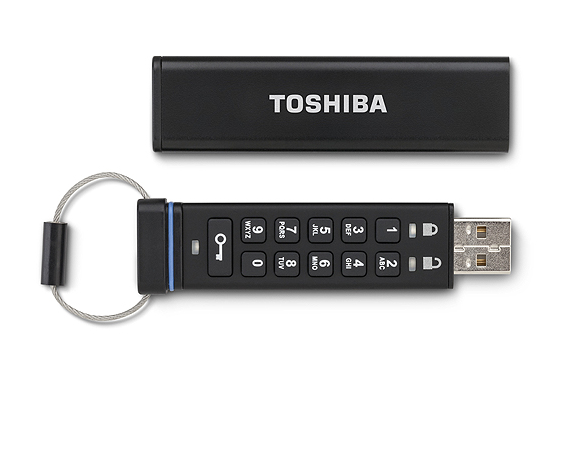
Unfortunately, not everyone can utilize cloud storage. Businesses in particular may be wary of using the cloud to store or transport sensitive information and trade secrets. Yes, a flash drive may be an option, but what if it gets lost? They are small, and can easily fall out of a bag or pocket. Today, Toshiba releases its solution; the unimaginatively named Encrypted USB Flash Drive. While the name may not be impressive, the AES 256-bit encryption surely is.