
It's time for enterprises to get crazy with communication
It’s been a long time coming. Fifteen years after VoIP proved its cost benefits, ten years after 'telephony' reinvented itself as unified communications and five years since the whole lot became 'just another app', we’re finally witnessing the consumerization and democratization of enterprise-class, personal communications and messaging by going ‘over-the-top’.
In the telecoms world, the OTT (over-the-top) acronym is well understood, if not a little overused. Traditional telecom providers have been forced into developing innovative services that move above their traditional infrastructure markets of lines and minutes, in order to compete with the innovative OTT services provided by the likes of Google, Facebook and Skype that capture the user so effectively and give them an experience they just can’t do without.

PowerArchiver 2015 adds new Explorer preview extension, tweaks user interface
ConeXware has unveiled a huge update to its Windows archiving software in the form of PowerArchiver 2015 v15.0. The paid-for tool offers support for a wide range of archiving formats presented in a user-friendly interface.
Version 15 focuses on delivering a large number of shell extension updates -- including new PowerArchiver Mini tool -- as well as interface changes, support for new formats, new skinning system and improvements to various supplementary apps.

Xshell is a one-stop SSH, SFTP terminal emulator
Most internet resources are accessed through a web interface, which means they’re normally very easy to use. You might have menus, text prompts, graphics, maybe wizards to walk you through whatever you’re trying to achieve.
For more low-level control, though -- micro-managing your own web space, maybe setting up a remote server -- you might still need a terminal emulator like the free-for-personal-use Xshell 5.

PlayStation games can run on Android Wear smartwatches
With the latest smartwatches boasting a significant amount of processing power, it was only a matter of time before fans of classic video games starting emulating older titles to run on them.
Now, one particular retro enthusiast has managed to run PlayStation One games on their Android Wear device.

Does a deleted Microsoft blog post show it's about to buy mobile email firm Acompli?
Web pages can be interesting, transient things; they can be there one minute and gone the next. But while a web page may vanish, that does not mean that all traces of it vanish from the internet. Earlier today an intriguing-looking article popped up in my news reader -- there are many benefits to sticking with RSS feeds: a post on the Microsoft blog with the title "blank post please delete".
Authored by Rajesh Jha, my RSS reader (InoReader) showed that the post's content was very similar to the title -- blank post, please delete. Just a comma added. Interest piqued, I clicked the link to see if there was any more to see. "We're sorry, but we can't find the page you're looking for" announced Chrome. But the URL is curious.
Now Twitter is going to start monitoring which mobile apps you download
Hate 'em, loathe 'em or abhor 'em, it's hard to avoid ads. You know that you're a consumer. Companies exist because you consume, and you are encouraged to consume more and more. To help lead you to consume, you need to be subjected to advertising -- it's all part of the money-go-round of using the web.
Tailored ads are more likely to bring in cash, and social networks are in the business of gathering information about their users with a view to delivering the most laser-focused targeted advertising possible. The latest venture by Twitter involves keeping tabs on the apps you install on your iOS or Android phone or tablet.

Need to clean your Surface Pro 3? Here's how Microsoft suggests you do it
Laptops and tablets can be quite the germ-factories. Not only do people touch the screens and keyboards with things like gross Cheez-Doodle-covered fingers, but many bring computers into the bathroom too, though most won't admit it. Germs are a real concern for me, and I like to be in a clean environment.
Unfortunately, it can be a mystery to know the best way to clean a tablet or laptop. Do you bring it in the shower with you? Spray it with Febreze? Put it on the hood of your car and drive through a car wash? Actually, those are all horrible ideas -- please don't do any of them! Today, Microsoft is enlightening Surface Pro 3 users with the best way to clean and sanitize the tablet/laptop hybrid for use in a hospital or clinical environment. Sure, it may be overkill for the average home user, but when it comes to germs, I would rather be safe than sorry.

Amazon deal -- grab a Fire HD 6 and get a bonus
Amazon recently released new devices, including Fire tablets and Kindle readers. But with the holiday shopping season now upon us, it's time for deals. The retailer is responding with multiple ones, some already being available on the site.
This one is a bit different, though. The online store wishes for you to purchase its new Fire HD 6 tablet, and to entice you, the pot is sweetened.

EFF joins dozens of groups to create global coalition to fight for net neutrality
The net neutrality debate has been rumbling on for some time now. Barack Obama even waded into things recently by giving his backing to campaigns that suggest all web traffic should be treated equally. But the US president is far from being the only big name speaking out against the two-tier internet that some providers would like to see created.
Now the Electronic Frontier Foundation (EFF) -- a group involved in many online campaigns and whose tagline is "defending your rights in the digital world" -- is joining forces with other equality advocates, including Greenpeace, to create a global coalition fighting for net neutrality. The latest campaign is a concerted effort to ensure that the internet is not transformed into something that delivers a poorer service to certain customers.

Study says Apple's iPhone 6 and 6 Plus are cannibalizing iPad use
Despite what many people say, size does matter; well... at least when it comes to screen-size and productivity. Sure, a large screen limits portability, but it also makes it easier to do work and multi-task.
Tablets became wildly popular, in part, because they had larger screens than smartphones. With that said, the Phablet craze has created smartphones with such large screens, that it can limit the allure of tablets like the iPad. Some analysts and pundits predicted that the iPhone 6 and 6 Plus would cannibalize iPad sales and use. Well, a new study by the company behind the popular Pocket app, shows that the latter may be true.

You better watch out -- online retailers' security practices under the spotlight
This time of year sees a spike in online shopping activity, but that also means added worries about how well our information is being looked after when we buy online.
Password management company LastPass has put together an infographic 'naughty and nice' list looking at how online retailers store information when we shop.
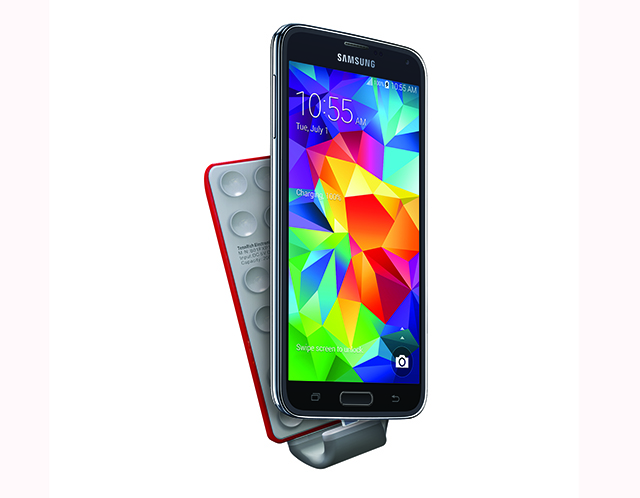
PowerSkin selling $50 iPhone and Android battery packs for just one cent on Cyber Monday
There are plenty of bargains to be had before, during, and after Black Friday, and if you’re shopping for a battery back to charge your iPhone or Android device, hold off a few days and you’ll be able to pick up a steal of a deal on Cyber Monday.
PowerSkin, a leader in portable power solutions, sells PoP'n battery packs that cost $49.99, but on Monday the retailer will be offering them for just one penny (plus $7.99 shipping and handling).

Is your company making the most of web-based tech?
Technologies available to businesses are changing daily. In the competitive business arena, it has become imperative to constantly evolve along with the technology. No matter which aspect of your business you consider, there is a relevant technology to make it more efficient.
When it comes to web-based technologies, there are a gamut of options that companies can benefit from to build their market reputation, outreach, drive more sales and enhance revenue. In this article, we will talk about a few of the most significant web based technologies that have changed the dynamics of how businesses operate and market themselves in today’s world.

Partial refunds for PS Vita customers after Sony's 'misleading' ads
Sony has been hit with an order to issue partial refunds to customers who bought PlayStation Vita consoles. The Federal Trade Commission found that the company had produced false advertising for the handheld console which suggested that the PS Vita had certain features when in fact it did not. Anyone who bought the console before June 1 2012 is entitled to either $25 cash or credit, or a $50 voucher.
Adverts for the three year old console suggested that players could start a game on a PS3 and pick up from where they left off on a PS Vita console. This feature was only supported by a small number of games. Ads also suggested that 3G subscribers could engage in live online games when in fact this was not possible.

Get free real-time backup and versioning with AutoVer
AutoVer is a small, simple, and surprisingly capable free backup tool. Not only can the program monitor folders, detecting new and modified files, and backing them up in real time -- it can maintain a library of their previous versions, too.
The program opens with a very straightforward interface. No menus, no complex dialogs or status displays, just a four-column table and a small toolbar.