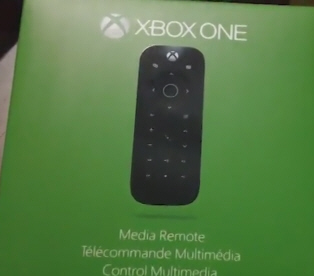
Microsoft reveals Media Remote for Xbox One
Xbox One touts its voice control, but some customers feel that isn't quite enough, and using a game controller is not much easier. Harmony supports the console, but not everyone wishes to pay for the high-end universal remote.
Now Microsoft is unveiling a new Media Remote for the gaming system. This isn't entirely unexpected. After all, last week Amazon Canada accidentally reveled the little remote control on its retail website.

Microsoft and Oprah Winfrey want you to say 'hello' on Skype, or in person
Every day, I speak with hundreds of people on social media, IRC and instant messenger. However, I rarely get to see the person face to face. The closest I get is their profile pic. Heck, even those can be faked; a hairy old man can pretend to be a 21 year old female college student -- trust me on this.
In other words, while technology has linked more people together, it has sucked the humanity out of the interaction. Video chat, such as Skype, is a great way to remedy this. Today, Microsoft announces an initiative with celebrities like Oprah Winfrey and Sanjay Gupta, urging people to say "hello" to complete strangers or people you haven't talked to in a long time; on Skype or in person.
RealPlayer Cloud gives you the best of all worlds when it comes to playing video
When it comes to playing video on your PC or mobile, the choices are vast and sometimes confusing. Do you restrict yourself to access from one device, or do you manually transfer media between devices as and when it’s required? Or do you invest in some cloud-based solution that gives you access wherever you have an internet connection?
You could try and combine a number of different solutions, or you could take a closer look at RealPlayer Cloud 17 and RealPlayer Cloud for Mobile, which offers a solution to all three scenarios in one app.

Hosted virtual desktop helps businesses migrate to the cloud
One of the problems with migrating systems to the cloud is ensuring a consistent means of access for users in different locations and with different devices.
Cloud services provider dinCloud has an answer in the form of webHVD, an HTML 5 virtual desktop that’s fast secure and easy to deploy.

The value of open source
In 2006, I co-founded Four Kitchens, a web design and development consultancy that specializes in working with open-source software. As an open-source business, we are frequently asked about the benefits of open source. The way I explain it to most people is like this: The open-source business model is service-driven, and the closed-source model is product-driven.
In an open-source model, your startup costs are zero and you need to expend capital -- your time, your company’s development cycles and your money to hire outside vendors, etc. -- to get the software to do what you need. In a closed-source model, your startup costs are usually quite high because you must purchase licenses, subscriptions and proprietary hardware, but the software more or less works out of the box. In the long run, I believe the open-source model is cheaper for two reasons:

Businesses unprepared for security risks from BYOD
A majority of organizations acknowledge that they’re unprepared to deal with security breaches via their BYOD technology.
A new survey released by security awareness training specialist KnowBe4 shows that 53 percent of businesses aren't properly prepared to deal with hacked or stolen mobile devices, even though 50 percent indicated that company-owned tablets, notebooks or smartphones may have been hacked in the past year.

uTorrent adds smarter peer selection, integrated BitTorrent Bundle
BitTorrent has announced the availability of uTorrent 3.4, the latest edition of its popular file-sharing tool.
The most obvious change is the (optional) integration of BitTorrent Bundle. Click in the left-hand sidebar and you can browse licensed content from Moby, Madonna and more, downloading whatever you like for free (although you’ll probably need to provide your email address).
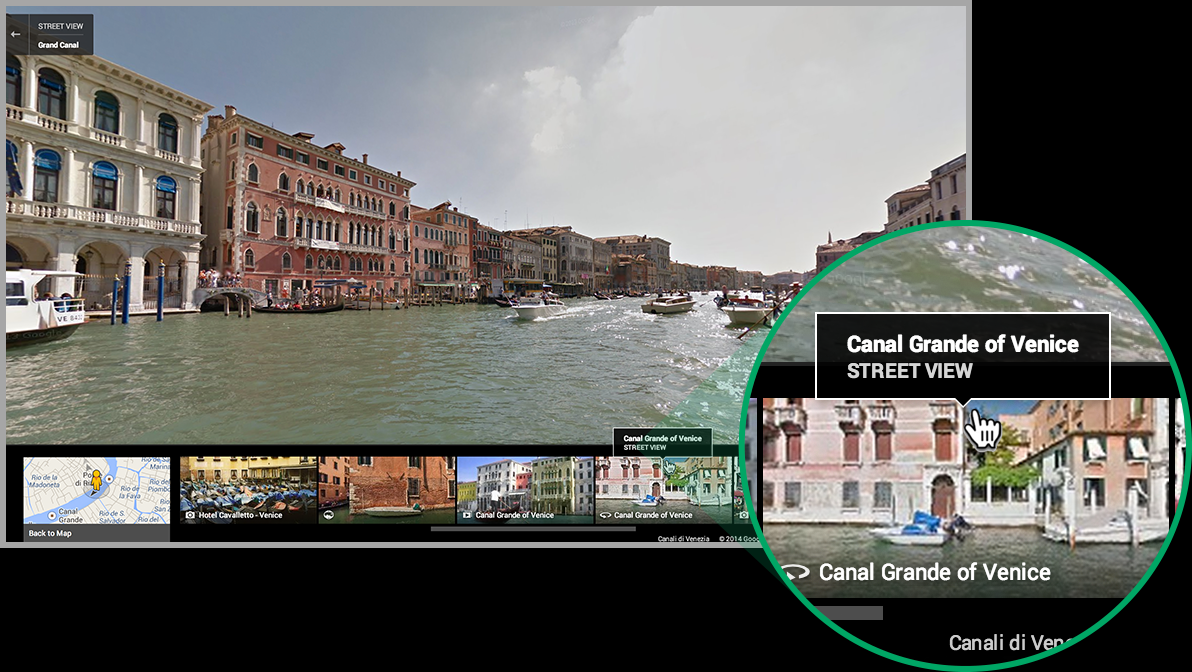
Google rolling out new Maps interface for the desktop
Google continues to enhance its Maps offering, combining it with Street View to bring comprehensive coverage of every possible area -- even trails in national parks. Now the search giant is announcing more improvements will be arriving on customers' desktops very soon.
"It’s now even easier to plan your next trip, check live traffic conditions, discover what’s happening around town, and learn about a new area -- with Pegman’s help if needed", states Brian McClendon, vice president of Google Maps.

Google needs to do something about Nest’s birdbrained support
I purchased four Nest Protect wired smoke detectors direct from Nest at the end of January. I live in the UK, they were shipped from Holland, and so took five days to arrive. No big deal. I got an electrician friend round to fit them, and he made an interesting discovery -- the power cables connected to my existing smoke detectors were dead (the devices still worked as they were running off batteries, and past false alarms showed they were linked together, so there was no safety risk). The only way to connect my new Nest devices was to do a massive rewiring job. I decided to speak to Nest and swap my wired models for wireless battery ones.
You’d imagine this would be a simple and painless task. But Nest, which was recently purchased by Google for $3.2 billion and produces intelligent hardware, has possibly the least intelligent returns policy in place. Four phone calls later, and I still have my wired Nest devices because the company has what has to be a contender for the worst support ever.
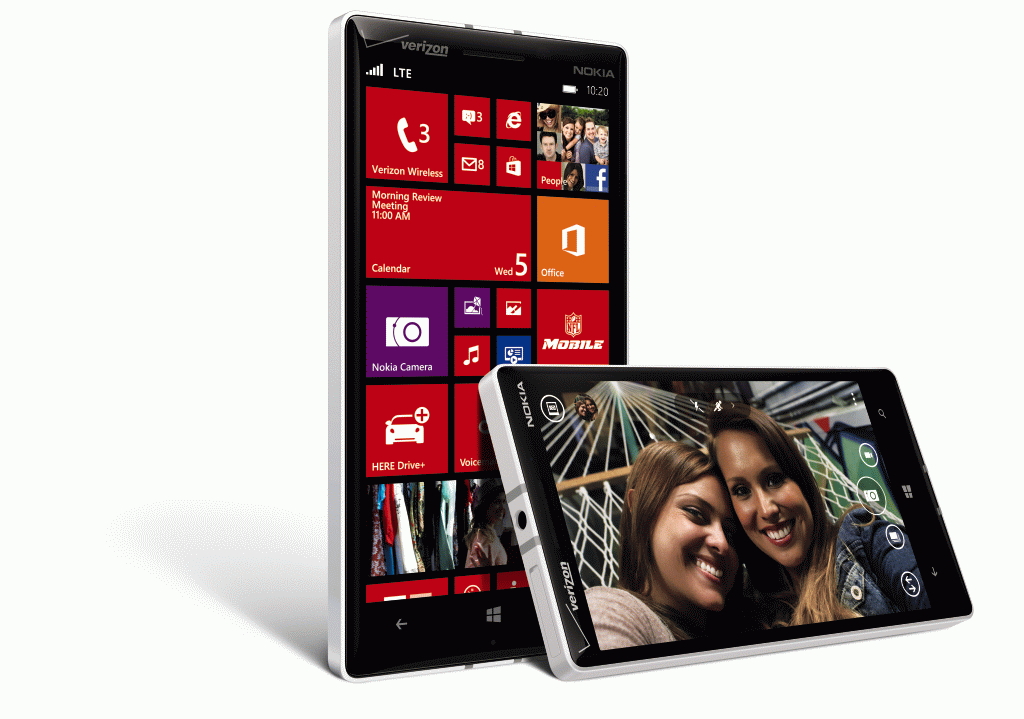
Nokia Lumia Icon is now available, but will you buy it?
The Nokia Lumia Icon is an interesting smartphone, and an interesting Windows Phone alike. It offers Qualcomm's top-of-the-line processor, plenty of internal storage, a good camera and a 1080p display, all in an attractive package. But it is not available for your carrier, unless it is called Verizon. Hey, you know Nokia, the company loves exclusives.
Microsoft's and Verizon's stores now carry the Lumia Icon, just a week after it was officially unveiled (but we knew the details long before the announcement). The smartphone can be had, in either black or white, for the usual, flagship-price of $199.99 when purchased on a two-year contract. It can also be had with a month-to-month contract, for $549.99, or an Edge plan, for $23.06 per month.

New threat intelligence platform speeds up investigation of security incidents
In today's complex cyber threat landscape it can be difficult and costly to investigate and respond to security incidents.
IT departments are often too focused on getting systems back online to spend time looking into the cause of the problem. With its new InSight platform AccessData wants to help enterprises better manage their data risks.
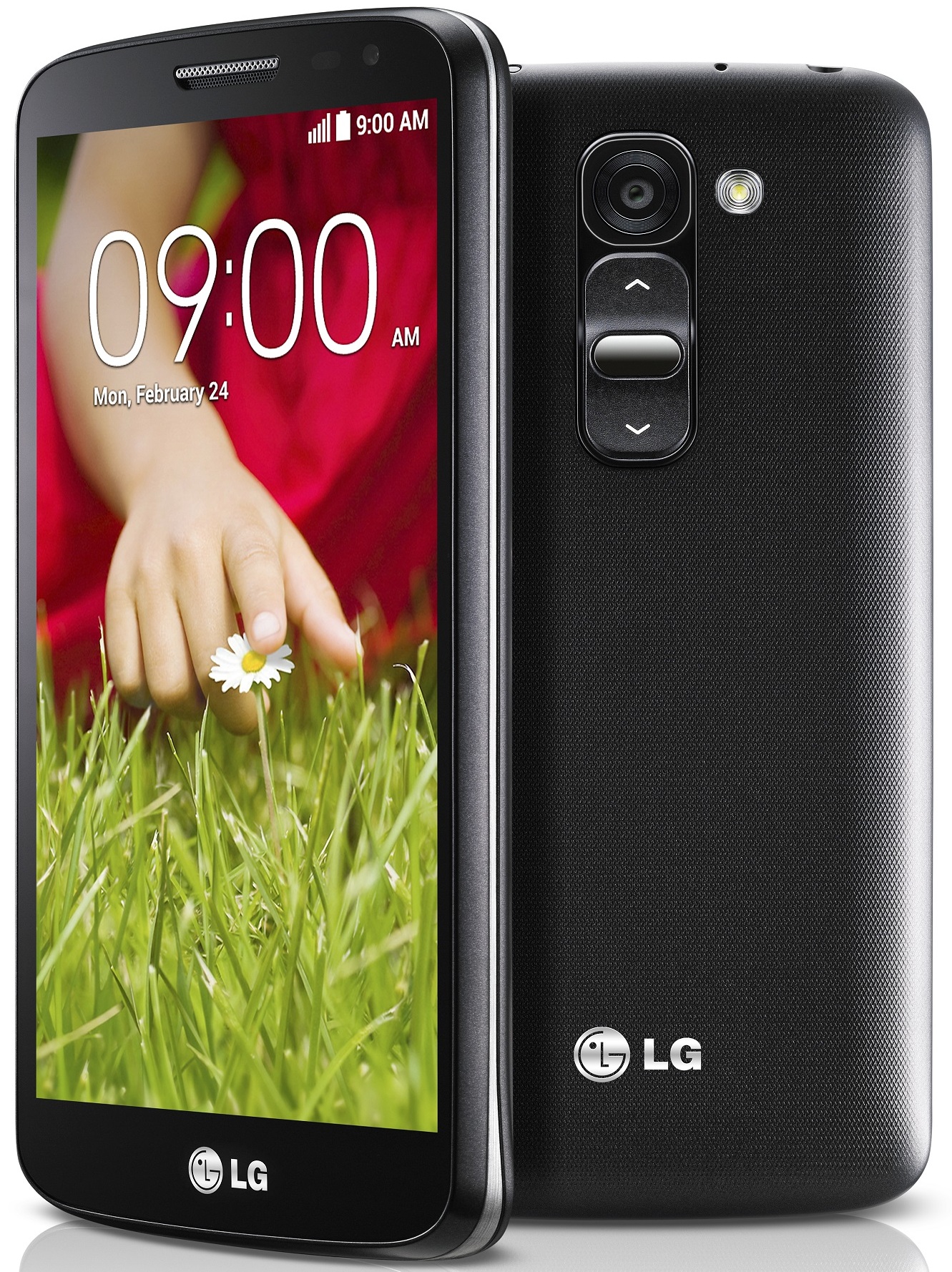
LG plays the miniaturizing game too, unveils G2 mini
Android vendors may like to announce bigger smartphones (because, bigger is better, isn't it?), but they also launch smaller versions of their flagships, to cater to a larger audience. Samsung has the Galaxy S4 Mini, HTC has the One mini and, now, LG takes the wraps off G2 mini. Heck, even the indicative has a small first letter.
The downsizing applies to the physical dimensions, as the screen is now a 4.7-inch unit with a resolution of 540 by 960, and also to the internals. LG has chosen not to severely underpower its new smartphone. Compared to its big brother, it still offers a quad-core processor in both the 3G and 4G trims, but those cannot compare to the Qualcomm Snapdragon 800 in the G2.
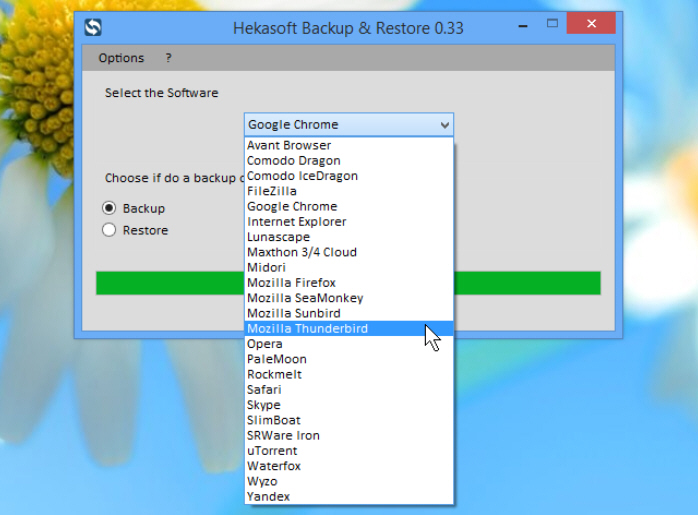
Back up all your browser profiles with Hekasoft Backup and Restore
Bookmarks, history, cookies, settings -- browsers store a great deal of valuable data, and backing this up occasionally could be a very good idea. But it’s not easy, as most browsers don’t provide any tools to help.
Hekasoft Backup and Restore provides a simple answer. It’s a straightforward free tool which makes it easy to back up and restore user profiles for all the main browsers, most of the minor ones, and a few other packages as well.

More people spend via their phones as the world goes "mobile first"
Mobile advertising company InMobi has announced the results of its 2014 Mobile Media Consumption Report.
Based on research covering over 14,000 respondents in 14 countries, the findings show that we’re increasingly living in a "mobile first" world with 60 percent now using a mobile as their primary or only means of going online.

96 percent of applications have security vulnerabilities -- and it's getting worse... or better
Publishing its Application Vulnerability Trends Report, Cenzic states that virtually all of the applications it tested had at least one security vulnerability. A staggering 96 percent of apps exhibited security issues, and it looks as though things are on a downward spiral.
In a similar report published last year, it was found that the median number of flaws was 13; this year it has increased to 14. So it appears as though things are getting worse... but is this the full story?