
Read all about it! Facebook reveals details of its news feed algorithm
It's one of the mysteries of life. It may not quite rank up there with who shot JR or why the word "monosyllabic" has so many syllables, but there can be few Facebook users who have not wondered why particular stories appear where they do in their news feed. Now, Facebook reveals details of the secret algorithm that determines how content is ranked.
According to the social network there are around 1,500 stories waiting for the average user to see upon logging into their Facebook account. Few people have the time to scroll through all of them, with research showing that users manage to work through just over half of the stories. Prioritization is needed and this is where the algorithm comes into play.
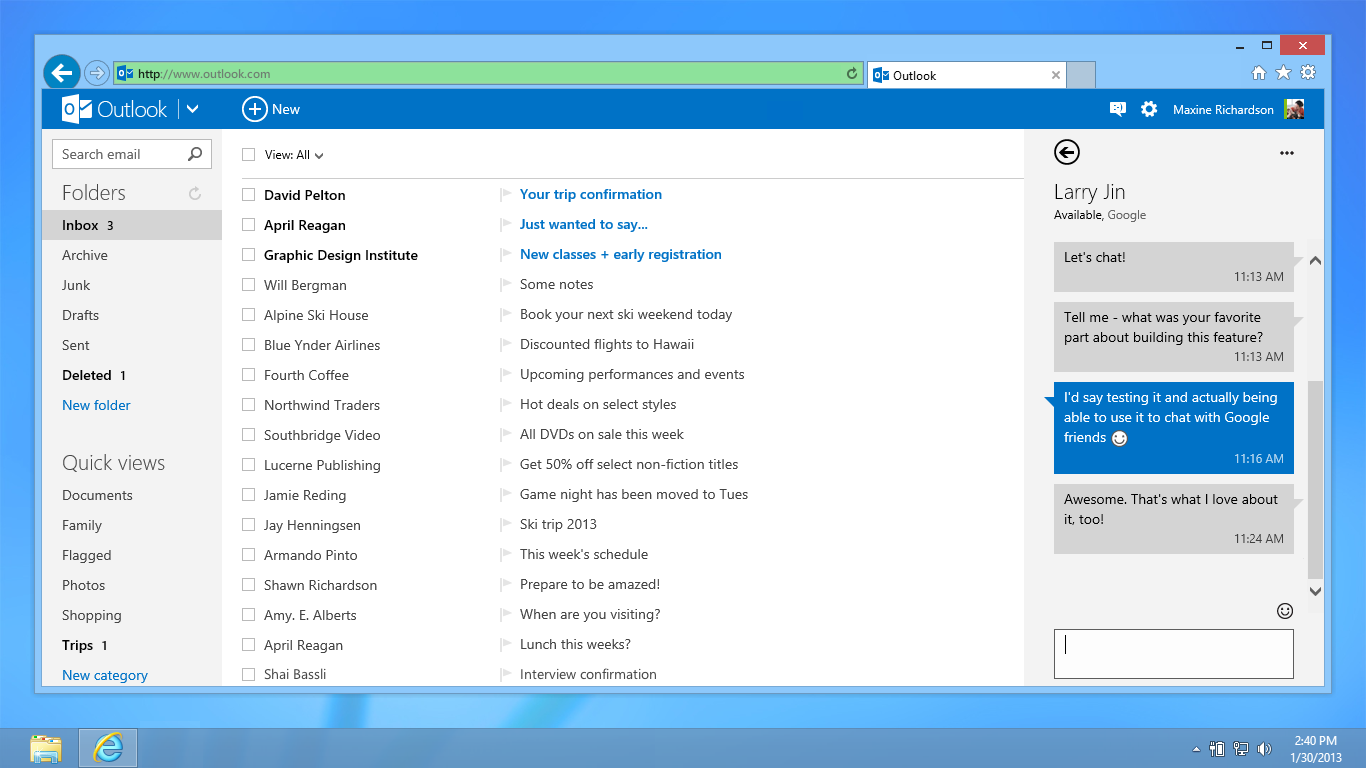
Microsoft announces change to Outlook.com messaging history
Social integration is one of the most interesting features of Outlook.com, as it allows users to manage emails and, at the same time, chat with friends on Facebook, Google Talk and Skype. Microsoft started to integrate the latter service in late-April, with the roll-out continuing into the summer and, now, the company announces a new change as the process reaches its final stages.
Microsoft just revealed that, "as part of adding Skype to Outlook.com", users will no longer be able to access the social messaging history through the adjacent folder, as it will be removed "sometime this fall". The feature will still be available, but only through the Messaging panel.

Microsoft warns Windows Phone users not to use WiFi -- wait, what!?
Windows Phone is a very closed system -- much like Apple's iOS. Because of this, users can comfortably use the operating system without fear of malware. However, this does not mean that the OS is free of vulnerabilities. Unfortunately, Microsoft has warned that Windows Phone 8 and 7.8 are vulnerable to a security weakness regarding Wi-Fi.
According to Microsoft, it is "...aware of a public report that describes a known weakness in the Wi-Fi authentication protocol known as PEAP-MS-CHAPv2 (Protected Extensible Authentication Protocol with Microsoft Challenge Handshake Authentication Protocol version 2), used by Windows Phones for WPA2 wireless authentication. In vulnerable scenarios, an attacker who successfully exploited this issue could achieve information disclosure against the targeted device". This is scary stuff!

Depeche View Lite lets you quickly search and explore plain text files
Searching one or two plain text files is easy. Windows Search and Notepad will probably be enough. But when you need to browse ten files, a hundred, maybe even thousands, then you’re likely to need a little specialist assistance. And that’s where the free-for-personal-use Depeche View Lite comes in.
Point this tiny portable program at a location and it will open every plain text file in that folder tree (up to a maximum of 10,000 in this build, anyway -- the $40 commercial version is unrestricted). These are all displayed in a flat view, one above the other, and that alone can be useful as it’s easy to scroll down and browse them all.

Yahoo tries on 30 days of new logos to find one that fits
When a company wants to reinvent itself, portray a different direction or show a modernization, the change is usually accompanied by the arrival of a new logo. Microsoft, for example, last year changed its decades old design to reflect its transition into a devices and services company.
Now Yahoo, which under Marissa Mayer is attempting to modernize its image and become more relevant after years of neglect, is planning to change its logo too. No, it’s not going to be swapping the exclamation point for a question mark or anything as interesting as that, but it is going to try on various logo styles.
Windows Phone App Studio beta makes a developer of everyone
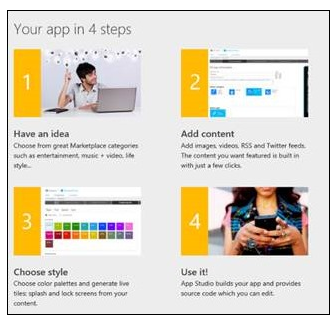
The app market is crazily busy. With so many thousands of apps to choose from, a developer looking to get noticed needs to come up with something pretty special. But the people with the best ideas aren't necessarily those with coding skills, and funds available to individuals and startups are usually limited. The solution? Make app development as easy as possible. Enter Windows Phone App Studio.
The online service is a new beta tool that can be used to create Windows Phone apps in a few simple steps. The idea is to keep things as simple as possible so even new developers should be able to create an app fairly quickly. No coding knowledge is required as this is all taken care of automatically. There are a number of templates available into which content such as text, video and RSS feeds can be dropped.

Take that Feedly! MultiPLX announces free search
On the heels of what is a minor kerfuffle, where Feedly announced a Pro version that involves paying for search (and a bit more), another service comes along to trump the new darling of RSS. "We are starting with 4 features: search in my feeds, one-click Evernote integration, premium support and HTTPS", Feedly announced late yesterday.
Today, rival MultiPLX began rolling out emails assuring users that its new search feature was free -- "today we are glad to announce the launch of 'search within your RSS feeds' feature and it is free for all our users. Please check out www.multiplx.com for 30 seconds to experience. There is no need to signup".

Intel announces Education Tablets -- powered by Android and Atom
Tablets allow students to leverage technology to improve learning. An iPad for instance, can offer a more immersible experience when compared to a paper textbook. While there are many educational based applications for Android and iOS, there hasn't been a serious education-focused tablet from a major manufacturer -- until now. Intel has announced a new line of Android-based tablets designed for learning.
According to Intel, the tablets "...available in 7-inch and 10-inch sizes, are designed specifically for education and built to meet students' needs. The multi-touch display and e-Reader software enable students to access rich online content. Ultra-portability allows them to take the device to the field to capture data with the built-in camera and analyze it with Intel Education Software. They can collaborate with their classmates, while comparing their findings to others on the web".

Bing teams with 500px in new photo offering
500px is a famous app for photographers -- but there are other reasons for its renown, most notably its temporary ban by Apple from the App Store on the grounds that it provided easy access to pornographic material. Regardless of that seemingly bad publicity, the service has signed a new a photography deal with Microsoft.
Bing has an iconic home screen that features a new image every day, showing off spectacular photography from around the globe. The company brags that "by following a simple, consistent theme of one beautiful image per day to show a unique perspective on the world our homepage has become synonymous with great photography".

Skype for Windows Phone adds People List Filter, improves Home Screen
Microsoft has released Skype for Windows Phone 2.9, an update to its popular video and audio messaging tool for Windows Phone users. Version 2.9 ships with two notable changes, an improved Home Screen and new People List Filter.
The People List Filter has been implemented as a direct result of user feedback, with Microsoft responding to user wishes to have the option of splitting Windows Phone contacts from Skype contacts in the Skype People List.

Amazon gets fancy, brings art galleries to your computer
Amazon sells many things -- customers can shop for everything from electronics to grocery store items. With a Prime membership you can even receive free two-day shipping. But I doubt customers think of the retail giant in the same breath as an art gallery -- the Louvre certainly does not come to mind.
To be fair, the famous Paris museum is not selling off its collection on Amazon, or anywhere else, but art galleries now have a home on Amazon. Today the retailer announces Amazon Art, "a marketplace that gives customers direct access to more than 40,000 works of fine art from over 150 galleries and dealers".

Firefox 23 enables mixed content blocking, consolidates search settings
Mozilla has released Firefox 23.0 FINAL, the latest version of its open-source, cross-platform browser for Windows, Mac and Linux. The new build’s main highlight is the implementation of mixed-content blocking for improved security, but it also comes with a host of minor changes, including one that has already provoked a negative response from power users.
The controversial change is the consolidation of search default preferences so both Address bar and Search bar use the same default search engine. Previously Address bar searches defaulted to Google regardless of the default provider set in the Search bar.

Surface sales are pathetic
It feels like repeatedly kicking someone when they’re down, but there’s really no other way to describe Windows tablet sales -- both RT and Windows 8 Pro -- other than pathetic and embarrassing for Microsoft. Which is a shame. Surface is a great tablet, Windows 8 on Surface is a good operating system, but people just aren’t buying the device in any great numbers. Well, pre-fire sale at least.
According to a new report from IDC, just 200,000 Windows RT tablets shipped in Q2 2013 (even the ailing BlackBerry PlayBook managed 100,000), and there’s no good news for other Windows tablets either as IDC reports just 1.8 million devices shipped with that OS onboard. Apple, by comparison, shipped 14.6 million iPads in the same quarter.
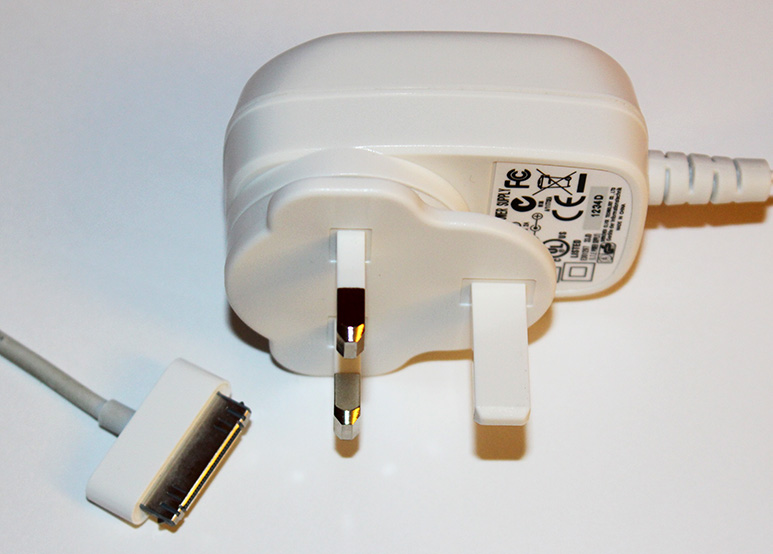
Apple announces takeback program for dodgy iOS power adapters
Ahead of its August 16 launch, Apple reveals details of a takeback program that aims to replace third-party power adapters with authentic units. Concern over the safety of third-party and counterfeit adapters for iPhones, iPads and iPods prompted the scheme, and Apple says any adapters handed in will be "disposed of in an environmentally friendly way".
So what's the incentive for just giving your current adapter to Apple? Well aside from that warm, fluffy feeling that comes from knowing that you're helping to do your little bit for the environment rather than just adding to landfill, Apple has another carrot to dangle.

New IBM Flex Systems squeeze a bigger cloud into a smaller data center
Announcing a raft of additions to its Flex System range, IBM aims to help companies consolidate their IT infrastructures and reduce operating costs. The new systems combine the latest server technology with updated virtualization, network and management tools. They will allow the fast deployment of increasingly large clouds without needing to boost the size of the data center.
IBM quotes Morgan Stanley's Cloud Perspective survey which has found that by 2014 businesses will have migrated at least 62 percent of their database workloads to the cloud.