
Why can't Apple's Ping sing?
Is Apple going to compel me to write another "I was wrong post?" Yesterday I extolled Ping -- Apple's new social music discovery tool -- based on features and product strategy. Finally, late last night, Apple widely distributed iTunes 10, giving me the chance to finally use Ping. The results aren't good. The discovery tool is simply useless, because Ping doesn't reflect my current music listening habits.
One of Ping's most important personal features is "What I Like." It can automatically display 10 popular songs, allowing friends to see what the Ping user (hereafter referred to as Pinger) listens to (there is a manual option, too). "What I Like" is crucial to music discovery friend-to-friend, and it broadcasts the Pinger's music tastes to the world. How embarrassing for the teen chugging Ke$ha, B.o.B., and Katy Perry, only to find Ping plunking Perry Como into "What I Like."
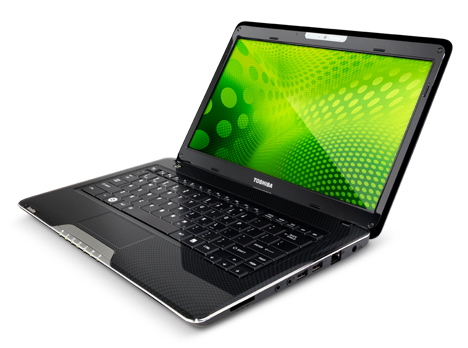
Toshiba recalls overheating and melting Satellite T-series notebooks
Thursday, the US Consumer Product Safety Commission and Health Canada announced a recall of three Toshiba Satellite T-series notebook computers: T135, T135D and ProT130, for reports that the units' AC adaptors cause them to overheat and melt.
Though there have been no injuries reported, the CPSC said it received 129 reports of the computer cases melting and deforming, presenting a fire and burn hazard.

First voice-over-LTE call placed in US public safety band
Telecommunications company Alcatel-Lucent Thursday announced that the first voice call in the 700MHz band of LTE has been completed. This is the section of wireless spectrum that is being utilized in the United States' national public safety network.
Part of the FCC's National Broadband Plan (Chapter 16, to be exact) outlines the creation of a nationwide interoperable public safety wireless broadband communications network, used specifically for first responders and issues of national importance. The high speed network will utilize a 10MHz block of spectrum in the 700MHz band, and approval for construction has been obtained in a growing number of markets.

Samsung: new wireless USB chips capable of 480Mbps max
Samsung Thursday announced its latest two-chip wireless USB solution capable of transmission speeds up to 480Mbps with an actual throughput rate of 200Mbps. The result is reportedly ten times more power efficient than 802.11g Wi-Fi.
The product is made up of two chips, S3C2680, a baseband processor with an ARM 9 core, built-in NAND flash controller, SD I/O, and two USB 2.0 PHYs; and S5M8311a, a separate RF transciever.

HP wins 3PAR with $2.4 Billion bid, Dell backs down
The bidding war between HP and Dell over virtualized storage company 3PAR is in its third week, and as of Thursday morning, HP looks to have won. The Palo Alto IT giant turned the tables on Dell with a $2 billion bid last Friday that caused 3PAR to announce it was terminating the merger agreement it had reached with Dell in mid-August.
When Dell received 3PAR's notice of termination, it raised its acquisition offer once again, from $27 per share to $32, and modified the terms of its proposal to include an increased termination fee of $92 million.

Roku and Boxee weigh in on today's AppleTV update
While the over-the-top (OTT) streaming entertainment category has not made a big dent in the mainstream home TV viewing market yet, it's a hot business, and service providers, software makers, and hardware manufacturers are all jockeying for the biggest piece of the pie.
When AppleTV debuted alongside the iPhone at Macworld in 2007, it was more or less a stripped-down home theater PC so users could enjoy their iTunes media on their televisions. Relatively little had changed on the platform until today, when Apple CEO Steve Jobs announced the box would lose its storage capacity and become rental-only, gain Netflix streaming and drop in price to $99. Jobs said these changes were based upon feedback provided by AppleTV users.

Steve Jobs: 'Ping is for social music discovery'
Apple's September 1 music event ended on a sour note. Coldplay's Chris Martin gave a tepid and pitchy performance that would have sent him packing from an American Idol audition. Michael Stanclift aptly tweeted: "This guy could have practiced before this gig." Martin, whose daughter is named Apple, seemed like the right performer for what was otherwise an outstanding event. While Martin muffed, Apple -- the company, not his child -- hit every key. Not since the first iPod nano launched five years ago has Apple delivered such spectacular new music products.
For the past week, pundits and rumormongers spewed forth the most ridiculous and seemingly sensible conjecture about what Apple would announce today. Nearly every rumor was wrong. There was a new Apple TV, but with no storage, no apps and no gaming capabilities. It's a Roku with a nicer design and streaming support for Apple services and devices, Netflix and YouTube. Yes, there are 99-cent TV rentals as rumored, but only from ABC and Fox -- and they're all HD. Otherwise, the rumors missed all the significant stuff, even the most important details about the new multitouch iPod nano. Who guess right about iTunes 10? There was no iLife `11 as rumored, among the other bits of mistaken reporting (and blogging).
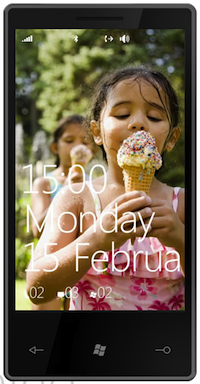
Windows Phone 7 is released to manufacturing
Microsoft announced that the highly anticipated Windows Phone 7 mobile operating system has been released to manufacturing on Wednesday, a major milestone for the project.
Following the release of its developer toolkit, Microsoft released Windows Phone 7 technical preview to its developer, carrier and manufacturing partners in July. Since that time, the mobile OS has been updated in a number of ways, such as including intelligent Facebook contact filtering (only real friends show up,) and the ability to "like" Facebook posts from within the People Hub.

Microsoft makes second push to upgrade households to Windows 7
In a sign that Windows 7 sales may be beginning to falter somewhat, Microsoft on Wednesday announced that it would be bringing back its Windows 7 Family Pack discount program. The offer gives multi-computer households the opportunity to upgrade three PCs to Windows 7 Home Premium.
The deal is available beginning October 3 at a price of $149.99. This is a considerable savings over individual upgrades: a single copy of Home Premium alone retails for $129.99. It is unclear when the promotion would end, although Microsoft began pulling last year's offer in December.
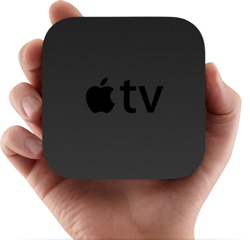
Redesigned AppleTV now $99, rentals and streaming now the focus
Apple's hobby got a little more serious on Wednesday as the Cupertino company debuted a much smaller and cheaper version of its AppleTV set-top box. The device also heralds the introduction of rentable TV shows, a move that had been widely expected.
The new AppleTV device is less than a quarter of the size of its predecessor, and has no storage space. Instead users would stream content from Apple's servers, and content available to the box would be rent-only.

Nokia to shut down Ovi Files 'digital locker' service on October 1
Nokia's cloud-based "digital locker" service Ovi Files will be shut down on October first, Nokia is warning users. The service was used for making files remotely accessible through a mobile device's browser.
Nokia added Files to the suite of Ovi services in 2008 after it acquired digital locker startup Avevenu. When we tested the service back in 2008, Nokia said it planned to make Files a premium service, but it was ultimately made free in 2009. Files was significant because it was the first service in Nokia's Ovi suite that utilized the Nokia account ID.
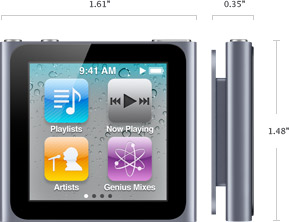
New iPods: Apple pulls buttons off the Nano and gives them back to the Shuffle
At Apple's annual iPod refresh event today, Apple CEO Steve Jobs revealed the "biggest change in the iPod lineup ever," which included dramatic changes to both the Nano and Shuffle which seem to reverse advancements made to the models last year.
Last year, Apple unveiled a shockingly small iPod shuffle which had no buttons. Instead, the controls for the device were put on the headphone cord, and required that users purchase an adaptor to use any headphones other than those made for the Shuffle. This year, Apple looks to have completely undone what was attempted with last year's Shuffle, and has brought back the design from the previous year which has the clickable control pad directly on the surface of the device.
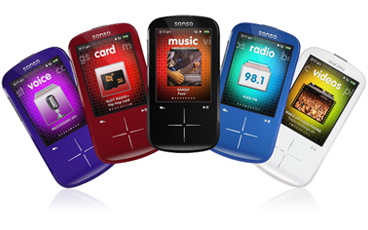
A look at new portable media players for Fall 2010 that aren't iPods
Apple's annual iPod refresh has taken place in the first week of September for the last five years, and the event coincides with back-to-school Mac and iPod promotions. Since the iPod has held a dominant share of the United States' portable media player (PMP) market, this is often the time of year when other consumer electronics companies debut new PMPs for the back-to-school season too.
This year, in the days surrounding Apple's September 1 event, Sandisk, Phillips, Archos, and Samsung have all revealed new media players that will compete against the newly-refreshed 2010-2011 iPod line.
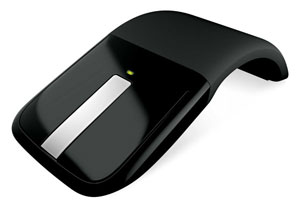
Microsoft's flexible Arc Touch Mouse goes up for pre-order
Microsoft Wednesday announced the availability of its Arc Touch mouse, a brilliantly designed mouse that can be flattened to fit into a laptop bag. The peripheral uses a capacitive touch panel in place of a scroll wheel, and provides haptic feedback that simulates the gentle ratcheting action of a traditional scroll wheel.
In light of the recent popularity of touchscreens and trackpads, Microsoft wanted to make it clear today that the mouse is far from dead.
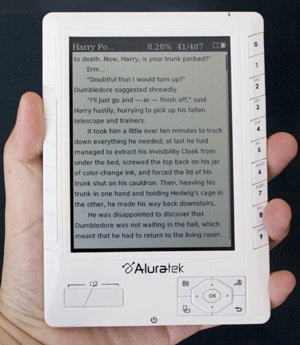
Borders offers cheapest, most diverse e-reader selection among booksellers
Contrary to popular opinion, the competition between e-reader hardware manufacturers is nothing compared to the competition between e-book retailers. Tuesday, second place book retailer Borders revised its aggressive strategy for e-reader sales, slashing the price of its two e-ink readers before the arrival of its Android-based tablet readers from Velocity Micro.
In June, Borders unveiled its $149.99 Kobo e-reader, which was met with considerable consumer interest due in large part to its low retail price. After Kobo's launch, both Barnes and Noble and Amazon reduced the prices of their respective e-readers from $259.00 down to $149.99.