



Google introduces Gmail Priority Inbox beta for intelligent message filtering
Google continued its reinvention of the Gmail inbox Tuesday with the introduction of Priority Inbox Beta, a new mail filtering system that prioritizes emails based upon the user's viewing and responding habits.
The feature will be rolled out incrementally to Gmail users over the next week, and will break up inboxes into three categories: Important and Unread emails, Starred conversations, and "everything else." Incoming messages will automatically be routed into one of these three categories, which Gmail determines by user trends. For example, if a particular contact is someone frequently exchanging emails with the user, their incoming messages will be ranked as more important than someone else's. Similarly, messages that users actually opened instead of skipped, deleted or "marked as read" from certain senders will be considered higher priority.

'Boxee Killer' Plex/Nine media center released, adds iOS app
Early Tuesday morning, a new version of Mac OS X-based media center software Plex was released, called Plex/Nine, and with it came a new app for iOS.
Plex is a fork of open source media center software XBMC, which has recently risen to prominence for being the software that powers Boxee and the forthcoming D-Link Boxee Box. It organizes multimedia content on a local media server, adds online content from more than 150 video and entertainment sites, and makes it available on client devices in the home network.

Xbox Live Gold subscription price to rise for the first time
On November first, Xbox Live will get more expensive than it's ever been.
Since launching in 2002, Microsoft's Xbox Live subscription gaming service has retained the same price in the U.S.: $7.99 per month, $19.99 per 3 months, and $49.99 per year. Monday, Director of Programming for Xbox Live Larry "Major Nelson" Hryb announced a price increase coming to the service on November 1, 2010 which will raise it to $9.99 per month, $24.99 per 3 months, and $59.99 per year.

DRM company acquires technology from music search engine killed by copyright suits
Monday, Intertrust Technologies Corporation, a company with more than a hundred patents for various Digital Rights Management (DRM) technologies, announced it has acquired all of SeeqPod's software and patents. The company went bankrupt after being sued by Warner Music Group in 2008.
SeeqPod was a music search engine that found, and let users listen to, songs in their entirety. The engine's algorithm set and technology reportedly were developed by biologists working at the Lawrence Berkeley National Laboratory to discover hidden relationships in genomic data. The technology identifies patterns in data that are distributed across the Internet. This included indexing and finding playable search results for audio, video, podcasts and text.

Intel acquires Infineon's wireless group for $1.4B, picks up 2G, 3G, LTE tech
The world's largest chipmaker, Intel Corp. announced Monday morning that it will be acquiring the Wireless Solutions (WLS) business from German semiconductor company Infineon Technologies AG for approximately $1.4 billion. Last year, the division held about 11% of the global cellular baseband market.
"The global demand for wireless solutions continues to grow at an extraordinary rate," Paul Otellini, Intel president and CEO said in a statement today. "The acquisition of Infineon's WLS business strengthens the second pillar of our computing strategy - Internet connectivity - and enables us to offer a portfolio of products that covers the full range of wireless options from WiFi and 3G to WiMAX and LTE."

Mobile phones in class: the next back to school accessory
As school districts across the country open their doors for the 2010-2011 school year, a remarkable shift in thought is taking place: cell phones, once regarded as distractions or liabilities are coming to be viewed as viable learning tools.
This fall, Wisconsin's Milwaukee Public School district will let students use their mobile phones in classrooms as long as it's for an approved educational purpose.

HP's $2 billion bid leads 3PAR to terminate agreement with Dell
Two weeks ago, Dell announced it would be acquiring virtualized storage company 3PAR for $1.5 billion. Dell's announcement, however, represented only a preliminary agreement between the companies, and HP wanted to acquire 3PAR as well.
Friday morning, just a matter of hours after 3PAR announced it had signed the second amendment to its merger agreement with Dell, competitor HP made its third bid for 3PAR, which upped the total value of the company to $2 billion.

Paul Allen sues Apple, Google, nine others over patent infringement
Microsoft co-founder and former executive Paul Allen filed a suit against 11 tech companies on Friday, accusing them of infringement over patents he acquired from the now defunct Internal Research. While Allen had invested in the company, he never participated in the development of the patented technologies.
When Internal Research closed its doors in 2000, the rights to the patents were transferred to Interval Licensing, a company Allen owns. The technologies cover four patents -- the most notable being the 6,263,507 and 6,757,682 patents -- relating to various web technologies. The companies named in the lawsuit are AOL, Apple, eBay, Facebook, Google, Netflix, Office Depot, OfficeMax, Staples, Yahoo and Google's YouTube.

Windows Live Sync to become Windows Live Mesh after beta
Microsoft's two sync offerings --Windows Live Sync and Windows Live Mesh-- were combined into a single program called Windows Live Sync beta for the beta of Windows Live Essentials. Today, Microsoft announced it's reversing that decision, and the combined program will be called Windows Live Mesh after the beta expires.
The decision to change the name was made because Microsoft felt that since the new program will do more than just sync files, it should have a name that reflects what it does.
Where have all the PC sales gone?
It's the question to ask now that Intel has issued a third-quarter profit warning. Right, this is the same company that reported its "best quarter ever" just last month. Strong PC sales mean more chip sales for Intel, and second quarter was scrumptious-delicious. PC shipments rose 21 percent year over year, according to Gartner, beating estimates. Apple and Microsoft had record quarters, too. Everybody swayed in the mosh pit of love, singing praises to a PC market recovered from recession.
Today, Intel sang a different tune, cutting its revenue estimate to $11 billion from a previously forecast range of $11.2 billion to 12 billion. "Revenue is being affected by weaker than expected demand for consumer PCs in mature markets," according to the press release. Yeah, Happy Friday to you, too, Bud.

Mozilla updates Fennec mobile browser, strengthens its ties to Firefox 4
Still in alpha after nearly two years, Mozila on Friday released the latest version of its mobile browser, Fennec for Android 2.0 and higher and Nokia N900.
Several improvements have been made in the Android version since the "Pre-alpha" build was released last April. In addition to interface and performance tweaks, the browser's integration with the desktop version of Firefox has improved, and tools for sharing content are taking a more prominent position.
HP ups the stakes to $2 Billion in 3PAR acquisition
It seems Dell cannot make an acquisition bid for virtualized storage company 3PAR without competitor HP making a bigger bid almost immediately afterward.
Just hours after Dell announced its revised offer to acquire memory company 3PAR for $1.6 billion on Thursday, HP announced a new counter-offer for $1.8 billion. HP's last counter-offer caused Dell to raise its bid by a little under 34%, and that offer raised it by another 11%.

Hulu Plus survey hints at ad-free premium content packages, HBO, Showtime integration
According to a survey given to Hulu Plus testers, the streaming web TV service might consider offering ad-free content packages on top of the existing Hulu Plus subscription.
The options Hulu is considering include: movie packages that feature classic movies, indie and foreign fims, documentaries or "back catalog" studio films; Premium Channel add-ons like HBO or Showtime; or On-demand premium TV with the option to rent or buy like Amazon On Demand.
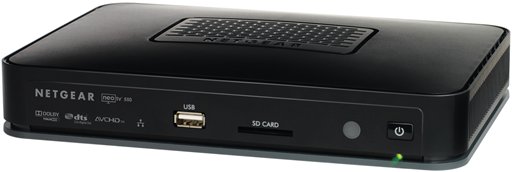
Netgear's NeoTV set-top box revives first-gen Blu-Ray drives
Network hardware company Netgear has taken the wraps off of a new set-top media player called the NeoTV 550 Ultimate HD, which will go on sale in North America this October for $220.
Betanews first started paying attention to Netgear's set-top boxes in 2009, when it first unveiled a BitTorrent-enabled box called Digital Entertainer Live EVA2000. That device, while useful for connecting devices within the home network to the user's television, was only capable of 720p output, and had only moderate support for streaming video services. It received pretty mediocre reviews, and didn't stand out tremendously from the crowd of similar products from Netgear's competitors.

Google deepens commitment to realtime search
Google expanded its commitment to providing real-time search results by introducing a new site devoted to searching live content, as well as new tools aimed at helping users parse the information collected more easily.
The live search would be available at www.google.com/realtime, which the company is launching on a rolling basis Thursday. It indexes content from social networking sites such as Facebook and Twitter. Google first introduced basic realtime search last December, allowing users to more accurately search for current trending topics.