




The Google-Verizon proposal is worse than evil
They say that the devil is in the details. But some things are so evil, the horned harbinger of deceit and doom is an obvious and menacing presence. The Google-Verizon proposal for an "open Internet" is the worst kind of evil, because Google so ardently asserts that "you can make money without doing evil" and the companies convincingly con with a deceitful sleight of hand. Their proposal for an open Internet is nothing of the kind. Google and Verizon offer to grant something people already have (unfettered, wired broadband) while exempting something Internet users want more of (unfettered, mobile wireless).
But the proposal's deceit goes further. Google and Verizon have put before the US government a huge carrot, while hiding behind their backs an even bigger stick. The two companies want the US Congress to pass their proposal into law, thus empowering the Federal Communications Commission to exert more control over the wired Internet. There are plenty of folks on Capitol Hill who want more Net control, and Google and Verizon have wrapped it up with ribbon and bow. The government's authority would be under the guise of keeping the Internet free and open for everyone -- ensuring Net neutrality. For lawmakers, the proposal is a seeming goldmine of goodwill during a tough election year.

Google launches Chrome 6 Beta
Wednesday, Google officially announced the release of Chrome 6 beta, the most recent of the search company's popular desktop browser.
The user interface has been tweaked and simplified even further in this version. All of the options are under a single menu, and the navigation buttons aren't so much buttons any more as icons in the browser's navigation bar. These changes were revealed in the June developer preview of Chrome 6.

AT&T, Facebook agree to disagree on Google-Verizon deal
AT&T and Facebook are the two latest companies to speak out on the net neutrality proposal put out by Google and Verizon on Monday, and their opinions of the deal appear to be on different sides of the argument.
At an investor conference, AT&T consumer and mobile chief Ralph de la Vega called it a "positive sign" and the right step forward to help the industry come to a reasonable agreement.

Networks expand 6x faster with mobile broadband demand, says Ericsson
Wireless telecommunications company Ericsson announced on Wednesday that it has delivered its two millionth radio base station. The accomplishment is significant because it illustrates the speed at which wireless networks are growing thanks to the high demand for mobile broadband. Ericsson says it took just three years to ship the second million radios, when it took more than 20 to ship the first million.
Ericsson traces that first million back to the early days of modern cellular telephones, when it built the first GSM network with Radiolinja (now Elisa) in Finland in 1991. It wasn't until nearly a decade later that the company's first GSM base station for data was launched in February 2000.

Google becomes ad seller for DirecTV
DirecTV Wednesday announced that Google will become the advertising sales representative for "a broad selection of advertising inventory on several cable networks" that the satellite TV company carries. It is the second major satellite partnership Google TV Ads has established.
Google's TV Ads branch of AdWords has existed for more than three years, giving businesses the opportunity to purchase blocks of airtime for advertising across a handful of stations on Dish Network and through several regional cable carriers. In 2009, NBC Universal cable networks CNBC, Sci-Fi Network, MSNBC, Oxygen, Sleuth, and Chiller joined the program; and now nearly 100 channels run ads sold by Google.
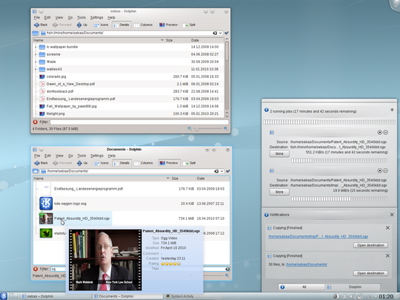
KDE updates Plasma Workspaces for Desktop and Netbook
KDE released a new version of Plasma Workspaces for Desktop and Netbook on Tuesday, the environment serves as the default workspace for more than twenty Linux distributions, including Mandriva Linux, openSUSE, and Slackware.
This version has received a handful of changes both in appearance and usability. The notification bar has been cleaned up and reworked, and the window manager KWin can now arrange windows on screen without overlapping. The Zooming User Interface (ZUI) from previous versions has been replaced by an "Activity Manager" which was integrated into KDE from the Nepomuk Semantic Desktop project.
Google's South Korean offices raided by police over Street View
Google confirmed Tuesday that police visited its Seoul offices to seize information related to an investigation surrounding its Street View product. South Korea is the latest in a series of governments probing the company's data collection methods.
Police were specifically looking for information surrounding how the Street View cars collect data. Law enforcement said that its seizures were related to the expected launch of the product later this year within the country. Officers with the Cyber Terror Center of the National Police Agency took hard drives and paper documents, the Korea Herald reported.
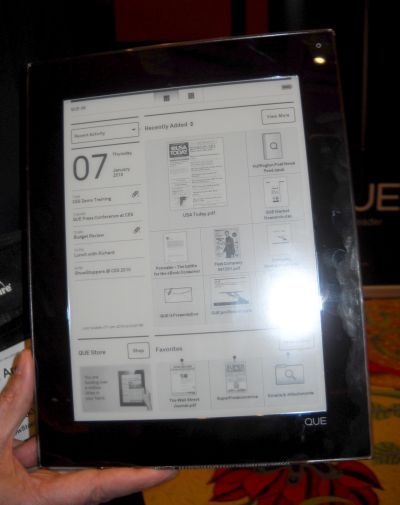
Plastic Logic axes Que e-reader, moves on
E-reader company Plastic Logic today officially announced the cancellation of the Que e-reader product it showed off at CES 2010 in favor of working on a more up-to-date second version.
The company debuted its E-reader concept in 2006, and showed off the first working prototypes in 2008. Finally, by the time the Consumer Electronics Show rolled around in 2010, the company had a product that looked ready to go: an 8.5" x 11" touchscreen e-paper reader complete with AT&T 3G wireless and several content partnerships.

Android growth spurs new mobile malware, SMS Trojan discovered
Security researchers at Kaspersky Lab announced the first malware for the Android operating system to be classified as a Trojan-SMS, the most widespread type of malware on mobile phones.
The malware is disguised as a media player application with the standard Android .APK file extension. When the 13KB file is installed, the mobile device will start to send SMS messages to premium numbers which incur charges on the user's account.
Oracle's Ellison takes HP to task over ouster of CEO Hurd
Oracle CEO Larry Ellison sent an impassioned e-mail to The New York Times Monday, criticizing the HP board for their move to dismiss CEO Mark Hurd following an investigation into sexual harassment claims. While those claims have been disproven, it uncovered other questionable behavior surrounding his relationship with the claimant.
Hurd apparently falsified expense reports in order to conceal his relationship. This in turn was a violation of the company's code of conduct, which in turn led the board to ask for his resignation. Ellison focused on the sexual harassment claim, only briefly mentioning the board's actual reason for dismissal in his letter.

Hollywood studio venture Epix brings new content to Netflix Instant on Sept. 1
September first, Netflix instant streaming will get a ton of new content from Viacom, Paramount Pictures, MGM Studios, United Artists, and Lionsgate Films thanks to a deal between Netflix and Studio 3 Partners' joint venture Epix, the companies announced Tuesday.
According to the deal, Netflix will get Epix new releases 90 days after they're made available to pay TV. When Epix was announced in late 2008, President Mark Greenberg said it would launch its on-demand with 15,000 movies and television shows, along with its companion for-pay movie channel.
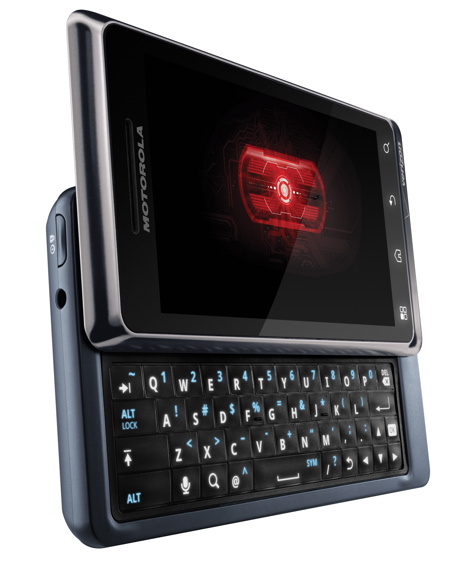
How does the new Motorola Droid 2 differ from the original?
Motorola and Verizon Tuesday announced the Droid 2, the sequel to the popular Droid, which launched in November 2009. While the device has received a handful of important improvements, it remains nearly identical to its predecessor in every other way.
The Motorola Droid was arguably the first smash hit Android device, capitalizing on the popularity of Verizon's network and pointing out the shortcomings of both AT&T's network and the Apple iPhone. So, Motorola appears to be giving the Droid the same treatment it gave the Razr for many years, by sticking with what people know, and improving in areas that matter.

'Virtual cable TV' service GenosTV seeks beta testers worldwide
GenosTV, a company billing itself as the first "virtual cable TV provider" is looking for beta testers for its IPTV platform. The service will differentiate itself in three ways: by not requiring a dedicated set-top box, by offering complete à la carte pricing, and by not being an on-demand service like Hulu and its competitors.
The service aims to be a platform agnostic linear streaming service, so any connected TV, media player, or set top box will be able to access the GenosTV service.

Craiglist asked to shut down adult personals over sex trafficking
While Craiglist's adult personals section has been the subject of a great many jokes, two alleged sex crimes as a result of the site may make you think more seriously about it. An interest group focused on human rights for women has blasted the site by taking out an ad in The Washington Post and San Francisco Chronicle asking for the adult services section to be shut down.
The Rebecca Project's ad tells the story of "AK," who claims to have been raped as a result of the site, and "MC." who was forced into prostitution as a result of the site. The ad claims that Craigslist makes $36 million yearly by charging for ads in this space.

Google, Verizon outline net neutrality proposal
While much of the speculation surrounding Google and Verizon's discussions adjoining net neutrality appeared to significantly diminish the idea's central precepts, it now appears that the concept may not be dead after all.
The two companies announced Monday a framework from which the FCC and legislators can work from. Proponents of net neutrality appear to have scored a victory in that one of the seven key principles of the agreement appears to be that wireline internet traffic can not be prioritized. At the same time, there also appears to be several loopholes which may weaken the agreement overall.



