




EU denies Google is under investigation, early evidence appears weak
This morning, despite clearly and pointedly phrased headlines such as this one proclaiming that the European Commission had opened an antitrust investigation into Google, the Commission released a statement this morning saying no such investigation was launched.
"The Commission has not opened a formal investigation for the time being," reads this morning's EC statement. "As is usual when the Commission receives complaints, it informed Google earlier this month and asked the company to comment on the allegations." No further information is being provided to the press on this matter -- again, as per protocol, because no investigation has begun.
![A screen shot from the vastly rethought Internet Explorer 7.0 for UMPCs - part of the Origami Experience 2.0. [Courtesy Microsoft]](https://betanews.com/wp-content/uploads/media/16/1687.jpg)
Americans don't give a damn about MIDs
We have a problem understanding devices that live outside of the commonly accepted "three screens" model. It's the model that has been pushed by big companies such as AT&T, Verizon, Nielsen, and Microsoft which says that our main windows into content consumption are the TV, PC, and mobile device.
If a device's functionality falls somewhere between one of these three screens, it gets marginalized and written off as something that doesn't address a specific need.

Google is a dangerous monopoly -- more than Microsoft ever was
The European Union's preliminary antitrust investigation of Google isn't the least surprising. But the timing is shockingly foreshadowing.
In December 2007, when Google announced the DoubleClick acquisition, I blogged: "The Google Monopoly Begins." I asserted that the acquisition would change everything about Google's search and advertising dominance and perceptions about the company's growing status as gatekeeper to all online information. The preliminary antitrust investigation comes as Google makes major changes to DoubleClick with hopes of boosting its display advertising business. The changes mark the final Googlefication of DoubleClick -- or the realistic, final integration of the acquisition into Google.
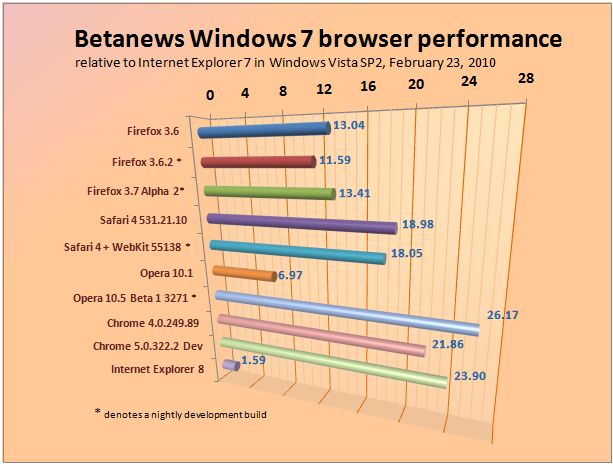
Google Chrome 5 loses points, wins categories, against Opera 10.5 beta
Download Opera 10.5 Beta 1 Build 3271 for Windows from Fileforum now.
Two weeks ago, we warned the new leader in the Windows Web browser, Opera 10.5 Beta 1, that it would have to paddle fast to stay ahead of the ever-improving Google Chrome 5. Apparently only one side of that battle was listening: Opera did paddle fast, pulling nicely above 26 in our latest Windows 7 relative performance index tests. The newest Chrome 5, meanwhile, took a performance hit that sent it back the other direction.
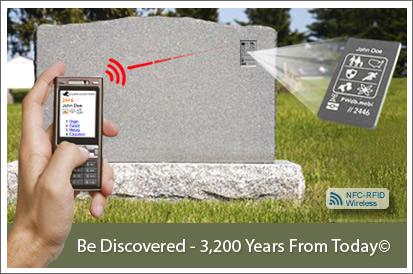
Die-Fi: Communications company unveils wireless tombstones
Arizona company Objecs announced today that it has developed "enhanced memorial products" that add Near Field Communications tags to cemetery markers, which allow text and photos to be "embedded" in a headstone and retrieved whenever a cell phone is touched against its surface.
It's the same inductive coupling technology used in wallet phones that allows complex information sharing at the expense of practically no electrical energy.
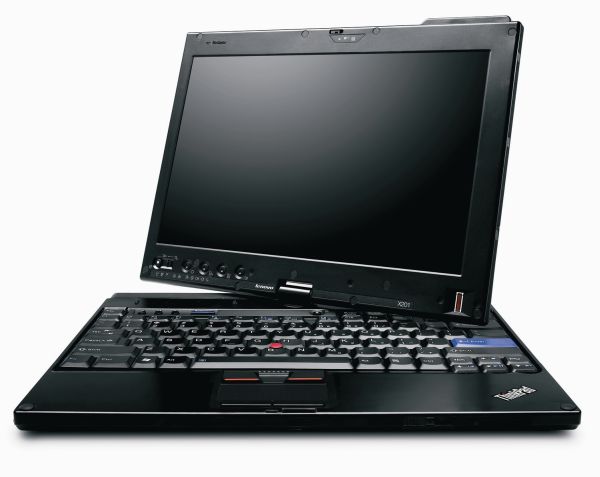
Lenovo launches notebooks, tablet, and sub-$400 Windows server
With its latest announced systems on Monday, Lenovo is following up on a series of PCs unveiled just over a month ago that included AMD-powered Edge notebooks for SMBs. The global #3 PC maker's new entries include two ultraportable notebooks, a tablet PC, and two mobile workstations -- one of them outfitted with Lenovo's trademark secondary display -- and a low-cost server aimed at the smallest of businesses.
With these new products, Lenovo is adhering to a "protect and attack" strategy versus rivals such as Hewlett-Packard and Dell, said Mika Majapuro, a Lenovo product marketing manager, in a meeting with Betanews during a New York City press tour.

Android and iPhone smack down Windows Mobile
Worldwide, Windows Mobile smartphone operating system market share declined in 2009 to 8.7 percent from 11.8 percent a year later. Windows Phone 7 Series couldn't come soon enough -- if holiday 2009 could even be enough to hold back Apple's iPhone OS and Google Android.
The smartphone data comes from Gartner, which measures actual sales to customers rather than to carriers or dealers. By that reckoning, Windows Mobile sales only declined by 1.47 million units to around 15 million units year over year. By comparison, iPhone OS sales more than doubled -- to nearly 25 million units -- with share rise to 14.4 percent from 8.2 percent year over year. Android made significant gains -- and at the expense of other Linux-based smartphone operating systems, too -- with share rising from 0.5 percent in 2008 to 3.9 percent in 2009 on 6.8 million units shipped. Android made its biggest gains of the year during fourth quarter.

Federal cybersecurity authority awaits break in Senate logjam
One of President Obama's first priorities upon taking office was a comprehensive review, then considered urgent, of federal policies for maintaining Internet security. The report on that review, released last May, recommended further empowering the role of what was then being called the "cybersecurity czar," including the delegation of authority to lead emergency responses in case of an attack on Internet resources that threatened the national security.
Inactivity in enacting those recommendations was blamed for the resignation of Mr. Obama's first czar, Melissa Hathaway, last August. In December, a former security advisor to Pres. George W. Bush, Howard Schmidt, was confirmed to fill Hathaway's post.

PGP security gets Linux and Win7 support, plus more encryption
After rolling out the first Linux edition of its desktop encryption security software last month -- together with new support for the latest versions of Windows and Mac -- PGP Corp. on Monday announced major server updates that will let PGP be managed alongside myriad other approaches to encryption.
Released on January 19, the new PGP Desktop 10.0 product brings new support for Windows 7, MacOS X 10.6 Snow Leopard, and two flavors of Linux: Ubuntu and Red Hat. The software also works on Windows Vista, XP, and 2000, earlier editions of Mac OS, and Windows Mobile and BlackBerry phones, said Karthik Krishnan, senior director of product management, in a briefing for Betanews.

What does Google gain from having purchased On2?
At the end of business last Friday, Google announced it had completed the transaction to acquire On2 Technologies, the maker of Web video encoding software and codecs, for a deal that was finally valued at $124.6 million. On2 was a small company that was, in recent quarters, losing small amounts of money. It was attempting to become lucrative at some point through the licensing of a new generation of its VPx codec platform, called VP8 announced way back in the fall of 2008. Customers were supposed to have included Move Networks and Skype.
It's the type of business model that only a small startup company could profit from to any significant degree; and it's the type of model that normally a huge company the size of Google would only purchase in order to shut down, perhaps to disable a competitor. But none of the usually suspected motives for a major player acquiring a minor provider make immediate sense when applied to Google and On2.

Overcast, or, How I learned to stop whining and embrace the cloud
It's one of the most predictable responses in all of tech: Every time there's a blowup over some online service's privacy or data security lapses, if you stick your head out the window and focus yourself just so, you can hear the rumble in the distance as naysayers happily share their told-you-so stories of woe.
Without your even asking, they'll go into excruciating detail over how cloud-based services aren't ready for prime time and probably never will be. They'll tell you how distrustful Web services vendors are, how they view our confidential data as means to a profitable end, and how only an idiot would move off of conventional network-controlled infrastructure and throw every shred of personally identifiable data into the nebulous clutches of an unseen service provider.

Email phishes for Windows Live IDs and passwords
The flu pretty much wiped out most of last week, which is just a blur to me. This morning, I started catching up on email and found a real frakker in my Windows Live Hotmail inbox. Someone wants to steal my Windows Live ID and password -- and probably yours, too. The message is dated Feb. 22, 2010.
The email caught my attention for several reasons: 1) Windows Live Hotmail didn't flag the message as junk or suspicious; 2) The apparent originating address -- "[email protected]" -- seems legit enough; 3) Sender is "Windows Live Team"; 4) The email effectively uses threats and cajoling.

Technologist accused of spreading Vista, Win7 FUD wasn't a real person
Normally, Betanews doesn't like to do "inside baseball" stories, that deal with the individuals in the technology journalism business and all the insights as to "how the sausage is made." I'll try to make this one as painless as possible, but it needs to be done, because the individual involved had been cited by me in Betanews stories in the past.
Yesterday morning, ZDNet Editor-in-Chief Larry Dignan revealed the results of research showing that a blogger for IDG publications, and the CTO of a testing and research firm cited by that blogger, were actually the same person. Blogger Randall C. Kennedy, a trusted InfoWorld contributor up until yesterday, was Devil Mountain Software Chief Technology Officer "Craig Barth," the author of reports over the years claiming that Windows Vista performance was slower than Windows XP, and recently that Windows 7 performance was slower than Windows Vista.
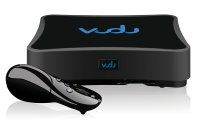
If Wal-Mart buys Vudu, will the adult content go away?
Wal-Mart is in the process of acquiring streaming video service Vudu, The New York Times reports today. An unnamed source said the two companies have begun telling Hollywood studios about the deal. No details have yet been disclosed to the public.
Vudu has had its own streaming HD video products available for a little more than two and a half years, and has gradually moved away from a hardware-centric service to something more akin to Netflix, where its platform is the core of the business.
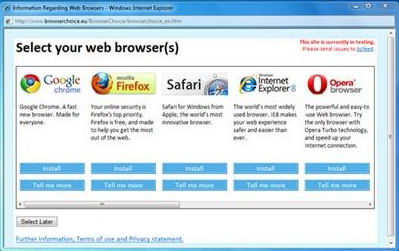
IE6 isn't on the ballot: Will March 1 Windows update kick IE6 out for good?
One of the more obvious, but little mentioned, facts about the upcoming Windows Web browser "choice screen," to be rolled out to European users via Windows Update March 1, is the absence of one very important choice: sticking with the old version of Microsoft Internet Explorer they may currently be using.
The "choice screen," as the European Commission now refers to it, will only be displayed for users who have IE7 or IE6 as their default Web browser. While they may choose Internet Explorer from this ballot, it explicitly offers version the latest version 8. The only upgrade procrastination option the ballot gives, based on snapshots of the first public beta, is a button in the lower left corner marked, "Select Later." The next time the user boots her computer, the choice screen reappears.



