



Psystar promises bankruptcy court it will rethink its business plan
It isn't Psystar's legal tangle with Apple Inc. that led to its Chapter 11 bankruptcy filing in a Florida federal court last Thursday. Rather, seven of the independent PC maker's top 10 creditors were credit card processing services, making up about 44% of its outstanding debt to those top 10 creditors. The IRS accounted for less than 5% of that debt. This according to court documents obtained by Betanews from the US Bankruptcy Court for Southern Florida.
Although Psystar also didn't blame Apple in its petition for an emergency relief hearing the following day, it did mention the company as the developer of the operating system on which its Open-brand PCs are based. Instead, the story Psystar told is one that could apply to a thousand independent PC makers across the country, except for one important element: It's almost impossible for an OEM of Psystar's size to compete in the PC market on price alone, while still maintaining profitability.

AT&T announces 7.2 Mbps HSPA upgrade
It has been one year almost to the day that AT&T completed its initial HSPA rollout, adding 800 Kbps HSUPA. As was promised on the operator's roadmap, the company announced its next network upgrade will begin later this year.
This upgrade will increase HSPA's maximum downlink speed from 3.6 Mbps to 7.2 Mbps, which will pull AT&T up into the majority bracket of HSPA operators (or those whose speeds max out at 7.2 Mbps or higher), and consequently increase the global average speed due to the company's ballooning subscriber base of more than 78 million.

Small-town thinking leads to a healthcare privacy smashup
I swear I don't mean for Lockdown to turn into the "What The Hell Are They Thinking?" weekly security rant, but as that legendary site used to say, a fish, a barrel, and a smoking gun. This week, we travel to Yakima, Washington, which on further reflection may turn out to have been our first mistake.
Yakima isn't Seattle, or even Tacoma -- it's about two hours away from either of those cities, and in either case its 81,214 residents live on the other side of a rather large mountain range that separates lovely Western Washington from the flatlands of the central area. The point is that while they're not entirely in the sticks out there, the local options for medical care in Yakima are a bit more limited than those to which you might be accustomed. Keep that in mind, if you would. There will be a quiz.

Microsoft plies Mediaroom on rural IPTV operators
Today, Microsoft announced that its Mediaroom IPTV platform now supports virtualization, which will facilitate cheaper IPTV deployments with a faster time to market.
Microsoft's IPTV platform has never been a huge sensation, despite its considerably strong portfolio of capabilities which include time shifting, video on demand, six-channel simultaneous channel view, and home media sharing. Since debuting as Mediaroom (its sixth brand name change) in mid-2007, it has been adopted by 20 major IPTV providers worldwide, and has over three million households using it. With today's announcement, Microsoft is making a play at the smaller regional service provider.
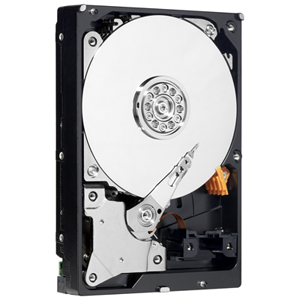
6 Gbps SATA transfer speed is on its way
The solid-state disk drive is supposed to be fast. After all, it's mostly made of memory -- and last we checked, flash RAM was fast. In practice, however, some applications with SSDs can be slower than with HDDs, the reason being the way data is cached as it's collected and moved through I/O channels into system RAM.
The transfer interface is the bottleneck, and the engineers that contribute to the Serial ATA (SATA) transfer specification admit that fact openly. Just a few years ago, you might never have thought that 3 gigabits per second (Gbps) would end up causing problems; but as it turned out, the faster SATA 2.0 maximum transfer rate enabled new applications, which ended up introducing users to those bottlenecks for the first time.
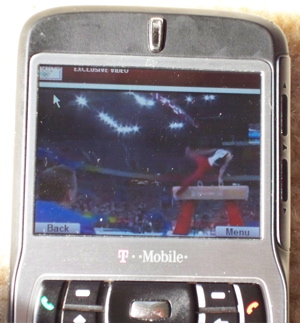
Skyfire 1.0 mobile browser launches today
Since launching in public beta last September, full-featured mobile browser Skyfire has been installed by more than a million North Americans. Today, the official first version has been released, and is available for free on Windows Mobile 5 and 6, and Symbian S60 3rd Edition handsets.
Skyfire has striven to provide a PC-like browsing experience on phones since its earliest stages. All pages are rendered on Skyfire's servers instead of in-phone, and it supports Flash 10, Silverlight 2, Ajax, and JavaScript, making most rich media fully available even on 2G data connections.

Switzerland sides with Microsoft...Facebook's $240 M payday...Digg shouts up
Welcome to What's Now | What's Next. Our objective is to present the news that people will be talking about today, and insight into what they'll be thinking about tomorrow.
Red Hat takes Switzerland to task for lack of neutrality

Sonia Sotomayor and technology: What we know so far
President Obama stepped around two Silicon Valley-area judges to nominate Sonia Sotomayor for the open Supreme Court post. What might the tech world expect from the Bronx-born, Ivy-educated, baseball-saving justice?
Say "Hmm," contractors. A lot of freelancers know the centrist Sotomayor best from NY Times Company v. Tasini, in which a large group of freelance writers sued the Times for putting their articles into LexisNexis without further permission or compensation.
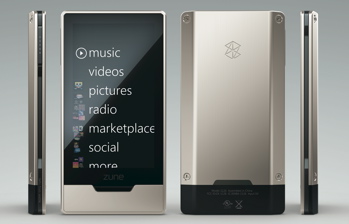
Touchscreen Zune touches down
The new Zune's HD qualities are twofold. First, it contains a built-in HD radio for receiving terrestrial multicasts, and second, it will have an HDMI-equipped dock for 720p high definition video output.
Though these are the qualities that give the device its "HD" name, they are somewhat overshadowed by the Zune's other new features: the upgrade to a multi-touch interface, support for full Web browsing, and Xbox Live integration.

Android apps run in an Ubuntu netbook
Talk of non-smartphone devices running Android has been commonplace in the last few months. From tiny companies like Guangzhou Skytone Transmission Technologies, which is expected to release an ARM-powered netbook driven by Android, to the ultra-mega computer giants like Dell with its Android-equipped Mini 10, the "DroidBook" is not far from reality.
But today, Ubuntu sponsor Canonical showed a different approach: making Android applications usable in Ubuntu Netbook Remix. The Ubuntu Developer Summit (UDS) takes place in Barcelona this week, and the focus is expected to be Ubuntu 9.10 (a.k.a., Karmic Koala), which was released in alpha earlier in May (downloadable from Fileforum now). However, three sessions at the convention are reportedly dedicated to development for, and compatibility with Android.
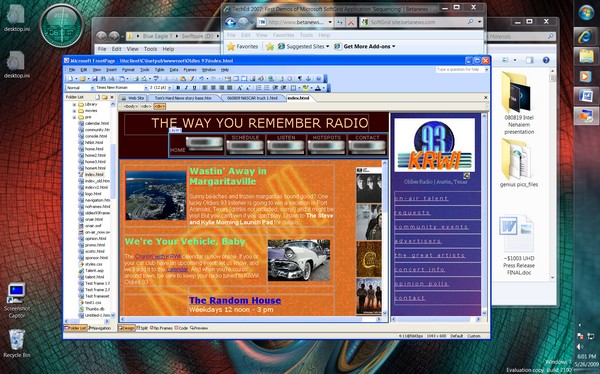
Top 10 Windows 7 Features #3: XP Mode
In some ways, Steve Ballmer is proving to be a more capable Microsoft CEO than Bill Gates, especially recently. Whereas Gates' strategies have typically been associated with playing unfair, rewriting the rules, and being blatantly defiant about it in the process, Ballmer's strategy of taking away the argument -- eliminating the appearance of advantage and then still winning -- has been more effective, and more difficult to combat in both the marketplace and the courtroom.
Nowhere does the "Playing Too Fair" strategy make a bigger display of itself in Microsoft's favor than in its latest permutation of virtualization technology -- a move that many individuals (myself included) directly suggested the company should do, and the company then did. Since 2004, Microsoft has offered a no-cost way for users to run Windows XP in a kind of hosted envelope, one which users were delighted to discover worked fairly well in Windows Vista. But it didn't offer any real advantages -- to use a program that relied on XP, you had to work within that envelope, using networking tools to associate two machines running on the same CPU.

Is Motorola saving money by skipping Windows Mobile 6.5?
According to documents purportedly leaked by AT&T, a Motorola handset originally slated to run Windows Mobile has changed Operating Systems mid-stream, and will be released with Android by the end of 2009's third quarter. The "Iron Man," or "Heron" as it's called on the AT&T document, includes all the Windows Mobile specs (IE6, Pocket Outlook, Exchange ActiveSync) with the caveat "Specifications subject to change due to move to Android."
Both Motorola and AT&T declined comment today.
LTE competition heats up as Swedish MNO opens first site
In Stockholm, Sweden today, mobile network operator TeliaSonera and wireless infrastructure leader Ericsson unveiled the first site in Sweden's forthcoming 4G LTE network, expected to go live in 2010 with deployments in Stockholm and Oslo.
The process has picked up considerable steam recently. It was only four months ago that TeliaSonera announced its first LTE contracts, which included Ericsson and Chinese telecommunications hardware provider Huawei. Just a month later in the US, Verizon named its LTE partners, which also included Ericsson, as well as Alcatel-Lucent, Starent Networks, and Nokia-Siemens.

To Bing or not to Bing?
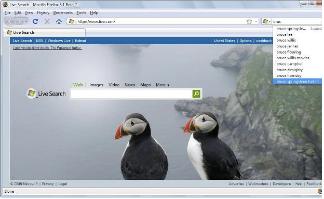
Focusing on Microsoft's dilemma over how it can compete against Google in a market that Google now solidly owns, blinds one to the bigger problem facing anyone trying to do business on the Internet today, including Microsoft: No one really has a clue as to how the damned thing works.
Arguably, Google may be closer to discovering the clue than anyone. But its clever marketing tactics, which lead the technology press to cover color changes to the Gmail toolbar and the shifting of department names from the bottom to the right side of the corporate logo as strike-up-the-band events, indicate to me that Google is just as indecisive about a viable long-term business plan as everyone else. It's just better at masking that fact.



