
The YouTube free ride is OVER
YouTube opened to the public in November 2005, and Google paid $1.6 billion for the service 11 months later. The video-sharing site is the quintessential freebee. No longer. Today Google announced the launch of the first pay-for channels, which is rather strange coming from the company which business model is about profiting from valuable content given away free wrapped with search keywords and advertising. Welcome to the new Internet, with paywalls rising everywhere. To play, you must pay.
In a statement Google says there are "1 million channels generating revenue on YouTube, and one of the most frequent requests we hear from these creators behind them is for more flexibility in monetizing and distributing content". That revenue largely comes from the in-video advertisements. Now you'll pay, too -- as little as 99 cents per month. Here's something: From the sampling I made today, subscription liberates you from advertising, which is something to cheer about.
Google gives iOS developers a choice, and it ain't mobile Safari
Just yesterday, I suggested that Gmail for iOS, which new version links to Google apps rather than Safari, might be a bigger deal. Sure enough, is it ever. The search and information giant is hellbent on co-opting Apple's mobile platform by offering superior apps tightly tied to web services. But the strategy depends on Chrome.
Contrary to popular tech convention, Android isn't the future of Google platforms, neither is Chrome OS, nor is an amalgamation of the two. The browser is the go-forward platform of choice. Android and Chrome stand apart, competing with operating systems like iOS and Windows. Chrome can co-opt them and others. The browser is more natural fit for Google services and anchors them anywhere. This is the lesson from March's corporate shake-up that put Android under Sundar Pichai, who leads Chrome and Apps.
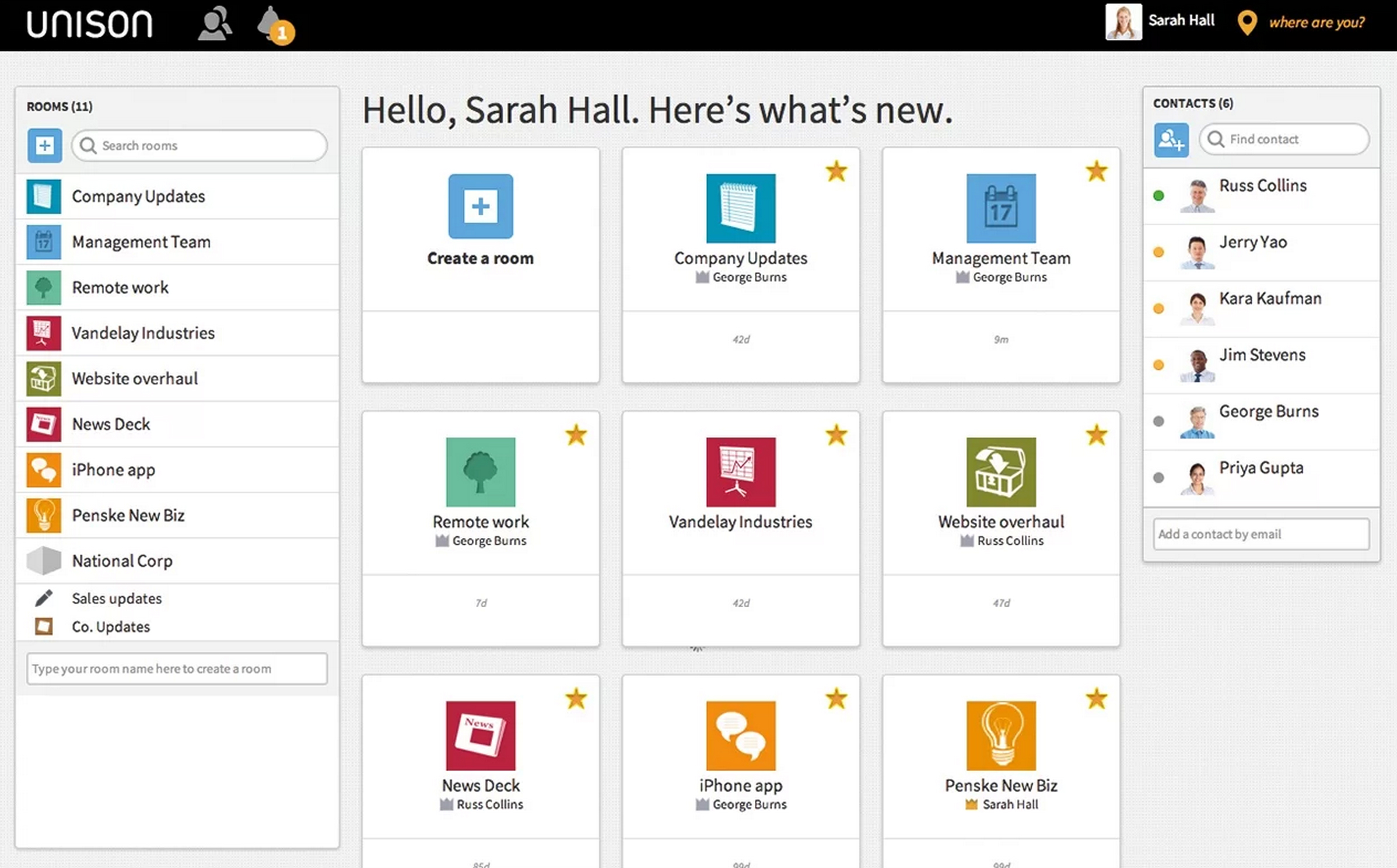
Enterprise social network Unison targets large teams with 250-user voice chat
After introducing Android and iOS apps, enterprise social network Unison has shifted its focus from mobile handsets to large team collaboration, introducing the ability to voice chat with up to 250 users straight from the browser. The feature is currently available only through the official Chrome app.
Compared to the traditional way of doing things on Unison -- text chatting -- the latest feature allows users and members of large teams to interact in a more personal way. Voice is also more immediate than writing and can trigger a faster response, something which can be helpful when dealing with fast-approaching deadlines or other critical scenarios. In some cases, businesses can also replace the traditional phone conference and, therefore, rely less on other services for basic but essential tasks.

Motorola abused patent position EU says
The European Union's Competition Commission has ruled that Motorola Mobility (owned by Google) abused its position in the German mobile market by filing a patent injunction against Apple.
Motorola won an injunction related to Apple products using data transmission technology in February 2012. The fruit-logo company offered to pay a licence fee for the patents but the companies failed to agree on a price. A number of Apple products, including iPad and severall iPhone models, were taken off sale in Germany during the dispute.

Gmail breaks iOS chains
Yesterday (yeah, yeah, I'm late), Google released a stunning new version of Gmail for iPad and iPhone. I tried to write this story several times on May 6, but the newsroom was short-staffed, keeping me extra busy. Vacations, bank holiday in United Kingdom and Orthodox Easter Monday just about emptied BetaNews. So, please, pardon this belated story about the great Google escape.
What a wild one, too. Control-freak Apple uses Safari to keep developers like Google in check. Especially such a rival that invades iOS with a remarkably rich set of apps tightly tied to myriad web services. So Gmail's sudden liberation is quite surprising. Links now go to installed Google apps -- gasp, Chrome, Maps and YouTube -- rather than opening Safari. Chrome linkage really is a shocker, and all the more so with Google kissing WebKit to the wind in favor of its own browsing engine. Expect it in the Chrome stable channel soon.
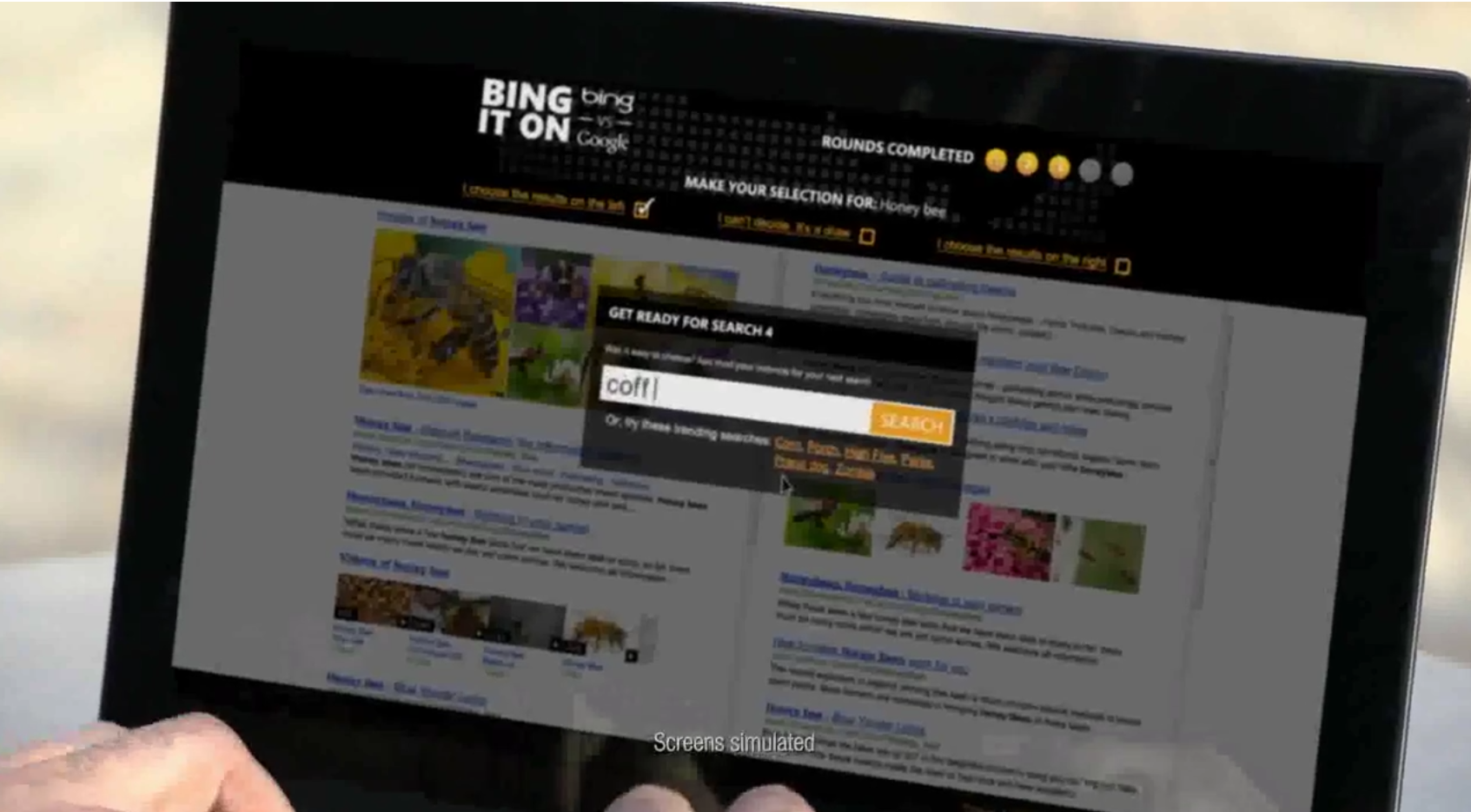
Surprise! Bing TV ad attacks Google
Bing has released its latest "Bing it on" challenge, a contest launched back in September 2012, and, along with that, comes new TV ads. As has become the M.O., Microsoft is going directly after the largest fish in the search sea -- Google. This time, Microsoft hits directly at the heart of Google -- Google, Kansas that is.
You may recall, back during the race to become the city which would receive Google Fiber, Topeka, Kansas changed its name to Google, Kansas. For that reason, Microsoft chose this as its attack venue for the new challenge and ad filming.

Did you wink at me or are you taking a photo?
As if the Google Gaze wasn’t enough to get you strange looks in the street, now there’s a new app for Google Glass users that lets you take a photo simply by winking.
The Winky app was revealed yesterday by developer Mike DiGiovanni on his Google+ page he says:
Sorry Microsoft, I’m switching back to Google (but not entirely)
Fifth in a series. Nearly two months ago I gave up Google and switched to Microsoft. Although I tried not to have any preconceptions, I’ll be honest and say I thought (based on past experience), I’d be swapping a set of mostly superb products and services for a collection of inferior alternatives and hate every moment I was away from Google.
That turned out not to be the case. Now my experiment is over, I find myself impressed with some elements of Microsoft’s offerings, but frustrated with others. So here’s a summary of my overall experience.
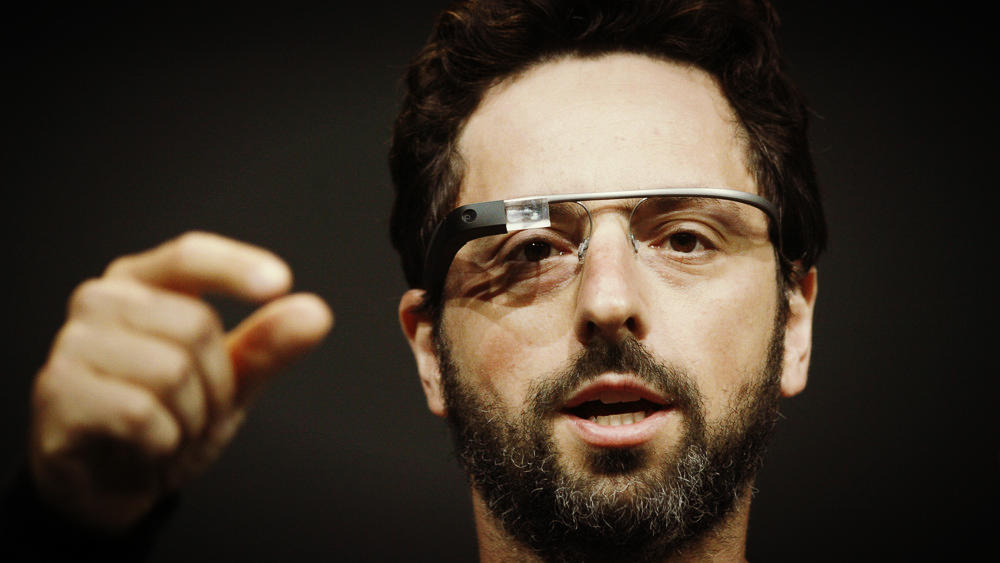
The sneaky thing about Google Glass
Remember when Bluetooth phone headsets came along and suddenly there were all these people loudly talking to themselves in public? Schizoid behavior became, if not cool, at least somewhat tolerable. Well expect the same experience now that Google Glass is hitting the street, because contrary to nearly any picture you can find of the thing, when you actually use it most of your time is spent looking up and to the right, where the data is. I call it the Google Gaze.
Only time will tell how traffic courts will come to view Google Glass, but having finally tried one I suspect it may end up on that list of things we’re supposed to drive without.

Gmail gets better Google Calendar integration
If Google does not already rule your internet world, then it is still aiming to do so. Gmail, Calendar, Drive, Docs -- the company aims to offer you everything. Now it looks at integrating more of these features to make things a bit easier for customers, adding better Calendar options right into the email app.
"If you do a lot of scheduling over email, it's now a little bit easier to create events directly from your Gmail. Now available: dates and times within emails are lightly underlined: click them to schedule that conference call or lunch date without ever leaving Gmail" says Google product manager Boris Khvostichenko.
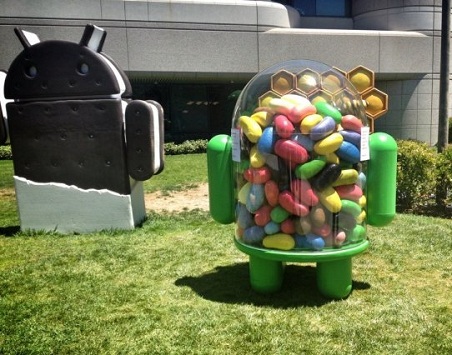
Is Jelly Bean more popular than Ice Cream Sandwich?
Last month Google altered the method of collecting data for its Android distribution charts, now measuring the popularity of the operating system iterations by visits to the app store instead of check-ins to the company's servers as before. The move significantly changed the results compared to the previous month, but is there a noticeable difference that is felt in the Android distribution charts for May?
Based on the number of devices visiting Google Play during the 14 days ending May 1, Jelly Bean now ranks as the most popular Android sweet, after Gingerbread. With a combined distribution level of 29.4 percent, for Android 4.1 and Android 4.2, Jelly Bean surpassed Ice Cream Sandwich, which now runs on 27.5 percent of all droids.

Google’s self-driving cars gather nearly 1GB of sensor data every second -- would you trust them?
While all the press attention is focused on Google Glass, there’s another even more life-changing invention continuing to be developed and refined at Google. The company’s self-driving cars have already driven more than 400,000 miles without an accident (there have been two crashes -- in the first the Google car was rear-ended at a stop light, and in the second it was being driven by a human).
Although they won’t likely become commonplace on our roads for another 15 to 20 years, make no mistake, driver-less cars are the future, and will have lots of benefits. Aside from reducing accidents, they’ll be able to travel much faster -- no need for speed limits -- and give passengers (and we’ll all be passengers) time to do other things. Forget working from home, you’ll be able to work from your car.
Google preps 'packaged apps' for Chrome stable channel
I/O starts two weeks from today, and Google wastes no time whetting developer interests. Yesterday, the search and information giant revealed new Google+ Sign-In benefits. Today there are changes regarding "packaged apps". Surely the big stuff will wait for the keynote, which takes place on a single day this year, but expect more like last two days beforehand.
"Starting today Chrome packaged apps will be available in the Chrome Web Store for anyone on Chrome's developer channel on Windows and Chrome OS", Amanda Bishop, Google product manager, says. "You will notice that the App category now contains only the new Chrome packaged apps. A new category, called Websites, contains all existing hosted apps and legacy packaged apps". She tempts me to change Chrome channels, but I'll wait. And you?
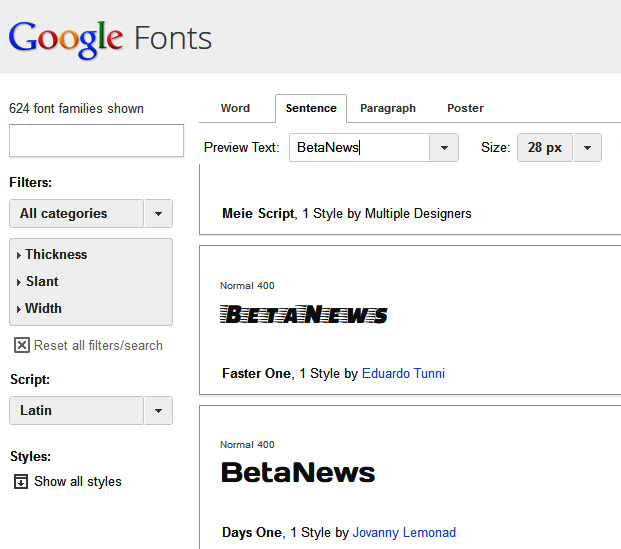
Google brings its Web Fonts to the desktop
Google Fonts is a collection of open-source typefaces designed to make websites look more appealing. The set includes fonts with names like Caesar Dressing, Faster One, and Oleo Script Swash Caps.
Starting from today the web giant is making these fonts available for use on the desktop (Windows and Mac). You can use them in your own creations, but just as importantly by having them stored locally on your system, your browser won’t have to download them, which will save a little time. And we all know how important speeding up the web is to Google.
Google+ Sign-In tempts developers with better search reach
Some days, I look at Google and my mind's eye sees Microsoft. This is one of them. Developers adopting Google+ Sign-In will get a big benefit in search results. The tie-in -- to monopoly search -- feels oh-so like Microsoft tactics to woo and keep developers on Windows during the 1980s and 90s. Yeah, I feel déjà vu right about now.
In February, the search and information giant added Google+ Sign-In as an option developers can include with their apps. In my news analysis then, I called the authentication service "bold and disruptive" and a "Facebook killer". The direct search tie-in makes my early sentiment a gross understatement. Google gives developers every reason to prefer its authentication mechanism, which hugely benefits the social network. The monopoly product is used to extend reach into an adjacent market. Say, didn't trustbusters on two continents prosecute Microsoft for tying together Windows and browser?