
AMD turns its attention to Chromebooks with new Ryzen 5000 C-Series processors
While Chromebooks are often great, there is a big problem -- a lack of AMD processors. Most laptops running Chrome OS are powered by Intel or ARM-based chips. Wouldn't it be great if AMD released some new specialized processors designed for Chromebooks specifically?
Well, folks, AMD has done exactly that with the all-new Ryzen 5000 C-Series processors. There are four such chips coming to market -- the dual-core Ryzen 3 5125C, quad-core Ryzen 3 5425C, hexa-core Ryzen 5 5625C, and octa-core Ryzen 7 5825C. These processors are based on Zen 3 architecture and AMD says they will be paired with Wi-Fi 6E/Bluetooth 5.2 modules -- likely its own RZ600 series radio chips it co-designed with MediaTek.
Google, Apple and Microsoft announce plans for a passwordless future
As we mark World Password Day, three of the major technology players are announcing a significant step on the road to a passwordless future.
Over the next year Google plans to implement passwordless support in Android and Chrome. Apple and Microsoft have also announced that they will offer support in iOS, MacOS, Safari, Windows and Edge.

Many of your 'secure' passwords will have been leaked or compromised -- here's how to easily check and change them
I reuse passwords regularly. But, here’s the thing -- I only do so on websites where that doesn’t matter. Sites that I don’t need to revisit regularly, or at all, and which don’t hold any personal information on me. Those passwords tend to be short and easy to guess, and get leaked in breaches all the time. It’s no big deal.
What is a big deal, however, is when one of my carefully curated, long, complicated and never reused passwords gets leaked. And that can, and does, happen. There are a number of ways to find out if your passwords have been compromised, including using HaveIBeenPwned. But for this article I’m going to show you the best and easiest ways to find out what passwords have been leaked. I will warn you now, you may be in for a very nasty surprise.
Google announces Sovereign Controls for Google Workspace to boost data protection
In response to new European data rules, Google has announced Sovereign Controls for Google Workspace.
Aimed at organizations in both the public and private sector, the new controls are due to launch at the end of 2022. They will make it possible to control, limit, and monitor transfers of data to and from the EU, and Google says that further capabilities will be added in 2023.
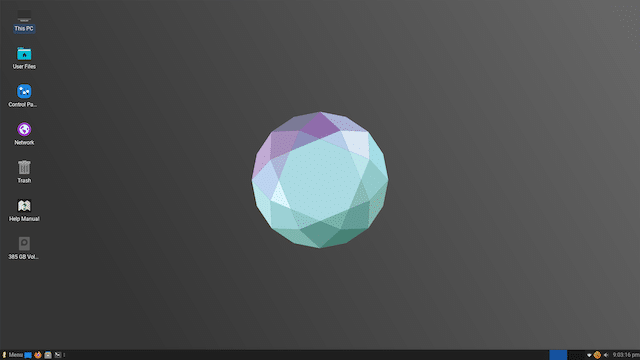
Linux Lite 6.0 RC1 is here with Google Chrome as new default web browser
Now that Ubuntu 22.04 has been released, we will start to see updates to all the Linux distributions that are based on Canonical's operating system. For instance, the first release candidate of Linux Lite 6.0, which is based on Ubuntu 22.04, is now available. If you aren't familiar, Linux Lite is very popular with those that are switching to Linux from Microsoft Windows.
Linux Lite 6.0 RC1 is notable for ditching Mozilla Firefox as the default web browser, and switching to Google Chrome 100 instead. The operating system currently uses Linux kernel 5.15.0-25 and the desktop environment Xfce 4.16.3. It comes with some excellent software pre-installed, such as GIMP 2.10.30, Thunderbird 91.7.0, VLC 3.0.16, and LibreOffice 7.2.6.2.

Google introduces a way to reject all cookies... But only in Europe
After being hit with a fairly hefty €150 million fine by regulators earlier in the year, Google has added a new Reject All button to the cookie consent banners that have become ubiquitous on websites in Europe.
Google says that the change is in response to the fact that, "regulators who interpret European laws requiring these banners [...] have updated their guidance for compliance". So what exactly does the change mean, and is it likely to extend outside of Europe?
Google marks Earth Day 2022 with a bleak time lapse of climate change, and shares news of progress towards net zero and sustainability
Today is Earth Day, the annual event that aims to promote protecting the environment. The global event has been running for over fifty years, and the big names from the world of technology play a major role, both in terms of the negative impact they have on the environment with carbon output and energy consumption, and the positive influence they wield.
Like many tech firms, Google has made commitments to reducing its impact on the environment. The company is using Earth Day 2022 to share news of the work it has done, what it continues to do, and what it has planned for the future. There is also a striking Google Doodle that drives home an important message.
Google is making it easier to find the best browser extensions in the Chrome Web Store
Among the supposed benefits of downloading apps and other digital products from an official store is that they should be safe and reliable. But as users of the Microsoft Store, Google Play and the App Store will attest, making an appearance in such a repository is really no indication of quality or trustworthiness.
And the same is true of browser extensions. Once completely unpoliced, this is an arena that Google tried to take control off by introducing the Chrome Web Store. Now the company is introducing two new features which it believes should help Chrome users find extensions that are of a high standard.

DuckDuckGo and Brave announce separate plans to fight back against Google's divisive AMP (Accelerated Mobile Pages) framework
Google's AMP (Accelerated Mobile Pages) project is designed to speed up the web for mobile users, but it has big privacy implications because it allows Google to further track user actions, as well as prioritize its own ads on pages.
Today, both DuckDuckGo and Brave announced changes to their respective products to protect against Google AMP tracking.
DuckDuckGo quietly begins removing pirate sites from its search results [Updated]
For years now, Google has been down-ranking -- or even removing entirely -- pirate sites from its search results. Privacy-focused search alternative DuckDuckGo has resisted taking similar action, making it a good choice for anyone seeking out such services.
Back in 2018, in a bid to avoid potential copyright liability, it did remove access to around 2,000 'bangs' -- shortcuts that let you run a search directly on a particular website -- for copyright infringing sites like The Pirate Bay and 1337x, but this didn’t affect the results in the search engine itself. It seems that has now changed.
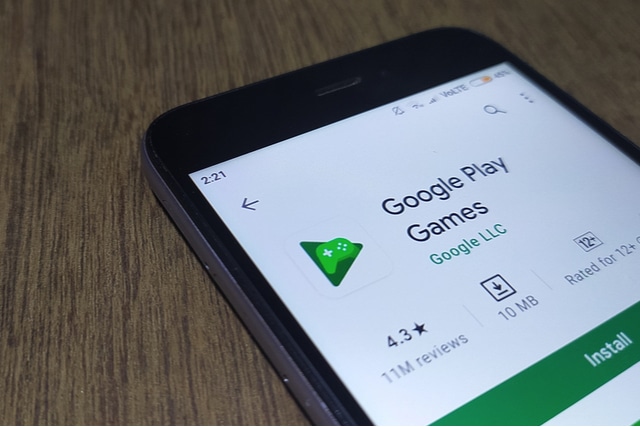
New Google app makes it (marginally) easier to switch from iOS to Android
While most iOS users will remain iOS users for life, and the same can be said of those who choose Android, there are some people who switch allegiances. There are also some who like the idea of switching platforms, but are put off by the potential complexity.
To help anyone looking to make the jump from an iPhone to an Android handset, Google has quietly launched an app called, appropriately enough, Switch To Android. But while the app sounds great in theory, it is found sadly wanting.
Businesses want sustainability but aren't investing in it
New research from Google Cloud shows that sustainability is a key focus for executives, yet it's one of the lowest areas for investment.
The study of almost 1,500 executives around the world shows 80 percent of executives give their organization an above average rating for their environmental sustainability effort. Meanwhile 86 percent believe their efforts are making a difference in advancing sustainability.

If tech giants were countries Apple and Microsoft would be among the top 10 richest
In an interesting bit of equivalence, UK-based insolvency specialist Real Business Rescue has compared the market value of the world's richest companies to countries' GDPs to show how big these businesses have become compared to the rest of the world.
As the table below shows, Apple -- which became the first trillion dollar company in 2018 -- would rank eighth in the world, just behind France, while Microsoft is ranked ninth and worth more than Italy.
Google is going to help you improve your privacy in Chrome with Privacy Guide
Google is rolling out a new feature to Chrome users which it says will help to protect privacy while online.
Although the Privacy Guide does not add any new privacy options, it serves as a step-by-step guide that will enable users to implement the settings that are most appropriate. As well as providing guidance through what can be a confusing sea of settings, the new addition also offers up explanations about different options.

'Dr. Google, am I unwell?' What is cyberchondria and how do you tackle it?
When you experience a persistent cold or a petulant pain in your arm, there is no hiding that paying your doctor a visit is not always your first port of call. Sometimes, when struck by a headache or an unexpected rash, the first reaction is to switch on your laptop and fire your pressing questions at Dr. Google. "Why do I have pins and needles in my leg?" "What is causing this mild chest pain?" "Is this mole dangerous?"
Some searchers are simply looking for basic information and take their findings with a pinch of salt. Others, instead, will spend hours skipping from one website to the next, worried about the array of intimidating diagnoses they have found. When this occurs, it is often known as cyberchondria.