Google sponsors pilot program to improve open source security
Google is announcing its sponsorship of the Secure Open Source (SOS) pilot program, run by the Linux Foundation, which financially rewards developers for enhancing the security of critical open source projects.
Google is starting with a $1 million investment and plans to expand the scope of the program based on community feedback.
Spook.js attack bypasses Strict Site Isolation in Chrome to steal passwords
Security researchers from a collection of US and international universities have revealed details of Spook.js, a worrying transient execution side channel attack that can be used to bypass Chrome's Strict Site Isolation.
Rolled out by Google in response to the Spectre security flaw, Strict Site Isolation is supposed to prevent unauthorized data theft. But the researchers found that malicious JavaScript code can be used to grab data -- such as passwords -- from other tabs. The attack has been found to affect Intel processors and Apple devices with M1 chips; AMD chips are also thought to be at risk, but this is yet to be fully demonstrated.
Google Search dark mode is finally rolling out for everyone
Dark modes have been steadily spreading their inky way across apps, websites and operating systems for a couple of years now. Like many companies, Google is no stranger to dark mode, and now a more shadowy look is rolling out to users of the desktop version of its flagship Search service.
We got a preview of Google Search dark mode earlier this year, and now the option is gradually being made available to anyone who prefers a gloomier look. If you count yourself in this number, here's how to enable dark mode for Google Search.

Assessing the viability of first-party data
In the wake of expanding regulations surrounding the use of consumer data for unprecedented purposes, the digital advertising industry is in for a massive overhaul. Google has announced the removal of third-party cookies and, although they have pushed the date of obsolescence back to 2023, companies are now forced to reckon with a future devoid of third-party data collection. Big Tech is looking to lead the rest of the industry in the development of innovative alternatives.
Unsurprisingly, Google has been at the front of these efforts thus far. The technology giant controls the largest browser, adtech, and search engine products in the industry, a powerful trio that leaves them perfectly positioned to navigate the digital advertising industry through uncharted territory. In addition to removing third-party cookies from their Chrome browser, Google is also fostering the development of responsible adtech in their Privacy Sandbox.

Looking forward to running Android apps in Windows 11? The feature won't arrive until next year
In a recent survey, there were two big new features in Windows 11 that had people excited. 35 percent said the centered Start menu was their favorite new feature, while 26 percent said it was native Android support they were most looking forward to.
Well, if you’re one of those people keen to run Android apps on your Windows 11 PC, there’s some bad news. The feature isn’t ready, and it won’t even start being tested by Insiders for months yet.
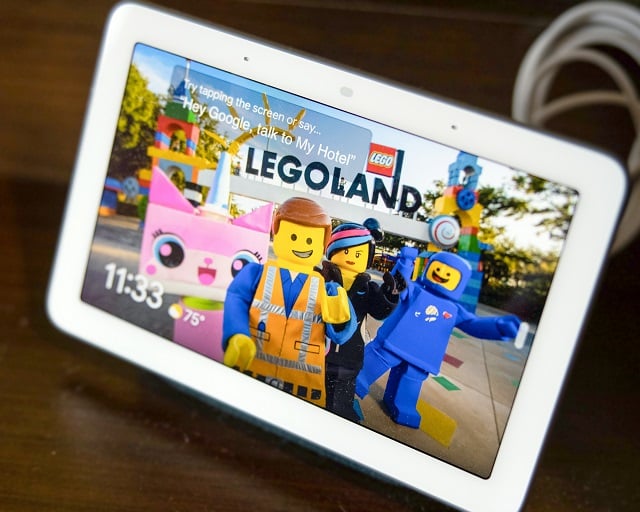
Google Nest Hub comes to LEGOLAND Hotels
About a year ago, we told you that Google was partnering with some hotels to have Nest Hub smart devices installed in guest rooms. Understandably, some people were concerned about having a microphone and camera in their hotel rooms.
However, those worries were unfounded. You see, Nest Hub doesn't even have a camera! Plus, Google is extremely focused on privacy, and the microphone can be totally disabled with a hardware switch. Ultimately, this hospitality partnership was simply a big win for hotel guests as they get to experience the convenience of Google Assistant when away from home.
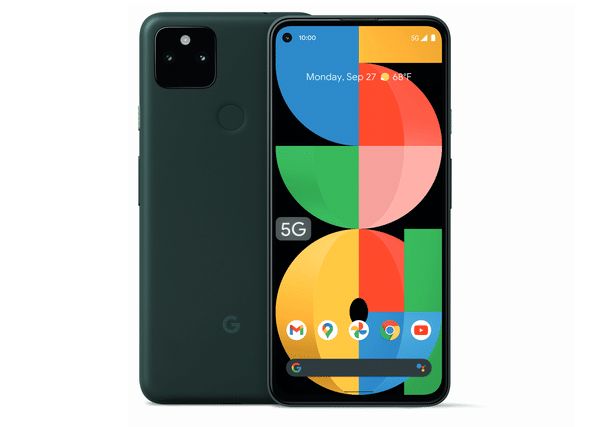
This is Google Pixel 5a with 5G
If you are a hardcore Android user, you should buy a Pixel. Google’s smartphones may not have the best specifications, but they do offer the purest Android experience. They are the only way to truly experience Android as Google intends it -- including timely OS updates. They are free of bloat, unlocked, and often very affordable. Best of all, they offer a remarkable photography experience.
Today, Google officially announces the oft-rumored Pixel 5a with 5G. It isn’t a flagship device, but with a reasonable $449 asking price, the Android 11 smartphone looks to be a great value. The 6.34-inch OLED screen features a respectable 2400x1080 resolution, while the 12.2 MP dual-pixel and 16 MP ultrawide rear cameras should take exceptional photos. While it does get water resistance, the Pixel 5a with 5G lacks wireless charging -- you must use USB-C to charge the 4680 mAh battery.
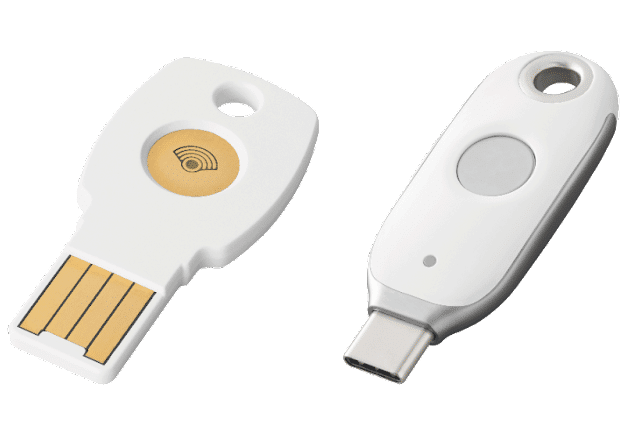
Google Titan Security Keys ditch Bluetooth
Google's Titan Security Key dongles are a great way to secure accounts using hardware rather than only relying on software. The search giant has offered these little devices for years now with USB-A, USB-C, and Bluetooth connectivity.
Back in 2019, Google discovered a vulnerability in its Bluetooth-capable Titan Security Key that lead to a recall. With that said, it is not surprising that in 2021, the search giant is dropping that wireless connection option entirely. You see, starting tomorrow, the Google Titan Security Keys are ditching Bluetooth to instead rely on NFC -- in addition to USB, of course.
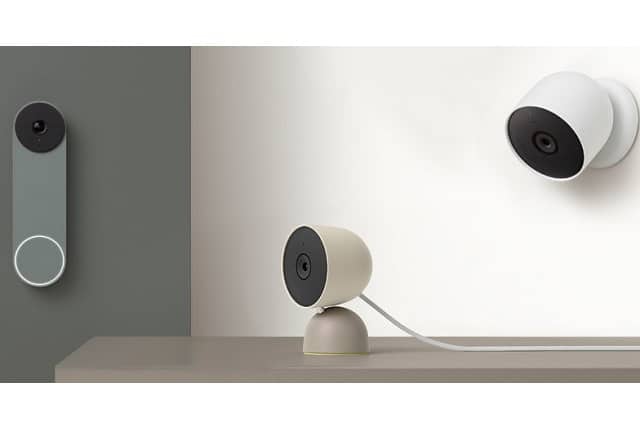
Google unveils new Nest smart home stuff
Google bought Nest more than seven years ago now, and since that acquisition, there have been many cool smart home devices to come from the search giant. Under the Nest branding, there's not just smart thermostats and cameras, but other products too such as doorbells and speakers. Ultimately, the name "Nest" has become synonymous with the smart home.
Today, Google unveils some new Nest smart home devices, and they are all camera-related. There is a new doorbell (with integrated camera) plus three new dedicated security cameras. What's notable is that the new doorbell and one of the new cameras can be run from a battery, meaning they do not require a hardwire power connection. One of the cameras features nifty floodlights too.

Is AI actually you?
This seems like a great time to ask this question, as it might not matter soon. With the direction things are heading, we may soon arrive at an intersection where the blurring of identity reality and identity fiction is so extreme that we’ll simply stop asking what is authentic personhood.
Case in point, a story out of Paris in July outlines not a dystopian future, but a troubling present reality. The piece recounts the story of computer-generated YouTube storytime videos. The genre is pretty much what it sounds like:
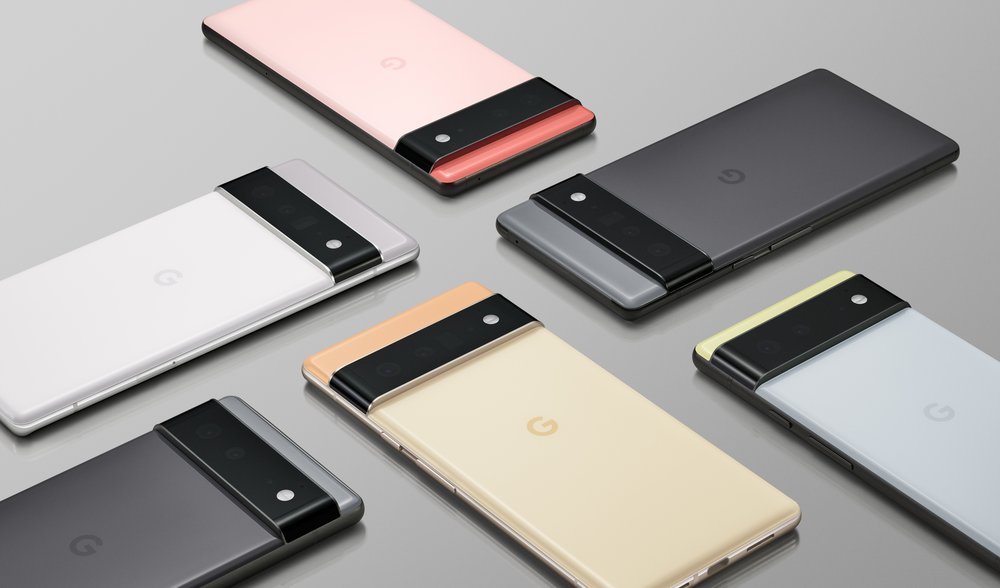
Google's Pixel6 and Pixel6 Pro smartphones will be powered by a Google designed chip
Google will be properly unveiling the next generation of its Pixel smartphones soon, but it’s released a sneak peek showing us what they look like, and revealing that they will be powered by a new custom-built chip.
Google will be hoping its new silicon proves as successful as Apple’s M1 chips, and it certainly looks as if could really revolutionize the Android experience.
Now you can block spam file sharing on Google Drive
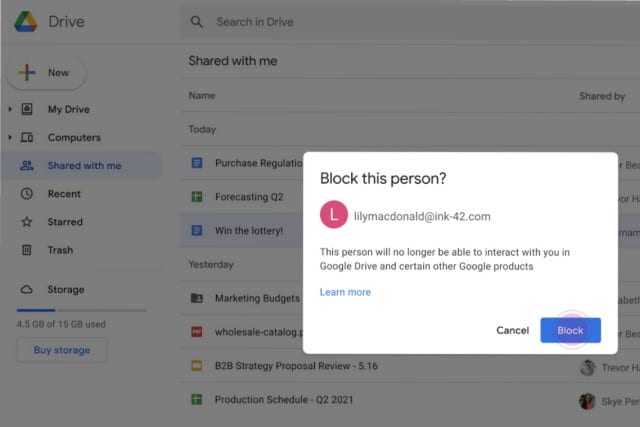
Google has a spam problem -- and we're not talking about Gmail, but Google Drive. Having discovered that the file sharing functionality of the cloud storage platform could be used to harass people, spammers have been doing exactly that.
Having announced plans to do something about the problem back in May, Google has finally started the process of roiling out anti-spam measures, giving users the ability to block spammers. While many Google Drive users will be pleased at the introduction of new controls, is it enough?
Google updates search to tell you why you're seeing particular results
Google has announced a significant upgrade to it search engine that means you will now be better informed about the reasons particular results are displayed to you.
Much of the time it is apparent why a certain page has been included in results, but this is not always the case. It is with this in mind that Google is updating the About This Result panel in search results to be more informative.
Google is rolling out its unified backup service, Backup by Google One
Backing up Android data is getting a whole lot easier as Google starts the roll out of Backup by Google One. The service makes it easy to backup everything from SMS, MMS and call logs, to Wi-Fi passwords and photos.
The company has not made a great deal about the rollout, making no announcement about it. This is perhaps understandable as it is essentially a consolidation and rebranding of a previously disparate selection of settings and tools.

Google is making it easier to hide the searches you want to keep secret
Perform a search using Google, and details of your search are saved in your Google account for posterity -- unless, of course, you take action.
If you want to keep a search to yourself, you could use Incognito mode in Chrome and it will not be saved. Or you could manually delete your search history, although this does mean losing potentially useful historic information; the same is true of the auto-delete option for your online activity. But now there is new option to delete the last 15 minutes of search activity -- just enough to cover your tracks when you need to.