
Adblock Plus comes (somewhat) clean about how Acceptable Ads work
The Acceptable Ads program from Adblock Plus has proved slightly controversial. The company behind the ad blocking tool, Eyeo, has already revealed a little about how it makes money from the program -- despite the fact that no money changes hands in most whitelisting cases -- and today it has opened up further about how it makes its money.
Whilst recognizing that people do want to block ads, Eyeo is also aware that sites do need to benefit from ad revenue -- hence Acceptable Ads, non-intrusive ads that it is hoped are less irritating and therefore easier to stomach. But Eyeo itself also wants to make money. How does it decide which company to charge for Acceptable Ads whitelisting, and what to charge? If you're expecting full transparency, you might be disappointed, but we are given a glimpse into how the financial side of things works.

GRE tunneling: Keeping human traffic unaffected during DDoS attacks
Picture a standard subway ride during rush hour. The car, of course, is crammed full. Some of those subway riders are pleasant commuters, and some are subway villains like pickpockets and purse-snatchers. Now imagine someone has invented a private subway that quickly and efficiently connects you and other pleasant commuters to the subway station in your neighborhood. You don’t have to deal with slowdowns, unexpected stops, or any of the risks associated with being lumped in with the aforementioned subway villains.
Now stop imagining, because someone has invented such a blissful sort of system. It’s just that instead of being a form of transportation it’s a method of directing legitimate human traffic to a website while it’s being protected from a DDoS attack. Not the best news for your commute, but great news for your website.

New platform offers endpoint protection for Linux servers
Most of the internet is powered by Linux servers, so it's not surprising that they’re increasingly a target for attack. In particular recent attacks have focussed on using compromised systems to distribute malware to other systems.
Many Linux systems rely on traditional signature-based threat detection which leaves them vulnerable to zero-day attacks. Endpoint security company SentinelOne is announcing a new solution aimed at protecting enterprise data centers and cloud providers from emerging threats that target Linux servers.

HP teams up with iPass to offer global Wi-Fi across select devices, including those running Windows 10
Among the downsides of traveling, is limited access to Wi-Fi. Finding hotspots becomes a priority, leaving travelers scrambling for places like Starbucks and various other cafes, libraries and, well...any port in a storm. Wi-Fi is becoming more ubiquitous, though.
Now HP is looking to help out those using its devices, including both tablets and laptops. The company is extending its partnership with iPass Inc to bring connectivity to what it terms "select devices". Previously this was only available in the Asia-Pacific region, but it is now expanding worldwide.

Facebook has missed a trick or two with its limited Reactions
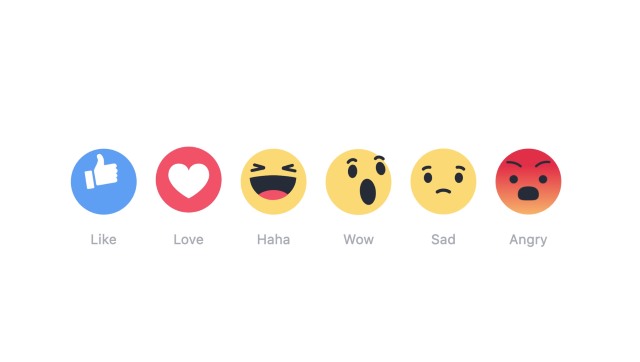
After years of pestering, yesterday Facebook finally supplemented the famous Like button with five additional Reactions. To the disappointment of many, the much-requested Dislike button is yet to make an appearance, but this is not the only way in which the social network has let people down.
Advertisers, page owners, and the general Facebook hoi polloi now have at their disposal six reactions that serve little useful purpose. Sure, it gives users the opportunity to express a slightly wider range of emotion, but the range is far too limited. Additionally, Facebook has let down its paying users more seriously -- it fails to register the meaning and intent behind the different reactions, rendering the six options almost pointless.
Like! Facebook Reactions launch around the world
Facebook is, at long, long last, rolling out Reactions globally. The limitations of the famous Like button which have been debated since its introduction are set to become a thing of the past at the social network. Like is now joined by Love, Haha, Wow, Sad, and Angry options.
As we reported earlier in the year, the 'yay' option that had been tested is not being released at this stage -- apparently users found it difficult to interpret what it means. Reactions do not work exactly as you might expect them to, and this means you might need to be careful about how you use them to start with.
Google Compare is closing
From today, Google is starting the process of winding down Google Compare. The price comparison tool is to close completely in the US and the UK by 23 March.
From this date forward, anyone looking to find the best prices on auto insurance and mortgages, credit cards and more will have to turn to one of the alternative comparison sites. Considering the US version of Google Compare was only recently resurrected from the ashes of Google Advisor, the move will come as a surprise to many.

Streamlining home network security [Q&A]
Whilst businesses can call on expert resources to secure their systems, for many home users protecting a home network and the devices attached to it can be something of a dark art.
Finnish security company F-Secure is aiming to make securing systems simple even for the non-technical with its forthcoming SENSE product. We spoke to Mika Majapuro, F-Secure's director of product management, to find about more.

Are you Digitally Enlightened or an Online Nudist?
According to the results of a new survey, while two thirds of US respondents say they would like extra layers of online privacy and security, their actions prove otherwise as few even use currently available tools.
The study by VPN provider Hide My Ass! has been used to categorize people into five different approaches to online life:

Critical security gaps found in secure web gateways
Attack detection and analytics specialist Seculert has released a new report identifying critical security gaps in popular web gateway solutions.
During the first 10 months of 2015, Seculert observed the web gateway performance of Barracuda, BlueCoat, Fortigate, Ironport, McAfee Web Gateway, Palo Alto Networks, Websense and Zscaler to determine whether existing gateway solutions were allowing infected internal devices to communicate traffic outside the organization.

UK government wants money-making porn sites to age-check visitors
The UK government is launching a public consultation over its plans to require pornographic websites to verify that visitors are aged 18 or over. The Conservative party wants to deliver on its manifesto pledge to introduce age verification to all porn sites, but the latest proposals go further.
The government wants all companies that profit from pornography online to implement systems to have a legal requirement to ensure that visitors are over 18. The consultation runs until 12 April and has the aim of using British Board of Film Classification (BBFC) issued 18 / 18R ratings for sites, but it's unclear how effective the system would be for free porn sites.

End of an era as pioneering BBC3 becomes an online-only station
13 years ago, BBC3 launched in the UK. Last night, the TV station broadcast over the airwaves for the last time. In a bid to slash expenditure, the youth-oriented channel that launched countless comedy careers is now only available online.
The likes of Being Human, The Mighty Boosh, Gavin and Stacey, and the like will live on, but only on the web -- which the BBC is spinning as an opportunity to be freed from the constraints of regular scheduling. The change has been known about for some time now, and there have been a number of campaigns and petitions to try to get the BBC to change its mind.

'The room had started to smell. Really quite bad': Stephen Fry exits Twitter once again
For a man so readily associated with words -- and certainly for a wordsmith so enamored with technology -- Twitter seems like something of a natural home for Stephen Fry. Over the years he has amassed hundreds of thousands of followers, but last night he closed his account. Fry's latest exit from Twitter (there have been several over the last few years for numerous reasons) came about because of the backlash he received for making a joke at an award ceremony.
Hosting the BAFTAs (British Academy of Film and Television Arts) on Sunday, he referred to costume designer and award winner (and, indeed, friend) Jenny Beavan as being "dressed as a bag lady". 'Offended' Twitter users attacked Fry in their droves, and he fought a valiant battle, before eventually giving up and terminating his account. It comes just days after Twitter set up a new Trust & Safety Council.

King Arthur is back on Facebook after falling foul of Real Name policy
For many, Arthurian legend is just that: legend. But for others, it is very real. One such person is King Arthur -- or Rev Arthur Uther Pendragon to give him his full title -- was recently kicked off Facebook as the social network did not believe he was using his real name.
But now the king is back. Having proved his identity, the once and future king (Rex Quondam Rexque Futuris) has had his account restored under his legal name of Arthur Uther Pendragon. King Arthur is not the first person to cross swords with Facebook's real name policy, and he certainly won't be the last.

Pedophiles are reportedly using Facebook to share images of children
An investigation by the BBC has found that secret groups on Facebook are being used by pedophiles to share images -- and Facebook doesn't seem to be doing much to control such activity.
The BBC reportedly unearthed numerous private groups which were both run by and for men with a sexual interest in children. One group was found to have a convicted pedophile as its administrator. Despite many of the groups and images being reported to Facebook, not all of them were removed, raising the question as to whether Facebook is doing enough to combat pedophilia.