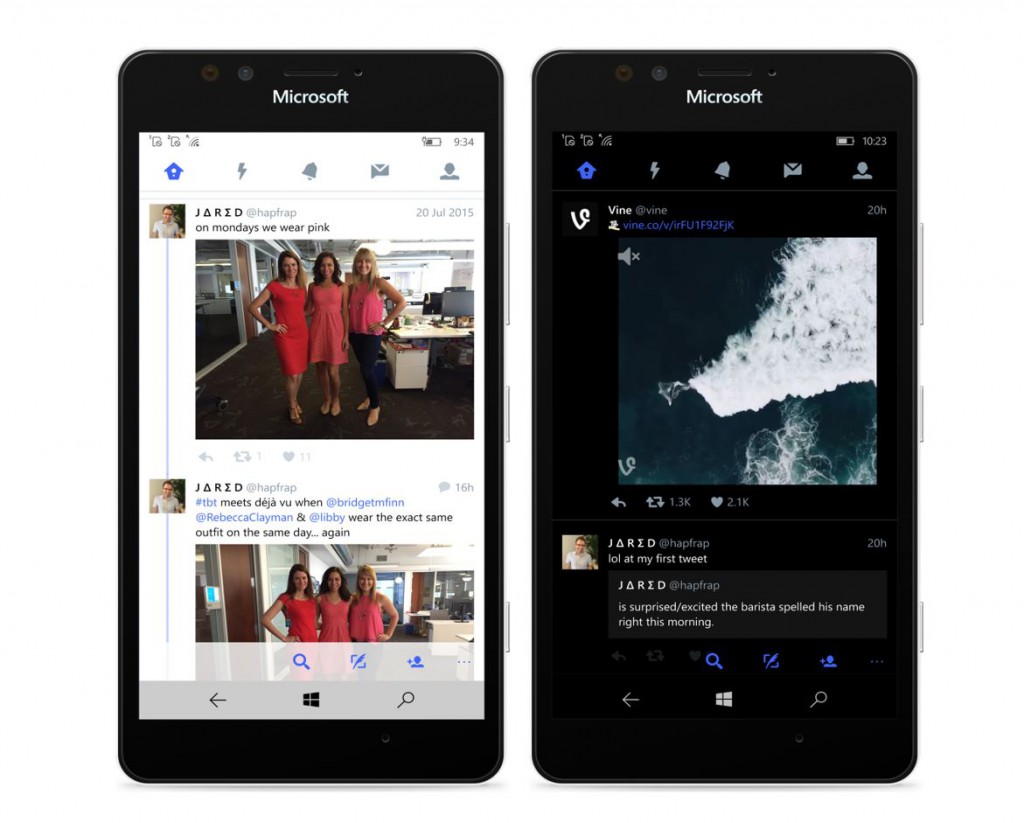
Microsoft scores rare Windows 10 Mobile win with all-new official Twitter app
While financial pundits are constantly discussing the profitability of Twitter and its stock, tech geeks such as me just enjoy using the damn thing. It is without a doubt my favorite social network -- it helps me stay on top of news and trends in a no-nonsense way.
Unfortunately for Windows 10 Mobile users (yes, they exist), a proper Twitter app was not available. Today, this changes, as an official app comes to Microsoft's struggling mobile platform. Yes, the Windows-maker is experiencing a rare win with its mobile OS. This is great news, as only yesterday the popular Here Maps defected from the platform.

Microsoft is farming your data, but it isn't what you think
If you reside in the US state of Maryland then you can find plenty to be proud of -- the Chesapeake Bay is home to great seafood, including the famous Maryland Blue Crab. Francis Scott Key wrote the Star Spangled Banner from a ship during a battle in Baltimore Harbor. Of course, there's the sports teams like the Ravens and Orioles.
But one thing the state tries not to neglect is its history of farming. A vast majority of the state is rural and is home to agriculture, horses and cattle. The state has instituted a Farm Preservation policy to preserve these lands for future generations and even car license plates have been dedicated to the cause.

Microsoft: 'Exciting update' coming for Windows 10 Maps app
There is no doubt that HERE's decision to leave Windows 10 in its rear view mirror is a serious blow to the platform, as it leaves users with fewer options in terms of top-notch navigation apps. Microsoft is well aware of this though, promising an "exciting update" to beef up its own offering, Windows Maps.
As Windows 10 and Windows 10 Mobile users may be well aware of, HERE apps and Windows Maps share the same maps -- created by HERE -- but their functionality is currently different, with the former offering a more mature feature set. Question is, what will that hyped update bring new to the table?

The most disruptive business technologies
You'll quite often hear talk of how technology can disrupt business. A survey carried out at Microsoft's 2015 Global CIO Summit in October suggests that CIOs believe 47 percent of their company's revenues will be under threat from digital disruption in the next five years.
But what does this disruption really mean? Microsoft has produced an infographic looking at the five major technologies that are doing most to disrupt the business world.

HERE abandons Windows 10
HERE just dealt a huge blow to Windows 10, announcing that it will remove all of its apps for the new operating system from Store on March 29. The news comes before the start of the Windows 10 Mobile rollout, which Microsoft has already delayed a couple of times.
HERE is one of the most important Windows developers, providing the best and the most popular navigation apps for smartphones running the tiled OS. Offerings like Drive and Maps have shipped on nearly all Windows Phones, and are used by the vast majority of users.

Microsoft did a whoopsy -- previous announcement about dropping Bitcoin was a mistake
Earlier today we reported that Microsoft was no longer accepting Bitcoin as a form of payment. It turns out that this is not true. Microsoft made a mistake.
Despite making a very clear change to its support pages that said "Microsoft Store doesn't accept Bitcoin" the company will in fact continue to support the cryptocurrency. This is not a change of heart, it was nothing more than a slip up, but Microsoft has not offered much of an explanation as to how it came about.

DVR capabilities are on their way to Xbox One
Although the Xbox One is undoubtedly a games console at heart, Microsoft wants it to be so much more. It's part of the reason for the blurring of boundaries between Windows 10 on the desktop and the Xbox One's version of the operating system, and there are already a number of media center features to be found. But things are on the verge of improving. A lot.
It's one thing to be able to watch OTA TV broadcasts on your console, but we've all become used to the notion of time-shifted viewing. DVR functionality -- the ability to pause and record shows as they are broadcast -- has been promised for some time, and now it's undergoing internal testing at Microsoft, strongly suggesting that a public release is not too far away.

Cross-platform support means Xbox One gamers will be able to play PS4 opponents
Microsoft has announced that cross-network play is coming to Xbox One. This means that as well as being able to play against other Xbox One owners and those running Windows 10, gamers will also be able to play against people who are using a PlayStation 4.
This is the announcement that Xbox Live subscribers have been waiting for, and it's something that gamers have been begging for for years. It's not something that's going to happen overnight however. Microsoft may have got the ball rolling, but it's going to need support from Sony as well as game developers -- although it's hard to imagine that they won't give it.

Microsoft Project AIX is an open source Minecraft-based artificial intelligence solution
Many people fear artificial intelligence, and the reasons range from sensible to science-fiction. Some people are worried it could lead to a loss of jobs, while others fear a robot-fueled apocalypse, such as in the Terminator films. Me? I'm not worried, but excited. Don't fear progress, y'all.
Today, Microsoft announces a new artificial intelligence solution, called Project AIX. It is quite intriguing, and should excite millennials, as it is based on the wildly-popular Minecraft video game. The really interesting aspect, however, is that Microsoft is making it an open source project.
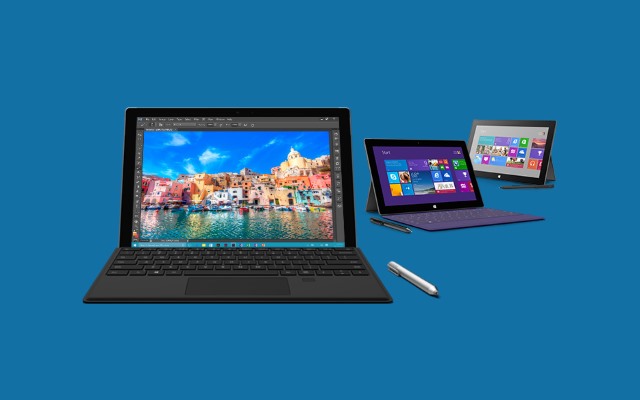
Save up to $650 off a Surface Pro 4 as Microsoft launches new trade-in program
If the price of a Surface Pro 4 has been putting you off upgrading, Microsoft's new 'Trade in, trade up' could be just what you’ve been waiting for. Apple is famous for running trade-in programs to encourage people to upgrade to the latest devices, and Microsoft has also got in on the action more recently.
The latest deal means you can ditch your old MacBook, PC or Surface and receive up to $650 back to put towards your Surface Pro 4. There are conditions, and you might find that it makes more sense to sell your old device privately, but it's certainly well worth checking out to see if it could work in your favor.

Microsoft continues to show Apple love -- adds Touch ID support to Outlook for iPhone and iPad
While both Android and iOS are solid and mature mobile operating systems, Apple's offering seems to get more developer support. Even though Google's OS reigns supreme from a market share perspective, iOS generates the most profit. Not to mention, Apple's products don't really deal with the fragmentation issues that Android does.
Microsoft doesn't discriminate between the two, offering many apps for both platforms. One of its most popular apps is Outlook. The email client works brilliantly, but on iOS, it is gaining a new trick -- Touch ID support. Yes, you can now protect your email on iPhone and iPad with biometrics.

Microsoft drops Bitcoin support for Windows 10 and Windows 10 Mobile purchases
Microsoft's love affair with Bitcoin has proved to be short-lived. The company has updated its support pages to indicate that it no longer supports the cryptocurrency for purchases made in the Microsoft Store.
No explanation has been given for the decision, but it's likely that Bitcoin's failure to hit the mainstream -- yet, at least -- is to blame. From now on, Windows 10 and Windows 10 Mobile purchases will have to be made using other payment methods, although Microsoft says current balances paid for with Bitcoin can still be used.

Microsoft knows what's best for you -- stop fighting Windows 10
Windows 10 is a wildly popular operating system in more ways than one. In one regard, it is installed on hundreds of millions of machines. In another, it is popular with technology pundits as something to portray in a negative light.
While it isn't perfect, Windows 10 is the best version of Microsoft's operating system ever. It is fast, reliable, and pretty. Best of all, it runs an endless amount of classic Windows programs, plus the new universal Windows apps too. True, there are some privacy concerns, but if you don't trust Microsoft with your data, why are you using any of the company's software? Sorry, y'all, Microsoft knows what's best for you -- stop fighting Windows 10! Sticking to an older version of the OS is asinine.
How to say NO to Windows 10
Running Windows 7 or 8.1? Microsoft wants you to upgrade to Windows 10. What’s that? You don’t want to? You want to keep the using the OS you like and paid for? Well, tough. You don’t have any choice in the matter.
Except, you do. While Microsoft’s nasty methods mean it’s getting harder to reject the new operating system, it can still be done. This is what you need to do.
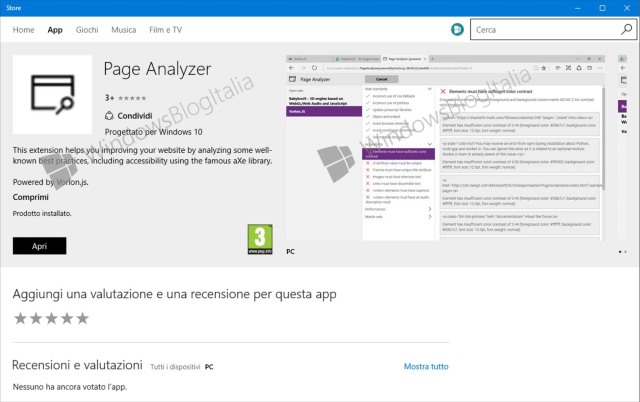
First Microsoft Edge extension appears in Windows Store
The feature that has been missing from Microsoft Edge for so long is just around the corner. We've known for a little while that extensions are due to make an appearance in an upcoming build of Windows 10, and ahead of this the first extension has made an appearance in the Windows Store.
Page Analyzer is an extension aimed at developers, so it's arrival in the Windows Store is a little odd. It's likely that extension support will be added in the next Windows 10 Redstone build, although there's no official timeline for this release at the moment.