
Tennibot is a really cool Ubuntu Linux-powered tennis ball collecting robot
Linux isn't just a hobby -- the kernel largely powers the web, for instance. Not only is Linux on many web servers, but it is also found on the most popular consumer operating system in the world -- Android. Why is this? Well, the open source kernel scales very well, making it ideal for many projects. True, Linux's share of the desktop is still minuscule, but sometimes slow and steady wins the race -- watch out, Windows!
A good example of Linux's scalability is a new robot powered by Linux which was recently featured on the official Ubuntu Blog. Called "Tennibot," the Ubuntu-powered bot seeks out and collects tennis balls. Not only does it offer convenience, but it can save the buyer a lot of money too -- potentially thousands of dollars per year as this calculator shows. So yeah, a not world-changing product, but still very neat nonetheless. In fact, it highlights that Linux isn't just behind boring nerdy stuff, but fun things too.

Canonical finally comments on Ubuntu Linux Snap Store security failure
Over the weekend, we reported on an Ubuntu Snap Store app that had a hidden cryptocurrency miner. This was a disappointing discovery, as users' machines were being hijacked to earn money for the developer.
With that said, it wasn't necessarily malware, as it did not cause harm to the computer, nor did it steal data or install a backdoor. Nevertheless, Canonical pulled the offending app and the developer's other submissions. The apps will eventually be re-listed without the mining code. Today, the company breaks its silence, finally commenting officially on this fiasco.

Ubuntu Snap Store app contained cryptocurrency miner
There was a recent discovery that an app called "2048buntu" in the Ubuntu Snap Store contained cryptocurrency (Bytecoin) mining code. Thankfully, this app -- and the developer's other submissions -- have since been removed.
What is the downside to having this cryptocurrency code commingled with the expected code? Well, the mining can slow down your computer while also increasing your electricity use.

Ubuntu Linux 18.10 is called Cosmic Cuttlefish -- yet another silly name
Ubuntu 18.04 was released last month, and for the most part, it is a solid release. As per usual, version 18.04 was given a silly name -- Bionic Beaver. Canonical follows an alphabetic naming convention, where two words are used that start with that same letter. The first word tends to be an adjective or other descriptive word, while the second word is always an animal. And yes, it is all a bit silly.
With the upcoming Ubuntu 18.10 -- due in October -- the name will be based on the letter "C." Today, Mark Shuttleworth, founder and CEO of Canonical, reveals the next Ubuntu version name -- Cosmic Cuttlefish. Don't know what a cuttlefish is? It's that weird looking thing in the picture above.

Google makes VR positional-tracking tool 'Seurat' open source on GitHub
Technology companies have been telling us virtual reality will change the world for decades now. While VR has become more popular in recent years, it is still a niche market. Virtual reality will probably become mainstream in the future, but until prices come down even further, it will remain a hobby for enthusiasts.
With that said, Google is still banking on virtual reality, especially with its Daydream initiative. Today, the search giant is making a VR positional-tracking tool called "Seurat" open source. The code is being hosted on GitHub.
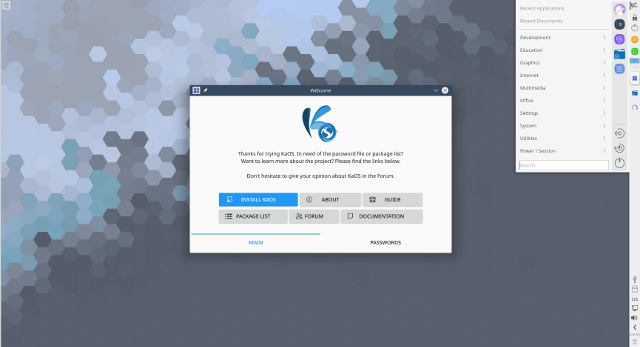
KaOS KDE-focused rolling Linux distro celebrates 5th birthday with updated ISO
When a person celebrates a birthday, they often receive gifts, eat cake, and spend time with friends and family. After all, it is intended to be a happy occasion as the person marks another year of life.
But what the heck does a Linux distribution do to celebrate a birthday? In the case of the excellent KaOS operating system, the answer is simple -- release an updated ISO. Yes, as a way to mark the 5th birthday of the KDE-focused distro, version 2018.04 is now available for download. You get Plasma 5.12.4, Linux kernel 4.15.7, Libreoffice 6.0.3, and more.

Fedora 28 is here -- download the overall best Linux-based operating system now!
Yesterday was all about Windows 10. Microsoft released its latest major version, called "April 2018 Update," and it is actually quite good -- for Windows, that is. Linux users won't likely care about that, however, as today there is an arguably more important operating system release -- Fedora 28. Yes, following an official Beta release, the distribution of choice for Linus Torvalds -- the father of Linux -- becomes available today.
Fedora 28 has many new features, but one in particular will surely excite desktop/workstation users -- GNOME 3.28, which introduces Thunderbolt 3 support and improved laptop battery life. Fedora has long used GNOME as the default desktop environment, and best of all, it is mostly a stock affair -- no silly tweaks enabled by default. In other words, you get a very pure GNOME experience, making Fedora Workstation the preferred OS for many hardcore fans of the DE.

Ubuntu Linux 18.04 Bionic Beaver is here -- download it now!
Ubuntu is one of the most popular desktop Linux distributions -- if not the most popular. While it may not be everyone's favorite operating system, it is largely responsible for making Linux accessible for average consumers. It is fairly easy to install, simple to use, and has a convenient application center. Ultimately, it is a pleasure to use for both beginners and experts alike.
Today, following an extensive beta period, the latest version of Ubuntu -- version 18.04 -- becomes available for download. Code-named "Bionic Beaver," it features GNOME 3.28 -- the best desktop environment -- rather than the now-abandoned (and much-maligned) Unity. As per usual, there are other DEs too, such as KDE, Xfce, and MATE. The kernel is based on Linux 4.15 and LibreOffice 6.0 is included by default. Best of all, Bionic Beaver is LTS (Long Term Support), meaning it gets an impressive five years of support.

System76 becomes GNOME Foundation Advisory Board member
System76 has long been a huge champion of both Linux and open source. If you aren't familiar, the company sells premium computers running the Ubuntu operating system. Recently, the company decided to create its own Ubuntu-based distro called "Pop!_OS" which uses the GNOME desktop environment.
Today, Denver, Colorado-based System76 takes its commitment to GNOME even further by becoming a Foundation Advisory Board member. It joins other respected companies on the board such as Google, Red Hat, and Canonical to name a few.
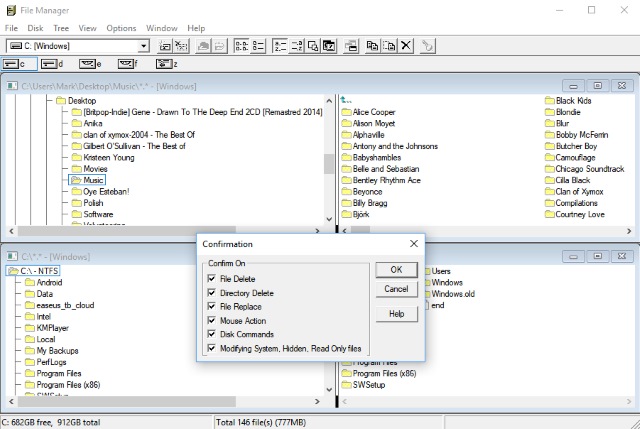
File Manager for Windows 10 is now available as Microsoft open sources winfile code
Cast your mind back several years and you'll remember Windows 3.0 and earlier. This was when Microsoft started to bring home computing to the masses, and for anyone raised on modern Windows, the lack of Start menu, taskbar and other components makes the operating system seem antiquated and unusable.
But use it we did! Back then, there was no File Explorer, but File Manager instead -- and it's something that people sometimes feel nostalgic about. A couple of days ago, Microsoft open sourced the File Manager code, and a Windows 10 version has been released.

Carbon Black improves integration with open APIs
Security teams are faced with an increasing range of problems, from the volume of attacks, to lack of visibility into networks and shortage of skills.
Endpoint security specialist Carbon Black is launching its own Carbon Black Integration Network (CbIN), a technology partner program designed to improve cybersecurity through collective defense.

Intel contributes code to open source edge computing project
The rise of IoT devices is pushing more systems towards an edge computing model in order to handle the data created more effectively.
While several open source projects exist to help solve pieces of the edge puzzle, no single project currently meets the need for a complete edge infrastructure solution.
WSL-DistroLauncher is an open source tool designed to lure Linux distros to the Microsoft Store
Is it cool that there are Linux distributions in the Microsoft Store? Eh, I suppose. While I don't fully trust Microsoft's commitment to both Linux and open source, understandably, some Linux users and administrators have the need to also run Windows 10. And so, from a convenience standpoint, the whole Windows Subsystem for Linux thing is appreciated (we are watching you though, Microsoft!).
Unfortunately, not all Linux distributions are available in the Microsoft Store. This is a problem, as Linux users are very tribal -- a Fedora user, for instance, might be unhappy using Debian. Microsoft hopes to solve this dilemma by making it even easier for distribution maintainers to get their distros into the store. How does the Windows-maker plan to do this? With an all-new GitHub-hosted open source tool called "WSL-DistroLauncher."

Mozilla Firefox Quantum available as Snap for Linux
If you use Linux on the desktop, there is no shortage of great web browsers from which to choose. For instance, popular options like Firefox, Chrome, and Opera are all available. Thankfully, Microsoft Edge is nowhere to be found!
Firefox is probably the most appropriate web browser to use on Linux. Why? Well, Mozilla’s open source focus is largely aligned with the Linux community. Today, Firefox Quantum becomes even more attractive to Linux users as it is now available as a Snap.
Linux Foundation announces open source ACRN hypervisor for the Internet of Things
The Linux Foundation has released details of one of its open source projects, ACRN -- a hypervisor designed for the Internet of Things and embedded devices. And, yes, it is pronounced "acorn".
The project was helped by contributions of code and engineering from Intel, and the aim was to create a system for managing virtual machines that was both flexible and small. With a Linux-based service OS, ACRN can run multiple guest operating systems at the same time, making it ideal for many scenarios.