
In India it is illegal to like blasphemous online content
In the latest blow for free speech, the government of the southern Indian state of Karnataka has passed legislation that makes it illegal to upload, share, or like content "with a view to hurt religious sentiments knowingly or unknowingly". Let's put aside the odd paradox of being able to have a "view" to do something, but to do it "unknowingly", and look at the history of this. Back in June, Karnataka police warned citizens about the type of things that were covered by the Information Technology Act.
Warning notices appeared in newspapers (of all places):

Rebel NSA and GCHQ agents are actually helping make Tor more secure
For anyone looking to stay anonymous online, Tor seems like an obvious option. At the same time, it could lull users into a false sense of security -- after all, this is a network that was, at least in the past, funded by the military and US government -- and conspiracy theories abound that Tor is nothing more than a honey trap to catch the kind of people who have a need for anonymity because of their nefarious activities. The network has evolved over the years and now agencies such as the NSA in the US and GCHQ in the UK are actively seeking out vulnerabilities so they can crack the network. But the relationships are actually far more complex than that.
According to Andrew Lewman, chief of operations at Tor, the same agencies that are trying to break Tor are also posting tips anonymously about the vulnerabilities that have been found -- giving a chance for them to be patched. Talking to the BBC Lewman said:

5 tips to make your browsing safe and secure
The internet has become as ubiquitous as air. You’re connected at home via Wi-Fi, then you go out and stop by a cafe to grab a quick morning coffee and check your Facebook, then you come to the office, get all serious and send business mail to your colleagues. The internet gives us great freedom. But with that freedom comes great dangers and great responsibility -- you are responsible for protecting yourself on the web.
Every time you indulge into any sort of online activity, your data can be easily monitored and checked. The websites you visit receive your IP address, location, browser and operating system, screen resolution, ISP and more. You can check on what information you give away at stayinvisible.com. I have nothing against sharing this data when I do simple browsing. I am like Dutch windows without curtains -- doing nothing wrong, peep in whenever you want, I have nothing to hide.

Google sets its sights on kids with child-friendly versions of YouTube and Gmail
There are many parts of the internet that are blocked to children under the age of 13. Facebook, for instance, implements an age restriction and Google is another online firm that prevents younger web users from setting up accounts. But all this could be set to change. First reported by The Information, Google has plans to open up its service to a younger audience. This does not mean that youngsters will be free to sign up for an account and browse through the contents of YouTube without restrictions. Parents will be able to sign their children up for an account and retain control over what they are able to do online.
One of the primary concerns many people have about Google -- regardless of their age -- is privacy. Google has a proven track record in delivering tailored content and advertisements to its users, and this is something that is at odds with laws around the world when it comes to children. The news coincides with UK plans to experiment with age ratings for online videos, and privacy and child protection groups are already voicing their concerns. Of course, there is nothing to stop someone of any age from signing up for a Google account; it's easy to stretch the truth with dates of birth online. But Google specifically targeting children with its services is unchartered water.
Twitter accepts removal requests for images of deceased, tinkers with timelines (again)
In the wake of the death of Robin Williams, Twitter announces that it will now accept image removal requests from relatives of deceased individuals. Williams' daughter Zelda was forced to leave Twitter having been inundated with a barrage of mocked up images of her deceased father.
In the aftermath of the actor's suicide, Twitter explained that it would improve its policies. The result is an update to the way in which death is handled on Twitter. The families of deceased people have been able to request the deactivation of an account, but now new rights have been introduced.
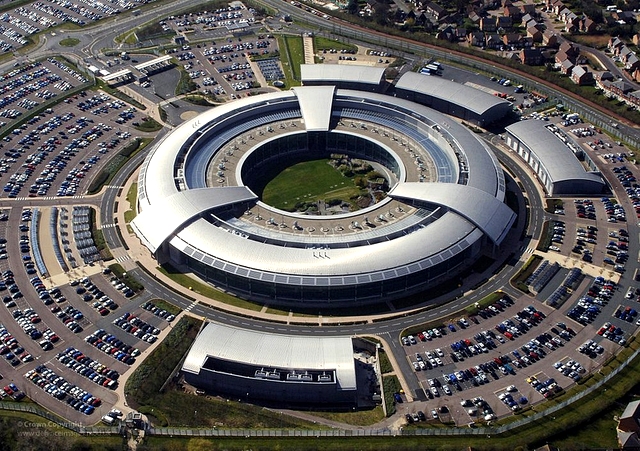
GCHQ accused of scanning entire nations for hacking vulnerabilities
The UK's Government Communications Headquarters (GCHQ) spy agency has been exposed scanning entire countries for server weaknesses that allow it to exploit vulnerable ports. According to reports, it does this using a tool called Hacienda, which is Spanish for estate.
The accusations came out in German newspaper Heise. "In 2009, the British spy agency GCHQ made port scans a 'standard tool' to be applied against entire nations," Heise reports. "Twenty-seven countries are listed as targets of the Hacienda".
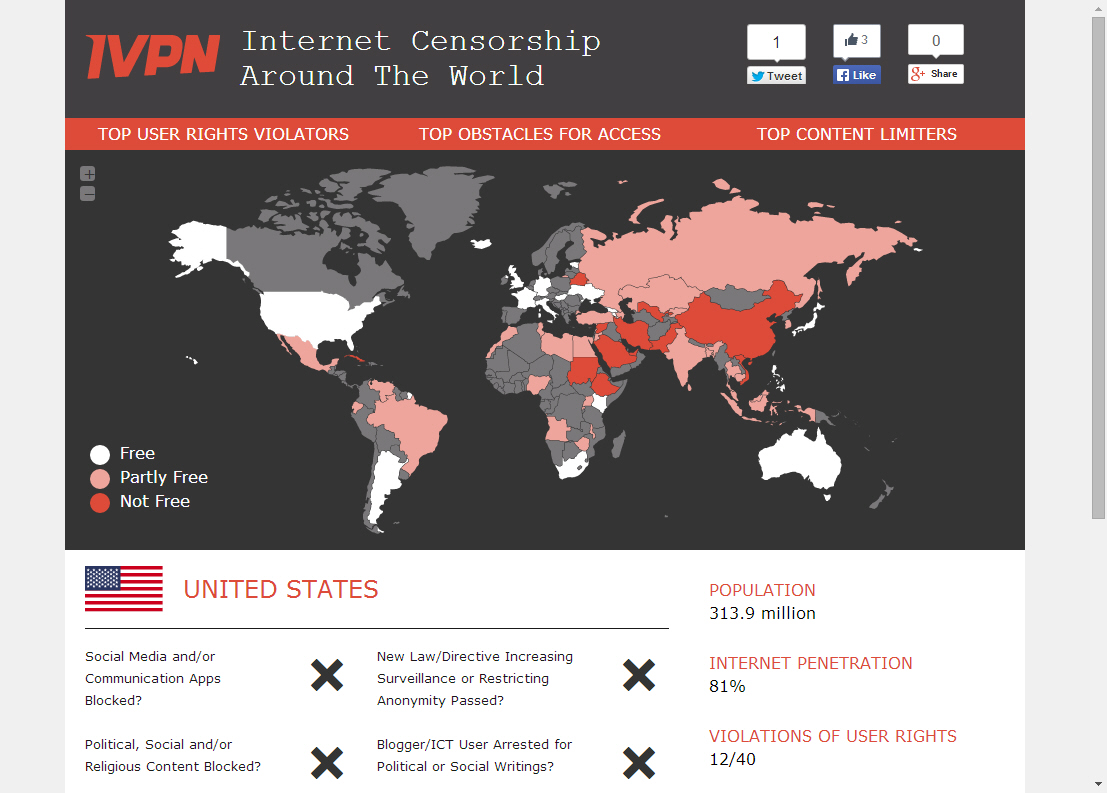
How much is your internet being censored? Point and click guide
The issue of internet freedom is seldom far from the news at the moment, but exactly how much are the governments in different countries restricting what their web users do?
Online privacy service IVPN has produced an interactive map showing levels of internet censorship around the world. You can simply click on a country to see how it rates.

Google vs the British government and the fight to be forgotten
The current uproar around various facets of data collection and use -- be it "the right to be forgotten" or the emergency data legislation being considered by Prime Minister David Cameron in the UK -- is divisive to say the least.
If your only source of information is the mainstream press, you’d be forgiven for thinking it comes down to two immiscible sides of an argument. On one side there’s the posited right for governments and people to access whatever information they need, whenever they need it. On the other side are those who believe that they have an absolute right to privacy, whatever the threats governments say we’re facing.

True password confessions of a security expert
I have a confession. It's hard to admit, and I know it might make me a bit of a social pariah and an outcast in the industry I work in but I need to get this off my chest:
I used a single password for many online services *deep breath* for a long time.
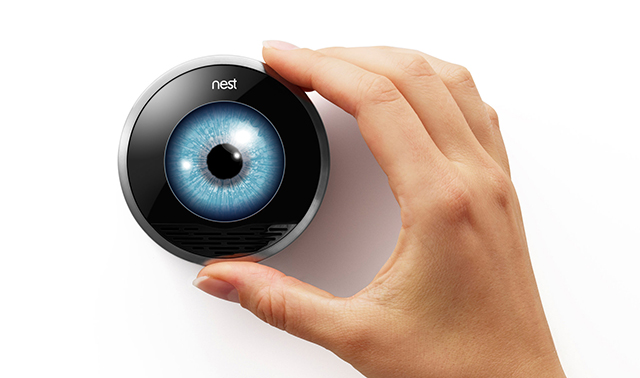
Google's Nest Thermostat can be easily hacked to spy on owners
When Google bought Nest Labs for $3.2 billion seven months ago, I described the move as the start of a home invasion. Google already knows a lot about you, including where you live, what your interests are, where you go on the Internet and in the real world (via Android), and its acquisition of Nest, which makes smart thermostats and (not so smart) smoke detectors, meant it would potentially also know what you get up to in your own home.
As it turns out, Google using Nest products to find out what customers are doing is just one worry. A team of researchers has discovered an easy hack that allows anyone to gain control of Nest’s smart thermostat and turn it into a spying device which can reveal when you’re at home or away, and even divulge your Wi-Fi credentials.

Edward Snowden can stay in Russia for at least three more years
The enfant terrible of the tech world, and the thorn in the side of the NSA, Edward Snowden has been granted permission to stay in Russia for a further three years. The former NSA analyst turned whistle-blower sought exile in the country a year ago and on August 1st he was granted an extension. The three-year residency permit was approved a week ago, but has only just been made public by Snowden's lawyer. Anatoly Kucherena explained that Snowden himself would hold a press conference as soon as possible, reported Russia Today.
The US has tried to force Russia to hand over Snowden so he can face charges in his home country, but for the time being, he will be able to stay where he is. If he feels inclined, the permits allows for him to travel abroad for up to three months, and he is free to travel wherever he wants within Russia. Although he has not expressed an interest in doing so, Snowden would be eligible to apply for permanent residence in Russia in five years' time.

Google email scanning technology catches pedophile sharing abuse photos
The scanning of personal emails is almost universally regarded as a terrible thing. Just like the activities of the NSA, when email providers start rifling through private information, it has a tendency to upset people. The justification for governmental mass surveillance has always been that it helps to combat crime -- and of course we never have to wait for long before the words "terrorists", "extremists", and "attack" are used. Google has just demonstrated how email scanning can be used to catch criminals. In this case, Google's image recognition software was used to identify images of child abuse sent via email by a Texan man.
A 41 year old man was arrested after the system detected suspicious material. The police were alerted and requested the user's details from Google after child protection services were automatically notified of the findings. The convicted sex offender's account triggered an alert after automatic, pro-active scans detected illegal pictures and Google then reported it to the National Center for Missing and Exploited Children. Google is understandably tight-lipped about how its technology works, but as the Telegraph points out, we do already know a little about the methods used.
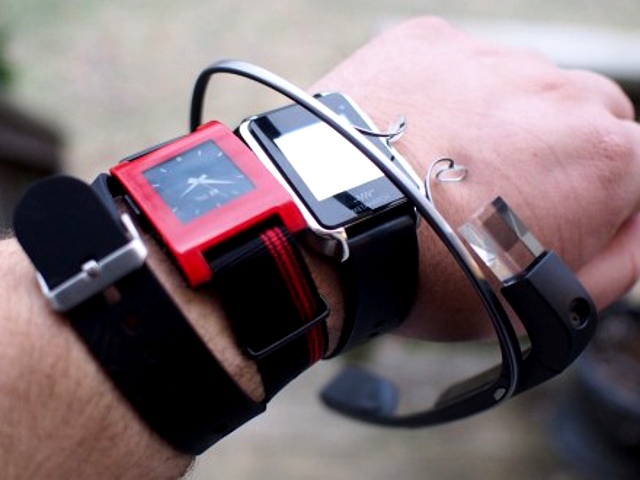
Wearable technology is easily tracked
Users of wearable technology can have their information tracked with just $70 worth of hardware, according to a new study.
Research carried out by security firm Symantec used a simple set-up combining a Raspberry Pi computer and a Bluetooth radio module, to scan for signals. The technology was taken to parks and sporting events where it was able to record data being broadcast from gadgets close by.

Microsoft announces Windows Phone 8.1 Update 1, Cortana coming to new markets
Today, Microsoft announces the first major update for Windows Phone 8.1, called Update 1. It introduces new features and improvements over the version which the software giant unveiled earlier this year at Build 2014, and makes way for Cortana to arrive in new markets.
In Windows Phone 8.1 Update 1, Microsoft adds Live Folders, allowing users to group live tiles on the Start screen. Like the name suggests, it is able to display updating information on its tile, coming from the items it contains. A live folder can be created by dragging a live tile on top of another.

Google is reading your email to track hotel visits -- helps you have fun away from home
Traveling and staying in hotels can be quite the adventure -- both good and bad. Of course, the quality of the lodging can determine the overall experience. If you check in and find a dead hooker under the bed, or stains all over the rug, you are going to have a bad time. Conversely, staying in a quality hotel can be quite the luxurious experience. Frankly, I have been on vacations where staying in the big comfy bed all day and watching movies was the highlight. Let's not forget room service -- eating fried mozzarella sticks and dripping marinara sauce everywhere? Who cares, its a hotel! The maid will clean it, right?
Unfortunately, leaving the hotel and looking for something to do in the vicinity can be an ordeal. I mean, going to a restaurant or attraction sight unseen could prove to be hit or miss. Choose the wrong restaurant and you will be stuck on the toilet for the rest of your vacation -- yuck! Today, Google announces that it wants to help users have a good time while on vacation. While that sounds great, the search giant is doing it in a creepy way -- by reading your emails!