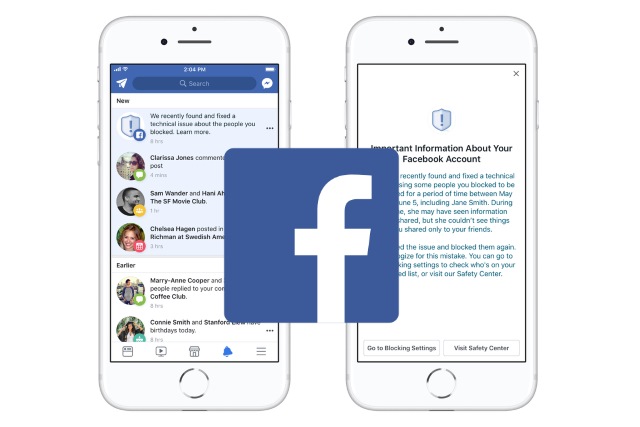
Facebook bug secretly unblocked people you thought you'd blocked
Facebook is primarily about connecting with other people, but its "block" functionality certainly has its place for avoiding those you don't want to be in touch with for one reason or another. It's a great option to have... until it goes wrong.
And that's precisely what happened. The social network has admitted that more than 800,000 were hit by a bug that meant people they had blocked on either Facebook or Facebook Messenger were temporarily unblocked and able to see content that had been posted.
The NSA is deleting all of its call records since 2015 because of privacy issues
The NSA -- not exactly a bastion of privacy -- has announced that it is deleting hundreds of millions of call and text records because of "technical irregularities".
The agency says that back in May this year is started to delete all of the calls records it collected since 2015. While full details of the reasons for the deletion are not given, the NSA notes that it collected data it was not authorized to collect.

Adidas data breach may have exposed personal data of American customers
Sportswear company Adidas has warned US customers about a security breach that took place earlier this week.
The firm says that on Tuesday it was made aware that "an unauthorized party claims to have acquired limited data associated with certain Adidas consumers". Two days later, the company started to notify its customers that personal data -- including contact information and usernames -- may have been compromised.
Report: AT&T is helping the NSA with surveillance using secret buildings throughout the US
A report published by the Intercept alleges that AT&T has eight buildings across the US which are used to collaborate on surveillance with the NSA.
Found in Atlanta, Chicago, Dallas, Los Angeles, New York City, San Francisco, Seattle, and Washington, DC, these "peering" facilities are home to networking equipment through which a lot of US and global internet traffic is routed. The Intercept says that there is a lot of evidence to suggest that "the buildings are central to an NSA spying initiative that has for years monitored billions of emails, phone calls, and online chats passing across US territory".
Privacy group EFF announces STARTTLS Everywhere to secure emails with hop-to-hop -- but not end-to-end -- encryption
When it comes to messaging tools, people have started to show greater interest in whether encryption is used for security, and the same for websites -- but not so much with email. Thanks to the work of the Electronic Frontier Foundation, however, email security is being placed at the top of the agenda.
The privacy group today announces STARTTLS Everywhere, its new initiative to improve the security of the email eco-system. STARTTLS is an addition to SMTP, and while it does not add end-to-end encryption, it does provide hop-to-hop encryption, which is very much a step in the right direction.
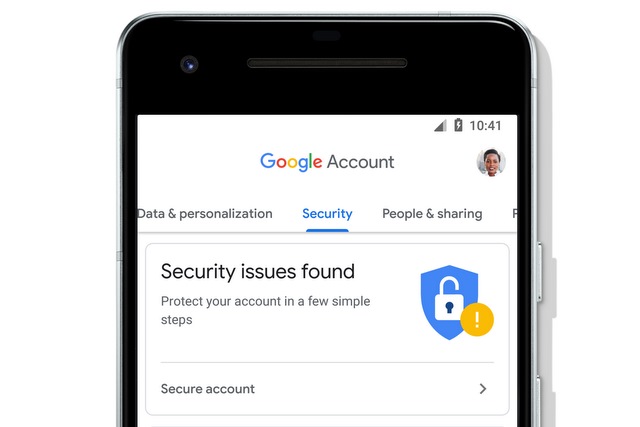
Google Account revamped -- increased transparency and new security and privacy options
Google has unveiled a new look for users' accounts, making information clearer, improving transparency and adding new options.
To make it easy to find information, Google has added a search function and there's also a cleaner look to aid navigation. Building on the previous update to Security Checkup, your Google account now also highlights settings you can change to improve your security.

72 percent of people fear the theft of their data from company hacks
A new survey of 2,000 UK adults reveals that almost three quarters worry that their details will be stolen every time they hand over bank details and email addresses to companies.
What’s more around one in five have already had their data stolen according to the study commissioned by BullGuard, and almost a third of these had been out of pocket as a result.
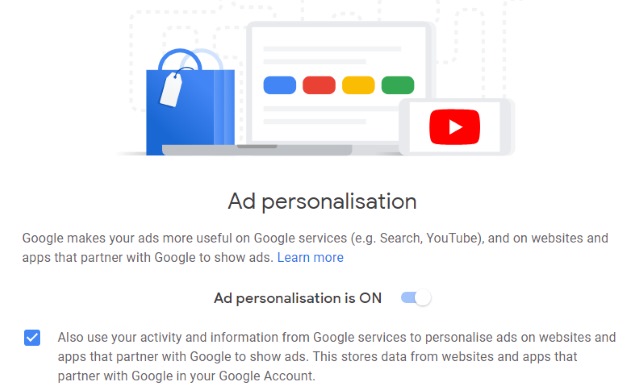
Google revamps Ad Settings and 'Why this ad?' so you can see and control how ads are personalized
Google has given its Ad Settings page an overhaul in the name of transparency. The page gives people the chance to not only see how Google uses the data it has gathered about them to personalize the ads they see, but also exercise a degree of control over these personalized ads.
The page makes it possible to disable ad targeting, so you will see rather more generic ads if tailored advertising concerns you. The company has also updated its "Why this ad?" feature, so you will be able to determine why you are seeing certain Google-supplied ads on the sites you visit.
Privacy: Facebook advertisers must warn users if ads are targeted because of data they purchased
The fall out from the Cambridge Analytica scandal continues for Facebook, and the social media giant is busy trying to repair its somewhat tattered reputation. The latest measures see the company introducing new privacy safeguards to inform users if advertisers are using information supplied by so-called "data brokers".
These brokers are firms that gather data about people and then sell this information on to other companies, often for the purposes of targeted advertising. Facebook is not banning the practice, merely requiring advertisers to keep users informed.
Apple updates App Store rules to prevent devs gathering data from contacts
Apple has tweaked its App Store policies, closing a loophole that made it possible for developers to gather data from phone contacts and then sell or share that data without consent.
Until very recently app developers have been able to ask for permission to access users' address books and then use this permission to gather data about contacts. But with the latest policy change -- introduced with no announcement -- Apple has clamped down on this practice in the name of privacy.
Adblock Plus blocks social media tracking in Chrome and Firefox
There has been a lot of talk recently about Facebook tracking users (and non-users) as they browse the internet. Ever a proponent of user empowerment, Adblock Plus has unveiled new features that make it possible to block tracking through social media buttons.
The company notes that Apple promised at WWDC to block social tracking, but with Adblock Plus this feature is available right now, regardless of whether you're an Apple customer. The only limitation is that you need to be using either Chrome or Firefox as your web browser.

Ticketfly says hack exposed private data of 27 million accounts
Last week event ticketing company Ticketfly suffered a cyberattack which saw the site taken offline for a number of days. The site is now back up and running, and Ticketfly has revealed the extent and impact of the hack.
The company says that data from 27 million Ticketfly accounts was accessed, including names, addresses, email addresses and phone numbers. Customers are assured that passwords and credit card details remain safe.
Facebook bug makes millions of users' private posts public
Facebook is in the process of contacting 14 million users after it emerged that a bug led to private posts being made public. A problem with the company's "audience selector" tool between May 18 and 27 meant that millions of posts meant for a limited audience were actually made available for everyone and anyone to see.
The social network has apologized for the incident and says that it will notify everyone who was affected by the bug. The SNAFU comes at a bad time for Facebook, as the company tries to rebuild a reputation tattered by the Cambridge Analytica scandal, and the news that the social network had data-sharing agreements with Chinese firms.

New York Times alleges Facebook shared user data with companies via device-integrated APIs
Facebook has vigorously denied allegations that it shared user data with the likes of Apple and Samsung through device-integrated APIs. In an article entitled "Facebook Gave Device Makers Deep Access to Data on Users and Friends", the New York Times raised concerns about the social network's privacy practices.
The NYT says that Facebook has brokered "data-sharing partnerships with at least 60 device makers" over the last ten years. It alleges that the APIs gave companies access to the data of Facebook users' friends without their explicit consent. The article questions not only Facebook's privacy protections, but also its compliance with an FTC deal it struck back in 2011.

Microsoft updates parental controls and allows for location tracking through Android Launcher
Ever keen to bolster its family-friendly image, Microsoft has revealed a number of updates to parental control options across a range of apps, services and devices. The company says it wants to "make it easier and safer for families to interact with technology and, each other, across devices and platforms".
The changes include updates to Edge and Microsoft Launcher for Android, which allows parents to not only limit what children can see, but also track their whereabouts. Microsoft is also introducing a specially-curated MSN Kids.