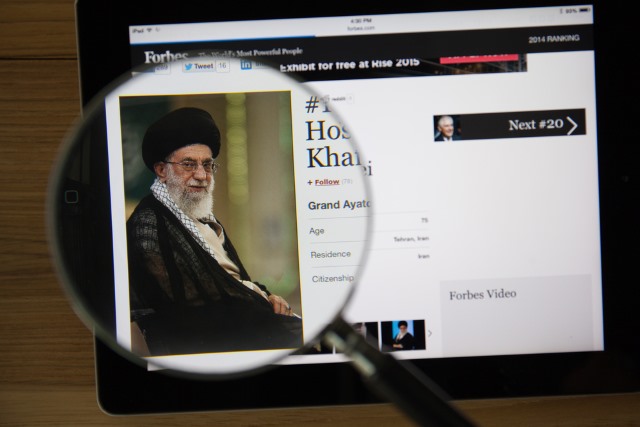
Messaging apps need to play by Iran's rules to operate in the country
Privacy concerns have been voiced after Iran announced plans to force messaging apps and social media services to store all data about Iranian users on Iranian soil. It is common practice for user data to be stored in other counties, but the government in Iran continues to exert its authority over the internet.
Any company who wants to operate a message service in Iran has a year to comply with the data relocation requirement. With Iran already blocking access to the likes of Facebook and Twitter, privacy and security advocates have expressed worries about the implications of the new rules.
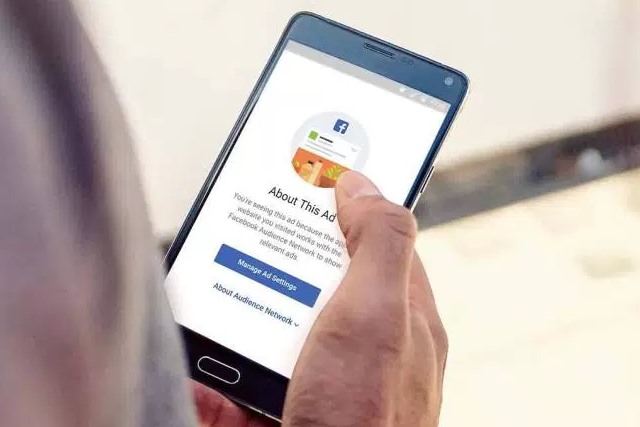
Facebook introduces new cookies policy and allows users to opt out of tailored ads on non-Facebook sites
When you hit Facebook today, you may well notice a new Cookies Policy warning at the top of the page. It states: "To help personalize content, tailor and measure ads, and provide a safer experience, we use cookies. By clicking or navigating the site, you agree to allow our collection of information on and off Facebook through cookies. Learn more, including about available controls: Cookies Policy". But what is it all about?
Facebook hasn’t made a great deal of fuss about it, but the social network has introduced not only a new cookies policy, but also made changes to ads. It is now possible to opt out of seeing tailored ads on non-Facebook sites. Facebook says it is all part of creating "a better online advertising experience for everyone".

Mozilla welcomes privacy-boosting GDPR data protection law updates
In a world more concerned than ever with privacy and data security, law makers are scrambling to keep up to date. With the growth of the internet, many old and inappropriate laws have been bent to fit a purpose they were not designed for. A case in point are European data protection directives which date back more than two decades.
In April this year a new law was adopted -- the General Data Protection Regulation, or GDPR. With compliance with the law required of the 28 EU member states by 25 May 2018, a two-year countdown is now underway. GDPR is welcomed by Mozilla who is using the 24-month compliance deadline to draw attention to some of the regulation's highlights.

Microsoft is using Windows 10 to see just how far it can push customers before they break
If you believe what comes out of Microsoft's figurative mouth, these days the company is all about listening to feedback. That's certainly the message that has been put forward with Windows 10, with the Feedback Hub app being made available to everyone with the operating system installed. Microsoft makes much of the fact that Windows 10 is installed on around 300 million computers, but the reality is that a portion of these installations relate to people who have been hoodwinked into upgrading from Windows 7 or Windows 8.
The latest trick (tricking users in to installing Windows 10 by clicking a button that would suggest that the offer is being declined) generated such a backlash that Microsoft has been forced into an embarrassing 'u-turn'. Annoying people with Windows 10 is far from unprecedented, and these days it seems Microsoft just likes to see how much it can get away with -- with the possibility of then saving face by 'listening to feedback' and changing tack.
Apple re-hires security expert of PGP, Blackphone and Silent Circle fame
Following the company's very public stand-off with the FBI over the San Bernardino shooter's iPhone, Apple is demonstrating that it has a great interest in security by re-hiring encryption expert Jon Callas.
Best known for founding security-focused firms PGP Corp and Silent Circle -- the company behind the ultra-secure, privacy-centric Blackphone -- Callas has worked for Apple on two previous occasions.

New healthcare platform addresses communications compliance challenges
The healthcare and pharmaceutical industries are highly regulated and need to constantly keep up with changing demands and regulations.
California-based Actiance, specialists in communications compliance, analytics and archiving, has launched a new cloud-based platform aimed at the health sector which addresses new and existing regulatory retention, security and privacy requirements, while reducing the risk and expense of costly eDiscovery and compliance activities.
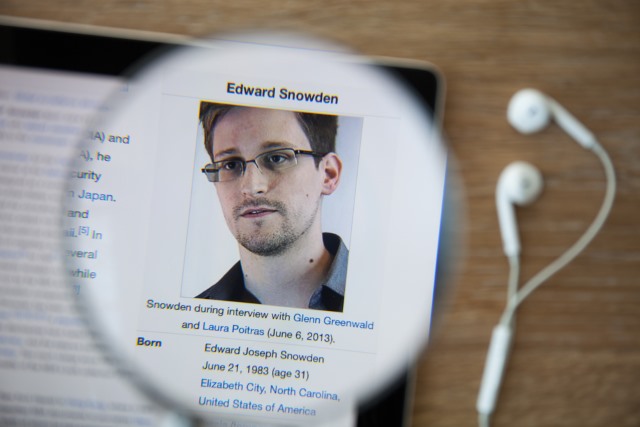
Edward Snowden warns about the dangers of using Google Allo
When Google announced the launch of two new messaging apps, the world wondered why. Duo is focused on video calling, while Allo is a more traditional messaging tool, albeit one with a Google assistant built in.
But while the world shrugged, Edward Snowden issued a stark warning. He says that Allo should be avoided, pointing out that the lack of end-to-end encryption makes it "dangerous".

Consumers don't trust companies with their data, but they're willing to share personal info
Consumers in the EMEA region (Europe, Middle East, Africa) are fairly skeptical about companies keeping their data safe, but are willing to share personal information to get something in return anyway.
Those are the results of a new and extensive research by F5 Networks, which had asked more than 7,000 consumers in UK, Germany, France, Bene, United Arab Emirates, Saudi Arabia and Poland about their online shopping habits, and data attitudes.

Compliance struggles to keep pace with new communications channels
Compliance professionals need to supervise all types of business communications, but a new survey shows that they're struggling to keep pace with the volume and variety of electronic channels.
Hosted archiving specialist Smarsh has released its sixth annual Electronic Communications Compliance Survey Report. The survey, of compliance professionals in the financial services industry, highlights that supervision practices aren't sufficiently addressing the compliance implications of ongoing trends, like increased regulatory scrutiny and the challenge of adapting to channels like social media and text messaging.
Four-year-old LinkedIn IDs go up for sale online
Cast your mind back to 2012 and the LinkedIn hack that had the grown up's social network scurrying to advise its users to change their passwords.
It was thought at the time that the 6.5 million sets of credentials posted on a Russian password forum was the extent of the breach. However, four years on a hacker under the name of 'Peace' is offering for sale a database of millions more LinkedIn accounts.

Microsoft just tried to use Windows 10 to trick me into using Skype with a random account
So there I was, typing away after using a couple of coffees to make myself feel vaguely human. Up popped a notification from Skype. This was odd. I don’t use Skype because I absolutely loathe it. The app isn’t even running. Nonetheless, there it is: a notification telling me that I have been signed into my account.
While I don’t use Skype, I do have a Skype username from back in days gone by -- but this wasn't the account Windows 10 told me I had been signed into. Rather it appeared that Microsoft had created a secondary Skype account for me (gee, thanks...) based on my name and decided to randomly sign me in to foist the terrible messaging app on me. What gives?

The Intercept cracks open the Snowden archive including internal NSA newsletters
There can be few people who have had such an impact on people's perception of the government as Edward Snowden. Having exposed the convert spying activities of the NSA, he opened up a worldwide debate about privacy and surveillance that is still going on today. His revelations have shaped public opinion and changed the course of history.
Just as the likes of the Guardian have already helped to educate the world about what the NSA has been doing, so The Intercept is releasing a huge cache of internal NSA documents that give an intriguing insight into the agency's operations. The documents shed light on the NSA's work relating to terrorism, Iraq, and general surveillance.
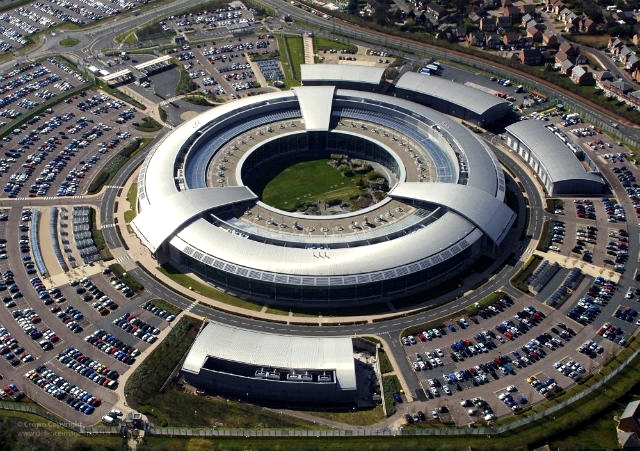
GCHQ arrives on Twitter to give a more public face to the spy agency
The UK's GCHQ -- like its US counterpart the NSA -- is an agency traditionally shrouded in secrecy. Tasked with the job of spying on all and sundry in the name of intelligence gathering, the agency has just joined Twitter, greeting other users with an unoriginal "Hello, world".
With the concerns about privacy and security that blew up in the wake of Edward Snowden's NSA surveillance revelation, spy agencies around the world have been on a mission to boost their public image. GCHQ -- complete with the blue tick reserved for verified accounts -- will use Twitter to "provide news, updates, and opinions".
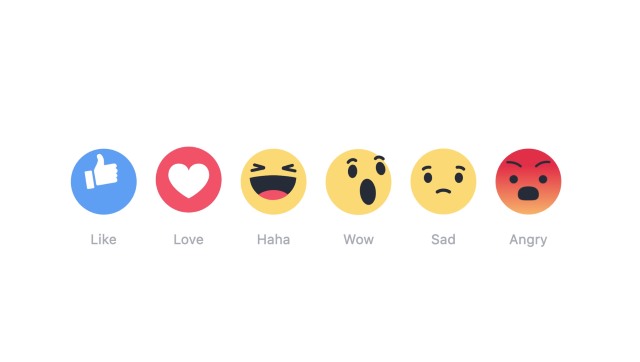
Belgian police warn that Facebook Reactions pose a serious privacy risk
Police in Belgium are warning people not to use Facebook Reactions because of the risk they pose to privacy. Introduced recently to supplement the iconic Like option, Reactions give Facebook users the chance to respond to content with Love, Haha, Wow, Sad, and Angry emoji.
But Belgian police have issued a 'Safe Browsing' warning advising that Facebook is using Reactions to gather information about social network users. Specifically, the police warn that in using Reactions to express emotions, users are giving Facebook the opportunity to build up a more detailed personal profile about them and use that information to deliver closely targeted advertising.
Facebook panders to European privacy concerns by stripping facial recognition from Moments app
Facebook has rolled out its photo-sharing app Moments around the world, and users in Europe have been treated to a modified version. Specifically, the European version of the app lacks the facial recognition feature that allows for automatic tagging of people.
In many ways, Facebook has been forced to release a degraded version of Moments to its EU audience because of the varying privacy laws that exist in different countries. The hobbled app will not attempt to identify individuals in photos, but will group together images that "appear to include the same face".