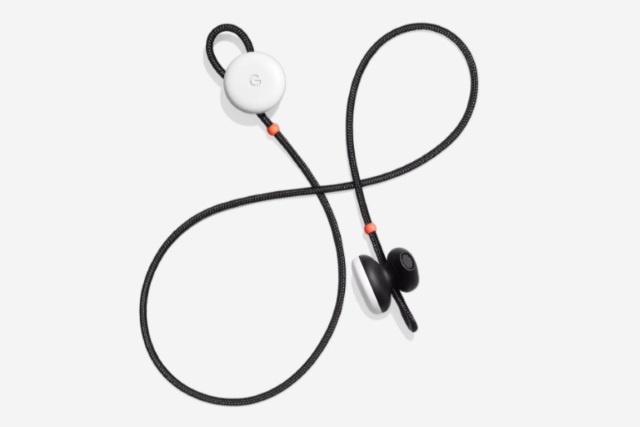
Google's instant-translation Pixel Buds are its most incredible release yet
There were numerous exciting releases announced by Google yesterday, but perhaps the most exciting -- certainly the most impressive -- was the Pixel Buds. Forget Apple's AirPods, Google's earphones have a mind-blowing trick up their sleeve.
Designed (ideally) for use with the Pixel 2, the Google Pixel Buds can translate spoken words on the fly. Real-time translations -- the Babel fish made real and implanted in your ear -- is now a reality, allowing for conversations between two people speaking different languages.

Purism exceeds $1 million in funding for Librem 5 Linux-based smartphone
Consumers don't care about privacy anymore, right? Wrong -- some actually do. True, we are systematically being conditioned to surrender our private information and rights nowadays, but some people are still fighting the good fight. In many ways, both the Linux and open source communities can be seen as the foundations of internet privacy.
The most popular mobile operating system on the planet, Android, is already based on Linux, but with Google in charge of it, many consumers cannot depend on it for privacy. With that said, Purism is planning to fight the impossible fight against Android and iOS with the "Librem 5" smartphone. This is a device that will run a privacy-focused Linux-based OS called "Pure OS," but the hardware is wide open for any OS, really. Purism is trying to raise $1.5 million through crowdfunding, and earlier today, it reached a significant milestone -- $1 million! Maybe the fight isn't impossible after all...

Oracle announces blockchain-based enterprise service
During the Oracle OpenWorld event, Oracle announced its entry into the world of blockchain with a new enterprise-oriented service. It is fully-managed, and built on the open-source Hyperledger Fabric project.
Prior to announcing the project, Oracle joined forces with IBM in building a blockchain service.
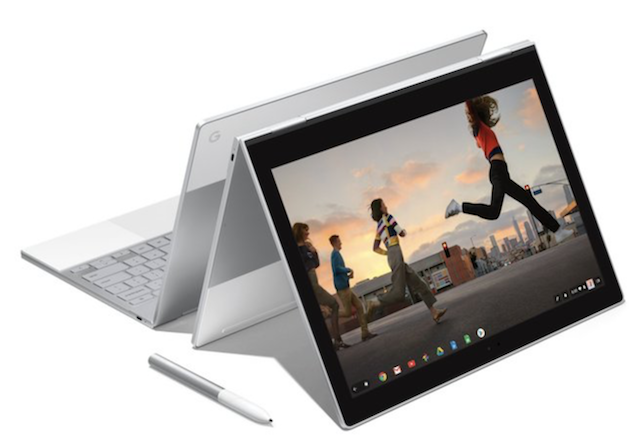
Google unveils 'Pixelbook' Chromebook, and it is much better than a Windows 10 PC
Fact -- Chromebooks are much better than Windows 10 PCs. Well, for some people, at least. I'll concede that some consumers will be better served by Windows or macOS, but nowadays, most home users can get by with Chrome OS. After all, many folks live in the web browser, doing things like watching YouTube and checking Facebook. While Windows 10 can arguably do more, it is also less secure. If you can get by with a Chromebook, you should! By the way, Chrome OS is not a glorified web browser, but instead, a well-designed Linux-based operating system.
Today, Google unveils the "Pixelbook," which is a high-end Chromebook with a 12.3-inch touch screen and stylus support. It can even convert into a tablet. It weighs a mere 1.1 kilograms and is just 10.3mm thick. Since it can run Android apps, there isn't much you can't do with it. True, it isn't a solution for, say, professional photo or video editing, but most people don't need that. And so, the Pixelbook is here to offer an elegant Chrome OS experience, reminiscent of the excellent Chromebook Pixel.

Google Store flubs Pixel Product Preorders
I would like to thank Google for saving me thousands of dollars in needless spending. Near the end of today's gangbuster hardware event, I was ready to order two new Chromebooks and smartphones, one each for me and my wife. But "error 500" pages on the company's store website and long-lead new product availability dates prompted me to cancel the one order successfully made and to delete the others in process from my shopping cart.
For a company whose product managers droned on this morning about all the reasons why artificial intelligence is so right, Big G got the store selling experience all wrong. I have waited through most of 2017 for a new Google-branded Chrome OS laptop. While hardly a fresh hardware design concept, Pixelbook is nevertheless tempting enough to bring me back to the AI and voice-assistant contextual future from the Apple rotting on the overly-obsessed touch-UI tree. I was willing and ready but instead walked away angry.

UK communications watchdog slams carriers over 5G legal battles
The head of the Ofcom watchdog has called for co-operation from the UK's main telecoms networks in order to facilitate the spread of 5G networks.
In a letter to the Financial Times published today, Ofcom chief executive Sharon White said that commercial interests must not affect the "golden opportunity" 5G offers to the country.

Equifax was aware of vulnerabilities prior to data breach
The total number of people affected by the recent Equifax breach has risen after more details came to light.
According to new reports, the number of affected customers has now hit 148 million -- meaning that an additional 2.5 million people have been impacted.

Google's new Pixel 2 and Pixel 2 XL get three years of software updates
Google just announced the second-generation Pixel smartphones. The new Pixel 2 and Pixel 2 XL, which come with Android 8.0 Oreo, feature a best-in-class camera, improved display with always-on functionality, faster internals and more storage than before.
The main differences between the Pixel 2 and Pixel 2 XL are in the display and battery departments. The Pixel 2 features a 5-inch AMOLED screen with a resolution of 1,920 by 1,080 and 16:9 aspect ratio whereas the XL version comes with a 6-inch pOLED panel with a resolution of 2,880 by 1,440 and 18:9 aspect ratio. The Pixel 2 XL has the most-impressive display of the two, hands down.

Oracle to add AI capabilities to cloud apps
Following the introduction of "adaptive intelligence" earlier this year, designed to improve customer experience (CX), Oracle has now introduced a new offering that builds on that idea.
During the Oracle OpenWorld event, the company announced that it will be adding its AI-powered capabilities to the bulk of its cloud applications, including Enterprise Resource Planning Cloud, Human Capital Management Cloud, Supply Chain Management Cloud, as well as the Oracle Customer Experience Cloud applications.
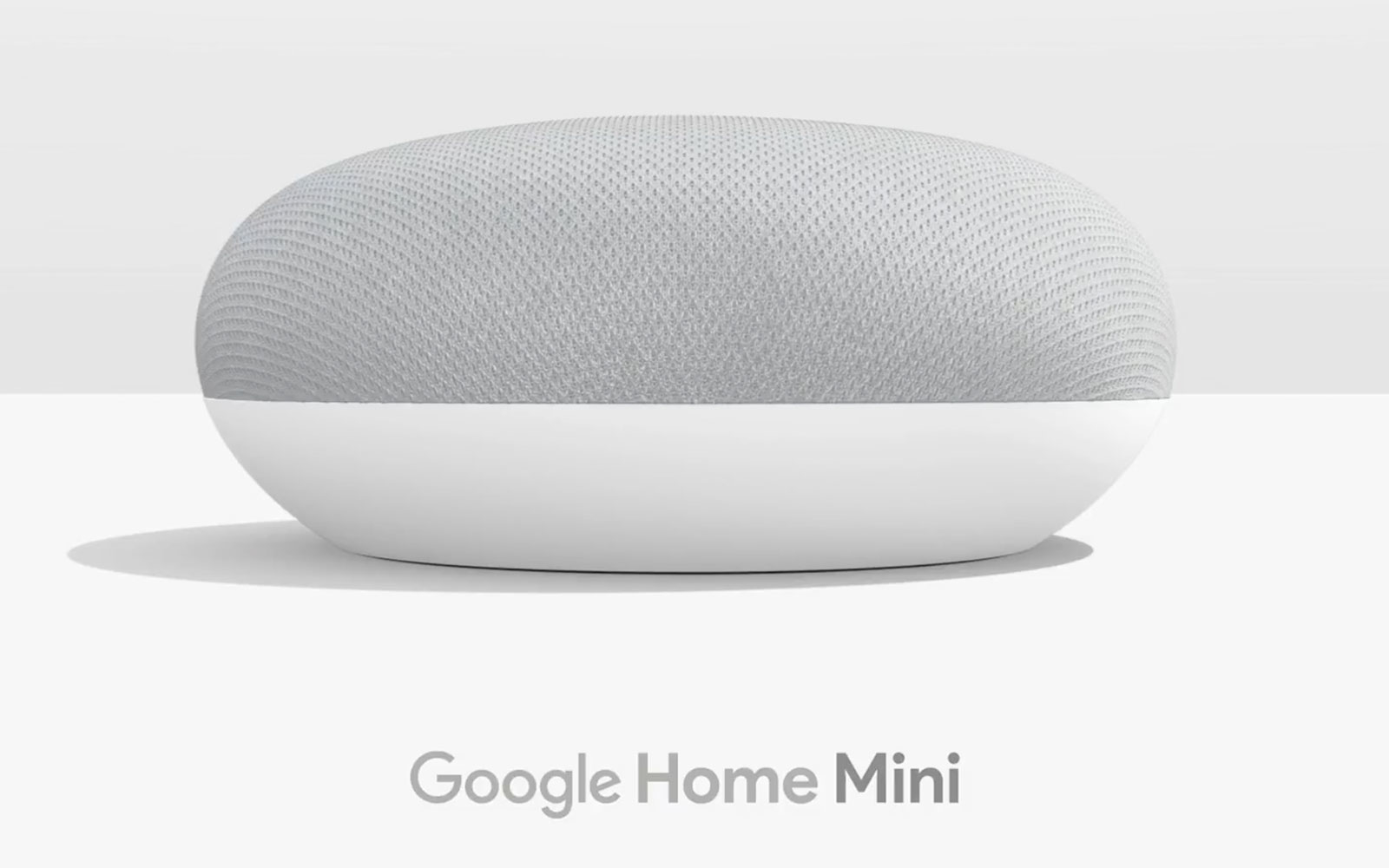
The $49 Home Mini is Google's answer to the Amazon Echo Dot
Amazon rolled out a selection of new Echo products a week ago, in a move designed to cement the company’s position as the leader of voice assistant technology.
At its hardware event today, Google announced its Echo Dot competitor, called the Home Mini. A companion to the Google Home, it will offer much the same functionality, but in a far smaller, cheaper package.
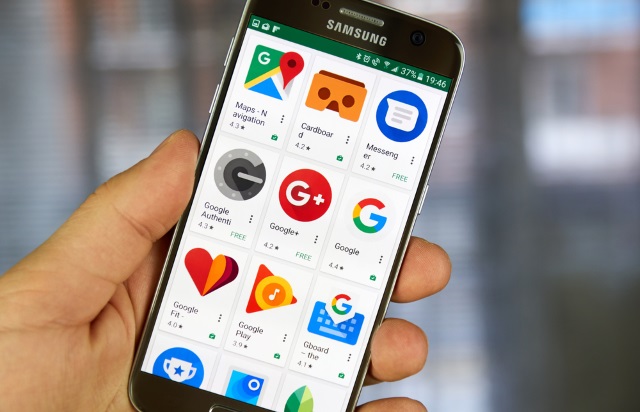
Google reveals the Android Excellence collection for Fall 2017
Google has unveiled the latest collections of best games and apps for Android. The company introduced the Android Excellence program earlier in the year, and now it has taken the wraps off the lists for Fall 2017.
These are not necessarily new titles, so as you browse through the collections you're likely to see a number of familiar names. In all, there are dozens of Android Excellence Apps and Android Excellence Games.
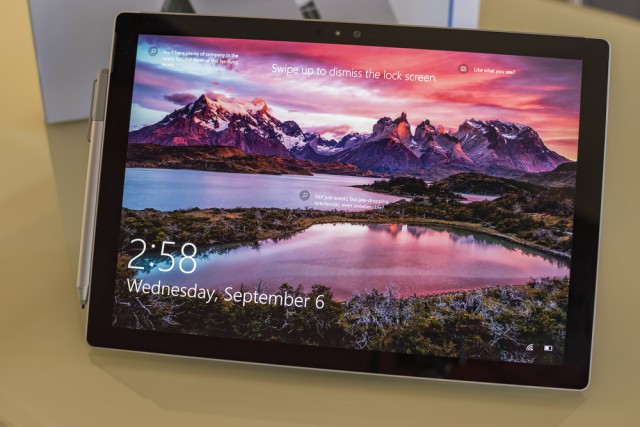
Microsoft will kill Surface line by 2019
It is difficult to imagine what the PC market would look like today had Microsoft not introduced the Surface RT and Surface Pro back in 2012. The software giant created a category, set the benchmark for high-end productivity-oriented tablets, and pushed rivals, like Apple, to compete in this space.
Despite this, Canalys CEO Steve Brazier and Lenovo COO Gianfranco Lanci believe that the Surface line will be put out to pasture by 2019. Why? The Surface business is not a huge money-maker for Microsoft, making it harder and harder to justify the cost to produce new devices and the low margins involved.

Plex rolls out adaptive Auto Quality feature to everyone, hardware-acceleration to subscribers
Plex -- the company behind the eponymous media server software -- is rolling out an update that automatically adjusts video quality during playback. This is a feature that was previously only available to Plex Pass subscribers, but now all users can enjoy it free of charge.
At the same time, Plex is also introducing a new performance-enhancing option to help justify the cost of a subscription. Hardware-Accelerated Streaming does very much what you would expect -- assuming you have the correct CPU or GPU, that is.

Cost and complexity are top barriers to DevOps adoption
While DevOps seems to be flavor of the month with many organizations, the path to adoption is not necessarily a smooth one.
Intelligent SaaS specialist Pensa has conducted a survey of more than 200 IT decision makers with a view to identifying the biggest challenges they face in the adoption of DevOps practices.

New platform delivers relevant, risk-based threat intelligence
Keeping on top of the latest threats can be a major task, so it's no surprise that many businesses are turning to automated solutions to help ease the workload.
Threat intelligence provider Recorded Future is launching a new machine learning based platform called Threat Views which enables the delivery of relevant threat intelligence in real-time based on analysis of billions of data points in every language.