
Was your home ever used as a meth lab? Find out online
Crystal methamphetamine usage is rampant in the United States. Truth be told, I never knew much about the drug before seeing the TV show "Breaking Bad". Lately though, it has been very prominent in the news. Apparently, the drug destroys lives and families and ultimately leads the abuser to ruin and chaos.
However, drug abusers aside, all people can be negatively impacted by the drug's creation. You see, this drug is artificial and must be created or "cooked", in a laboratory. Often, these makeshift labs are located in homes and produce dangerous chemicals which can cause negative health issues. Even after the lab is moved from a home, the chemicals may be in carpets, walls and ventilation systems. In other words, you may buy or rent a home that was previously used as a meth lab and have no idea. Today, the Indiana Office of Technology announces that it is using the internet to alert residents if a home has been used to cook meth.

Send emails from the command line with ShellSend
Binary Fortress Software has announced the release of ShellSend 2.0, the latest edition of its free tool for sending emails from the command line.
The new build adds an extra parameter which specifies the email body text, rather than pointing the program at a separate text file.
Microsoft releases video editor for Windows Phone 8.1
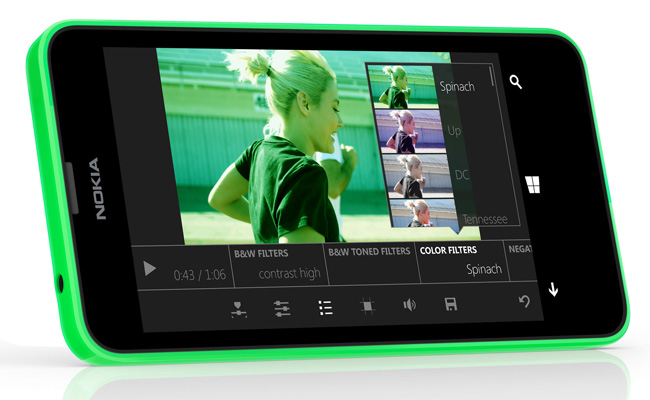
Microsoft's Mobile division just released Video Tuner, a new Windows Phone 8.1 app that gives users the ability to quickly edit videos right on their smartphones. The free offering is a Nokia Lumia-exclusive, at least for now, meaning that some platform users will be unable to install it.
Microsoft says Video Tuner offers "basic, yet powerful" tools, which include mundane ones like crop, flip, mirror, rotate, speed change and trim, as well as more advanced features like the option to add a soundtrack and tweak the sound level.

Design fully working model railways with 3D Train Studio
Model railways have been around for a very long time, and enthusiasts will sometimes build huge layouts stretching across hundreds, even thousands of feet.
If you don’t have the space or the money, though, you might prefer 3D Train Studio, which enables you to build complex virtual model railways, with moving trains, working signals, even cockpit cameras to help you monitor what’s happening in your custom world.

Where is Windows Phone most popular?
Following the launch of Windows Phone 8 in late-2012, Microsoft's smartphone platform has significantly increased its market share, reaching more consumers in more regions across the globe. Its rise can be attributed, for the most part, to sales of low-end handsets, like the affordable Nokia Lumia 520 and Lumia 625, which are prevalent in emerging markets.
So, it should come as no surprise that emerging markets make up roughly half the list of the 20 largest Windows Phone markets, according to a new report from Windows 8 and Windows Phone advertising network AdDuplex. The leader of the pack, however, is US, with 11 percent of the user base.

Bitdefender 2015 release focuses on ease of use
Bitdefender has announced the release of its 2015 range, including Bitdefender Antivirus Plus 2015, Bitdefender Internet Security 2015, and the do-everything Bitdefender Total Security 2015.
The new builds add little to Bitdefender’s core security abilities, instead introducing what the company calls "OneClick Security", a strong focus on simplicity and ease of use.
Lenovo Yoga Tablet 10 HD+: Not your average Android tablet [Review]
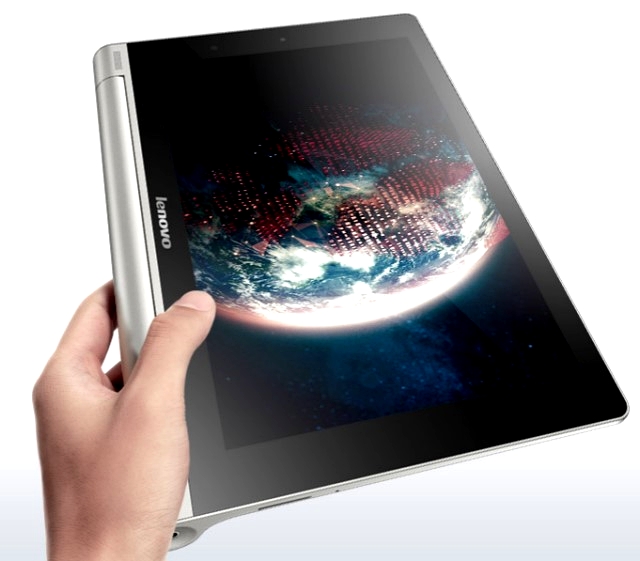
Last year Lenovo extended its Yoga line to cover not just the company's rather clever folding hybrid Windows laptops, but Android tablets too. The designs weren't quite as ingenious as the IdeaPad Yoga, with its keyboard that flipped nearly 360 degrees to sit flat against the back of the display, but it still had a unique selling point (USP): A brilliant flip-out stand which could hold the tablet either tilted or upright.
It was a fabulous concept, but spoilt by a dated specification. The screen was a bog standard 1280 x 800 resolution effort, and the processor a lowly Mediatek quad-core CPU. Now, however, Lenovo has come back with the Yoga Tablet 10 HD+, enhancing the previous model with a full HD 1080p screen and a Snapdragon S400 SoC. Is this enough to make a great tablet from a great idea?

Symantec unveils Norton Security 2015 Betas
Symantec has unveiled the first public betas of its forthcoming Norton security products. Norton Security 2015 Beta and Norton Security with Backup 2015 Beta reveal the company’s attempt to harmonize its two main security products.
Both products sport a redesigned user interface based on the old Norton 360 product, plus sport a number of major new protection and performance improvements.

How smarter cities will transform the way we live
Where are our cities headed in the future? What can we expect from the long sought after "smart cities"? Can we really expect anything different?
If big data has anything to do with it, we certainly can. We've already seen tremendous strides over the last 20 years in creating more energy efficiency, cleaner air, better transportation and improved security, but it's only a small fraction of what we can expect to see in the future with big data.

PC shipments show strong growth in USA -- global decline slows
The most popular computers nowadays, mobile devices such as smartphones and tablets, are full of compromises. Sure, they are sexy and fun to use, but hardly ideal for true work and creation. Hell, the "smart" in smartphone is starting to feel like a misnomer. A true desktop operating system coupled with a laptop, desktop or hybrid form factor will offer the most functionality and success.
Consumers have overlooked these mobile shortcomings as they have been mostly consuming content at home. However, the tides may be changing -- it feels like the consumer love-affair with mobile devices is starting to wane. Smart-watches may be the straw that breaks the camel's back. People are tired of retrofitting their desired computing to small screens. How about using an actual PC, rather than try to get PC functionality from a mobile device? Crazy concept, I know. Today, IDC announces that PC shipments are showing strong growth in the USA for Q2 2014, year-on-year.
Vysk QS1 phone case brings encrypted calls to paranoid Samsung and Apple users
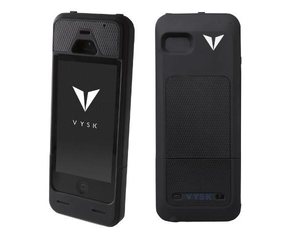
Phones hit the headlines for lots of reasons -- the biggest, the most expensive, the shiniest, or just the newest. We live in times in which security and privacy are major concerns for people in all walks of life. The activities of the NSA, as revealed by Edward Snowden, served only to heighten paranoia -- the prospect of having one's phone calls and text messages intercepted is something that fills few people with joy. Enter Vysk communicastions' Vysk QS1 phone case which can be used with an iPhone 5 or 5s, and a Samsung Galaxy S5 or S4. The selling point here is that it's not just your phone that's protected, but also your privacy.
The privacy features come in mechanical and software forms. On the mechanical front there are "shutters" that can be used to obscure your phone's front and rear cameras, and there's also a jamming system for microphones. This is described by Vysk as "Lockdown Mode", but you can take things a step further. For $9.95 you can subscribe to "Private Call Mode". This introduces encryption to your texts and phone calls, with an onboard processor taking care of encryption on the fly and sent via the Vysk encrypted network. As Vysk puts it: "No one -- not even Vysk -- will know the identity of the caller or the recipient. No data is collected -- no phone numbers, call times or content - so there is no data to record. Because nothing is recorded, nothing is at risk."

Verizon releases new transparency report, reveals location data requests
We're growing accustomed to companies releasing transparency reports -- all seem to want to get in on the action and make themselves look good for the public. The latest report rolls out of US mobile carrier Verizon, and reveals the usual amount of troubling data requests. The most prominent being for customer location data.
Unlike some reports, the carrier provides actual numbers, as opposed to estimates. We see that the company received 72,342 subpoenas in the first half of 2014 (a number that is actually down compared to the second half of 2013), and 14,977 warrants. As for other requests, we only get estimates there -- for instance between zero and 999 national security requests were received.

Ransomware is still a major concern for IT professionals
Ransomware has proved to be a successful business model for cybercrooks and a recent study shows that IT professionals still see it as a major and growing area of concern.
In a study by security awareness training specialist KnowBe4 88 percent of the 300 professionals surveyed said they expected ransomware to grow over the rest of this year. Attacks are also shifting from desktops to mobile devices, leading to problems for BYOD users.

Kaspersky Internet Security 2015 extends ransomware, webcam, Wi-Fi protection
Kaspersky Labs has announced its updated product range for home users, including Kaspersky Anti-Virus 2015 ($59.95) and Kaspersky Internet Security 2015 (also $59.95, 3 PCs, 1 year: offer expires 25th August 2014).
Both products now include an extra layer of protection from Cryptolocker-type ransomware. Kaspersky’s System Watcher now looks out for suspect processes trying to modify user files, and immediately backs up the originals. If the package finds the process was malicious then not only will the malware be removed, but you’ll get your documents back, too (or any tampered with in this session, anyway – backups are deleted when the program closes down).
Android SMS bot sets new infection record
Earlier this week we covered the debate on whether Android users need malware protection. If further fuel for the argument was needed it comes in the form of Russian security firm Dr.Web's monitoring of Android threats.
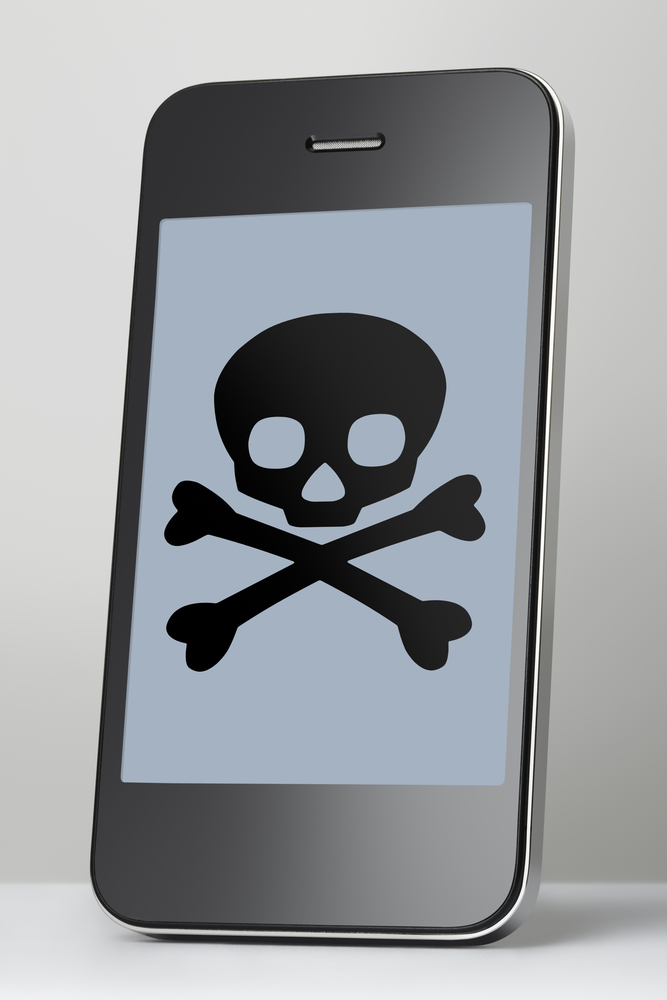
Until recently embedded advertising modules have topped Dr.Web's malicious program rankings, but statistics for recent months indicate that an Android SMS bot Trojan has been spreading at an alarming rate.